
Make a blue spirulina smoothie by blending a pale fruit base with a measured food-grade blue extract, then adjusting liquid, sweetness, and acidity only after you see the finished shade. A tablespoon of a green spirulina powder can turn the drink green and give it a stronger taste, so the ingredient choice matters. This blue spirulina smoothie recipe gives you one repeatable starting glass and a method for improving it. You can then decide whether it is a home drink, a café item, or the beginning of a packaged product.
1. What is a simple blue spirulina smoothie recipe?
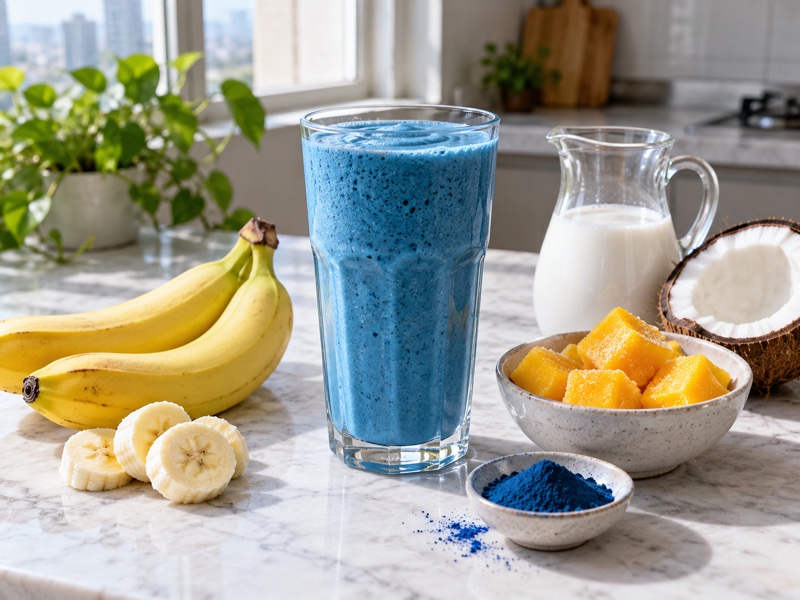
A simple blue spirulina smoothie recipe combines pale fruit, a mild liquid, ice or frozen fruit, and a small weighed amount of blue extract. For one test serving, blend a small banana, about 100 g frozen pale mango, and 150 to 200 mL unsweetened coconut milk or another light base. Add the extract in a tiny premix according to the supplier’s food-use guidance, then adjust to a target blue. The exact dose varies by grade. Taste before adding sweetener because ripe fruit may be enough.
What should you record on the first try?
Weigh fruit, liquid, ice, and extract; note the blender time and serving size. Take a photo in normal light and taste immediately and after 15 minutes. The blue smoothie overview covers other formats, while this recipe is a controlled starting point. If the drink is greenish, check the fruit’s yellow tone before adding more powder. A consistent recipe is easier to improve than a blender full of guesses.
| Starting input | Working amount | Why measure it |
|---|---|---|
| Banana | 1 small | Texture and sweetness |
| Frozen pale mango | About 100 g | Body and flavor |
| Light liquid | 150–200 mL | Pourability |
| Blue extract | Grade-specific, weighed | Shade |
Use these amounts as a trial, not a medical serving recommendation.
2. Which blue ingredient should you use?
Use a food-grade blue spirulina extract when the goal is a bright blue smoothie. Whole dried green spirulina is a different ingredient and can change both flavor and hue. Some retail powders are blends with sweeteners or other colors. Read the full ingredient list and supplier instructions before measuring. A product’s blue photograph does not tell you whether it contains a carrier or other additions.
How do you check the label?
Look for the formal ingredient name, grade, lot, carrier, and suggested use. The composition guide explains what may be present in a blue powder. If the label only says “spirulina,” ask whether it is whole biomass or extract. Blend a small sample into plain water to see its baseline hue, then test it in the smoothie. Keep the lot number with your recipe notes.
| Material | Likely result |
|---|---|
| Blue extract | Cleaner blue at color dose |
| Whole spirulina | Green tone and stronger taste |
| Sweetened blue blend | Extra sweetness or flavor |
The correct form makes the rest of the recipe easier.
3. How much blue extract gives the right shade?
Use the least weighed extract that gives the blue you want in the finished smoothie. A universal teaspoon is unreliable because powders differ in color strength and density. Start low and build a dose ladder with two or three measured versions. A deeper shade can cost more and may add an off-note. Judge the smoothie after blending and after a short hold, not just at the moment powder hits the liquid.
What should a dose ladder compare?
Keep fruit, liquid, and ice constant while changing only extract weight. Compare shade, flavor, texture, and cost per serving. The blue powder article explains why grades vary. If a pale smoothie tastes best but looks too light, try a more suitable grade or a whiter base before doubling the dose. A commercial recipe should record grams, not “one scoop.”
| Result | Next move |
|---|---|
| Pale and pleasant | Adjust grade or dose |
| Bright and pleasant | Candidate version |
| Bright but bitter | Reduce dose or change base |
| Speckled | Improve premix |
The approved shade should also be the approved flavor.
4. Why can banana or mango turn blue green?
Banana and mango bring yellow tones that can visually mix with blue and create teal or green. Ripeness changes color and sweetness from one batch to another. A very ripe mango may taste excellent but be more orange than a pale frozen piece. That does not make the fruit wrong; it changes the design brief. Decide whether the menu promises cyan, turquoise, or simply a colorful smoothie.
How do you control fruit variation?
Test two or three fruit lots at the same blue dose. Photograph the plain base and the colored version to see how much hue comes from fruit. The taste guide helps separate flavor from appearance. If you want a brighter blue, a pale fruit or smaller mango portion may work better than more pigment. Keep taste in the decision. Customers return for a drink they enjoy finishing.
| Fruit change | Likely effect |
|---|---|
| More ripe mango | Sweeter, warmer hue |
| More banana | Creamier, yellow tint |
| Pale coconut base | Cleaner blue |
Fruit color belongs in the recipe specification.
5. Can yogurt or milk make the smoothie better?
Yogurt or milk can add creaminess and protein, but it also changes acidity, opacity, and flavor. A white dairy or plant-based base may make a pleasing pastel blue. Sour yogurt may sharpen taste and affect pigment stability. Unsweetened versus flavored milk alternatives can change the ingredient list substantially. Choose the base for the whole drink rather than assuming every pale liquid is interchangeable.
How should you compare creamy bases?
Make equal-volume versions with the same fruit and blue dose. Compare taste, thickness, shade, and separation after standing. The blue smoothie bowl article shows how a thick base can make pale blue desirable. If a plant milk has a strong vanilla flavor, it may mask a mild extract note but add sweetness. Keep an unsweetened control. For a packaged drink, the base also affects allergen and nutrition labels.
| Base | Check |
|---|---|
| Yogurt | Acid and tang |
| Cow’s milk | Dairy allergen and opacity |
| Oat drink | Sweetness and beige tone |
| Coconut milk | Flavor and pale color |
The base should help both flavor and appearance.
6. Should you add lemon or berries?
Add lemon or berries only when their flavor improves the smoothie and their color effect is acceptable. Lemon can lower pH and challenge the blue. Berries can mask the pigment, giving purple or gray rather than cyan. If the recipe is meant to be a berry smoothie, that may be fine; do not promise a bright blue that the fruit cannot show. Test additions one at a time. A garnish is also part of the served appearance.
What is a useful add-in test?
Keep the base formula and blue dose fixed, then compare plain, light lemon, and berry versions. Record pH if the product will be held or bottled. The blue lemonade article discusses acid more fully. If a flavor makes the drink better but hides blue, rethink the name or visual strategy instead of adding excessive extract. A coherent smoothie can be more valuable than a perfect color target.
| Add-in | Likely trade-off |
|---|---|
| Lemon | Bright flavor, acid stress |
| Blueberries | Berry taste, purple hue |
| Pineapple | Sweet-tart, yellow hue |
Flavor additions should earn their place.
7. What blending order prevents blue specks?
Premix the blue extract into a small amount of the liquid base before it goes into the blender. Dry powder can stick to fruit or blender walls and leave dark specks in a pale smoothie. Add liquids first, then fruit and ice, then the blue premix under a consistent sequence. Blend just long enough for the intended texture. A commercial recipe should specify the blender and time because equipment changes the result.
How do you make the method repeatable?
Record premix volume, ingredient order, blender speed, duration, and serving temperature. Ask another person to make the smoothie from the written card. The blue drink guide covers premixing in thinner beverages; smoothies add frozen solids and more shear. If their glass looks different, simplify the instruction. A repeatable method protects both color and cost.
| Step | Control |
|---|---|
| Premix | Powder and liquid amount |
| Load | Same order |
| Blend | Speed and time |
| Serve | Same cup and temperature |
Speck-free blue starts before blending.
8. How do you adjust nutrition without misleading buyers?
Build nutrition from the whole recipe, not from the blue color. Yogurt, soy, milk, or a dedicated protein ingredient may add measurable protein; a small extract dose is unlikely to do so. Fruit supplies sugars and some nutrients, and portions matter. If the menu or pack makes a nutrition claim, calculate and test the finished serving under the destination market’s rules. A blue hue does not make a smoothie low sugar or high protein.
What should a label review check?
Use the exact approved formula, serving size, supplier nutrition data, and finished-product test where needed. The nutrition overview explains why the pigment’s protein chemistry is not a serving-level claim. Check allergen declarations for dairy, soy, nuts, and toppings. If you change the base, update the nutrition panel. A truthful recipe can still be appealing without a broad “superfood” promise.
| Claim | Evidence |
|---|---|
| High protein | Finished-serving amount |
| No added sugar | Full formula |
| Dairy-free | Ingredients and cross-contact |
| Organic | Certified chain |
Let the ingredients, not the color, set the nutrition story.
9. Can you make the smoothie ahead of time?
You can hold a smoothie only for a period supported by food safety and quality checks. Fruit, dairy, oxygen, temperature, and ice dilution can change texture and color. A café drink made to order differs from a bottled smoothie with weeks of shelf life. Set a realistic service window, keep it cold as required, and taste it near the end of that window. Color is not a food-safety indicator.
What should a hold test include?
Prepare the exact recipe and store it in the actual cup or bottle. Record temperature, separation, shade, flavor, and safe-holding criteria at planned times. The blue ice cream article shows how cold product appearance can change through storage in another format. If the smoothie separates or dulls, mix to order or redesign the formula. A retail bottle needs a validated process and shelf-life plan.
| Format | Required control |
|---|---|
| Home glass | Drink promptly and safely |
| Café batch | Defined cold hold |
| Retail bottle | Validated process and shelf life |
Make ahead only as far as testing supports.
10. When is the smoothie recipe ready to serve?
It is ready when another person can make a safe, good-tasting smoothie with the same approved shade and portion. Keep the exact blue grade, weighed dose, fruit specification, liquid quantity, method, and serving photo in one card. Recheck after a seasonal fruit or supplier change. For a bottled version, add processing, package, shelf-life, and label review. The recipe should work on a busy day, not only during development.
What should the final file contain?
Include the signed recipe, ingredient statements, lot records, sensory notes, shade reference, cost, and any approved claims. Our team can discuss extract samples and specifications for a business trial. Train staff to weigh blue consistently rather than adding it until the glass looks right. A little discipline makes the recipe easy to repeat. Customers notice consistency even when they do not know how you achieved it.
| File item | Why it matters |
|---|---|
| Weighed formula | Cost and shade |
| Supplier grade | Repeat supply |
| Sensory result | Drinkability |
| Label review | Accurate claims |
The recipe is ready when the next glass is as good as the first.
Frequently Asked Questions
Can I use frozen fruit in a blue smoothie?
Yes. Frozen fruit adds thickness, but its native color can shift the blue; test the exact fruit.
What’s the best liquid for a bright blue smoothie?
A pale, mild liquid is a useful starting point. Choose one that also tastes right and fits the label.
How do I know if I used too much blue powder?
Compare weighed doses for shade, flavor, texture, and cost. The darkest version is not always best.
Can I add protein powder?
Yes, but it may change flavor, viscosity, and shade. Test the complete recipe and verify any protein claim.
Can I make this smoothie the night before?
Only if you can store it safely and accept the tested texture and color after holding. A fresh glass may be better.
Conclusion
A good blue spirulina smoothie recipe uses a measured extract, a fruit base that tastes good, and a mixing method another person can repeat. You now know how to adjust shade, fruit, milk, add-ins, nutrition, and hold time without guessing. If you are developing a commercial smoothie, contact us with your base and market for extract information. We believe the best blue smoothie is the one people enjoy after the photograph is taken.