
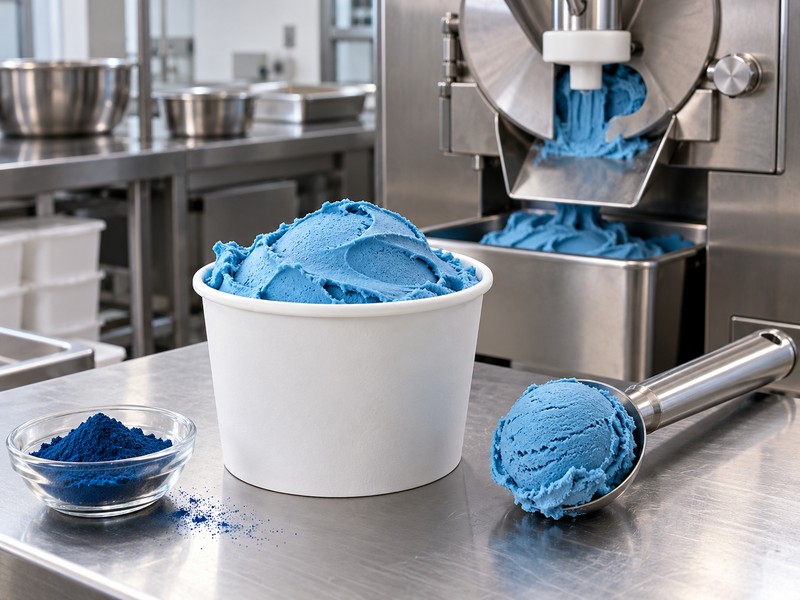
Blue spirulina ice cream is a frozen dessert colored with phycocyanin-rich spirulina extract. A scoop can look brilliant in a test kitchen, then turn pale, icy, or uneven after processing and storage. If you are developing blue spirulina ice cream for a shop or retail pack, the blue powder is only one part of the job. The base, mixing step, freezing process, package, and serving temperature decide what customers see and taste.
1. What makes blue spirulina ice cream blue?
Phycocyanins from a spirulina-derived extract create the blue shade. Whole green spirulina powder is not a substitute if the goal is a clean blue scoop; it brings different pigments and a stronger flavor. The visible shade also depends on the whiteness of the base, powder grade, and how uniformly the extract disperses. Air incorporated during freezing changes the way light passes through the dessert. Judge the color in a frozen scoop, not only in an unfrozen mix.
What should be checked on the ingredient specification?
Request the blue extract specification, ingredient statement, carrier details, and lot-specific certificate of analysis. Ask how the supplier defines each color grade and whether it suits dairy and plant-based systems. An E-grade code is a supplier measure, not a universal phycocyanin percentage. Keep a retained sample of the approved lot so later batches can be compared against the same physical reference.
| Powder detail | Why an ice cream maker cares |
|---|---|
| Color strength | Dose per finished kilogram |
| Carrier | Solids, sweetness, and labeling |
| Solubility | Specks or uneven shade |
| Lot | Consistency between batches |
Approval starts with the ingredient you will actually purchase.
2. Which base shows the clearest blue?
A pale base usually shows the clearest blue, but the right base must also deliver good texture and flavor. Vanilla dairy ice cream can display blue well, while cocoa, coffee, and dark fruit bases will mask or shift it. Coconut, oat, and other plant bases differ in color, fat, sweetness, and allergen profile. The best visual option may not be the best eating experience. Compare candidate bases at the same measured pigment level after freezing.
How should you screen base colors?
Prepare small mixes with identical pigment dose and process them in the same freezer. Photograph a fresh scoop under controlled light, then repeat after the intended storage period. Taste blind to separate color preference from flavor preference. A white liquid sample can appear more muted once frozen because air, fat, and ice crystals scatter light. If a plant base looks beige before coloring, expect a less saturated result than a truly pale base.
The OEM services page is relevant when you need help moving from a bench base to a repeatable product.
3. When should the blue extract enter the process?
Add the blue extract at a point that permits full dispersion while limiting unnecessary heat exposure. The exact step depends on whether the base is pasteurized before coloring and what the target market’s process rules allow. Phycocyanin is sensitive to some combinations of heat, acidity, and light; adding powder early to a hot process may dull the shade. A cool premix can reduce clumps, but any post-heat addition must be assessed for food safety and plant controls. Write the sequence for the actual equipment.
What does a controlled mixing trial look like?
Premix the weighed powder in a small amount of compatible liquid, then add it under consistent agitation. Compare the same dose added at two feasible process points. Check color, specks, foam, and taste before freezing and after a finished scoop is hardened. Record temperatures and time, not simply “mix until blue.” If the later addition gives stronger color, verify that the process still meets hygiene and regulatory requirements. Color is never a reason to bypass a validated safety step.
| Addition point | Potential advantage | Question to test |
|---|---|---|
| Before heat treatment | Simple production flow | Color loss from heat |
| After cooling | Better pigment retention | Hygienic control |
| Premix before freezing | Even distribution | Complete dispersion |
Choose a process the plant can repeat safely.
4. How much blue extract should a batch use?
Use the lowest weighed amount that gives the approved shade in the finished frozen dessert. A dry powder sample does not predict dose because the base, overrun, and storage all change visible color. Make a dose ladder around the expected target instead of adding spoonfuls until the liquid looks dramatic. Record grams per kilogram of mix and per saleable portion. Compare grades by cost per approved scoop or pack, not by unit price alone.
How do you find the practical dose?
Make a colorless control and several fixed-dose samples in the same base. Freeze, harden, and temper them identically. Score a standard scoop for shade, specks, taste, and melt appearance. Repeat after storage. If a higher dose adds an earthy note without improving the final visual enough, select a different grade or base. Do not hide a process problem with an ever-higher powder level.
The blue spirulina product page can help narrow samples; the frozen trial sets the commercial dose.
5. Does blue spirulina change ice cream texture?
At color-use levels, the extract may have less effect on texture than the base formula, but carriers and dose can still matter. A powder that dissolves poorly may leave visible specks or a sandy impression. Adding extra solids or water through a premix can shift the balance of an already delicate frozen system. Texture problems such as iciness often come from water balance, freezing, and storage rather than from the pigment alone. Compare a control batch before blaming the blue ingredient.
What should a tasting panel record?
Serve the control and blue samples at the same temperature. Note scoopability, ice crystals, mouthfeel, melt rate, powder notes, and any aftertaste. Check whether a blue sample looks smooth but feels grainy. If the color powder is supplied with a carrier, include that material in the formulation review. A controlled comparison is more useful than tasting two batches made on different days with different freezers.
| Observation | First cause to examine |
|---|---|
| Blue specks | Dispersion and powder solubility |
| Icy texture | Water balance and storage |
| Sandy finish | Carrier, dose, or unmixed solids |
| Rapid melt | Base and processing conditions |
Keep color and texture decisions in the same trial record.
6. Can acidic fruit swirls affect the shade?
Yes, an acidic fruit swirl can change the blue at the contact zone even when the base remains attractive. Lemon and many berry preparations bring acid, water, and their own pigments. A clear blue-and-pink pattern at filling can develop a dull band during storage. Swirl thickness, placement, and time all matter. Test the actual fruit system, not a color sketch of the intended pack.
How should you test a swirl or sauce?
Make a plain blue control and versions with the proposed swirl at different ratios. Store them in the intended package and compare the interface after hardening and again later. Observe color during melting too; a sauce may bleed into the blue as the scoop warms. If the boundary discolors, consider a different fruit system, a barrier, or a revised design. Do not change acidity casually, because taste, safety, and preservation can change with it.
The contact page is a place to describe your base and acidic inclusions when requesting sample guidance.
7. What happens during freezing and storage?
Freezing can preserve a visually appealing scoop, but it does not guarantee that the blue remains stable through storage and service. Heat used earlier, package light exposure, ice-crystal growth, and repeated temperature changes can affect the final product. A retail pack may face a much longer chain than a shop pan. A sample judged straight from the batch freezer is not representative of what a customer buys weeks later. Test under conditions that resemble the intended supply chain.
Which checkpoints should be documented?
Assess the mix before freezing, the hardened product, stored packs, and a tempered serving. Take photos under the same light and record storage temperature and any excursions. Note freezer burn, shrinkage, ice crystals, and color differences at the surface and center. Include a melt observation because a blue dessert may form a less attractive liquid pool. If the pack is transparent, compare it with an opaque option during the same study.
| Checkpoint | Decision it supports |
|---|---|
| Before freezing | Mixing and dispersion |
| After hardening | Immediate scoop appearance |
| After storage | Shelf life and package |
| During melting | Serving quality |
The saleable scoop is the relevant color standard.
8. How should a blue ice cream be labeled?
Label the finished dessert according to its actual ingredients and destination market. A blue color does not establish a health claim, organic status, or suitability for every diet. Dairy, nuts, soy, or other allergens may come from the base and inclusions. In the United States, 21 CFR 73.530 lists conditions for spirulina extract as a color additive in specified foods, including frozen desserts. Check current rules and the exact application before printing a label.
Which claims deserve a second look?
Review “natural,” “organic,” “vegan,” and any wellness claim against the complete formula and supporting documents. Conventional blue extract should not be presented as organic without certification for the exact product and supply chain. A blue pigment is not evidence that an ice cream is nutrient-dense or therapeutic. Keep the approved label, supplier specification, and production formula aligned. If the base or extract carrier changes, the label may need revision even if the scoop looks the same.
The about page offers company context, while a lot-specific document should support a product claim.
9. Can blue spirulina work in dairy-free frozen desserts?
Yes, it can color some dairy-free frozen desserts, but the base must be tested for shade, stability, texture, and allergens. Coconut often provides a pale background, while oat and nut bases can bring warmer undertones. Plant bases differ greatly in fat and protein, which changes freezing and melting behavior. A product marketed as dairy-free still needs appropriate cross-contact controls and label review. The blue color does not compensate for a weak base formula.
What should a dairy-free comparison include?
Use the same target shade and serving format across candidate bases. Record grams of extract needed, frozen color, scoopability, melt, flavor, and cost. Check whether the carrier or other ingredients conflict with a vegan or free-from claim. Test with intended inclusions, because dark cookie pieces or fruit may change the perceived blue. Keep the final decision tied to the product that customers will purchase, not a plain test base.
| Base | Color consideration | Product consideration |
|---|---|---|
| Coconut | Often pale | Coconut flavor and fat |
| Oat | Can appear beige | Texture and allergen handling |
| Almond | Shade varies | Nut allergen declaration |
A dairy-free claim needs formula and facility evidence.
10. What should a buyer ask before ordering at scale?
Ask for samples and documents matched to the frozen-dessert process before ordering at scale. Define base, heat treatment, addition point, target shade, pack, shelf life, market, and forecast volume. Request the complete ingredient declaration, grade method, lot COA, and change-control process. Pilot at production scale because mixing energy and freezing equipment can alter the result. The price comparison should include dose, waste, and color consistency across lots.
How should a pilot batch be approved?
Use the same written formula, equipment settings, and packaging intended for launch. Sample at the beginning, middle, and end of filling. Assess color and texture after hardening and at planned storage checkpoints. Document deviations before changing dose. Keep quality, purchasing, and marketing in the approval discussion so a visually striking scoop does not leave a label or supply problem unresolved.
The factory overview can help your team frame manufacturing questions, but verify the exact facility and certifications for the supplied lot.
FAQ
Can I make blue spirulina ice cream at home?
Yes. Start with a pale ice cream base and a small measured amount of food-grade blue extract, then follow the recipe’s freezing and food-safety instructions.
What’s the best flavor with blue spirulina ice cream?
It depends on the base and audience. Mild vanilla or coconut can show the color clearly, while any flavor should be tested for its own color and acidity.
How do I know if the blue powder is food-grade?
Check the exact product label, ingredient statement, supplier specification, and applicable market documents. A color photograph or generic certificate is not enough.
Can I add the blue powder before pasteurization?
Possibly, but test the color after the full heat process. An alternative addition point must also meet the plant’s food-safety controls.
Can blue spirulina turn ice cream green?
It can appear greenish or dull when the base color, other pigments, acidity, or processing changes the perceived shade. Test the finished frozen product before choosing a dose.
Conclusion
Blue spirulina ice cream succeeds when the color, texture, process, label, and storage performance all hold together. You can move from a promising blue mix to a repeatable scoop by testing the actual base, measured dose, addition point, swirl, and package. If you are developing a shop or retail product, contact us with your process and target market so we can discuss suitable extract samples and documents. Color should earn its place in the recipe by surviving the customer experience.