
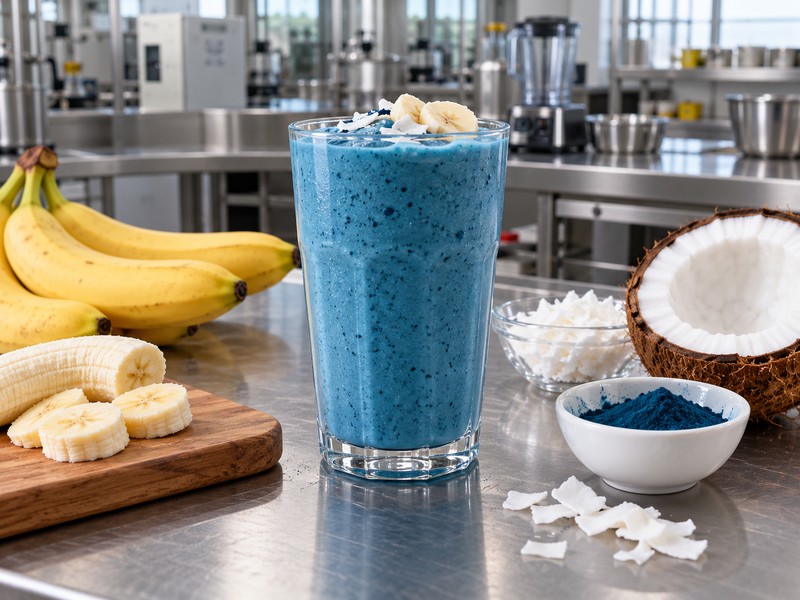
A blue spirulina smoothie is a blended drink colored with phycocyanin-rich spirulina extract. It can look striking in a menu photo, but a café or bottled-drink brand has to make that shade repeatable across fruit deliveries, staff shifts, and storage time. A little berry puree can turn the blue gray; a different powder lot can change the dose. This guide gives you a tested way to develop a blue spirulina smoothie that tastes good and looks the same beyond the first sample cup.
1. What gives a blue spirulina smoothie its color?
A blue spirulina smoothie gets its color from phycocyanins in a spirulina-derived extract. The extract usually behaves differently from whole green spirulina powder, which can add a green tint and a stronger taste. The precise shade depends on the extract grade, dose, smoothie base, pH, and lighting. If you need a branded color, define it with a reference sample rather than asking staff to blend until it “looks blue enough.”
Which ingredient should you buy?
Ask for a food-grade blue spirulina extract with a clear ingredient declaration and current specification. Confirm any carrier because it can affect texture, sweetness, and label wording. If a supplier uses E3, E6, E18, E25, or E35 grade terms, request its measurement method; those codes do not automatically state a universal phycocyanin percentage. Keep the sample lot number with your recipe notes.
| Choice | Likely recipe effect |
|---|---|
| Blue extract | Bright blue with a relatively mild note |
| Whole green spirulina | Green color and broader whole-biomass flavor |
| Higher color grade | May reach shade at a lower weight dose |
Test the intended material, since the market names can be loose.
2. Which smoothie bases show blue most clearly?
Pale bases show blue most clearly, especially coconut, banana, and light-colored dairy or plant-based milk. Dark berries, cocoa, and strongly yellow fruit can shift the final shade toward gray, purple, or green. That does not make those ingredients unusable, but it does change the design brief. Decide whether you want a clear sky blue, a turquoise look, or a darker “ocean” shade before adjusting the powder.
How can you screen bases quickly?
Blend small batches of each base to the same serving weight. Add the same measured extract dose, then photograph the cups under fixed, neutral lighting. Taste each one blind, because the palest base may not be the best drink. Repeat the promising two bases after ice melt or chilled storage. A recipe that photographs well at minute one may separate or fade before it reaches the customer.
For a commercial menu, talk with the supplier about the planned base and serving conditions. A sample chosen for lemonade may not be the most useful one for a thick smoothie.
3. How much blue spirulina belongs in one smoothie?
Use the lowest measured amount that reaches the target color without an unwanted taste or texture change. There is no universal teaspoon dose for a blue spirulina smoothie because powders differ in color grade, carrier, and bulk density. A kitchen scoop may vary by staff member and humidity. Build the recipe in grams and verify the final shade in a standard cup.
What does a dose ladder look like?
Prepare one control without extract and three measured doses around your target. Hold fruit, liquid, sweetener, ice, and blend time constant. Score shade, aftertaste, sediment, and cost per serving. If a higher grade reaches the same color with less material, compare the full cost after freight and waste, not only the bag price. Recheck the chosen dose when the fruit supplier or base changes.
| Trial level | Decision question |
|---|---|
| Low | Is the shade visible enough? |
| Medium | Is this the best balance of color and taste? |
| High | Does more powder improve or flatten the result? |
The dose ladder turns a visual preference into a repeatable formula.
4. Does acidity affect the blue shade?
Acidity can affect the blue shade, so an acidic fruit base needs a real stability test. Phycocyanin is sensitive to its surrounding conditions, and a freshly blended sample may not reveal the color after holding. Citrus, pineapple, yogurt, and fruit purees can all move the final pH. Do not set a target dose before measuring the actual finished drink.
What should you record during the acid trial?
Measure pH after blending and at each storage checkpoint. Keep a control with the same recipe but no blue extract, and compare shade under the same light. If the color shifts, test a change in fruit mix, addition sequence, or packaging before doubling the pigment dose. Higher use levels can raise cost and aftertaste without solving instability. A published pH range for purified phycocyanin may not predict your exact smoothie matrix.
Have the product’s regulatory and quality teams review any preservation or shelf-life changes. Color trials do not replace food-safety validation.
5. How can you keep a smoothie smooth rather than speckled?
Control mixing and ingredient order to keep a blue spirulina smoothie evenly colored. Powder added onto dry fruit or into a crowded blender can cling to the vessel, form blue specks, or disperse unevenly. A premix with part of the liquid often helps, but the best sequence depends on the carrier and equipment. Test the sequence that staff or the production line can repeat.
Which process variables matter?
Write down powder weight, liquid volume, blend speed, blend time, ice weight, and order of addition. Compare direct addition with a small premix, then check the cup immediately and after several minutes. Inspect the walls of the blender for retained pigment; lost powder changes both cost and color. For bottled products, check sediment after transport as well as on the bench.
| Variable | What can go wrong |
|---|---|
| Powder added last | Specks or material stuck to lid |
| Excessive blending | Foam and unnecessary air exposure |
| Variable ice weight | Diluted shade and inconsistent texture |
| Poor premix control | Staff-to-staff color variation |
Choose the simplest process that passes the quality check.
6. How do you balance flavor in a blue smoothie?
Balance the smoothie as a drink first, then use the extract at the dose needed for color. Blue spirulina is usually milder than whole green spirulina, but it can still leave an earthy or marine note in a lightly flavored base. Sweetness, acidity, fruit aroma, and texture all affect whether that note is noticed. A brightly colored drink that needs excessive syrup to hide the ingredient has a formulation problem.
What should a tasting panel compare?
Use coded samples: the base without extract, the target dose, and one neighboring dose. Ask tasters to record first sip, aftertaste, mouthfeel, and sweetness. Taste at the actual serving temperature and after a realistic wait. If the blue version seems less sweet, check whether the difference remains during blind tasting. Color can change expectations before the first sip.
The whole green spirulina page describes a different ingredient category. Avoid borrowing nutrition or flavor assumptions from it when you assess a blue extract.
7. Can you make blue spirulina smoothies ahead of time?
You can prepare them ahead only after testing the finished formula under the intended holding conditions. A made-to-order café smoothie and a bottled smoothie face different timelines, temperatures, light exposure, and safety controls. Color may fade, fruit may oxidize, and the drink may separate even when the extract itself is acceptable. A fresh cup is a prototype, not a shelf-life claim.
What belongs in the holding trial?
Make the drink with the intended process and package. Check color, pH, taste, texture, separation, and microbiological controls at relevant time points. Store samples at the temperatures your quality team defines, including likely abuse conditions where appropriate. If the formula changes, repeat the safety and quality assessment. Do not simply add more extract to compensate for fruit browning or poor packaging.
| Product format | Minimum development question |
|---|---|
| Café made to order | How long can it wait before serving? |
| Chilled ready-to-drink | What happens throughout the validated shelf life? |
| Frozen smoothie kit | Does thawing alter shade or texture? |
The correct answer depends on the product format, not the ingredient’s promotional copy.
8. What should be on a café’s preparation card?
A preparation card should state every ingredient in measured amounts, the order of addition, blend time, serving cup, and acceptable color range. Those details are what make a blue spirulina smoothie reproducible during a rush. Include a photo taken under ordinary service lighting and a note about which fruit substitutions are allowed. A staff member should be able to make the drink without guessing at powder color.
How do you catch drift between shifts?
Weigh the powder for a set number of trial drinks, then compare the finished cups from different staff members. Check fruit ripeness, ice weight, scoop technique, and blender program. If one cup looks pale, investigate the process before changing the master recipe. A written batch card reduces both ingredient waste and customer disappointment. For multi-site menus, collect color photos and taste notes from each site during rollout.
If you need branded product development support, the OEM service overview can frame the supplier discussion, but the operating card belongs to the team serving the drink.
9. How should a bottled smoothie brand qualify the extract?
A bottled brand should qualify the exact blue extract lot through documents, pilot production, and finished-product shelf-life tests. Bottling brings process heat or pressure, filling conditions, package light exposure, and distribution time into the trial. A powder that looks good in a cold blender may not behave the same way at production scale. The purchase specification should name the approved grade, carrier, and test limits.
Which files should procurement retain?
Keep the signed specification, lot-specific COA, ingredient declaration, relevant allergen and contaminant results, approved sample, and pilot report. Check market rules for the intended food-color use and claims. If a supplier changes the carrier, production site, or grade method, request a new qualification trial before using the replacement in production. The goal is a repeatable finished drink, not a one-time shade match.
| File | Approval purpose |
|---|---|
| COA and specification | Confirms lot against agreed limits |
| Pilot batch record | Connects process to color outcome |
| Shelf-life report | Shows performance through sale period |
| Label review | Checks ingredient and claim wording |
Keep the same lot identifier across all four records.
10. What makes the final blue smoothie worth buying again?
A blue smoothie earns a repeat purchase when its color, flavor, texture, and serving experience stay consistent. Phycocyanin provides the visual hook, but customers drink the whole recipe. If the shade varies each week or the flavor changes after a few minutes, a striking photo will not rescue it. The best launch brief sets both sensory and operational acceptance criteria.
How do you finish the product brief?
Define the target audience, serving size, color reference, maximum detectable off-note, nutrition panel, ingredient cost, and approved holding period. Test the recipe with the equipment and staff who will make it. Then lock a supplier specification and a change-control process for future lots. A brand can still adjust fruit seasonally, but each change should be checked against the color and flavor reference.
For ingredient samples, Spirulina CN can discuss blue extract options with a written application brief. Bring the formula, not just a photo of the desired blue.
Frequently Asked Questions
Can I make a blue spirulina smoothie without banana?
Yes. Use another pale base that gives the texture you want, then test its pH, flavor, and color with the chosen extract.
What is the best milk for a bright blue smoothie?
There is no universal winner. Compare light-colored dairy and plant bases in the same recipe, since each changes shade, taste, and texture differently.
How do I know if the blue color will last in a bottle?
Run a finished-product shelf-life trial in the actual package. Check color and safety throughout the intended distribution period.
Can I use green spirulina instead?
You can test it as a separate recipe, but expect a different color, taste, and ingredient profile. Do not substitute it at the same scoop size.
What is the best way to keep café drinks consistent?
Use a measured recipe card and a color reference. Check powder weight, fruit, ice, and blender settings across staff shifts.
Conclusion
A blue spirulina smoothie works when its color survives the real recipe and its flavor makes people want another. You now have a way to choose a base, set a measured dose, test acidity and holding, and write a repeatable preparation card. If you are building a café menu or bottled drink, contact us with the formula and sales market so we can discuss samples and documentation. A vivid color is useful only when the drink behind it holds up.