
A blue spirulina smoothie bowl is a thick, spoonable fruit or milk blend colored with a spirulina extract. It is built for the eye as much as the palate, which makes consistency hard: frozen fruit ripeness, blender heat, topping placement, and the time between preparation and serving can change the look. This guide helps cafés and food brands make a blue spirulina smoothie bowl that holds its color, texture, and flavor after the first photograph.
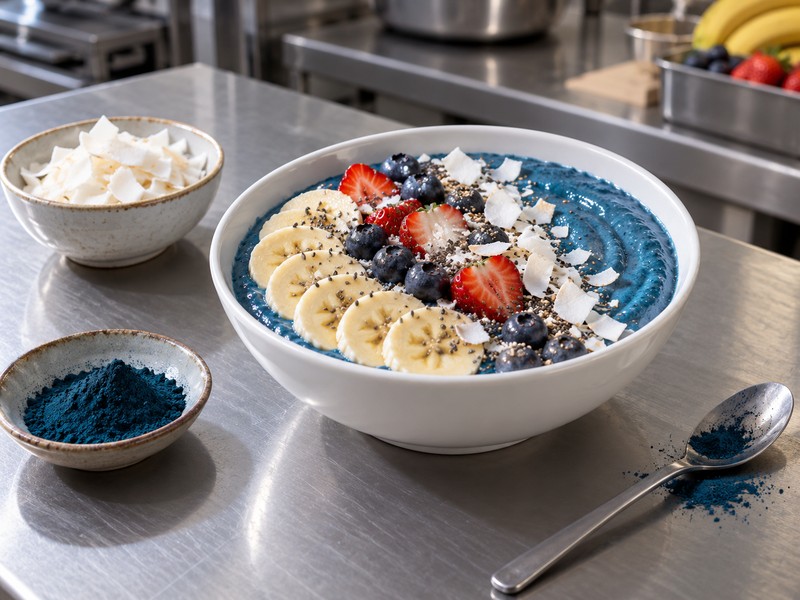
1. What makes a smoothie bowl blue?
Phycocyanins in a blue spirulina extract make the bowl blue. The extract is not the same as whole green spirulina powder, which changes both hue and flavor. The final shade depends on the base fruit, dairy or plant milk, dose, and serving temperature. A pale base gives the best chance of a clear blue, while strongly yellow or dark fruit can make it greenish or gray.
What ingredient file should a café keep?
Ask for the exact blue extract grade, carrier declaration, current specification, and lot-specific COA. A higher E-grade can be useful when less powder reaches the shade, but the grade code is not a universal phycocyanin percentage. Keep an approved sample and record its lot. If the supplier changes the carrier, repeat the texture and taste trial before swapping in the new powder.
| Ingredient detail | Bowl effect |
|---|---|
| Color grade | Dose needed for target blue |
| Carrier | Sweetness, mouthfeel, and label |
| Base color | Hue after blending |
The ingredient and the base need to be chosen together.
2. Which base ingredients keep the color bright?
Pale ingredients such as banana, coconut, light yogurt, and some white-flesh fruit tend to keep a blue smoothie bowl bright. Dark berries and cocoa can overpower the pigment. Yellow mango or pineapple can shift blue toward turquoise or green, which may still suit the menu if planned. The best base also needs a pleasant flavor and spoonable texture, not just an attractive shade.
How should you test base choices?
Prepare small bowls with the same measured extract dose and standard serving weight. Photograph them under the same light, then taste blind. Record fruit lot, ripeness, sweetness, pH, and texture. Repeat a promising base with another fruit delivery to see how much natural variation changes the shade. A recipe that works only with one unusually pale banana lot is not ready for a multi-site menu.
The OEM service page can support a commercial product conversation, but the café’s actual ingredients should drive the bench test.
3. How thick should a blue smoothie bowl be?
It should be thick enough to hold toppings briefly without becoming icy, gummy, or difficult to eat. Too much liquid can make the blue look pale and cause toppings to sink. Too little liquid can heat the blender or leave powder pockets. The target thickness depends on service time and the toppings, so define a spoon test or other simple standard staff can repeat.
What process variables change thickness?
Frozen fruit weight, liquid volume, fruit temperature, blender speed, and blend time all matter. Write the recipe in grams and milliliters, not loose scoops. Compare a fresh bowl with one that has waited ten minutes in the intended serving area. If it liquefies quickly, adjust the base structure before increasing blue powder. The pigment is a color ingredient, not a fix for texture.
| Variable | Typical problem if uncontrolled |
|---|---|
| Extra liquid | Pale color and sinking toppings |
| Warmer fruit | Soft bowl and rapid melting |
| Long blending | Heat, foam, and thinning |
| Variable serving size | Cost and shade drift |
The texture standard belongs on the same card as the color reference.
4. How much blue spirulina should the bowl contain?
Use the lowest weighed dose that achieves the approved shade in the finished base and passes taste testing. The amount changes with extract grade and fruit color. A teaspoon is not reliable because powder density and scoop technique vary. Cost should be calculated per finished bowl at the successful dose, including any pigment that remains in the blender.
How do you choose the dose?
Make a no-color control and a measured dose ladder around the expected target. Hold fruit, milk, temperature, and blend time constant. Score color, aftertaste, specks, and cost. Repeat the chosen dose with the intended toppings, because a white coconut topping can make the base look darker by contrast. If more powder adds an earthy note without improving the shade enough, compare another grade rather than forcing the dose.
A supplier sample discussion is more useful when you send the base formula and target bowl color.
5. How do you prevent streaks and blue specks?
Prevent streaks by dispersing the weighed extract before it is trapped in a thick frozen blend. A small premix in milk or another compatible liquid can help. Direct powder addition into a full blender jar may leave pigment on the lid or create blue pockets in the finished bowl. The best mixing sequence must be tested in the equipment staff will use.
Which sequence should be compared?
Try a premix added before frozen fruit, and a direct-addition control. Measure blend time, powder loss on the jar, uniformity, and texture. Check the bowl surface and a spoonful from the center. If the café makes many bowls during a rush, test whether a prepared premix remains uniform and safe through the intended service window. A premix that settles can make the last order a different shade.
| Mixing approach | What to inspect |
|---|---|
| Dry powder into frozen base | Clumps and lid residue |
| Liquid premix | Even color and premix stability |
| Pre-portioned sachet | Dose accuracy and powder handling |
Choose the approach that staff can repeat under normal pressure.
6. Which toppings work without hiding the blue?
Toppings should add texture and flavor without covering the color customers came to see. Pale coconut, light granola, banana slices, and a measured amount of berries can work, but the exact combination depends on the bowl base. Acidic fruit juices may bleed into the blue surface. Dark sauces can create contrast or make the bowl look muddy. The goal is a balanced dish, not a color chart.
How should topping placement be standardized?
Photograph the approved bowl from the angle customers see at the counter. Record topping weights and placement, then ask several staff members to make it. Check appearance at service and after a typical wait. If berries bleed into the base, change the cut, order, or barrier rather than adding more pigment. Taste the whole bowl with toppings, since a beautiful arrangement can still be too sweet or too bland.
A good menu photo should resemble the sold bowl; a one-off studio arrangement is a poor operational standard.
7. Can you prepare the base ahead of time?
You can prepare a base ahead only after checking color, texture, and food safety under the intended holding conditions. A frozen kit, refrigerated premix, and finished bowl are three different products. Fruit can oxidize or separate, while the blue pigment may change during storage. The café should define a safe hold time with its quality team and discard rules for unsold material.
What should a holding trial record?
Prepare the base with the production recipe and package or container. Check shade, pH when relevant, texture, separation, flavor, and temperature at planned intervals. Compare it with a fresh control. If staff will reblend, test that step too; it can add air and change thickness. Do not claim a shelf life from a bowl that was simply left on the bench for an afternoon.
| Format | Main question |
|---|---|
| Frozen ingredient kit | Does thawing preserve texture and shade? |
| Refrigerated premix | Does it separate or fade? |
| Finished bowl | How long does it stay spoonable? |
The safe holding limit and the visual limit may not be the same.
8. Does the extract change the bowl’s nutrition?
The extract’s main role in most bowls is color, so do not assume a small dose turns the dish into a high-protein or therapeutic food. Blue extract and whole green spirulina have different compositions. The bowl’s nutrition comes largely from fruit, milk, yogurt, sweeteners, granola, and portion size. If you plan a nutrient claim, calculate it from measured ingredients and verify the finished product where needed.
What should a menu review examine?
Check total sugar, protein, calories, allergens, and serving size. If the bowl is positioned as breakfast, make sure it satisfies the intended nutrition brief rather than relying on “superfood” language. Avoid implying that color alone improves immunity, skin, or energy. A study on isolated phycocyanin does not prove a health outcome from this bowl. Keep the ingredient story close to verifiable facts.
The whole green spirulina category is a separate choice if whole-biomass nutrition is part of the brief.
9. How can a café control cost and waste?
Control cost by measuring the powder and every topping per bowl, then tracking waste from unsold bases and inconsistent blending. A stronger extract grade may cost more per kilogram but less per bowl if it reaches the target at a lower dose. Fruit seasonality can change both shade and price. A costed recipe should include the full serving, not only the blue powder.
What should be monitored during rollout?
Record powder usage against bowl sales, remake reasons, fruit substitutions, and customer comments. If bowls are remade because the color is wrong, check fruit and dosing before changing the standard. Train staff on the approved color reference and accept a realistic range rather than a single filtered photo. A small weekly review can reveal whether the recipe is operationally stable.
| Cost item | Common blind spot |
|---|---|
| Extract | Powder left on equipment |
| Fruit | Seasonal color and price variation |
| Toppings | Inconsistent portions |
| Labor | Extra blending or remakes |
The best-looking bowl must also fit the menu margin.
10. What makes a blue bowl ready for a menu?
A blue bowl is ready when the approved recipe delivers the right color, flavor, thickness, and food-safety performance across normal service conditions. The ingredient file should identify the exact extract grade and lot. Staff need a measured process and an image of the acceptable finished bowl. The menu should describe what is actually served, including allergens and any caffeine-containing additions.
What belongs in the final recipe card?
List ingredient weights, fruit options, powder dose, premix method, blender program, serving bowl, topping weights, hold limit, allergen notes, and a color photo under ordinary light. Test the card with staff who did not develop the recipe. If they can reproduce the bowl without coaching, the process is close to ready. Requalify the recipe when the fruit source, extract carrier, or equipment changes.
For extract options, Spirulina CN can discuss samples against a written bowl brief. The finished food must still pass the café’s own tests.
Frequently Asked Questions
Can I make a blue smoothie bowl without banana?
Yes. Choose another pale frozen base and test its texture, sweetness, acidity, and color with the extract.
What is the best topping for a bright blue bowl?
Use toppings that add flavor and contrast without covering the base. Test the approved serving after a realistic wait, not only in a photograph.
How do I know if the powder is clumping?
Inspect the bowl surface and center, then compare a premix with direct addition. Check the blender for retained blue material.
Can I prepare the blue base the night before?
Only after a controlled holding and safety trial. Color, texture, and microbiological limits must all fit the intended refrigerated or frozen process.
What is the best way to keep bowl color consistent?
Weigh the extract, control fruit substitutions, and use a realistic color reference. Recheck the recipe when a key ingredient lot changes.
Conclusion
A blue spirulina smoothie bowl should look appealing and stay pleasant to eat after it leaves the blender. You now have a way to select a pale base, set a measured dose, control texture and toppings, and test holding. If you are developing a café menu or packaged bowl kit, contact us with the formula and market so we can discuss suitable extracts and documents. A good bowl is a repeatable food, not a one-time photograph.