
Blue spirulina usually tastes mild in a finished food, though its flavor varies by extract, carrier, and dose. That answer matters if you are trying to make a bright-blue drink without the seaweed note people often expect from green spirulina. A supplier’s powder can look perfect on the bench and still leave a faint earthy finish after it meets milk, fruit acid, or sweetener. The question “what does blue spirulina taste like?” deserves a test in the real formula, rather than a judgment based on dry powder alone.
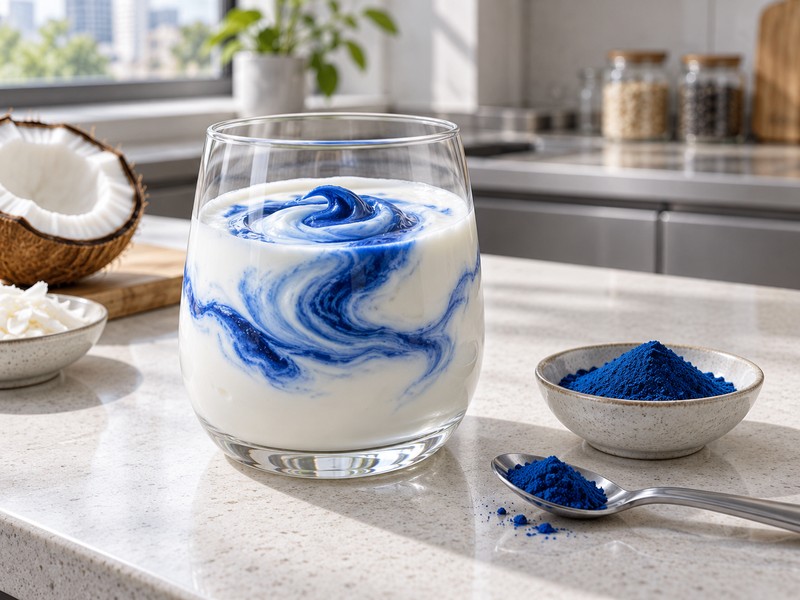
1. What does blue spirulina taste like on its own?
On its own, blue spirulina can have a light earthy or marine note, but many food-grade extracts taste milder than whole green spirulina. Your result depends on how much powder you taste, whether you dissolve it first, and what the supplier put into that powder. A concentrated dry taste is useful for spotting off-notes, though it is a poor predictor of the flavor in a finished drink. The first step is to identify the material and make a measured test solution.
Why is a dry-powder taste misleading?
Dry powder exposes your tongue to a much higher local concentration than a normal serving. It may also cling to the mouth, exaggerating bitterness or a chalky feel. Mix a known amount into neutral water, then test it again in the intended recipe. A food-grade blue extract may include a carrier, so request its ingredient statement before deciding what caused the taste.
| Sample | What it reveals |
|---|---|
| Dry powder | Strong off-notes and powder texture |
| Measured water solution | Extract flavor without recipe masking |
| Finished formula | The experience customers will actually have |
Use all three, but approve the ingredient against the finished formula.
2. Why does blue spirulina taste different from green spirulina?
Blue spirulina tastes different because it is commonly a blue, phycocyanin-rich extract, while green spirulina is usually the whole dried biomass. Whole biomass carries a wider range of compounds and a stronger green color; the extract is selected mainly for blue color. That difference can make a blue extract easier to use in delicately flavored drinks, but it does not guarantee a flavorless ingredient. Processing and carriers still vary between suppliers.
How should you run a fair comparison?
Do not compare one teaspoon of each powder. Their color strength, composition, and bulk density may be very different. Prepare two prototypes to the same visual target in the same base, then let a panel taste them blind. Record flavor, aftertaste, mouthfeel, and color separately. You may find that the green material works well in a tart smoothie while a blue extract performs better in lemonade or frosting.
The whole spirulina range is a separate sourcing category. If nutrition rather than blue color is the goal, compare nutrient data and serving levels as well as taste.
3. Can you taste blue spirulina in a smoothie?
You may taste blue spirulina in a smoothie, especially in a lightly flavored base or at a high use level. Fruit, yogurt, coconut, and sweetness can cover a mild note, but the effect depends on the particular extract. A banana-heavy sample can hide taste while making the shade dull; a pale coconut base can show the color beautifully but expose more of the powder’s aftertaste. The recipe, rather than the powder label, decides the answer.
What should you taste first?
Make a small series with the same base and measured extract levels. Keep the sweetener constant so you do not mistake sugar masking for a cleaner ingredient. Taste immediately and again after the product has stood or been stored under realistic conditions. If the formula uses protein powder, compare a version without it; some apparent spirulina notes come from other ingredients.
| Prototype | Main check |
|---|---|
| Pale fruit base | Maximum color and exposed flavor |
| Acidic berry base | Flavor masking and possible color shift |
| Protein-rich base | Aftertaste and mouthfeel interactions |
A sensory note is more useful when it names the base and dose.
4. Does blue spirulina change a drink’s sweetness?
Blue spirulina does not inherently sweeten a drink, but it can change how sweet the drink seems. Color shapes expectations: a vivid blue beverage may look like a candy-sweet drink even when the recipe is restrained. A slight earthy finish can also make a low-sugar drink feel less sweet. If you change the extract grade or dose, recheck the sweetness balance rather than assuming the original recipe still works.
How do you separate color from flavor?
Use blind tasting where possible. Let tasters score sweetness, acidity, aftertaste, and overall liking, then show them the colored sample and ask the same questions. The difference helps you see whether appearance is influencing the judgment. If the product will be sold in a clear package, the visual expectation is part of the real customer experience and should be included in the final trial.
For commercial launches, discuss samples with your target base and label requirements. A useful supplier sample matches the intended application, not only a color swatch in water.
5. Can blue spirulina add an earthy or marine aftertaste?
Yes, some blue spirulina powders leave a faint earthy, grassy, or marine aftertaste. The intensity depends on the source material, extraction and drying steps, carrier, grade, and use level. An aftertaste may become more obvious as ice melts or sweetness fades from the palate. A single quick sip at the development bench can miss that change, so evaluate the whole serving.
Which test catches the aftertaste?
Have tasters sip a standard portion at serving temperature, wait a minute, and describe what remains. Repeat with a blind control that contains every ingredient except the blue powder. Use plain terms such as earthy, mineral, bitter, dusty, or none; avoid vague “good” and “bad” scores without notes. If several people detect the same note, compare a lower dose or a different grade before adding more sweetener.
| Observation | Next test |
|---|---|
| Earthy finish | Lower dose or alternative extract grade |
| Chalky mouthfeel | Improve dispersion or inspect carrier |
| Off-flavor only after storage | Check packaging and accelerated stability |
The control tells you whether the extract really caused the problem.
6. How do carriers affect blue spirulina flavor?
Carriers can affect flavor and mouthfeel because commercial blue extracts are not always pure phycocyanin. A carrier may improve handling, dispersion, or stability, while also changing sweetness, bulk, or label wording. Two powders with the same apparent blue shade can taste different at equal weight. You need the ingredient declaration and measured trial data before choosing one for a finished product.
What should the specification tell you?
Ask for the full ingredient statement, recommended storage, color grade method, solubility or dispersion advice, and any sensory notes the supplier can support. Do not treat an E-grade label as a universal purity percentage. Match the offered lot to its COA, then keep a retain sample for comparison with production deliveries. If a carrier is not acceptable for your label, you need to know before a pilot batch is scaled.
An OEM or formulation discussion can help you map ingredients to a real product brief. The final recipe still needs its own taste and stability tests.
7. What use level keeps the taste in balance?
The right use level is the lowest measured dose that reaches your color target and passes the sensory test in your finished food. There is no single scoop size that fits every extract or recipe. A more concentrated color grade may need less powder, which can reduce flavor impact, but price per kilogram alone will not tell you the best value. Calculate cost per finished serving at the successful dose.
How should you build a dose ladder?
Set a reference batch with no blue extract, then prepare at least three measured doses around the expected target. Keep every other ingredient and processing step fixed. Record color under the same lighting, taste at serving temperature, and inspect for sediment. Test the promising dose after the planned heat, acidity, light, and storage exposures. If it fails stability, reformulate before buying a large lot.
| Dose decision | What to record |
|---|---|
| Lowest acceptable shade | Visual standard and instrument reading, if used |
| First detectable off-note | Panel comments and serving temperature |
| Best commercial dose | Cost per serving and storage result |
A written dose ladder makes later lot comparisons possible.
8. Does processing change the taste over time?
Processing can change the taste of the complete product, even if the blue extract was mild at mixing. Heat, acid, light, oxygen, and long storage can affect color and other ingredients in the formula. If a drink develops an off-note weeks later, do not assume the spirulina extract is the sole cause. A control batch and an ingredient-by-ingredient comparison help locate the source.
What does a useful shelf-life trial include?
Keep control and colored batches in the intended package, under both normal and challenging conditions approved by your quality team. Test at several time points for color, flavor, pH, sediment, and microbiology as appropriate. Open a fresh package for each tasting session so repeated opening does not distort the result. Document the lot, dose, process, and packaging details with each observation.
The same discipline applies if you switch suppliers or grades. Run a bridge trial in the actual formula instead of relying on a similar-looking powder. The blue spirulina product page is a source for samples, not a substitute for the trial.
9. How should a purchasing team compare suppliers?
A purchasing team should compare suppliers on taste in the final formula, color stability, documentation, and delivered cost. A powder that looks brighter in water may not be the best choice after a product is heated, acidified, or stored in a clear bottle. Compare the same specification and performance brief across suppliers. Ask each one to identify the exact grade and carrier in the sample they send.
Which records should travel with the sample?
Keep the lot-specific COA, ingredient declaration, allergen statement, storage guidance, and any market-specific documents with your tasting notes. If a supplier claims organic status or a particular certification, verify that it covers the exact product and production route. Record the receiving date and package condition. Those details matter when a later production lot tastes different from the first bench sample.
| Supplier check | Reason |
|---|---|
| Same grade and carrier | Prevents a misleading taste comparison |
| Lot-level COA | Links the sample to its tested quality |
| Finished-formula trial | Measures the flavor customers will receive |
| Supply terms | Makes the successful dose commercially repeatable |
The cheapest kilogram may cost more if it takes a higher dose to reach the shade.
10. What is a reliable answer to “does it taste good”?
A reliable answer is a documented sensory result in the intended food, at its final dose and serving temperature. Blue spirulina can be mild enough to disappear into a recipe, or noticeable enough to need a different grade or base. Taste is a product decision, not a universal trait of the ingredient. Your test should show what people noticed, how many noticed it, and whether the color survived the process.
How do you make the decision repeatable?
Write an acceptance standard with a reference sample, target shade, allowed flavor descriptors, maximum detectable off-note, and shelf-life checks. Have more than one person taste the same coded samples. If results conflict, repeat the test rather than choosing the loudest opinion in the room. Keep records that a new R&D or purchasing colleague can use when the product is reordered months later.
If you need a starting sample, Spirulina CN can discuss food-grade options and documentation. Bring the recipe brief so the conversation starts with the application you are building.
Frequently Asked Questions
Can I use blue spirulina without changing my drink’s flavor?
Often, yes, at a suitable dose. Test the exact grade in your finished recipe because base ingredients and carriers can reveal or hide a mild note.
What is the best base for a mild blue spirulina drink?
A pale, balanced base is a good visual starting point. Taste coconut, dairy, or lightly flavored fruit bases against your target shade and sweetness rather than assuming one will always work.
How do I know if the aftertaste comes from blue spirulina?
Run a blind control without the extract. Keep all other ingredients and processing conditions the same, then compare the full serving and its aftertaste.
Can I replace green spirulina with blue spirulina at the same dose?
No. They differ in composition, color strength, and likely flavor, so match the functional target and retest the formula.
What is the best way to record a taste test?
Use coded samples and a short scorecard. Record dose, base, serving temperature, first impression, aftertaste, and any changes after storage.
Conclusion
Blue spirulina often tastes mild, but a successful formula depends on the exact extract, carrier, and dose. You now have a way to separate dry-powder impressions from finished-product flavor and to compare suppliers fairly. If you are developing a blue beverage or food, contact us with the recipe and target market so we can suggest samples and documentation for a controlled trial. Good color should survive a real taste test.