
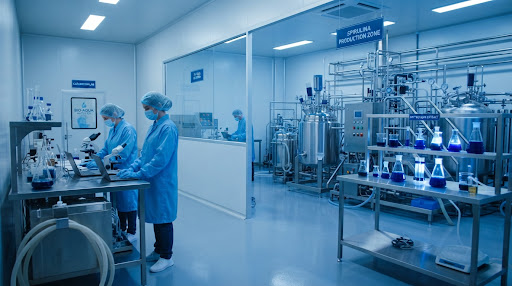
Food-Grade Blue Spirulina & Phycocyanin Manufacturer in China
Blue Spirulina and phycocyanin solutions for beverages, drink powders, smoothies, frozen desserts, confectionery and other food applications. Get support with grade selection, samples, batch documentation and bulk orders.
Ready to evaluate food-grade samples or custom specifications?
E3–E35 Grade Options
Confirmed color values and grades for target formulations.
Application Selection Support
Formulation guidance tailored to pH, heat, and processing.
Batch COA & Documents
Traceable batch documentation, micro, and heavy metal testing.
Bulk & Export Support
Flexible commercial MOQs, export logistics, and supply contracts.
Solve the Key Challenges in Sourcing Natural Blue Ingredients
Choosing Blue Spirulina involves more than comparing product names or prices. Color targets, ingredients, processing conditions, batch documentation and delivery requirements should all be confirmed before bulk purchasing.
Color & Grade Selection
The same grade name may produce different color intensity or application results across different vendors.
Select the appropriate specification according to the target blue shade, formulation, dosage and testing method. Available grades and color values should be confirmed against the current product specification.
Formulation & Processing Fit
pH, heat, light, processing steps and other ingredients may affect the final color stability and performance.
Match the product with the intended beverage, powder, dessert or food application, and verify its performance through formulation and processing tests before production.
Batch Consistency & Documents
Buyers need clear specifications and batch records for internal approval, QA verification, and customs clearance.
Coordinate the applicable specification sheet, ingredient and allergen statements, batch COA, microbiological data, heavy metal data and available third-party test reports for each confirmed product.
Bulk Supply & Delivery Planning
Sample approval does not automatically confirm factory capacity, lead times or continuous repeat availability.
Confirm the required specification, order quantity, packaging, production schedule and export documents before placing a bulk order, then coordinate future purchasing plans for repeat supply.
Blue Spirulina Is Not the Same as Green Spirulina Powder
Blue Spirulina is commonly used as a commercial name for blue-colored ingredients derived from spirulina. It may refer to phycocyanin or a spirulina extract formulation, while green spirulina powder is the dried whole biomass. Always verify the exact product specification before purchasing.
What Does “Blue Spirulina” Mean?
“Blue Spirulina” is a market-facing product name rather than one universal specification. The ingredient composition, carrier, color value, testing method and intended application may vary between products.
Phycocyanin
A blue protein-pigment obtained from spirulina and used as the key blue component in relevant food ingredient formulations.
Bright blue to deep blue, depending on the confirmed grade and specification.
Beverages, drink powders, smoothies, frozen desserts, confectionery and other tested food applications.
Color value, test method, ingredient composition, carrier, dosage and processing conditions.
Spirulina Extract
An extract obtained from spirulina. Commercial products may contain phycocyanin together with a carrier or other formulation ingredients.
Blue powder or blue liquid, depending on the product form and formulation.
Food and beverage coloring, powdered mixes, desserts and other formulation-based applications.
Raw material, carrier, full ingredient list, color value, test method, solubility or dispersion performance and labeling requirements.
Green Spirulina Powder
Dried whole spirulina biomass rather than the isolated blue extract.
Naturally green powder with its own characteristic color and flavor.
Superfood powders, nutrition blends, tablets, capsules and other suitable product formats.
Conventional or organic status, origin, microbiological limits, heavy metals, particle size and intended use.
Do Not Purchase by Product Name Alone
The same commercial name may represent different formulations. Final product selection should be based on the confirmed SKU, specification, sample test and batch documentation.
Need to confirm product specification sheets and COA for your evaluation?
Request Product SpecificationsChoose the Right Blue Spirulina Specification for Your Product
The right specification depends on the color you want to achieve, the ingredients you can use, your processing conditions and the cost target of the finished product. A higher color value is not automatically the best choice for every application.
Define Your Target Color
Start with the blue shade and color intensity required in the finished product. The product base, dosage, transparency and other ingredients may all affect the final appearance.
- Target shade & intensity
- Product base and opacity
- Expected dosage range
- Available color grades
E3, E6, E18, E25 and E35 represent different color directions; available grade & performance must be confirmed by spec.
Check Carrier & Ingredients
Products sold under the same commercial name may use different carriers or formulation ingredients. These differences may affect labeling, dispersibility, dosage and cost.
- Full ingredient list
- Carrier type & proportion
- Allergen statement
- Solubility / dispersion needs
Do not assume that “Blue Spirulina” is single-ingredient or carrier-free. Confirm complete composition.
Match Application & Process
Select the specification according to the intended product, formulation environment and production process. Sample testing should reproduce actual processing conditions closely.
- Beverage, powder, or dessert
- Product pH range
- Heating temp & holding time
- Light exposure & shelf life
Color performance varies under differing pH, heat, light and storage. Verify through application testing.
Balance Performance & Cost
Compare the effective cost in the finished formulation instead of judging only by the price per kilogram. A product with a different color value may require a different dosage.
- Cost per kilogram
- Recommended test dosage
- Cost per finished unit
- MOQ & repeat forecast
The best option balances color performance, formulation compatibility, documentation, and total cost.
What to Tell Us for Product Selection
Share these details with our team so we can identify suitable specifications for sampling and application testing.
Have a new beverage, dessert or food concept ready for sampling?
Send Your Product BriefSix Blue Spirulina Options for Different Formulation Needs
Compare five color-value directions and an application-matched option for food and beverage projects. Final selection should be based on the confirmed ingredient composition, test method, application test, batch documents and current supply information.
Food-Grade Blue Spirulina E3
A lower color-value direction for projects seeking a lighter blue appearance and controlled formulation cost.
Food-Grade Blue Spirulina E6
A practical color-value direction for projects balancing blue color performance, dosage and formulation budget.
Food-Grade Blue Spirulina E18
A stronger color-value direction for formulations requiring a more visible blue appearance after application testing.
Food-Grade Blue Spirulina E25
A higher color-value direction for projects evaluating stronger color performance and application cost at different dosage levels.
Food-Grade Blue Spirulina E35
A high color-value direction for formulations that require concentrated color performance, subject to specification and application verification.
Application-Matched Blue Spirulina Solution
A project-based option for buyers with specific requirements for color value, carrier, ingredient list, packaging or end-use application.
Bring Natural Blue Color to Different Food and Beverage Applications
Blue Spirulina can be evaluated for beverages, drink powders, smoothies, frozen desserts, confectionery and superfood blends. The right grade and dosage depend on the formulation, processing conditions and target color of each product.
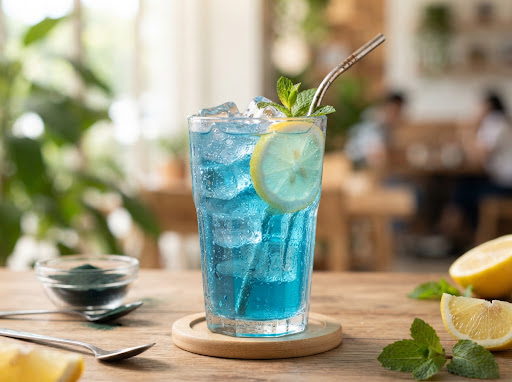
Beverages & Drink Powders
Evaluate Blue Spirulina for ready-to-drink beverages, instant drink powders, flavored water concepts and other beverage formulations.
- pH range evaluation
- Heating temperature and holding time
- Water quality and interaction with other ingredients
- Light exposure and color stability during storage
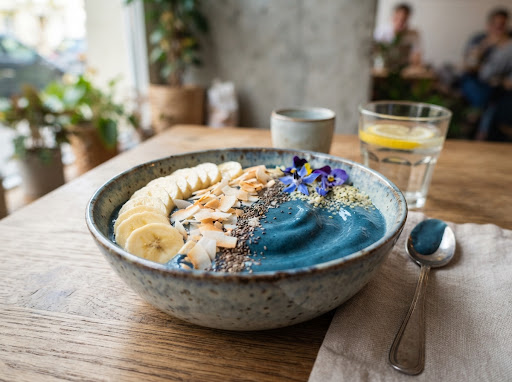
Smoothies & Café Drinks
Create visually distinctive smoothies, cold drinks, blended beverages and menu concepts with application-matched Blue Spirulina.
- Fruit acidity and organic acids
- Dairy or plant-based ingredient interactions
- Mixing sequence during preparation
- Serving temperature and holding time
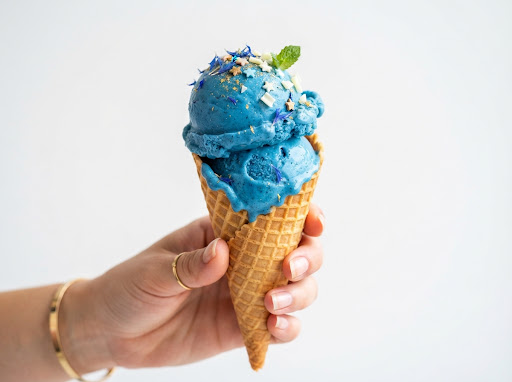
Frozen Desserts
Evaluate blue color performance in ice cream, frozen yogurt, sorbet, frozen bars and other frozen dessert concepts.
- Dairy or non-dairy base formulation
- Product acidity and sugar levels
- Freezing process and air incorporation (overrun)
- Frozen storage conditions over shelf life
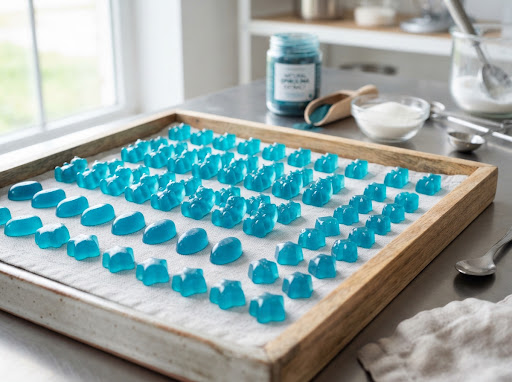
Confectionery & Food Decoration
Explore Blue Spirulina for gummies, coatings, decorative toppings, fillings and other confectionery concepts after process testing.
- Cooking temperature and thermal exposure
- Moisture level and water activity
- Acidic ingredients and addition timing
- Light and transparent packaging storage
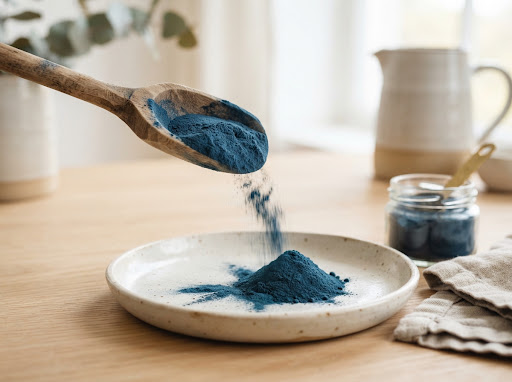
Superfood Powders & Blends
Develop blue superfood powders, powdered beverage blends and multi-ingredient dry mixes for brand and private-label projects.
- Ingredient compatibility and bulk density
- Particle size and dry-blend uniformity
- Recommended serving dosage
- Moisture barrier and light protection in packaging
Verify Blue Spirulina Performance Under Real Application Conditions
Color, solubility or dispersion, pH, light exposure and processing temperature can all affect the final application result. Test the selected product in the actual formulation and process before moving to bulk production.
Powder Color ≠ Finished Product ColorColor Performance
Evaluate the color after the ingredient is added to the complete formula, not only in water or as dry powder.
- Initial color & shade match
- Color intensity & uniformity
- Color retention after processing
- Color stability during storage
Compare the finished product under the same lighting and evaluation conditions.
Solubility & Dispersion
Check how the product mixes into the liquid or dry matrix. Results may involve dissolution, dispersion, or both.
- Mixing time & base temperature
- Lumps or floating powder particles
- Foam formation & aeration behavior
- Sediment, separation & uniformity
Do not describe every product as fully soluble without testing the confirmed SKU.
pH Compatibility
Test the color response within the actual pH range of the finished product after all acidic ingredients are added.
- Initial pH & final product pH
- Order of ingredient addition
- Immediate color shift response
- Color hold over extended storage
Do not apply one universal pH conclusion to every grade, carrier or formulation.
Light Exposure & Packaging
Compare protected and exposed samples to evaluate retail shelf display, light exposure and packaging barrier needs.
- Light source & exposure duration
- Packaging transparency level
- Sample storage environment
- Delta E / visual variance comparison
Evaluate the actual packaging format rather than relying only on an open-container test.
Processing Temperature & Time
Test performance before and after thermal treatments, cooling, freezing, or pasteurization steps used in production.
- Peak processing temperature
- Heating & holding time profile
- Stage of ingredient addition
- Cooling or freezing rate dynamics
Temperature and processing time should be evaluated together, not as separate factors.
From Sample Test to Production Approval
Define the Test Conditions
Record target color, full formula, pH, thermal limits, processing sequence, packaging and storage conditions.
Run Laboratory Formula Test
Compare suitable product grades and dosage levels across preliminary bench-top trials in the complete formulation.
Complete Pilot-Scale Trial
Replicate commercial manufacturing conditions using the selected sample to verify production scalability.
Confirm Specs & Batch COA
Confirm agreed SKU, specification limits, ingredient statement, batch COA and export documents prior to bulk procurement.
Blue Spirulina Supply Solutions for Different Business Models
Manufacturers, brands, distributors and foodservice chains have different requirements for specifications, testing, documentation, packaging and purchasing. Choose the supply path that matches your business model and project stage.
Food & Beverage Manufacturers
For food factories, beverage producers, and contract packagers scaling commercial production.
- Application-compatible grade
- Formulation & process stability
- Batch-to-batch COA records
- Industrial bulk packaging
- Target formula grade screening
- Lab & pilot test sample batches
- COA & allergen documentation
- Production scheduling support
- Product type & target color
- pH & thermal conditions
- Trial vs commercial volume
Nutrition & Superfood Brands
For brands developing blue powders, functional drink mixes, and smoothie products.
- Clean-label product concepts
- Ingredient & carrier confirmation
- Retail pouch or tub packaging
- Private-label feasibility
- Compare grade specifications
- Samples for brand evaluation
- Labeling & ingredient statements
- Custom packaging coordination
- Concept & target sales market
- Carrier / allergen restrictions
- Expected first order volume
Ingredient Importers & Distributors
For natural color distributors, food ingredient wholesalers, and global sourcing partners.
- Broad specification portfolio
- Competitive volume tier pricing
- Complete regulatory documentation
- Reliable repeat order capacity
- Comprehensive color grade range
- Tiered commercial quotations
- Full COA & compliance files
- Export shipping coordination
- Target portfolio range
- Expected purchasing frequency
- Destination port & Incoterms
Foodservice & Beverage Chains
For café groups, smoothie chains, dessert brands, and centralized commercial kitchens.
- Standardized beverage color
- Simple barista preparation SOP
- Resealable foodservice packs
- Scheduled multi-location supply
- Menu application testing support
- Standardized grade & dosage guide
- Durable kitchen pack formats
- Central kitchen sample batches
- Menu concept & drink prep method
- Number of operating locations
- Estimated monthly store volume
Support Across the B2B Purchasing Process
Specific services, packaging, MOQ, production schedule and documentation are confirmed according to the selected product and order requirements.
Spirulina CN presents the confirmed product and manufacturing capabilities. For overseas inquiries, our international sales team coordinates product selection, samples, quotations, contracts, commercial documents, quality-document communication and export orders. The actual manufacturer, manufacturing site and applicable certifications are identified for each supplied product and batch.
Ready to establish a tailored B2B supply plan?
Connect With Our Supply TeamTest, Refine and Prepare Your Blue Spirulina Product for Market
Start with the right sample, verify performance in your formulation, then evaluate packaging and private-label requirements before bulk production. Each project is confirmed according to the selected product, application and order conditions.
Sample Testing
Identify suitable product options and verify initial color, mixing and formulation performance before bulk purchasing.
- Compare available color-value directions
- Confirm sample SKU & basic product info
- Coordinate specification & ingredient details
- Provide samples for benchtop/lab trials
- Record feedback for the next selection step
- Product type & target color shade
- Base formula & processing conditions
- Required sample quantity & shipping address
A tested sample direction for further formulation or pilot-scale evaluation.
Formulation Collaboration
Compare grades, carriers and dosage levels under the customer’s actual formulation and processing conditions.
- Review target color & application parameters
- Compare suitable grades & product compositions
- Evaluate pH, heat, light & mixing dynamics
- Analyze benchtop trial observations
- Guide product selection for pilot scale-up
- Formula type & key active ingredients
- Finished product pH & thermal parameters
- Ingredient restrictions & target cost range
A defined specification and test plan tailored to your manufacturing process.
Final formulation approval and shelf-life verification remain subject to customer's finished product testing.
OEM / Private Label
Evaluate whether the confirmed product can be supplied in the required formulation, packaging and brand presentation.
- Product specification & ingredient validation
- Carrier or formulation adjustment feasibility
- Bulk, foodservice, or retail packaging review
- Private-label branding & artwork coordination
- MOQ, production schedule & delivery planning
- Target specification & packaging format
- Order volume & brand artwork readiness
- Destination market & target launch timeline
A feasibility assessment covering product, packaging, MOQ and project schedule.
OEM and private-label availability must be confirmed for the actual product, factory and packaging format.
From Product Brief to Bulk Order
Share Product Brief
Provide application, target color, processing conditions, ingredient rules and expected volume.
Confirm Samples & Specs
Select suitable sample grades and confirm SKU, specification and available quality records.
Application Testing
Evaluate color, dosage, mixing, pH, heat stability and shelf storage in the actual finished formula.
Custom Feasibility
Review formulation, packaging, artwork, label compliance, MOQ and production timelines.
Approve Order Plan
Confirm final SKU, approved sample, quotation, contract terms, batch documents and export shipping.
What to Prepare Before Starting
Complete project information helps us evaluate suitable samples, available customization options, MOQ and production timing more accurately.
Choose Packaging for Bulk Supply, Foodservice Use or Retail Branding
Packaging should match how the product will be stored, handled, used and sold. Select the packaging direction first, then confirm the material, net weight, labeling, MOQ and production schedule for the actual order.
Bulk Ingredient Packaging
For food & beverage manufacturers, ingredient importers, color distributors, wholesalers & contract packers.
Designed for customers purchasing Blue Spirulina as a production ingredient, distribution item or repacking material.
- Food-grade multi-layer inner moisture liners
- Protective outer carton, kraft bag or fiber drum
- Multiple bulk net weights (e.g. 5kg, 10kg, 20kg)
- Export-standard carton & pallet configurations
- Traceable batch & product identification labels
- Product SKU & required net weight per unit
- Total order volume & warehouse storage conditions
- Palletization & destination-market label rules
Available package types and net weights must be confirmed for the selected SKU and order quantity.
Foodservice Packaging
For beverage chains, café & smoothie shops, artisan ice cream brands, central kitchens & restaurant operators.
Designed for frequent preparation, centralized purchasing and standardized use across kitchens or store locations.
- Medium-size foodservice pouches (500g–2kg)
- Durable, resealable zip-lock moisture barrier bags
- Central kitchen batch-premeasured unit packs
- Portion-management & scoop-friendly designs
- Generic or customer-specific label options
- Daily/monthly usage & number of store locations
- Opening frequency & standard batch dosage SOP
- Storage space constraints & inventory schedule
The packaging format should support storage, repeated opening and standardized use without creating waste.
Retail & Private Label Packaging
For superfood brands, nutrition startups, e-commerce retailers, private-label clients & functional food innovators.
Designed for finished products sold under the customer’s brand, subject to packaging, labeling and order feasibility confirmation.
- Branded stand-up pouches (50g, 100g, 250g)
- PET or glass jars with protective tamper seals
- Single-serve sachets & on-the-go stick packs
- Custom printed artwork or high-res adhesive labels
- Retail display shelf cartons & master shippers
- Ingredient statement, barcode & label text
- Barrier foil needs, printing method & artwork files
- MOQ, target retail launch date & carton specs
Private-label packaging is confirmed only after product, artwork, label content, supplier MOQ and lead times are reviewed.
Choose Packaging Based on How the Product Will Be Used
The lowest packaging cost is not always the best option. Consider product protection, operational convenience, filling loss, transport efficiency and the total cost of the finished product.
Packaging Confirmation Process
Select Packaging Direction
Choose bulk, foodservice or retail packaging according to the intended use and purchasing model.
Confirm Packaging Spec
Review the packaging material, net weight, barrier foil, sealing method, outer carton and transport requirements.
Review Labels & Artwork
Confirm ingredient statement, net weight, storage instructions, lot fields, barcode, artwork and local language compliance.
Approve MOQ & Schedule
Confirm packaging MOQ, unit cost, sampling or proofing requirements, production lead times and delivery schedules.
Label Information to Confirm
Final label content must be reviewed according to the actual product, manufacturing site, contracting entity and destination-market requirements.
From Spirulina Raw Material to Graded Blue Ingredients
Blue Spirulina production involves more than extracting blue color. Raw material identification, processing conditions, ingredient composition, color-value testing and batch records all contribute to a clearly defined product specification.
Process details vary by product and manufacturing site.Spirulina Cultivation & Source
Identify the spirulina raw material, cultivation or sourcing route and the manufacturing chain connected to the supplied product.
- Raw material identity
- Cultivation or sourcing information
- Supplier and batch records
- Applicable raw-material requirements
Harvesting & Pre-Processing
Prepare the spirulina material for the next processing stage according to the defined product and manufacturing procedure.
- Raw material handling
- Time and storage conditions
- Cleaning or preparation steps
- Lot identification
Blue Component Extraction
Extract the blue component from spirulina under defined processing conditions appropriate for the intended product.
- Defined extraction procedure
- Processing time and conditions
- Material-to-process identification
- In-process observation
Separation, Filtration & Concentration
Separate unwanted solids and prepare the blue fraction according to the required product form and specification.
- Separation and filtration controls
- In-process appearance
- Concentration direction
- Foreign-material control
Product Formation & Ingredient Control
Prepare the extract in its intended commercial form and record any carrier or formulation ingredient used in the product.
- Powder or liquid product form
- Carrier and ingredient composition
- Drying or formulation conditions
- Product and batch identification
Color-Value Grading, Testing & Packing
Classify the product according to the confirmed specification and test method, complete applicable batch testing and pack the released product.
- Color-value test method
- Specification comparison
- Batch COA and test records
- Packaging, label identification & storage
Four Core Management Focuses Across the Manufacturing Chain
Raw Material Identification
Connect the supplied product to its confirmed raw material source, production chain and batch records.
Process Control
Record the relevant processing stages and control requirements for the actual product.
Ingredient & Spec Control
Confirm the full ingredient list, carrier, product form, color value and applicable test method.
Batch Traceability
Maintain the connection between product batch, manufacturing info, test records, packaging and orders.
Information Buyers Can Request for a Confirmed Product
The availability and scope of each document depend on the actual product, manufacturer, manufacturing site, certificate holder and batch.
Connect Every Confirmed Product to Its Specification, Test Results and Batch Records
Consistent B2B supply requires a clearly defined product specification, applicable quality testing and batch-specific documentation. Each supplied product should be connected to its actual manufacturer, manufacturing site, lot number and available quality records.
Batch Consistency Means Compliance With the Confirmed SpecificationBatch Consistency
Compare released batches against the same confirmed SKU specification, ingredient composition, color-value method and applicable quality limits.
- Confirmed SKU identity
- Ingredient and carrier consistency
- Color-value test method
- Specification limits & batch release status
Natural-source ingredients may show controlled variation. The key requirement is whether the batch meets the agreed specification.
Quality Testing
Test the parameters required by the actual product specification and coordinate additional information according to buyer's QA and market requirements.
- Product-specific test items
- Defined test methods
- Batch sampling and records
- Internal or third-party test verification
Not every test is automatically included for every SKU or batch. Parameters must follow confirmed specification.
Documented Traceability
Connect the product specification, manufacturer information, lot number, test records, packaging identification and commercial order documents.
- Product code or SKU
- Manufacturer and manufacturing site
- Batch or lot number
- COA, packaging and shipment records
Traceability depends on accurate product and batch identification throughout the complete supply process.
Product Specification
Defines what the confirmed SKU is and the quality requirements it is expected to meet.
- Product name, SKU and description
- Full ingredient or carrier information
- Applicable test items & specification limits
- Stated test methods
- Packaging and storage requirements
One specification may apply to multiple released batches of the same confirmed SKU.
Batch Certificate of Analysis (COA)
Records the applicable test results for one identified production batch or lot.
- Product name, SKU & lot number
- Production & test dates
- Actual batch analytical test results
- Specification limits comparison
- Conformity or QA release information
A COA is batch-specific and must not be presented as the result for every future batch.
Product Identity & Composition
- Product name and physical form
- Ingredient and carrier info
- Color-value grade
- Appearance & test method
Identifies SKU composition and visual criteria.
Physical & Chemical Parameters
- Color value (E-value)
- Moisture & ash content
- Solubility or dispersion limits
- pH in solution
Parameters depend on confirmed product spec.
Microbiological Parameters
- Total plate count limits
- Yeast and mold parameters
- Specified pathogens testing
- Standard pharmacopeia methods
Must follow actual spec and regulatory limits.
Heavy Metals & QA Data
- Lead (Pb), Arsenic (As), Mercury (Hg)
- Cadmium (Cd) limits
- Third-party lab certificates
- Customer-specific extra items
Additional tests subject to project confirmation.
How Product and Batch Records Stay Connected
Confirm SKU & Spec
Identify exact product composition, grade and quality limits.
Assign Lot Number
Connect produced quantity to an identifiable batch number.
Sampling & Testing
Execute analytical testing against specified criteria.
Issue Batch COA
Prepare formal COA referencing batch testing records.
Match Labels & Lot
Connect outer packaging, carton labels, and lot identification.
Link to Order Docs
Attach batch COA and documents to shipping invoice and customs.
Available Quality Information Is Confirmed by Product and Batch
Document availability, issuing entity, scope and validity must be verified for the actual product and order.
International Certifications, Customs Documents & Global Trade Support
Exporting food-grade Blue Spirulina requires authentic manufacturing compliance, transparent origin certification, and professional overseas commercial execution. Our team confirms production capabilities and handles international contracting and regulatory coordination.
Manufacturing Verification + Professional Global Commercial SupportApplicable Certifications
Production standards depend on confirmed manufacturing site and product SKU. Certificates are verified per supplying factory and batch.
- ISO 22000 / HACCP food safety compliance
- Halal and Kosher certification availability
- Organic certification (where applicable to SKU)
- cGMP compliance standards at site level
Certifications must be verified against actual factory legal entity and validity period.
Customs & Clearance Records
Complete export documentation prepared according to destination customs authorities, Incoterms rules and food import regulations.
- Commercial Invoice, Packing List & Bill of Lading
- Official Certificate of Origin (CO / Form E/F)
- Batch-matched Certificate of Analysis (COA)
- Non-GMO declaration & Allergen statements
Special documentation (health cert, phytosanitary) confirmed based on destination port.
Overseas Service
Our international sales team provides professional commercial management, bridging technical Chinese manufacturing with international purchasing standards.
- Multi-currency contracts & secure international payment
- Incoterms management (FOB, CIF, CFR, DDP options)
- Sample dispatch & international courier coordination
- Ongoing batch replenishment & supply security
Our team coordinates factory extraction and international trade.
Dual Entity Architecture: Transparent Manufacturing & Global Execution
Spirulina CN (Production Verification)
Focuses on cultivation site identification, extraction processes, color value grading (E3–E35), in-house testing verification, and physical production management. Confirms product feasibility, factory audits, and batch COA records directly from source facilities.
International Sales Team
Acts as the international commercial partner, coordinating client inquiries, sample fulfillment, commercial quotation, export documentation, customs paperwork, international logistics, and post-sale technical communication across global markets.
Documentation Available for Confirmed Commercial Orders
Document validity, issuing entity name and certification scope correspond strictly to the confirmed manufacturing site and product SKU.
From Initial Inquiry to Bulk Delivery & Sourcing FAQ
We keep B2B purchasing structured, predictable and transparent. Follow our 6-step commercial cooperation workflow, or find quick answers to common technical and procurement questions below.
Standard 6-Step B2B Procurement Journey
Inquiry & Technical Brief
Submit your application type, target blue color shade, processing conditions (temperature/pH), carrier restrictions, and estimated demand.
Grade Selection & Quote
Our team recommends suitable standard grades (E3–E35) or custom solutions, providing product specifications and commercial pricing tiers.
Sample Testing & Approval
Test dispatched benchtop samples in your lab. Verify solubility, shade accuracy, and stability under your actual thermal and shelf conditions.
Contract & Commercial Spec
Lock in confirmed product SKU, signed technical specification, packaging type, Incoterms, payment terms, and delivery timeline with our export team.
Batch Production & QA COA
Controlled manufacturing and filtration. Full batch testing is executed, and a formal batch COA matching product limits is issued prior to packing.
Export Dispatch & Delivery
Sealed packaging, palletization, customs clearance documentation, international freight dispatch, and post-delivery batch follow-up.
Frequently Asked Sourcing Questions
What is the difference between E-value grades (e.g. E18 vs E25)?
The E-value represents the color value (absorbance intensity) of phycocyanin at 618nm. A higher number (e.g. E25 or E35) provides stronger blue coloring per gram, meaning lower dosage is required in your formulation. A lower E-value (e.g. E3 or E6) is ideal for light blue pastel shades or cost-sensitive projects.
Is Blue Spirulina stable under high heat or low pH?
Phycocyanin is a natural pigment-protein complex sensitive to high heat (above 60–70°C for extended periods) and extreme acidic conditions (pH < 3.8). For acidic beverages or baked goods, protective carriers, stabilizing agents, or adding the ingredient after thermal steps may be recommended. We provide application testing support.
What carriers are used in your Blue Spirulina powders?
Commercial Blue Spirulina extract typically requires a food-grade carrier to protect the protein structure during spray drying. Standard options include maltodextrin, trehalose, or sodium citrate blends. Carrier-free pure phycocyanin is also available upon request for specific formulations. Always confirm carrier specs before ordering.
What is your typical Minimum Order Quantity (MOQ)?
For standard bulk ingredient grades (E6, E18, E25), our standard MOQ typically starts at 25kg (one fiber drum), though pilot trial quantities (5kg–10kg) can be arranged for qualifying customers. For custom formulations, specialized carriers, or private label retail packaging, MOQs depend on packaging format and production schedules.
How are samples requested and dispatched?
We provide 20g–50g lab samples for benchtop formulation testing. Please share your product type, target application, carrier restrictions, and company address. Samples are dispatched internationally via DHL/FedEx with technical specification sheets and preliminary test guidance.
Who handles the sales contract and overseas logistics?
While manufacturing and process controls are managed at Spirulina CN’s production base, all international contracts, export documentation, customs formalities, and overseas logistics are executed by our international sales team, ensuring smooth international trade compliance and convenient payment settlement.
Information That Speeds Up Your Inquiry & Quotation
Providing these details allows our commercial specialists to quote accurate pricing and dispatch the most suitable test grade without back-and-forth delays.
Request Blue Spirulina Samples, Batch COA or Custom Quotation
Tell us about your target application, desired color value (E-value), carrier preferences and estimated volume. Our technical food scientists and overseas commercial team coordinate exact SKU feasibility within 24 hours.
Spirulina CN Production & Export SupportB2B Technical Brief & Commercial Inquiry
Fill in your technical criteria below to fast-track sample preparation and tiered wholesale quotation.
Batch-to-Batch Color Stability
Every released lot matches the spectrophotometric absorbance standard specified in contract.
Authentic Production Origin
Traceable from raw spirulina culture ponds to extracted phycocyanin crystallization batch records.
Incoterms Flexibility
FOB, CIF, CFR, or door-to-door DDP overseas fulfillment managed reliably via our international sales team.
Regulatory & Lab Transparency
All safety datasheets (SDS), heavy metal ICP-MS results and microbiological assays verified by accredited labs.