
Make a blue spirulina drink by blending a measured food-grade blue extract into a compatible liquid, then adjusting sweetness, acidity, and serving temperature to protect the color. A bright glass is easy to photograph; making one that tastes good after the ice melts is harder. If you are building a menu item or packaged beverage, the useful question is not simply how blue it looks. It is whether the recipe remains consistent when another person makes it. This guide gives you a starting formula and the checks that turn it into a repeatable drink.
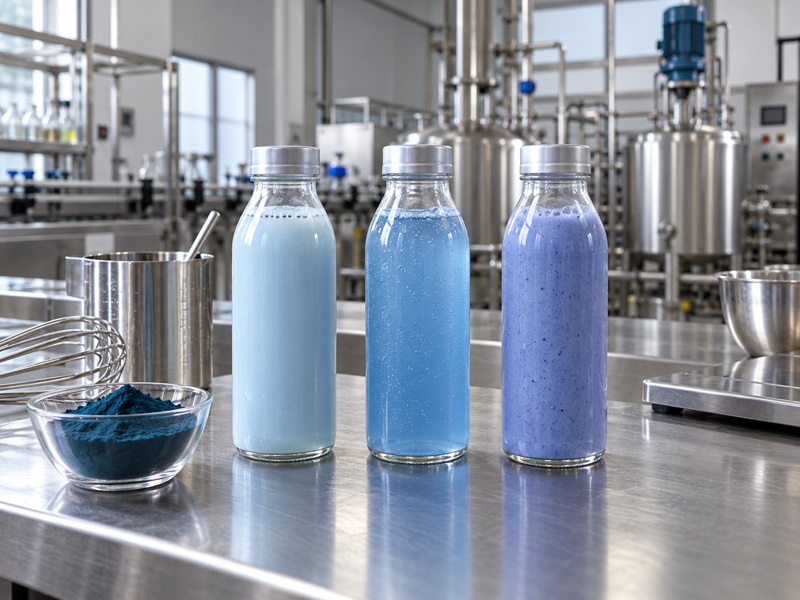
1. What is a practical blue spirulina drink recipe?
A practical blue spirulina drink recipe uses a mild liquid base, a measured amount of blue extract, and a simple mixing sequence. For a single test glass, start with about 250 mL of chilled water or coconut water, a small weighed portion of food-grade extract, and sweetener only if the base needs it. The right dose depends on extract grade and shade, so weigh it. Add acid only after tasting and checking the effect on color.
What should the first test glass include?
Whisk the powder into a small portion of the liquid until smooth, then add the rest and stir. Photograph the glass under consistent light, taste it immediately, and check it again after 15 minutes. A guide to blue spirulina powder explains why two powders can give different results at the same weight. If the drink is served over ice, make a second glass with the intended ice load rather than assuming dilution is harmless.
| First trial | Why record it |
|---|---|
| Exact powder weight | Makes the shade repeatable |
| Base and serving volume | Sets concentration |
| Mixing time | Exposes clumping |
| Color after ice melts | Shows service performance |
The recipe is a baseline to test, not a final commercial formula.
2. Which liquid base makes the blue easiest to see?
A clear or pale liquid usually displays the blue most clearly. Water gives the cleanest visual test, coconut water adds sweetness, and milk alternatives create an opaque pastel blue. Tea, citrus juice, and colored fruit bases may shift the hue or mask it. Choose the base for flavor first, then decide whether the blue ingredient supports that drink. A vivid photo of a base you would never serve is not useful product development.
How should you compare bases?
Make small, equal-volume trials with the same extract lot and dose. Compare appearance, flavor, sediment, and the color of the poured drink against the filled container. The blue drink guide covers clarity and packaging for a transparent base; a smoothie example shows how fruit and opacity change the problem. Do not change base, dose, and sweetener together, because you will not know which change helped.
| Base | Likely appearance | Main trade-off |
|---|---|---|
| Water | Clear blue | Flavor needs attention |
| Coconut water | Translucent blue | Natural variation |
| Oat drink | Pale opaque blue | Separation and flavor |
| Citrus juice | Shifting blue-green | Acid stability |
Select the base that still tastes worth drinking without a color claim.
3. How much blue extract should you add?
Add only enough extract to meet an approved shade and flavor target. Blue extract grades vary in pigment strength and carrier composition, so a universal teaspoon instruction is unreliable. A dark starting color can also fade or change in a finished drink. Run a small dose ladder instead of increasing powder by eye. For a retail concept, record dose per serving and cost per finished liter.
What does a dose ladder reveal?
Prepare a plain control and three measured levels in the same base. Photograph them together, taste each without knowing its dose if possible, and revisit the glasses after the intended serving period. The strongest blue is not automatically the best drink. A composition guide helps you ask whether the grade contains a carrier or other ingredients that also affect the formula. Keep the lot number so another batch can repeat the result.
| Observation | Next question |
|---|---|
| Pale but pleasant | Is a stronger grade available? |
| Bright with off-note | Can the base balance the flavor? |
| Cloudy at high dose | Is dispersion or grade the issue? |
| Blue fades quickly | What do pH and light explain? |
The least expensive recipe is not always the one with the least powder; stability waste matters too.
4. What mixing order avoids clumps?
Premixing the powder in a small amount of liquid usually avoids visible clumps. Fine powders can float on a large glass or stick to a blender wall when added dry at the end. Use a small whisk, milk frother, or controlled shear appropriate to the texture you want. Add the premix to the full base and stir until the shade is even. Do not assume a café shaker and a production tank behave alike.
What should a service instruction specify?
Write down the premix volume, powder weight, mixing tool, time, liquid temperature, and order of additions. Then ask someone who did not develop the recipe to make it from the instructions. If their glass is different, revise the method before printing a menu or sending a formulation to a co-packer. Quick service and shelf-stable production have different requirements. A simple procedure is a better training tool than an attractive hero photo.
Consistency starts with the smallest repeatable step.
5. Can citrus go into a blue spirulina drink?
Yes, citrus can be part of a blue spirulina drink, but its acidity may change the blue and its stability. A squeeze of lemon in a drink made to order is different from lemon juice in a bottle expected to sit for months. The finished pH, not the ingredient name, is what the formulation team should measure. If you want a citrus flavor, test a controlled range of acid levels and check the actual shade after holding. Safety and preservation decisions belong to the qualified beverage manufacturer.
How do you keep a citrus trial useful?
Start with the same base and pigment dose in each glass; change only the citrus level. Record pH, taste, hue, and any haze at the intended service time. The lemonade article gives a fuller discussion of this trade-off. If the color becomes dull, another drink concept may be preferable to simply doubling the pigment. Flavor and color need to work together in the final glass.
| Citrus trial | What to watch |
|---|---|
| No citrus | Baseline blue and flavor |
| Light citrus | Flavor lift and shade |
| Strong citrus | Pigment change and sourness |
Choose the level that is pleasant and reproducible, not just the one that photographs well.
6. What sweetener works without hiding the color?
A clear, mild sweetener is easiest to test when the goal is a clean blue drink. Sugar syrup dissolves predictably in a cold base, while honey or fruit purée brings flavor and its own color. Low- and no-sugar options may change mouthfeel or introduce aftertaste. Sweetness should balance the base rather than cover a problem with the extract. Evaluate the drink at the actual serving temperature, because sweetness perception changes when a drink warms or dilutes.
How can you compare sweeteners fairly?
Set a sweetness target and prepare equivalent small batches instead of adding each sweetener by spoonful. Ask tasters to rank flavor, aftertaste, visual clarity, and the finish after the ice melts. Keep one unsweetened sample to show what the base and extract contribute. If you are making a commercial claim such as “no added sugar,” have the final formula and destination-market label reviewed. Recipe testing and claim approval are separate tasks.
| Sweetener | Benefit | Check |
|---|---|---|
| Simple syrup | Clear and easy to blend | Added sugar level |
| Honey | Distinct flavor | Color and allergen policy |
| Fruit purée | Body and flavor | Haze and shelf life |
| High-intensity sweetener | Low dose | Aftertaste and labeling |
Let the target customer, rather than the color trend, decide the sweetness.
7. Should the drink use ice, milk, or carbonation?
The serving format should follow the intended drinking occasion. Ice gives a clear refreshment but dilutes the formula; milk alternatives create a pastel café drink; carbonation adds acidity and foam. Each needs its own dose and stability trial. Do not copy a still-water recipe into a sparkling bottle without retesting. A recipe that works in a glass may fail at fill, during storage, or after opening.
What changes in each format?
For an iced drink, measure color and taste after the expected melt. For a milk-based drink, test separation, texture, and flavor after standing. For a sparkling drink, measure pH and observe foam, sediment, and the poured appearance. The latte guide is useful for creamy service, while juice development shows why a fruit base is a separate formulation. One “blue drink” label can hide several different production problems.
The format determines which failure you need to catch early.
8. How can a café make the recipe consistent?
A café can make the drink consistent by weighing the extract, standardizing the base, and using a short written method. Staff turnover, different ice loads, and variable fruit or coconut water can alter both shade and flavor. Put a photograph of the approved serving next to the recipe card, with lighting that resembles the bar. Train for a measurable range rather than a perfect social-media color. If the powder is portioned ahead, store it according to the supplier’s handling instructions.
Which checks matter during service?
Check the first drink of a shift for color and taste, then repeat after a new ingredient lot is opened. Use clean, dry scoops or preweighed portions to avoid moisture and accidental overdosing. Record customer complaints that point to inconsistency: grit, pale color, or unexpected flavor. Presentation changes when a recipe is assembled to order. A bar procedure that survives a busy afternoon is more valuable than one that only works in a quiet test kitchen.
| Control | Café practice |
|---|---|
| Dose | Preweighed portion or scale |
| Base | Defined brand or specification |
| Mixing | Timed, documented sequence |
| Appearance | Approved serving reference |
Your customer should get the same drink on a different day.
9. What changes when you bottle the recipe?
Bottling changes the recipe into a regulated manufactured beverage with a shelf-life and safety plan. Processing, oxygen, light, package material, and storage temperature can all alter the blue. A café recipe does not establish that a bottled drink is safe or stable. The producer must validate the process and test the finished package over the proposed shelf life. Ingredient declarations and color-additive permissions also depend on the market and beverage category.
What should the pilot bottle test?
Record the extract addition point, heat exposure, finished pH, fill conditions, and package. Measure appearance, flavor, sediment, and microbiological results at planned intervals. For US color use, review the applicable conditions in 21 CFR 73.530 for the exact food category. A blue drink guide helps frame clear-bottle tests, but the finished drink needs its own evidence. If the color fails, change the process or concept with the formulation team rather than treating more powder as a cure.
| Bottled-drink factor | Evidence to collect |
|---|---|
| Process | Validated safety plan |
| Color | Finished-pack stability |
| Package | Light and closure study |
| Label | Destination-market review |
The bottle must deliver the drink the label promises.
10. When is the recipe ready for customers?
The recipe is ready when a different operator can reproduce a drink that passes taste, appearance, safety, and label checks. A repeatable café version may need only short service-life controls, while a packaged drink needs a validated commercial process and shelf-life file. Keep a signed formula, extract lot specification, preparation method, photographs, and change log. If the base or supplier changes, run the relevant trials again. “Looks blue” is a starting observation, not a release standard.
What belongs in the handoff file?
Include grams per serving, base specification, mixing order, target shade, serving temperature, and any approved claims. For a packaged format, add process, package, shelf-life, and market review records. The contact page can start a discussion about food-grade extract samples and lot documents, while your manufacturer validates the finished drink. Clear handoffs let purchasing, R&D, and operations work from the same recipe. They also make a problem traceable if the next production lot looks different.
| Handoff item | Owner |
|---|---|
| Ingredient specification | Procurement and quality |
| Recipe and method | R&D or bar team |
| Safety and shelf life | Manufacturer and quality |
| Final label | Regulatory team |
Approve the version customers will receive, not only the test glass.
Frequently Asked Questions
Can I put blue spirulina in any drink?
Usually you can test it in many bases, but you should not assume the shade will survive acid, heat, or storage. Check the actual formula and local rules.
What’s the best base for a bright blue drink?
A clear, mild base is the easiest starting point. Water or coconut water makes pigment changes easier to see than an opaque or strongly colored base.
How do I know if I used too much powder?
Compare weighed dose levels for color, flavor, clarity, and cost. A darker glass is not necessarily a better drink.
Can I serve it with lemon?
Yes, for an immediate drink if it tastes good and the shade is acceptable. For bottled lemonade, run a full acidity and stability trial.
Can I use the café recipe for a retail bottle?
No, not without manufacturing, safety, shelf-life, and label validation. The café version is a useful starting formula.
Conclusion
A good blue spirulina drink recipe starts with a measured extract, a compatible base, and an order of mixing that another person can follow. You now know how to test dose, acidity, sweetness, service format, and the extra requirements of a bottle. If you need an extract sample or batch documents for a product concept, contact us with your base, market, and process. We believe a striking color earns its place only when the finished drink is dependable.