
A blue spirulina drink is a beverage colored with a phycocyanin-rich spirulina extract. The blue can be attractive in a clear bottle or café cup, but making it last is a technical problem: acid, heat, light, minerals, carbonation, and packaging can all change the result. If you are developing a blue spirulina drink, this guide gives you a practical path from a bench sample to a product that still looks and tastes right when customers open it.
1. What makes a blue spirulina drink blue?
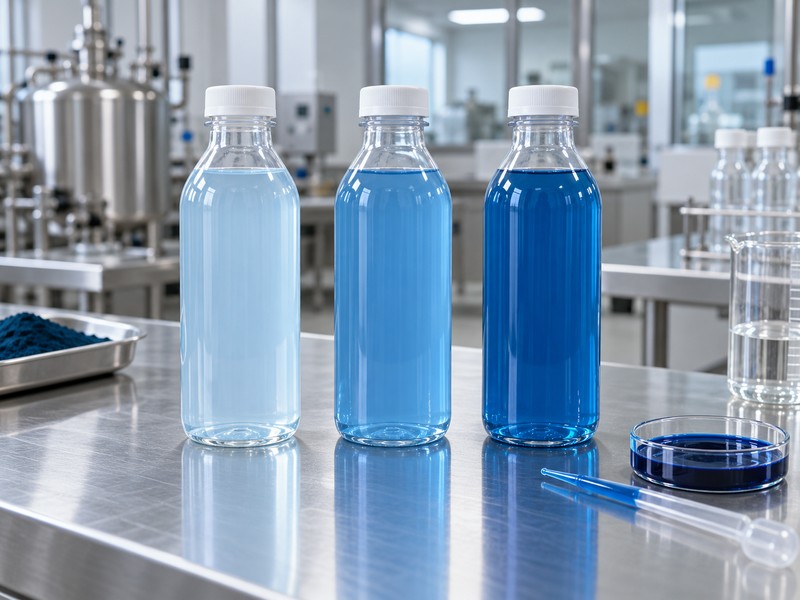
Phycocyanins in a spirulina-derived extract give a blue spirulina drink its color. They are protein pigments, so their behavior depends on the surrounding beverage rather than on powder strength alone. A pale base makes the color more visible; a yellow juice can turn it greenish. If you want a repeatable hue, set a target using a finished-drink reference sample and agreed lighting.
Which ingredient should you request?
Ask for a food-grade blue spirulina extract with a declared carrier, measured color grade, and lot-specific COA. A label such as E18 or E25 identifies a supplier grade but does not automatically state a universal purity percentage. Request the method behind the color value and test a sample in your actual beverage. Whole green spirulina powder is a different ingredient with a different shade and taste.
| Purchasing item | Question to resolve |
|---|---|
| Ingredient identity | Extract or whole biomass? |
| Carrier | Does it fit the beverage label? |
| Color grade | What method defines the result? |
| Lot COA | Does this batch meet the agreed specification? |
These answers should accompany the sample, not arrive after the label is printed.
2. Which drink formats are easiest to develop?
Cold-mixed drinks with a pale base are usually the easiest place to begin. They let you observe the ingredient without severe heat or competing colors. A café drink served promptly has a different risk profile from a carbonated product stored for months in a clear bottle. Choose the commercial format first, then design the trial around its hardest conditions.
How should you compare formats?
Make a short list: made-to-order, chilled ready-to-drink, carbonated, powdered mix, or frozen concentrate. For each, record target pH, processing temperature, intended package, light exposure, and holding time. Then use the same extract lot across prototypes. The result can show whether one grade works across the range or whether separate specifications are needed. Do not extrapolate a café cup directly into a bottled shelf-life claim.
If you are testing an OEM beverage concept, share the full process outline with the ingredient supplier. The production route often matters more than the drink’s marketing name.
3. How does acidity affect a blue drink?
Acidity can alter the color and stability of a blue spirulina drink. Many refreshing beverages are acidic, so a fresh bright-blue sample may fade or shift during storage. The actual outcome depends on the extract and complete formula. Fruit acids, preservatives, mineral salts, sweeteners, and proteins can interact, so a pH number alone is not the whole answer.
What belongs in the acid trial?
Make otherwise identical batches at several pH values inside the safe and commercially acceptable range defined by your team. Add the same measured extract dose and fill the intended package. Record initial color and changes over time under realistic storage conditions. Check taste and sediment too. If the lowest-pH sample fails, test formulation changes before simply increasing the pigment dose; more powder may raise cost or alter flavor without fixing degradation.
| Trial variable | What to record |
|---|---|
| pH | Measured value after filling and during storage |
| Acid source | Citrus, malic, fruit blend, or other system |
| Color | Hue and intensity at each checkpoint |
| Taste | Sourness, aftertaste, and any new off-note |
Keep the safety and preservation design under the beverage quality team’s control.
4. Can a blue spirulina drink be heat processed?
It may be possible, but the specific heat process must be tested in the finished drink. Phycocyanin can lose color under heat, and different time-temperature combinations can produce different outcomes. A cold bench blend cannot predict a hot-filled or pasteurized product. If the color is added after a kill step, the post-process addition itself needs a validated hygienic design.
What should a pilot line measure?
Record the peak temperature, hold time, cooling profile, point of pigment addition, and any exposure to oxygen or light. Compare color immediately before and after processing, then through shelf life. Run a control with no extract to see whether the base itself changes. If the process cannot be changed, evaluate whether a different extract grade, package, or beverage concept is more realistic. A color test should never override the food-safety process.
The supplier can advise on ingredient handling, but the finished product’s validated process belongs to the manufacturer.
5. Does carbonation change the formula decision?
Carbonation changes mouthfeel and acidity, and it can complicate the visual and sensory assessment of a blue spirulina drink. CO2 may lower apparent pH and emphasize a sharp taste. Foaming can also make it harder to judge shade during filling. These effects are part of the finished product, so a still-water sample is an incomplete prototype for a sparkling drink.
How should you test a sparkling version?
Prepare the target formula at the intended carbonation level and package pressure. Evaluate color through the bottle and in a poured glass. Record foam, pH, sediment, flavor after opening, and color after realistic storage. Taste at the expected serving temperature. If the ingredient creates haze or particles, compare mixing sequence and filtration strategy before assuming the powder is unsuitable.
| Carbonated check | Why it matters |
|---|---|
| Filled bottle appearance | What customers see on shelf |
| Pour appearance | What customers see in the glass |
| Foam and sediment | Perceived quality and handling |
| Post-opening flavor | Actual drinking experience |
The winning formula has to pass all four views.
6. How do light and packaging affect blue color?
Light exposure can affect phycocyanin color, making packaging a core part of the formulation decision. A clear bottle shows the blue beautifully but may expose it during shipping and retail display. An opaque package protects the color but hides the visual appeal. There is no universal answer; compare package types under the light and time your distribution route will create.
What is a realistic package trial?
Fill the same batch into the intended clear, tinted, and opaque options, if those are commercially viable. Store them under both dark and retail-light conditions selected by the quality team. Measure color at scheduled checkpoints and photograph samples against a standard background. Keep unopened controls. If clear packaging fails, a stronger powder may not solve the underlying light problem.
For a sourcing discussion, contact the team with the proposed package and shelf-life goal. Those details help match samples to the actual risk.
7. How should a brand set the dose?
Set the dose by the lowest level that achieves the finished-drink color target and passes stability and sensory checks. A blue spirulina drink may need a different dose from the same brand’s smoothie or powder mix. Weigh the extract in grams; scoop volume is too imprecise for scale-up. Calculate cost per filled unit at the successful dose, including any process loss.
What does a useful dose ladder include?
Make a no-color control and several measured doses around the expected target. Keep the base, pH, process, and package fixed. Rate fresh color, color after processing, color at storage checkpoints, taste, and visible sediment. A higher color grade may reduce the required weight, but carrier and price can change the comparison. Keep the tested lot number with the result so a production order can be checked against it; the same logic applies when setting a serving amount.
| Dose result | Decision |
|---|---|
| Pale but stable | Test a modest increase or grade change |
| Correct fresh, fades later | Investigate matrix or packaging |
| Strong but off-taste | Reduce dose or change extract grade |
Do not choose by the brightest fresh sample alone.
8. What quality documents belong in the file?
The file should connect the blue spirulina extract’s identity and safety data to the exact lot used in the drink. Request a signed specification, lot-specific COA, carrier declaration, storage advice, and relevant contaminant and microbiological results. Review labeling and permitted use for the destination market. In the United States, the spirulina extract color regulation defines a particular ingredient and lists food uses; a different market needs its own check.
What should trigger requalification?
Requalify if the supplier changes carrier, grade method, production site, or other features that could affect the finished formula. Also rerun a bridge trial if the drink’s acid system, process, or package changes. Keep an approved retain sample and a photo standard under controlled lighting. This makes it easier to investigate a later batch that looks different.
The about page can introduce supplier capabilities, but certificates and claims must be verified for the exact product and transaction.
9. What should the label avoid promising?
Avoid claiming that a blue spirulina drink treats disease or provides broad immune, heart, or skin benefits without direct supporting evidence and market approval. The extract’s demonstrated role in the formula may be color. Research on isolated phycocyanin, whole green spirulina, or animals cannot automatically prove a consumer benefit from the finished beverage. The same caution applies to organic or “pure” claims if the carrier and supply-chain documents do not support them.
What can the label say clearly?
Describe the ingredient and the sensory experience in terms the market permits. Check the exact ingredient declaration, any color-additive naming requirements, and the product’s full nutrition panel. If a marketing line mentions phycocyanin content, verify that the lot and serving data support it. A bright color can be a persuasive feature without a medical promise.
| Claim idea | Required check |
|---|---|
| Spirulina-derived blue color | Ingredient identity and market rule |
| Organic | Product, site, transaction, and market documents |
| Health benefit | Direct evidence on relevant product and wording |
The label should match the finished drink and its records.
10. How do you scale a successful blue drink?
Scale it by locking the formula, process, package, and ingredient specification together. A bench prototype can change when mixing energy, heat transfer, or filling time changes. The first production trial should include color and taste samples at start, middle, and end of the run. Compare them with the approved reference and keep enough retain samples for shelf-life checks.
What should the launch handover include?
Give operations a measured recipe, addition sequence, process limits, approved ingredient lot and grade, quality checks, package specification, and hold-release criteria. Give purchasing the same supplier specification and a change-control rule. Give marketing the approved claims and product facts. If any part changes, repeat the relevant trial before sale. This avoids the common problem of a vivid development drink turning pale in its first large run.
If you are ready to sample Spirulina CN blue extract, bring the planned pH, process, package, and target shade to the conversation. Those details make the trial useful.
Frequently Asked Questions
Can I put blue spirulina in a carbonated drink?
Yes, if the finished formula passes color, taste, stability, and safety testing. Carbonation changes acidity and sensory perception, so test the packaged sparkling drink.
What is the best packaging for a blue spirulina drink?
The best package is the one that passes your shelf-life trial and fits the visual brief. Compare clear and light-protective options before choosing.
How do I know if heat will fade the color?
Run the intended time-temperature process on the full drink. Measure color immediately and throughout the planned shelf life.
Can I claim the drink boosts immunity?
Only if direct evidence and local rules support that exact claim. A blue color or phycocyanin assay does not establish an immune outcome.
What is the best first test before buying in bulk?
Make a pilot batch in the intended package. Check pH, processing loss, taste, sediment, and color stability with the exact extract lot.
Conclusion
A blue spirulina drink is commercially ready when its color survives the real process and its flavor remains appealing through sale. You now have a way to test acid, heat, carbonation, packaging, dose, and documentation before scale-up. If you are developing a café or packaged beverage, contact us with the formula and target market so we can discuss appropriate samples and quality files. A blue drink earns trust when the bottle matches the approved bench sample.