
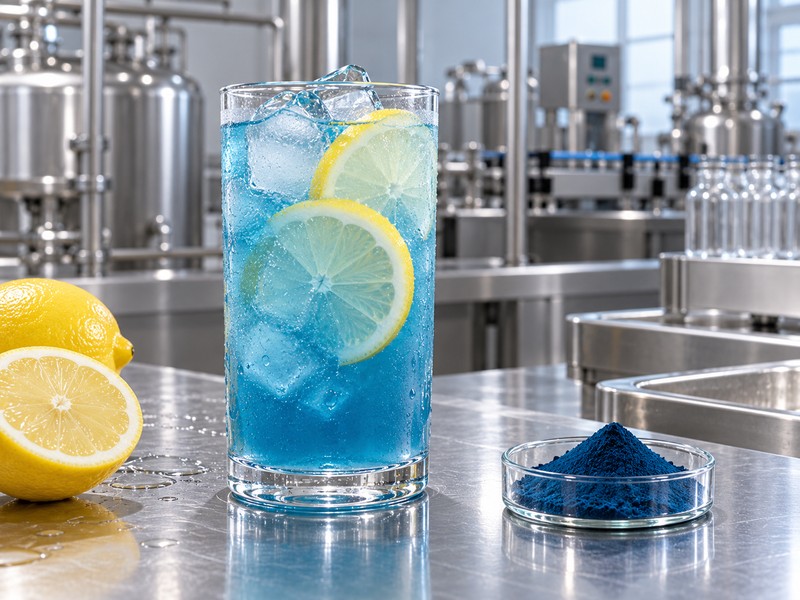
Blue spirulina lemonade is a citrus drink colored with phycocyanin-rich spirulina extract. It sounds like an easy menu idea: lemon, water, sweetener, and a blue powder. The difficult part is that lemon acidity can work against the color you bought the powder to create. A drink may look brilliant when mixed and pale after a short hold. This guide shows how to develop blue spirulina lemonade with a measured recipe, honest color expectations, and a practical path to service or bottling.
1. What makes blue spirulina lemonade blue?
Phycocyanins extracted from spirulina give the lemonade its blue shade. The ingredient is commonly supplied as a powder and may include a carrier, so a product specification matters more than the name on a sample jar. Whole green spirulina powder will not create the same clear blue look. The final color depends on extract grade, dose, lemon concentration, sweetener, water, and time after mixing.
What should be checked before recipe trials?
Request a food-grade blue extract specification, carrier declaration, storage advice, and lot-specific COA. Ask how color grade is measured; E labels do not state a universal purity percentage. Confirm the market permits the planned use of the ingredient and the intended label wording. Then keep the lot number attached to every test cup and recipe note.
| Ingredient detail | Why it affects the drink |
|---|---|
| Color grade | Determines likely dose range |
| Carrier | May alter flavor, label, or clarity |
| Lot identity | Connects trial with quality data |
| Storage advice | Protects the sample before mixing |
A blue ingredient can only be judged fairly when its identity is clear.
2. Why is lemon acidity a formulation challenge?
Lemon acidity can reduce phycocyanin color stability, so blue spirulina lemonade needs a real pH and holding trial. The exact result depends on the full drink, not lemon juice alone. A more acidic recipe may taste refreshing while losing blue; a less acidic one may hold color but no longer taste like lemonade. Food safety and product identity set boundaries around any pH change.
How can you test the balance?
Prepare several lemon levels inside a range your beverage team considers safe and suitable. Keep the extract dose, sweetener, process, and cup or package constant. Measure pH and record color immediately, after the normal service wait, and after longer storage if applicable. Taste blind as well as viewing the color. If a color adjustment ruins the citrus taste, the ingredient choice or product concept needs another look.
Do not raise pH solely to preserve color without a validated safety and preservation plan. The quality team should approve the finished beverage process.
3. Can you make lemonade blue without making it too sweet?
Yes, but sweetness must be developed alongside acidity and color rather than added to hide a weak formula. Sugar can soften sourness and a mild extract note, but excessive syrup changes the nutrition panel and customer expectation. A vivid blue drink often looks like candy, so tasters may expect more sweetness than the recipe contains. Blind and visible tasting can reveal that effect.
What is a useful sweetness trial?
Make a measured sweetness ladder at one lemon level and one extract dose. Have tasters rate sourness, sweetness, aftertaste, and overall appeal without seeing the drink first. Then show the same samples and ask whether expectations changed. Keep the best two formulas for the color-holding trial. A sweetener that works in a café cup may behave differently in a bottled drink after weeks of storage.
| Taste result | Next move |
|---|---|
| Sharp but clean | Small sweetness adjustment |
| Sweet but flat | Rebalance lemon before adding pigment |
| Earthy finish | Compare lower dose or another grade |
Taste should guide the recipe; the blue should support it.
4. How much blue extract should you add?
Add the lowest measured dose that reaches the target shade after the intended holding period and passes the taste test. A teaspoon is unreliable because powder density and scoop technique vary. Stronger grades may need less powder, but a lower use level does not automatically mean lower cost. Calculate ingredient cost per served glass or saleable bottle at the dose that works.
What does a dose ladder show?
Prepare a no-color control and several weighed extract levels in the same lemonade base. Record fresh shade, shade after holding, taste, sediment, and cost. If every level fades quickly, the problem is likely not solved by simply increasing the dose. Change one variable at a time, such as the acid blend, addition sequence, or package, and document the result. Keep photographs under consistent lighting.
The blue spirulina range can provide candidate grades, but your lemonade trial decides which one fits.
5. When should the extract be mixed in?
Mix the extract at a point that gives even color without exposing it to unnecessary heat or long acidic holding. For a café drink, a measured blue premix can make service faster. For bottled lemonade, the addition sequence must fit a validated production and filling process. Adding the extract after a preservation step is not a shortcut unless the downstream handling is designed and controlled for safety.
How can staff avoid blue clumps?
Disperse a weighed amount into a small compatible liquid portion, then blend it into the full drink. Compare this with direct powder addition in a realistic service trial. Check the bottom of the cup and pitcher for sediment, and inspect whether blue residue remains on equipment. If a premix is held during service, define its safe holding time and mix it consistently before dosing.
| Process option | Main check |
|---|---|
| Direct addition | Specks, foam, and uneven dose |
| Liquid premix | Premix stability and sanitation |
| Batch preparation | Color and flavor over the service window |
The right sequence is the one staff can repeat under normal workload.
6. Does sparkling water change the result?
Sparkling water changes mouthfeel, perceived acidity, and sometimes the appearance of blue spirulina lemonade. Carbonation can make a sour note feel sharper, while foam and bubbles alter how the shade looks in a glass. A still-water trial is therefore only a starting point for a sparkling menu item. Test the exact carbonation and serving method.
What should a sparkling trial include?
Mix the blue base as planned, add carbonated water at a measured ratio, and observe shade immediately and after the bubbles settle. Taste at the intended temperature and after some ice melt. Check foam, separation, and how the drink looks through the actual cup or bottle. If the product will be canned or bottled, use the planned package and pressure in a production pilot.
For a packaged version, contact the supplier with the planned pH, carbonation, process, and shelf life. Those facts make sample recommendations more useful.
7. Can you create a layered blue-and-yellow lemonade?
You can create a layered drink by controlling liquid density and pouring sequence, but the layers may disappear as soon as the customer stirs or carries the cup. A blue layer beside yellow lemon can turn green after mixing. This may be an appealing effect if the menu describes it accurately. It should not be presented as a permanently bright-blue lemonade when the actual drink becomes another color.
How should the visual be tested?
Prepare the drink in the cup and lid used for sale. Photograph it at service, after several minutes, and after a realistic takeaway journey. Taste both layered and stirred versions. If syrup is used to hold a layer, include it in nutrition and cost calculations. The final appearance in the customer’s hand matters more than the first demonstration behind the counter.
| Moment | What it tells you |
|---|---|
| Fresh pour | Layer definition and service speed |
| After stirring | Final hue and flavor |
| After transport | What takeaway customers receive |
A visual promise should survive the normal way people drink it.
8. How long will the blue color last?
The blue color lasts only as long as the exact recipe, process, package, and storage conditions allow. A made-to-order drink may need a short service hold; a retail bottle needs a validated shelf life. Heat, acid, light, and oxygen can affect phycocyanin. A supplier’s general storage claim for powder cannot establish the finished lemonade’s stability.
What is the right shelf-life experiment?
Fill the intended package with a production-representative batch and store samples under conditions defined by the quality team. At planned checkpoints, measure color and pH, taste, inspect for sediment, and complete safety tests. Keep unopened controls. If the formula changes, restart the relevant assessment. A drink can keep its blue hue while failing another quality or safety requirement, so color is only one release criterion.
The factory and supply information can support a sourcing discussion, but only finished-product data can support the shelf-life claim.
9. Which claims should appear on the menu or label?
Menu and label claims should describe the actual ingredient and complete beverage without implying unproven health effects. A blue extract‘s main verified role in lemonade is color. A study of isolated phycocyanin or whole spirulina does not prove that a small serving of lemonade boosts immunity or treats inflammation. Organic and “pure” statements also need product-specific evidence, especially when the powder contains a carrier.
What does the regulatory team need to see?
Give them the ingredient statement, COA, planned use level, finished formula, target market, and proposed wording. The current U.S. spirulina extract regulation defines the color ingredient and certain uses; it does not grant broad permission for every market or medical claim. If the drink is sold across borders, review each market separately.
| Claim idea | Evidence question |
|---|---|
| Blue from spirulina extract | Does the ingredient declaration support it? |
| Organic ingredient | Does the exact SKU and supply chain qualify? |
| Caffeine-free | Are all recipe components caffeine-free? |
| Health benefit | Is there direct evidence for the finished use? |
Write the menu after the formula is approved, not before.
10. What makes the lemonade ready to serve or sell?
The lemonade is ready when its color, taste, dose, safety, and service process meet a written product brief. A café should know how to measure powder, how long a batch can be held, and what a good cup looks like. A bottler needs a qualified extract lot, validated process, package, shelf-life report, and label review. Both need a way to handle a new powder grade or fruit lot without guessing.
What belongs in the final recipe file?
Keep the lemon and sweetener ranges, water specification, extract grade and dose, mixing sequence, target pH, color reference, sensory notes, hold limit, supplier documents, and change-control rule. Train staff or operators on the measured procedure. Then check several real service or production runs against the approved reference. A photo is useful evidence only when it is tied to the recipe and timing.
If you are planning blue spirulina samples, bring the lemonade base and distribution plan to the discussion. The target is a drink that keeps its appeal after the first pour.
Frequently Asked Questions
Can I add blue spirulina directly to lemon juice?
You can test it, but direct contact with strong acidity may change the color. A measured premix and full-formula trial give a more useful answer.
What is the best lemon-to-water ratio for blue color?
There is no universal ratio. Choose a safe, good-tasting lemonade first, then test color across the practical pH range of that recipe.
How do I know whether the blue will fade in a bottle?
Run a finished-product shelf-life trial in the intended package. Check pH, shade, flavor, and safety over the planned sale period.
Can I use sparkling water?
Yes, but test the final carbonated drink. Bubbles and acidity change both taste and appearance.
What is the best way to avoid blue specks?
Weigh the powder and make a small, controlled premix. Check dispersion in the full drink and after the normal service hold.
Conclusion
Blue spirulina lemonade works when the citrus taste and blue appearance survive the same recipe. You now have a way to test acidity, sweetness, dose, mixing, carbonation, holding, and label claims. If you are developing a café drink or retail bottle, contact us with the formula and target market so we can discuss samples and documents. Color is only useful when it lasts long enough for the customer to enjoy it.