
Make blue spirulina energy balls by blending a measured blue extract into a pale, sticky oat or coconut mixture, then portioning and chilling the balls. A blue snack can turn muddy when dates or cocoa dominate the base, and a pretty sample may crumble after a day in its pack. You need a recipe that rolls cleanly, tastes good, and keeps its color through service. This guide covers the binder, dose, storage, nutrition, and buying questions behind a repeatable batch. The blue spirulina energy balls described here use the extract for color; the nuts, oats, seeds, and sweeteners account for most of the food’s energy and nutrients.
1. What are blue spirulina energy balls?
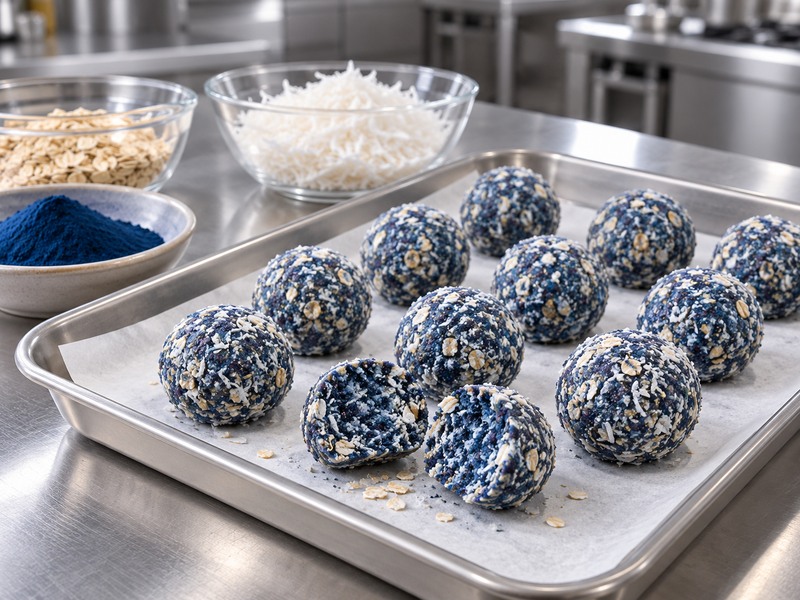
blue spirulina energy balls are no-bake bite-size snacks colored with blue spirulina extract and held together by a moist binder. Their texture comes from the balance of dry particles and sticky ingredients, not from the pigment. A light oat-coconut base shows blue more clearly than a cocoa or dark-date mixture. For a café tray, the ball must stay intact when picked up; for a sealed pack, it must survive shipping and the intended shelf period.
What should the first test batch contain?
Start with one dry base, one binder, a small amount of extract, and an uncolored control. Weigh every ingredient before rolling so you can diagnose a sticky or crumbling batch. Chill both samples under identical conditions and compare them the next day. If the control will not hold together, change the binder ratio before adjusting color.
Keep toppings out of the first trial so you can see the true shade and surface texture.
- Record the binder-to-dry ratio.
- Make an uncolored control.
- Test a ball after a full chill.
| Checkpoint | What to record |
|---|---|
| Dry base | Oat, coconut, or nut particle size |
| Binder | Moisture and stickiness |
| Serving | Single bite or larger snack |
The first batch should answer whether the snack works before color becomes the main discussion.
Key Takeaway: Build a stable plain ball, then color it.
2. Which base keeps the blue visible?
Blue spirulina energy balls look brighter when the dry ingredients are pale and the binder does not turn the mixture brown. Oats, coconut, cashew, and white seed butter can make a light canvas. Dates, cacao, and dark nut skins push the shade toward navy or gray. That may fit a different concept, but it will not match a clean sky-blue product photograph.
Taste the light base on its own before assuming the pigment will cover a weak flavor. The recipe collection shows other cold applications you can compare with this base.
How do you choose without wasting powder?
Mix miniature uncolored batches with each candidate base and binder. Photograph the cut center as well as the exterior, since a pale coconut coating can hide a dark core. Add the same extract dose to the two best bases and compare them after chilling. Check whether the chosen nut or seed introduces a required allergen statement.
A slightly warmer blue may be acceptable if the ball has a better bite and a simpler ingredient list.
- Compare cut centers, not only coatings.
- Keep extract dose identical.
- Check nut and seed declarations.
| Checkpoint | What to record |
|---|---|
| Coconut | Light appearance, distinct flavor |
| Oats | Soft texture and grain |
| Dates | Strong binder, darker color |
The visible center tells you whether the blue is part of the snack or only a surface trick.
Key Takeaway: Choose the base from a cut-and-taste trial.
3. How much blue extract is enough?
Dose blue spirulina energy balls by weight until the chilled center reaches the target blue without a flavor penalty. Supplier grades vary, and dark binders can demand more powder than a light base. Adding extract repeatedly to rescue a brown formula may raise cost without yielding a clean blue. A dose ladder gives you a defensible choice and a reference for later lots.
What belongs in the dose ladder?
Use one base batch divided into three equal portions. Add low, middle, and high weighed extract doses, then roll balls at the same portion weight. Photograph the cut centers under constant light immediately and after the planned chill. Taste them blind and calculate extract cost per ball.
If a higher dose brings no visible gain after chilling, set the lower dose as the pilot specification and address the base instead.
- Report extract grams per kilogram.
- Keep ball weight and coating constant.
- Taste the cut center blind.
| Checkpoint | What to record |
|---|---|
| Low | Minimum visible blue |
| Target | Approved shade and flavor |
| High | Marginal gain and cost |
The dose that wins in a cut chilled ball is more useful than a scoop size from another recipe.
Key Takeaway: Approve color from the finished snack, not the mixing bowl.
4. What makes the mixture roll cleanly?
Blue spirulina energy balls roll cleanly when the binder moistens the dry mix without leaving free syrup on the surface. Too little binder makes a ball crack; too much makes it smear on gloves and packaging. Chilling can firm some fat-based binders, so judge the mixture both at rolling temperature and at service temperature. Ingredient particle size also matters: large oat flakes need more binding than fine oat flour.
The ingredient guide can help you check what the purchased extract contains.
How can you correct a failing batch?
Weigh the broken mixture before adding anything. For a crumbly batch, add binder in measured increments; for a sticky batch, add the chosen dry ingredient gradually. Roll a few test pieces after each change and record their weight, diameter, and handling feel. Then chill and repeat the squeeze test.
Avoid fixing every problem with coconut coating, which can disguise a weak core but leave the consumer with a falling-apart bite.
- Measure each correction.
- Check at rolling and service temperatures.
- Cut a ball to inspect internal binding.
| Checkpoint | What to record |
|---|---|
| Cracks | Binder short or particles coarse |
| Smears | Binder excess or warm fat |
| Soft center | Chill or formulation issue |
A coating cannot make a structurally weak recipe ready for distribution.
Key Takeaway: Lock the binder ratio before testing packaging.
5. Can you make them without nuts?
blue spirulina energy balls can be made without nuts by using oat, seed, or coconut systems, provided every ingredient and facility control supports the claim. A nut-free recipe is not automatically safe for someone with a nut allergy if ingredients or equipment carry cross-contact risks. Sunflower seed butter has a different flavor and color from cashew butter. Test it as its own formula rather than assuming a one-for-one swap will preserve texture and shade.
What should an alternative-base trial check?
Prepare small batches with the same dry-to-binder weight and change one binder at a time. Compare rolling pressure, color, flavor, and next-day firmness. Review supplier allergen statements for the extract, inclusions, and coatings, and check your site’s cross-contact controls. The allergen review provides related questions for the blue ingredient.
If you sell a nut-free claim, have the label and production process reviewed for the target market.
- Trial each binder as a new recipe.
- Read ingredient and facility allergen records.
- Check next-day firmness and color.
| Checkpoint | What to record |
|---|---|
| Seed butter | Flavor and gray tint |
| Oat binder | Softness and moisture |
| Coconut | Texture and distinct taste |
The claim depends on the complete supply chain, not on removing nuts from one mixing bowl.
Key Takeaway: Validate both the formula and the cross-contact controls.
6. Which flavors work with the color?
Blue spirulina energy balls pair well with mild vanilla, coconut, and pale fruit flavors that do not overpower the blue base. Cocoa turns the mixture dark, while acidic fruit concentrates can shift or bleed at contact points. A little salt can sharpen flavor without adding color. Select flavor for the customer first; blue pigment does not compensate for a dry, bland snack.
The cookie guide offers another way to test flavor inclusions.
How can you test flavor without hiding defects?
Taste the plain base and the colored version side by side. Then add one flavor ingredient at a time, measuring both its weight and effect on the cut color. If using freeze-dried fruit, inspect the ball after a day for speckle bleeding and moisture pickup. A citrus zest may taste fresh yet needs a color-contact check.
Keep a small panel’s notes on sweetness, aftertaste, and chew instead of asking only whether the sample looks appealing.
- Test vanilla and coconut at measured levels.
- Inspect fruit speckles after holding.
- Keep flavor and color notes separate.
| Checkpoint | What to record |
|---|---|
| Vanilla | Neutral flavor support |
| Berry powder | Color bleed and acid |
| Cocoa | Dark base and changed concept |
A flavor trial should improve the bite without silently changing the color target.
Key Takeaway: Choose flavors from a tasted, held sample.
7. How should you store the finished balls?
Store blue spirulina energy balls under conditions validated for their moisture, binder, package, and intended sale period. A home refrigerated snack and a shelf-stable packaged product require different evidence. Moist binders can support microbial growth, and clear packaging may expose the pigment to light. Freezing may help a home prep routine, but it can change texture when thawed.
Do not assign a commercial shelf life from a recipe post.
What should a holding trial record?
Pack the balls in the intended film or tray and hold them under the proposed temperature and light conditions. Check appearance, odor, texture, surface moisture, and package condensation at planned intervals. For sale, validate microbiological safety and water activity through the site’s food-safety process. Keep an uncolored control and a sealed retention sample so a color change can be distinguished from broader spoilage or binder failure.
- Use the final package in the trial.
- Inspect condensation and surface moisture.
- Validate safety for commercial sale.
| Checkpoint | What to record |
|---|---|
| Refrigerated | Texture and moisture change |
| Frozen | Thaw appearance and bite |
| Ambient | Requires stronger stability evidence |
Color retention and food safety have separate pass criteria.
Key Takeaway: Set storage instructions from the complete product, not the powder’s shelf life.
8. Do they deliver meaningful protein?
Blue spirulina energy balls may contain protein, but most of it comes from nuts, seeds, oats, or added protein ingredients. The extract is generally a small color addition and should not carry the nutrition story by itself. Energy balls can be calorie dense because of fats and sweet binders; portion size matters. Calculate the actual recipe before making high-protein, low-sugar, or other nutrient claims.
How do you build an honest panel?
Enter each weighed ingredient and its supplier nutrition data into a recipe calculation. Include the coating and the real packed weight of one ball. Compare a single-ball serving with the number customers actually eat. The protein explanation helps separate extract from whole biomass.
If your product uses a plant protein powder, test its effect on binding because a dry addition can turn a previously stable mixture crumbly.
- Calculate per ball and per pack.
- Include binder and coating sugars.
- Verify claims in the destination market.
| Checkpoint | What to record |
|---|---|
| Nuts or seeds | Protein and fat |
| Binder | Often sugar and moisture |
| Extract | Small color contribution |
The serving calculation tells a clearer story than the color name on the front of pack.
Key Takeaway: Credit nutrients to the ingredients that supply them.
9. How can a bakery scale the recipe?
A bakery can scale blue spirulina energy balls by standardizing premix, mixing time, portion weight, and chill conditions. Powder dumped into a large sticky mass can create dark pockets. A premix in part of the binder distributes color more evenly, but the extra liquid must be included in the recipe. Portioning equipment may compress the mixture differently from hand rolling, changing the bite.
What should the first scale trial measure?
Premix the extract with a measured part of the binder, then add it at a defined stage. Sample the first, middle, and last portions for weight, cut color, and firmness. Track mixer time and batch temperature, since warm fat can make a ball feel stickier at filling. Pack trial portions in the intended material and examine them after transport simulation.
Keep a retained sample from each extract lot to catch any shift in color or handling.
- Define a pigment premix step.
- Sample early and late portions.
- Compare hand and machine texture.
| Checkpoint | What to record |
|---|---|
| Dark pockets | Premix dispersion |
| Weight drift | Portioning control |
| Soft packs | Temperature or compression |
A small line trial reveals problems a hand-rolled kitchen sample cannot show.
Key Takeaway: Scale the process alongside the formula.
10. What should buyers request from a supplier?
Buyers of blue spirulina energy balls should request the exact blue extract specification, carrier declaration, lot certificate, and food-safety documents. Tell the supplier the ball’s binder, processing temperature, and planned packaging. Ask for a sample large enough to test both appearance and stability. The cheapest powder per kilogram may be expensive per acceptable ball if more is needed to overcome a dark base.
Which details make a purchase decision sound?
Request the ingredient statement, allergen information, color-strength method, microbiological limits, and recent lot-level certificate. Calculate cost from the dose that passes your cut-color trial, not from a list price alone. Compare lot-to-lot consistency and lead times if you will use the ingredient in a regular production schedule. Share photographs of a passing ball and a failed dark-center sample so the supplier understands the application.
- Verify the carrier and allergen statement.
- Compare cost at the approved dose.
- Keep a lot and shade reference.
| Checkpoint | What to record |
|---|---|
| Specification | Color strength and carrier |
| COA | Lot-specific quality results |
| Pilot | Cut color and pack stability |
An ingredient decision should survive the next batch as well as the first photo shoot.
Key Takeaway: Qualify the powder in the finished, packed ball.
Conclusion
A blue energy ball earns its place in a snack range when the center is attractive, the texture holds, and the ingredient story is accurate. A pale base, measured binder, weighed extract, and real package test give you a route to that result. If you are developing a retail snack, contact us with your base recipe and target shelf conditions so we can help you test an appropriate extract grade. We believe a natural color earns trust only when the finished food performs in the customer’s hand.
FAQ
Can I make blue spirulina energy balls without dates?
Yes. Use another binder, then retest rolling, color, and moisture because dates also supply structure.
What’s the best base for a bright blue center?
A pale oat or coconut base is a strong starting point. Choose by the cut-color and taste test.
How do I know if the mixture is too wet?
Roll a test ball. Smearing on gloves or leaving free syrup in the pack signals excess binder or a warm mixture.
Can I freeze the balls?
You can for home prep, but check thawed texture and condensation. Commercial storage needs its own validation.
How do I know if they are high in protein?
Calculate the complete recipe per sold serving. The blue extract alone is unlikely to justify that claim.