
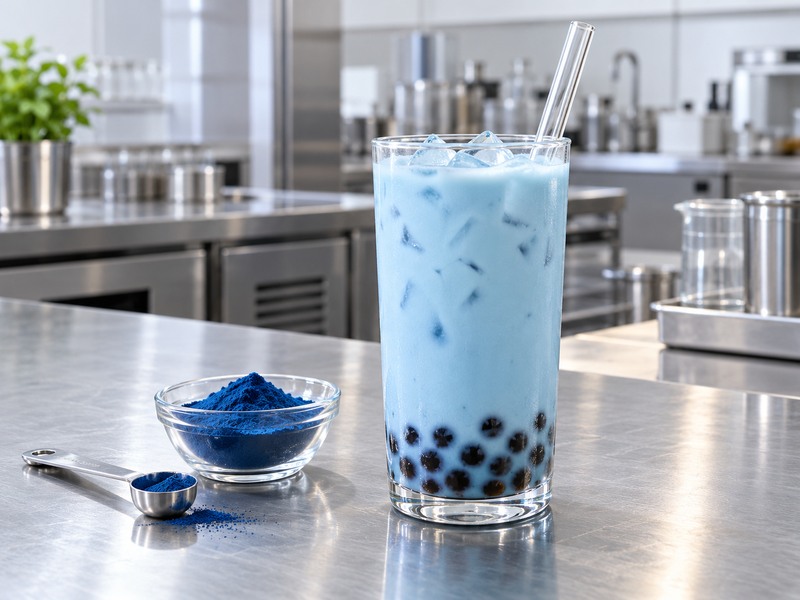
Make blue spirulina boba by coloring a cold, pale milk or plant-milk drink with a measured blue extract, then adding freshly cooked and cooled tapioca pearls. The drink can look brilliant at the counter yet become diluted, gray, or unpleasantly chewy during delivery. You need a formula that separates the questions of blue color, milk flavor, pearl texture, and holding time. This guide shows how to test each one before putting the drink on a menu or into a packaged format. The blue spirulina boba here gets its color from extract; the milk, syrup, and pearls drive most of its nutrition and calories.
1. What is blue spirulina boba?
blue spirulina boba is a milk or plant-milk drink colored with blue spirulina extract and served with tapioca pearls. The blue ingredient colors the liquid, while cooked pearls supply the characteristic chew. This distinction matters if you are comparing a café drink with a ready-to-drink bottle, because pearls change texture during holding. Decide whether you are selling a made-to-order glass or a packaged beverage before choosing the recipe and claims.
What belongs in the first drink brief?
Define cup size, base milk, sweetness, pearl weight, ice, service time, and the target blue. Prepare a color-free control with the same syrup and pearls to reveal any flavor or texture defects. Record whether customers will drink it through a wide straw or eat the pearls by spoon. A pale drink with a separate pearl layer gives you a clear starting point; dark tea or syrup makes a bright blue harder to achieve.
- Set the sold cup size and pearl portion.
- Choose made-to-order or packaged service.
- Make a matching uncolored control.
| Checkpoint | What to record |
|---|---|
| Blue liquid | Extract grade and milk opacity |
| Pearls | Chew and service window |
| Cup | Ice, straw, and presentation |
A cup specification gives the color test a practical target.
Key Takeaway: Design the drink around its real service format.
2. Which milk base shows blue clearly?
Blue spirulina boba looks clearest in a pale milk base that accepts the extract without a beige or gray cast. Dairy milk, oat milk, coconut milk, and other plant bases differ in opacity and taste. A darker oat base may need more extract yet still look dull, while coconut can dominate the flavor. Check allergens and dietary positioning before making the final selection.
The best base must remain pleasant after ice dilution, not only at the mixing bench. The recipe collection shows other cold applications you can compare with this base.
How should you compare milk candidates?
Color equal volumes of two or three chilled bases with the same weighed extract dose. Add the same syrup and ice weight to each cup, then photograph immediately and after the expected customer wait. Taste through a straw so you experience the intended balance. Check whether the milk separates around the pearls.
Record the exact brand or specification used; switching a plant-milk product can change the color even if its label names the same ingredient.
- Use one extract lot and dose.
- Hold syrup and ice constant.
- Taste after the expected wait.
| Checkpoint | What to record |
|---|---|
| Dairy | Pale body and milk allergens |
| Oat | Beige cast and sweetness |
| Coconut | Distinct flavor and fat behavior |
A slightly less vivid cup can win if it drinks better after ten minutes with ice.
Key Takeaway: Choose the base from a complete served drink.
3. How much blue powder should you use?
Dose blue spirulina boba by weight, then judge the shade in the iced cup rather than in a concentrated premix. Color strength varies by extract grade, and ice dilution changes what the customer sees. Adding more powder to a tan or acidic base may not solve the underlying problem. A measured dose ladder lets you compare color, flavor, and ingredient cost for the exact cup size.
What is a fair dose ladder?
Make three equal milk bases with low, target, and high doses of one extract lot. Use identical pearl and ice weights, photograph the cups at service and after the likely drinking interval, and taste blind. Calculate pigment cost per cup at each level. Keep the highest dose only if customers can see and taste a useful improvement.
Record the chosen dose in grams per liter of liquid and per sold cup so both kitchen and purchasing teams have the same number.
- Measure powder instead of using a spoon guess.
- Compare cups after ice dilution.
- Calculate cost per served cup.
| Checkpoint | What to record |
|---|---|
| Low | Pale service color |
| Target | Approved shade and taste |
| High | Extra color versus cost |
A recipe number tied to a real cup is more durable than a photograph of blue liquid.
Key Takeaway: Select the dose after pearls and ice are included.
4. When should you add the extract?
Add blue spirulina boba extract to a cool milk base after hot pearl cooking, with an approved hygienic mixing step. Boiling the pearls and heating the pigment together is unnecessary for a made-to-order drink and can risk color loss. Dry powder added straight to a cold full cup may clump or leave blue flecks. A small cold premix is easier to standardize across staff and shifts.
The ingredient guide can help you check what the purchased extract contains.
What sequence should the bar use?
Cook the pearls according to their supplier instructions and hold them under the operation’s food-safety plan. Separately disperse the weighed extract in a small amount of cold milk or water that is already counted in the recipe. Blend that premix into the remaining milk and syrup, add ice, then assemble with the measured pearl portion. Taste and inspect at the planned handoff time.
For a commercial packaged drink, late addition must be evaluated within the validated process rather than copied from a café workflow.
- Keep pigment out of the pearl boil.
- Premix in measured cool liquid.
- Record the assembly order.
| Checkpoint | What to record |
|---|---|
| Pearl cook | Texture and safe holding |
| Blue premix | Even color without flecks |
| Assembly | Consistent cup weight and shade |
Separate pearl cooking from color mixing so each process can be controlled.
Key Takeaway: Write an assembly sequence that staff can repeat.
5. How do you keep the pearls chewy?
blue spirulina boba keeps a satisfying chew when tapioca pearls are cooked and held according to the pearl supplier’s method and served within a tested window. Refrigeration can harden some cooked pearls, while a long soak can make others soft. The blue extract does not repair either problem. For a delivery drink, the pearls may face a different wait from a counter pickup; test the actual travel time and temperature.
What should a pearl trial record?
Cook a small batch and measure the pearl portion per cup. Taste at opening, the usual handoff interval, and the longest expected delivery interval. Note hard centers, surface stickiness, clumping, and syrup uptake. Keep the blue liquid formula constant while you test the pearls.
If the maximum acceptable hold is short, set a production schedule and menu promise around that limit rather than labeling the drink long-lasting.
- Weigh the cooked pearl serving.
- Taste at pickup and delivery times.
- Record clumping and hard centers.
| Checkpoint | What to record |
|---|---|
| Fresh | Baseline chew |
| Mid hold | Syrup uptake and clumping |
| Late hold | Accept or discard decision |
The pearl’s service window may set the whole drink’s shelf limit.
Key Takeaway: Base the menu workflow on tested pearl texture.
6. Can fruit syrup or citrus go in?
Blue spirulina boba can include fruit syrup, but acidic or dark syrups may change the blue hue and flavor balance. Strawberry or berry syrup can create an attractive layer while turning a mixed drink purple. Citrus can alter the local color around the contact point. Brown sugar syrup gives pearls flavor but may make the cup look gray if it mixes through the milk.
Decide whether the drink should stay blue after stirring or only at first presentation. The mocktail guide covers syrup and pigment interactions in cold drinks.
How should a syrup trial be staged?
Compare plain blue milk, layered syrup, and fully mixed syrup at the same sugar level. Photograph immediately and after ten minutes with ice. Taste the entire drink through the straw, because a layered cup may deliver a very sweet first sip and bland last sip. Record pH if your process requires it and inspect any color shift at the interface.
A separate syrup dose at service may work better than premixing an acidic fruit into a bottled base.
- Compare layered and mixed appearance.
- Use the same syrup weight in each cup.
- Taste first and last sips.
| Checkpoint | What to record |
|---|---|
| Pale vanilla | Keeps blue cleaner |
| Berry | Purple shift or bleed |
| Brown sugar | Amber cast when mixed |
The visual target should describe the drink after customers stir it, not only before service.
Key Takeaway: Approve syrup in the real drinking sequence.
7. How do ice and time affect the color?
blue spirulina boba becomes paler as ice melts, so the recipe must be judged after the likely waiting time. A cup with no ice can exaggerate the apparent pigment strength. Clear cups also expose the drink to display light, while delivery lids and condensation change the view. A color that survives fifteen minutes may still not survive a longer packaged shelf life; test each format separately.
What should a service simulation include?
Build cups with the standard ice count or ice weight, lid, straw, pearl portion, and syrup. Photograph one at handoff and another after a realistic pickup or delivery wait. Weigh the remaining ice or estimate dilution in a repeatable way, then taste for sweetness and milk balance. If the drink becomes watery, adjust the base and ice system before increasing pigment.
Keep a no-ice control to separate dilution from true pigment instability.
- Use the actual cup, lid, and ice.
- Compare handoff with delayed service.
- Taste after dilution.
| Checkpoint | What to record |
|---|---|
| Handoff | Initial color and sweetness |
| Delayed | Dilution and pearl texture |
| No-ice control | Color without dilution |
A pale delayed cup may be an ice problem rather than a powder problem.
Key Takeaway: Approve the drink at the point customers actually consume it.
8. What are the calories in a cup?
Blue spirulina boba calories come mainly from milk, syrup, and tapioca pearls rather than the small blue extract addition. Cup size and syrup portion can change the calculation substantially. A plant-milk option is not automatically lower in calories, and a vivid blue color does not make the beverage sugar free. Build nutrition information from weighed portions and the exact brands used.
How can you make the nutrition estimate useful?
Record liquid volume, milk product, syrup grams, cooked pearl grams, and any toppings for each sold size. Use supplier nutrition data and calculate the portion actually served, including sweetened pearls. If you offer a reduced-sugar option, test its color and flavor separately. The calorie guide explains why extract amounts and complete drinks should not be conflated.
Review any menu claim under the rules of the destination market.
- Calculate each cup size separately.
- Include pearl syrup and sweetened milk.
- Check reduced-sugar versions by taste.
| Checkpoint | What to record |
|---|---|
| Milk | Varies by type and volume |
| Syrup | Concentrated added sugar |
| Pearls | Starch and soak syrup |
The blue ingredient is a small part of a much larger beverage calculation.
Key Takeaway: State nutrition for the finished cup, not the color ingredient.
9. Can you bottle the drink with pearls?
Bottled blue spirulina boba needs separate shelf-life and safety validation because cooked pearls and a milk beverage may not hold texture or safety over the same period. A made-to-order café drink is simpler to control than a sealed multi-day product. Pearls can harden, swell, or settle during cold holding, and a post-process blue addition must meet the plant’s hygiene plan. Treat bottling as a new product development project rather than a longer version of the café recipe.
What should a packaged pilot test?
Start with a validated beverage process and evaluate pearls only if the package and intended shelf period can support them. Check separation, pearl chew, color, microbiology, and opening experience at intervals. Consider a separate pearl compartment or made-to-order assembly if a combined bottle fails. Document the exact pasteurization or cold-fill steps with qualified food-safety staff; a bright color result cannot substitute for process validation.
- Test the full filled package.
- Measure pearl texture and separation.
- Validate microbial safety and process.
| Checkpoint | What to record |
|---|---|
| Combined bottle | Texture and safety burden |
| Separate pearls | Assembly convenience tradeoff |
| Made-to-order | Shorter tested hold |
The package format should follow evidence from the pearls and milk, not a marketing mockup.
Key Takeaway: Develop packaged boba as its own validated product.
10. What should a café ask a blue supplier?
A café should ask a blue spirulina boba supplier for the exact extract grade, carrier statement, lot certificate, and a sample for cold milk trials. Share the milk type, syrup acidity, cup size, and service window so the supplier can recommend a suitable grade. Verify permitted use and labeling in the sales market. Compare suppliers by the amount needed per acceptable cup, not by powder price alone.
Which purchase checks prevent surprises?
Request the technical specification, ingredient and allergen statements, microbiological limits, and a recent lot certificate. Ask how the supplier measures color strength and how much variation to expect between lots. Trial the sample in the real iced cup with pearls, then retain a photograph and approved lot sample. If the product will be sold across locations, write a short mixing sheet with gram weights and an acceptable shade range.
- Request grade and carrier details.
- Check lot traceability and safety limits.
- Trial in the exact service cup.
| Checkpoint | What to record |
|---|---|
| Specification | Color strength and composition |
| COA | Lot results |
| Cup trial | Shade after ice and holding |
A supplier sample earns approval in the customer’s cup, not in a beaker of water.
Key Takeaway: Qualify the extract through the full drink workflow.
Conclusion
A blue boba drink succeeds when the milk stays pleasant, the pearls keep their chew, and the color survives ice and the expected wait. The tests above separate those problems so you can fix the right one. If you are creating a café menu or beverage line, contact us with your base, syrup, cup size, and hold time so we can help you trial a suitable extract. Our position is practical: the ingredient should look good at the moment your customer drinks it.
FAQ
Can I use oat milk for blue spirulina boba?
Yes. Test the exact oat milk for beige cast, sweetness, and separation after ice dilution.
What’s the best way to prevent blue clumps?
Premix the weighed extract in a small amount of cool recipe liquid. Stir that into the full milk base.
How do I know if the pearls are still good?
Taste them at the planned handoff time. Hard centers, clumping, or excess softness mean the hold has gone too far.
Can I use brown sugar syrup?
You can, but it may darken the blue when mixed. Test the finished drink after customers stir it.
How do I know if a bottled version is feasible?
Run a formal package and shelf trial. Color, pearl texture, and microbial safety must all pass.