
Blue spirulina extract is a blue, phycocyanin-rich ingredient separated from cultivated spirulina biomass and used mainly to color foods and drinks. A purchase order that says only “spirulina” can send a product team in the wrong direction: whole green powder, blue extract, and a formulated color preparation behave differently. If you need a reliable blue in a commercial recipe, the exact extract, carrier, grade, process, and destination market matter. This guide turns those questions into a practical ingredient brief.
1. What is blue spirulina extract made from?
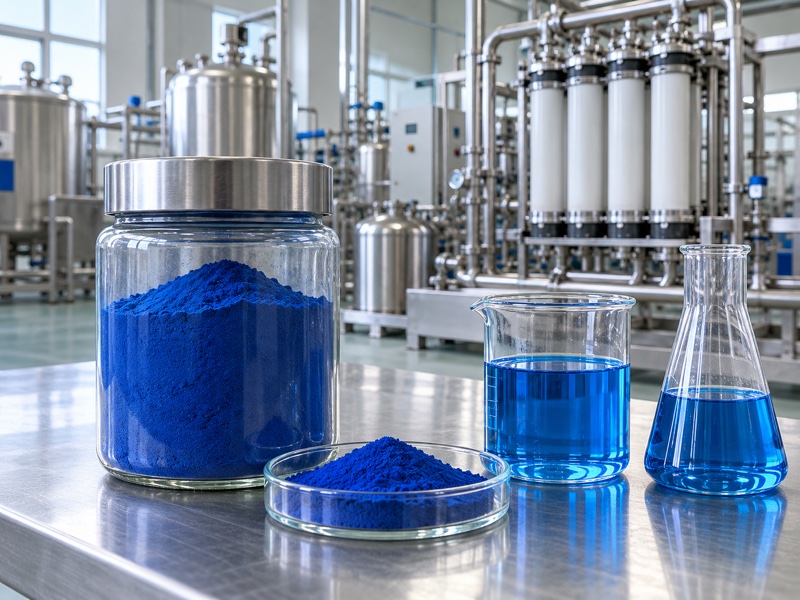
Blue spirulina extract is made from cultivated spirulina, usually Arthrospira biomass, with processing that separates and concentrates a blue pigment fraction. The key pigment is phycocyanin, a water-soluble pigment-protein complex. A commercial dry product may also contain carriers or other processing-related components, so “100% blue pigment” should never be inferred from the color. Ask for the full product specification and ingredient declaration for the grade offered. The material’s composition determines how it should be used and labeled.
What should the identity file show?
It should name the source organism, manufacturing form, any carrier, intended food use, and lot identification. An ingredient composition guide explains why the blue fraction is not the same as a spoonful of whole green spirulina. If a supplier offers several shades, ask whether the grades differ in extraction, concentration, or added carrier. Photographs cannot establish this. A clean identity file makes the first pilot easier to interpret.
| Identity item | Buying decision it affects |
|---|---|
| Source biomass | Traceability and claims |
| Carrier system | Label, solubility, cost |
| Extract grade | Dose and shade |
| Intended use | Regulatory review |
Buy the specified material, not a color description.
2. How is the blue fraction produced?
The blue fraction is produced by extracting water-soluble components from prepared spirulina biomass, then separating, concentrating, and drying or formulating the extract. The exact method and controls vary by manufacturer. Processing choices can affect color strength, residual moisture, microbial quality, and stability. For a food buyer, the useful question is whether the supplier can document a reproducible process and suitable controls. A technical data sheet still matters.
Which process questions are worth asking?
Ask how the biomass is cultivated, when the blue fraction is separated, what solvents or processing aids are used if relevant, and how the material is dried and packed. Request a flow chart when your quality program requires one. The factory page describes supplier capabilities, but claims about a particular batch, certification, or production site should be checked against the exact transaction documents. Do not assume every listed capability applies to every grade. A supplier should explain its controls.
| Process stage | What to verify |
|---|---|
| Cultivation | Identity and source control |
| Extraction | Defined method and aids |
| Concentration | Consistent color strength |
| Drying and packing | Moisture and protection |
Process consistency is part of color consistency.
3. Is extract different from whole spirulina powder?
Yes, blue spirulina extract is different from whole spirulina powder in composition, appearance, flavor, and usual dose. Whole dried biomass is green because it retains several pigments and other cellular components. The blue extract favors the phycocyanin-rich fraction and is often chosen for visual color. Whole biomass can be a nutrition ingredient, but its nutrient profile cannot be copied onto the extract. A recipe that calls for one may not work with the other at the same weight.
How does the difference show up in a drink?
Make side-by-side samples in the same clear base at carefully chosen doses. Observe hue, turbidity, flavor, and sediment. The blue versus green article covers the visual distinction; protein calculations address the nutrition trap. If a finished beverage must be bright blue and clear, whole biomass is usually the wrong starting material. If the nutritional role is primary, the blue extract may not supply enough at a color-use dose.
| Ingredient | Typical role | Main caution |
|---|---|---|
| Whole spirulina | Nutrition or green color | Stronger flavor and green hue |
| Blue extract | Blue color | Grade and stability vary |
| Finished color blend | Application-specific color | Check carrier and label |
Match the ingredient to the job before discussing price.
4. What does a blue extract grade tell you?
A grade tells you how a supplier groups a product’s color performance and specifications, but the code alone is not a universal measurement. Commercial labels such as E3, E6, E18, E25, and E35 may help compare a supplier’s catalog; they should not be treated as standardized percentages of phycocyanin or protein. Ask which analytical method defines the grade and what acceptance range applies to the lot. A stronger color grade may need less material in the formula. The most relevant test is color at the final use level.
How do you compare two grades?
Request samples with matching technical sheets and batch COAs. Prepare a dose ladder for each in the same finished matrix and compare cost at the approved shade. Record taste, dispersion, processing loss, and shelf color too. The powder buying guide explains why a cheaper price per kilogram can be more expensive per finished serving. If the supplier changes a method or carrier, repeat the comparison rather than assuming the old grade name guarantees the same result.
| Comparison basis | Why it is useful |
|---|---|
| Price per kilogram | Initial quote only |
| Dose to target shade | Formulation cost |
| Color after process | Usable performance |
| Lot variation | Production risk |
Compare equal finished color, not equal powder weight.
5. How well does extract dissolve in water?
Many blue extracts disperse or dissolve in water, but the result depends on grade, carrier, water chemistry, and mixing method. A fine powder can still clump if it is added directly to a full tank. Some formulas show haze or settling even when the pigment looks soluble in a bench beaker. Test the exact water base and process, not just a supplier’s demonstration glass. A clear beverage needs a stricter appearance standard than a smoothie.
What is a useful dispersion trial?
Premix a weighed dose in a small volume, then add it to the full base under a documented mixing condition. Check color evenness, visible specks, foam, and sediment immediately and after holding. The blue drink guide gives a clear-base test framework; a smoothie guide shows an opaque application where small particles are less obvious. If a problem appears only after scale-up, compare mixing energy and addition point before changing ingredient grade.
| Observation | Likely investigation |
|---|---|
| Floating powder | Premix or wetting method |
| Fine haze | Base compatibility |
| Settling | Dispersion and carrier |
| Batch color variation | Dose and lot control |
Solubility claims should be tested in your actual recipe.
6. What makes the blue color fade?
Heat, acidity, light, oxygen, and time can affect blue extract color, with the extent depending on the grade and finished formula. A shelf-stable dry powder is not proof that a heated, acidic beverage will keep the same shade. The risk is especially visible in clear packaging. Test the process and the intended pack together. Fresh color is only a first checkpoint.
How should stability be tested?
Use the intended pH, heat exposure, storage temperature, package, and light conditions. Photograph against a fixed color reference and measure color if your quality program can. Compare an unopened control with retail-display conditions at planned intervals. The phycocyanin stability review summarizes why extraction and formulation affect stability. If color loss occurs, identify the main driver before increasing dose; more starting pigment may not solve the underlying problem.
| Stress | Finished-product question |
|---|---|
| Heat | What survives processing? |
| Acid | Does pH shift hue or stability? |
| Light | Does shelf display bleach color? |
| Time | Does the approved shade last? |
The sold product, not the fresh beaker, is the true color test.
7. Is blue spirulina extract allowed in every food?
No, use permissions depend on the jurisdiction and food category. In the United States, spirulina extract as a color additive has specified conditions under 21 CFR 73.530, and a 2026 amendment was delayed indefinitely. A product team must check the current rule for its exact category and label. Other markets have their own classification and documentation requirements. A supplier’s claim that the ingredient is “food grade” is not a universal regulatory clearance.
What should regulatory review receive?
Send the full formula, intended use level, product category, destination countries, ingredient specification, and draft label. Ask whether color-additive declarations, process limits, or identity requirements apply. The FDA color-additives page is a starting point for US changes, while a local regulatory specialist should confirm the actual launch market. Document the review before printing packs or making broad export claims. Include regulatory fit in the initial brief.
| Input to review | Why it matters |
|---|---|
| Destination market | Different legal framework |
| Food category | Permitted use can differ |
| Use level | Conditions and labeling |
| Exact grade | Identity and composition |
Treat permission as a product-specific question.
8. What quality documents should a buyer request?
A buyer should request a current specification, lot-specific certificate of analysis, relevant contaminant and microbiology information, shelf-life guidance, and traceability documents. The exact list depends on the food category, market, and company quality system. A brochure or sales email is not a substitute for batch evidence. If a certification matters, verify the exact facility, product, dates, and transaction scope. Conventional non-organic status is the safe assumption until a valid organic chain is documented.
What should be checked on the COA?
Confirm the grade, lot number, color or phycocyanin method, moisture, microbiology, and relevant contaminants against agreed limits. Check whether the method and units match the specification. The natural-label article explains why “natural” and “certified organic” are different statements. A contact route can be used to request sample and document details for a specific grade. Resolve discrepancies before a production trial, not after purchasing a container.
| Document | What it establishes |
|---|---|
| Specification | Agreed product limits |
| Lot COA | Batch result |
| Traceability record | Source and movement |
| Valid certificate | Specific certified scope |
Documents should describe the material that will actually ship.
9. How should extract be stored and handled?
Store and handle the extract according to the grade’s supplier instructions, protecting it from conditions that can damage color or encourage clumping. Dry powder usually needs closed packaging, controlled moisture, and appropriate temperature and light protection. A opened bag left near a hot, wet mixing line is a different environment from a sealed warehouse carton. Build a first-in, first-out and lot-traceable routine. Check the material again after it has been opened for repeated production use.
What should the receiving procedure include?
Inspect packaging integrity, lot and date, seal, temperature exposure where specified, and accompanying documents. Keep a retained sample when your quality program requires one. Record any repacking, and avoid exposing the powder to humid air during weighing. Powder handling needs a documented routine. If a later batch looks paler, compare receiving, storage, and use records before concluding the supplier changed the grade.
| Point in handling | Simple control |
|---|---|
| Receipt | Inspect seal and COA |
| Storage | Follow temperature and light limits |
| Weighing | Keep moisture out |
| Changeover | Record lots and cleaning |
Good storage protects the trial result you approved.
10. When is an extract ready for a commercial formula?
An extract is ready when the exact grade meets the recipe’s shade, flavor, process, shelf-life, quality, and legal requirements at a repeatable use level. A blue sample is insufficient. The production team needs a signed ingredient specification, approved dose, mixing method, stability evidence, and release criteria. Procurement needs a realistic supply plan and an agreed substitution process. The finished product manufacturer must validate safety and the final label.
What should the final handoff contain?
Keep the extract specification, approved lot or sample, trial records, color standard, package tests, COA requirements, and regulatory decision in one file. Note the exact supplier entity and manufacturing site for the grade being purchased. A blue drink formulation guide helps frame the application questions, while the signed commercial brief should settle the precise ones. Require a new trial when the grade, carrier, process, or destination market changes. This discipline prevents a small ingredient change from becoming a costly product recall or color complaint.
| Release question | Evidence |
|---|---|
| Is the blue right? | Finished-product standard |
| Will it last? | Stability results |
| Is it safe and lawful? | Quality and regulatory review |
| Can it be supplied? | Approved purchasing plan |
Commercial readiness means the same blue can be made again.
Frequently Asked Questions
Can I replace green spirulina with blue extract?
Not at the same weight without testing. The materials differ in color, composition, flavor, and normal use level.
What’s the best grade of blue extract?
The best grade is the one that meets your finished-product shade and stability targets with suitable documentation and cost. A grade code alone cannot answer that.
How do I know if an extract is food grade?
Review its specification, intended use, lot COA, manufacturer information, and destination-market status. Do not rely on color or a marketing label.
Can blue extract color acidic drinks?
It can be tested, but acidity may alter shade and stability. Validate the exact finished formula over its intended shelf life.
Can I call blue extract organic?
Only when a valid certification chain covers the exact product and transaction in the relevant market. Natural origin alone is not enough.
Conclusion
Blue spirulina extract is a phycocyanin-rich color ingredient whose real value depends on its grade, carrier, process fit, stability, and documents. You now have a way to distinguish it from whole biomass and to ask for evidence before scaling a formula. If you are sourcing an extract for a food or beverage, contact us with your target shade, process, and destination market. We believe a reliable natural color is the one a customer can recognize in every finished batch.