
Make blue spirulina cookies by choosing whether the blue extract belongs in a pale dough or on a cool icing finish, then testing the color after baking, packing, and storage. Raw dough can look electric and bake into a tan cookie, leaving the team tempted to add ever more pigment. A crisp edge, good flavor, and stable decoration matter just as much as the shade. This guide gives you a pilot method for a bakery product that can be repeated beyond one styled tray.
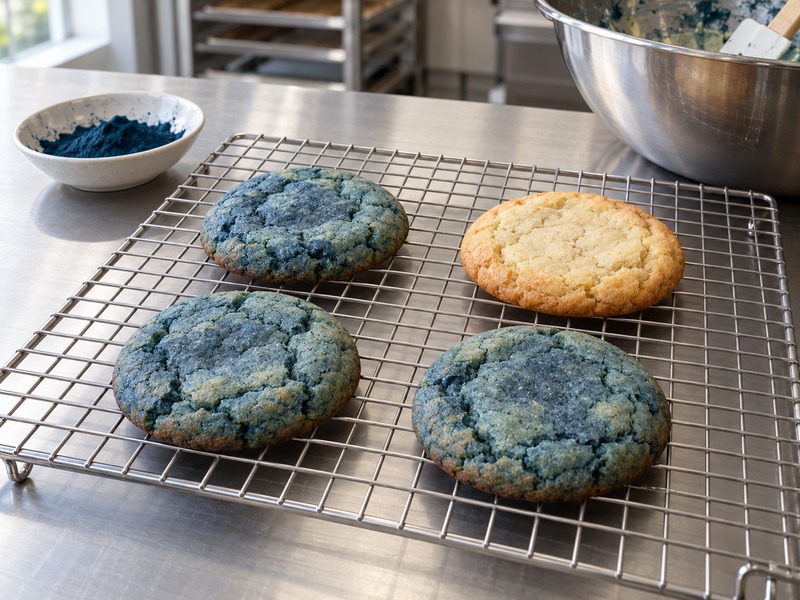
1. What are blue spirulina cookies?
Blue spirulina cookies are cookies colored with a phycocyanin-rich spirulina extract in the dough, icing, or both. Whole green spirulina is a different ingredient and can produce a greenish dough and stronger flavor. The ingredient-form guide explains the distinction. Because the blue extract is normally used for appearance, do not imply the cookie is a meaningful protein source without a serving-level calculation.
What should the bakery decide first?
Define whether you want a blue cut interior, blue surface, decorated character cookie, or blue sandwich filling. Oven browning can make a perfectly blue exterior unrealistic for some formulas. Set the desired appearance after baking and after the intended display period, not in raw dough. A plain control cookie helps separate pigment behavior from changes in flour, sugar, or bake conditions.
- Name the cookie style and visual target.
- Set portion weight and bake process.
- Define the sale and packaging route.
| Design | Likely challenge |
|---|---|
| Blue dough | Heat and browning |
| Blue icing | Drying and transfer |
| Blue filling | Moisture movement |
The design choice determines where the color has to survive.
Key Takeaway: Decide what part of the finished cookie must look blue.
2. Which dough base shows blue best?
A pale vanilla or shortbread-style dough gives blue spirulina cookies a cleaner blue interior than cocoa, brown sugar, or strongly yellow dough. White flour and light sweetener help reduce color interference, though the baked surface will still brown. The blue-versus-green guide helps when comparing extract with whole spirulina. Use flavor and texture as constraints; a white dough that tastes bland is not a finished product.
How should bases be screened?
Prepare equal-size cookies from two or three pale formulas with the same extract lot and dose. Bake under the same conditions and cut after cooling. Compare spread, edge color, interior hue, texture, and taste. If a base gives better blue but spreads badly, fix structure before increasing pigment.
- Keep dough ball weight constant.
- Compare cut surfaces after cooling.
- Taste without icing first.
| Dough | Watch for |
|---|---|
| Pale sugar cookie | Spread and sweetness |
| Shortbread | Fat and crumb texture |
| Oat or whole grain | Beige or brown cast |
The ideal base supports the cookie style and the color.
Key Takeaway: Choose dough from a baked side-by-side trial.
3. What is a useful small-batch formula?
A pilot blue spirulina cookies formula can start with a pale sugar-cookie base and a measured extract dose ladder. For a small comparison, try 200 g plain flour, 100 g butter, 80 g white sugar, one egg, and a small amount of vanilla and leavening suited to the desired texture; adjust after a control bake. This is a starting point, not a validated commercial recipe. Use the supplier’s grade information to choose trial doses rather than copying a spoon measure from a different extract.
How should the pilot be mixed?
Cream fat and sugar consistently, add egg, then mix in dry ingredients just enough to form dough. Preblend the blue powder with a little cool liquid or a small part of the dough if it streaks. Chill samples equally before baking. Keep bake time and cookie weight fixed so color differences can be attributed to dose rather than process variation.
- Weigh the dough and pigment.
- Keep chill and bake conditions equal.
- Retain an uncolored control.
| Pilot component | Starting amount |
|---|---|
| Plain flour | 200 g |
| Butter | 100 g |
| White sugar | 80 g |
The first bake is an experiment; flavor and shelf trials come next.
Key Takeaway: Start with a controlled pale dough before optimizing the blue.
4. Why does baking change the color?
Baking can dull blue spirulina cookies because heat affects phycocyanin and browning adds tan color to the surface. A raw batter’s shade is therefore a poor prediction of the finished cookie. The food-color application guide explains the broader heat issue.
A lower bake temperature may preserve some color but can change spread, texture, or food safety. Do not trade a properly baked cookie for a brighter but undercooked sample.
What should the oven trial compare?
Use the same dough and cookie weight at two or three validated bake profiles. Record oven temperature, time, edge color, internal texture, and blue visible on the cut face. Let all cookies cool before judgment. If every safe profile browns the surface, use a cool icing or filling to carry the visible blue rather than adding pigment until the dough tastes wrong.
- Record bake time and temperature.
- Check doneness and texture.
- Compare interior and exterior color.
| Observation | Likely response |
|---|---|
| Blue center, tan edge | Accept or decorate |
| Gray throughout | Review grade and base |
| Pale but soft cookie | Fix bake, not color |
A good cookie is the constraint that the color must work within.
Key Takeaway: Evaluate blue only after the cookie is baked properly.
5. How much extract belongs in the dough?
Use the lowest weighed dose that gives blue spirulina cookies an acceptable cooked result and flavor. Supplier grades vary, so “one teaspoon” does not transfer reliably between products. The blue powder guide explains why grade names need their own methods.
Compare low, middle, and high doses in identical dough, then calculate cost per cookie. Stop raising the dose if heat and browning prevent a visible improvement.
What should a dose sheet include?
Record extract grams per kilogram of dough, baked shade, taste, spread, and cost. Inspect after packaging as well as after cooling. Some carriers can alter dry solids or moisture, particularly at higher additions. A controlled sheet will help the bakery repeat the approved cookie when the production lot changes.
- Weigh at least three doses.
- Taste plain cookies.
- Check color after storage.
| Dose | Question |
|---|---|
| Low | Is blue visible? |
| Target | Does flavor still work? |
| High | Is extra pigment wasted? |
The highest dose is rarely the most economical answer.
Key Takeaway: Approve the lowest dose that survives the real bake.
6. Would blue icing work better?
Blue icing can give blue spirulina cookies a brighter surface because the extract is added after the oven. Royal icing, a thin glaze, or buttercream each has different drying and storage behavior. The blue spirulina icing guide compares these systems. A cool finish may reduce pigment loss but add sugar, labor, allergens, and packaging requirements, so judge the whole product.
How do you compare decorations?
Ice fully cooled cookies using a measured color dose and portion weight. Check edge control, dry-to-touch time, transfer after stacking, and color under display light. A royal icing may suit decorated shipping cookies; buttercream may work for same-day counter sale. Test the actual package before choosing a finish for a retail line.
- Cool cookies before decorating.
- Measure icing weight per cookie.
- Test stacking and package transfer.
| Finish | Main consideration |
|---|---|
| Royal icing | Drying and humidity |
| Glaze | Thin coverage |
| Buttercream | Warmth and handling |
The brightest icing is useful only if it survives how the cookie is sold.
Key Takeaway: Choose decoration by color, flavor, and distribution route together.
7. Can the cookies be made vegan?
Vegan blue spirulina cookies are possible with plant-based fat and an egg alternative, provided the blue blend and decorations also qualify. The extract’s source is compatible with many vegan recipes, but carriers and processing aids still need review. The blue spirulina vegan guide covers that distinction. Replacing egg or butter changes spread and browning, so the vegan dough needs its own bake and color trial.
What should substitutions be tested for?
Change fat and egg system one at a time. Measure spread, snap, moisture, and blue interior after baking. Review chocolate pieces, sprinkles, and fillings separately; they may contain dairy or other animal-derived components. If a vegan certification mark is planned, submit the exact formula and process to the relevant program.
- Verify all ingredients and decorations.
- Recheck spread and texture.
- Review the blue carrier.
| Swap | Possible effect |
|---|---|
| Plant fat | Spread and flavor |
| Egg alternative | Binding and rise |
| Vegan icing | Drying and label |
A vegan claim and a good cookie need to be developed together.
Key Takeaway: Validate the complete vegan recipe, not just the pigment.
8. How should cookies be stored and packed?
Blue spirulina cookies need a finished-product storage test that includes color, texture, and decoration, because dry extract shelf life does not establish cookie shelf life. Moisture can soften a crisp cookie or make icing tacky; light can change the blue. The blue spirulina shelf-life guide covers the powder itself. Test the exact bag, tray, or box through the planned sales period.
What should a packaging trial inspect?
Pack fully cooled cookies as they will be sold. Check breakage, moisture, off-flavor, icing transfer, and color at several checkpoints. Compare a clear window pack with a more protective pack if display is important. A cookie that looks good on day one but sticks together in transit needs a packaging or finish change.
- Test real packs and stacking.
- Track texture and color together.
- Include transport handling.
| Failure | Likely cause to review |
|---|---|
| Soft cookie | Moisture migration |
| Faded icing | Light or formula |
| Smear | Decoration not set |
The pack is part of the recipe once the cookie leaves the bakery.
Key Takeaway: Set the sale period using packaged cookies, not unwrapped samples.
9. Are blue cookies a healthier snack?
Blue spirulina cookies are not automatically healthier than ordinary cookies; flour, sugar, fat, and portion size determine most of their nutrition. A small extract dose should not inherit claims made for whole spirulina supplements. The blue spirulina nutrition facts guide explains the difference. Calculate the finished cookie, including icing, chips, and fillings, before making protein, calorie, or sugar claims.
What should the label file include?
Use the actual production formula and finished weight, then calculate or test according to the market’s rules. Review allergens from flour, eggs, dairy, nuts, soy, and decorations. If the blue extract includes a carrier, add it to the ingredient statement. Avoid “healthy because blue” on packaging; customers deserve a meaningful serving description.
- Include decorations and fillings.
- Use the real cookie weight.
- Review allergens and claims.
| Label element | Evidence |
|---|---|
| Calories | Finished serving formula |
| Protein | Measured ingredient contribution |
| Allergens | Full recipe and site review |
The cookie’s color is obvious; its nutrition should be equally clear.
Key Takeaway: Let the finished recipe, not the ingredient trend, drive claims.
10. How do you scale a bakery cookie line?
Scaling blue spirulina cookies requires controlled mixing, extract dosing, dough portioning, oven profile, decoration, and lot traceability. A large mixer can leave streaks even when a small bowl did not. The manufacturer guide helps buyers qualify the exact blue grade for repeated orders. Sample baked cookies from the beginning, middle, and end of each run and compare them with an approved standard.
What belongs in the commercial specification?
State ingredient weights, mixing order and time, dough temperature, portion weight, bake profile, cooling period, and icing or filling procedure. Set acceptable limits for color, spread, snap, and breakage. Keep a retained sample and record extract lot changes. If the cookie looks different later, those records let the team investigate rather than immediately adding more pigment.
- Lock the approved extract and dose.
- Check spread and color across the line.
- Keep lot and process records.
| Control | Purpose |
|---|---|
| Extract lot | Shade and traceability |
| Dough weight | Uniform baking |
| Oven profile | Texture and color |
The commercial goal is a repeatable cookie, not a single photogenic batch.
Key Takeaway: Specify the baked, packaged cookie as the quality target.
Conclusion
Blue cookies work when a pale dough, measured extract, realistic bake target, and optional cool icing are tested as one product. You now have a pilot approach for dose, vegan substitutions, packaging, claims, and line scale-up. For a blue extract sample suited to your bakery formula, contact us. We believe color should add delight while the cookie still earns its place through taste, texture, and consistency.
FAQ
Can I keep cookies bright blue after baking?
Expect some browning. A blue interior or cool icing may be more reliable than a fully blue crust.
What’s the best cookie base for blue color?
Start with a pale vanilla-style dough. Test its baked color, spread, and flavor before committing.
How do I know if I used too much extract?
Compare baked dose levels. Extra powder that adds cost or flavor without visible improvement is too much for that formula.
Can I ship cookies with blue icing?
Yes, if the finish dries and packs well. Test stacking, transfer, humidity, and color in the real package.
How do I know if blue cookies are high protein?
Calculate the complete serving. A small color dose alone usually cannot support the claim.