
Yes, blue spirulina extract contains phycocyanin, a protein-bound blue pigment, but a typical color-use serving is not a dependable source of dietary protein. The question “does blue spirulina have protein?” matters when a bright blue smoothie is sold beside a high-protein one. You may see whole spirulina’s protein figures on the web and assume the blue extract delivers the same nutrition. It does not follow: extraction, carriers, grade, and the small amount used for color change the calculation. Here is how to read a specification and make a claim that matches the actual serving.
1. Does blue spirulina have protein at all?
Yes, blue spirulina has protein in the sense that its defining pigment, phycocyanin, is a pigment-protein complex. That chemical fact does not tell you how many grams of usable dietary protein a consumer receives. A blue extract may include phycocyanin, other soluble solids, moisture, and carriers, with proportions that vary by grade. The serving used to tint a drink is often much smaller than a serving of a protein ingredient. Ask for the product-specific nutrition panel and typical use level before turning the chemistry into a menu claim.
What does “phycocyanin-rich” actually describe?
It describes a pigment characteristic, not a guaranteed protein quantity per glass. The blue extract composition guide explains why whole biomass and a blue fraction should be listed separately in a formulation. A supplier may report pigment by a color grade or analytical method; that value should not be copied into a protein declaration. If protein matters to your product, request a test result for the exact commercial material and do the serving calculation.
| Term on a specification | What it does not prove |
|---|---|
| Phycocyanin-rich | Grams of protein per serving |
| Blue color grade | Protein quality or digestibility |
| Whole spirulina protein data | Extract nutrition |
The first useful number is protein in the finished serving.
2. Is blue extract the same as whole spirulina?
No, blue extract is not the same as whole spirulina biomass. Whole dried spirulina contains many components, including protein, pigments, carbohydrates, lipids, minerals, and fiber; a blue extract is processed to enrich the water-soluble color fraction. Carriers may be added for drying and handling. This is why a nutrition figure for dried green powder cannot be transferred to a blue color ingredient. The two materials also behave differently in taste, shade, and formulation.
How can you tell which ingredient is in a product?
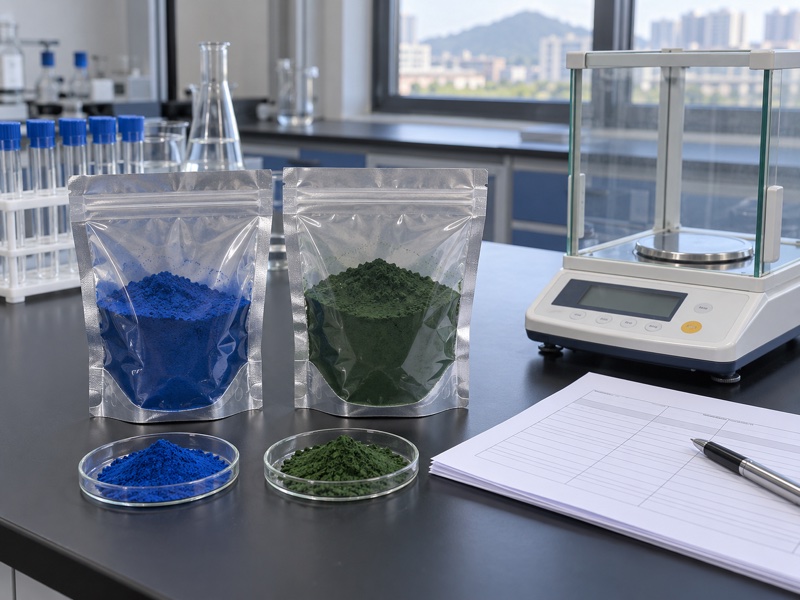
Read the full ingredient name, specification, color description, and method of manufacture. A green powder used at a larger dose may contribute measurable nutrition while giving a green or teal color. A blue extract may be chosen primarily for appearance at a lower dose. The blue versus green comparison makes the visual and formulation difference clearer. For label purposes, let the exact purchased material and local rules determine the wording.
| Material | Main buying question |
|---|---|
| Whole dried spirulina | Nutrient profile, flavor, dose |
| Blue spirulina extract | Color strength, carrier, stability |
| Protein isolate or concentrate | Protein per serving and quality |
Do not borrow the strongest claim from one material for another.
3. How much protein could a colored drink provide?
Calculate it from the extract’s measured protein percentage and the actual amount added to one finished drink. A product with 20% protein used at 0.2 g per serving would contribute 0.04 g of protein before considering analytical and rounding rules. That is a hypothetical example, not a published value for a particular blue extract. The result illustrates why a vivid color can coexist with negligible protein delivery. Use the same arithmetic with your lot’s certificate or nutrition data.
What belongs in the calculation?
Record grams of extract per serving, laboratory protein result for that extract, number of servings in the package, and other protein sources in the recipe. Calculate contribution from each ingredient separately. Then check how the jurisdiction requires protein to be declared and whether any claim threshold is met. The smoothie guide is an example: yogurt, milk, soy, or a dedicated protein ingredient may supply most of the protein, while the blue extract supplies color. Keep the calculation with the approved recipe so a later dose change triggers a label review.
| Input | Example only |
|---|---|
| Extract in serving | 0.2 g |
| Tested protein in extract | 20% |
| Calculated contribution | 0.04 g |
The math is simple; the quality of the input data is the hard part.
4. Why do online protein numbers disagree?
They often describe different materials, different serving sizes, or different analytical bases. One article may quote dried whole spirulina per 100 g, another a tablespoon, and a third a blue extract without disclosing its carrier. Moisture and grade can alter the percentage on a dry or as-sold basis. Even a correct per-100-g number can mislead when a blue drink uses a fraction of a gram. Compare like with like before repeating a number in a brief or on a package.
Which source should you trust for a product?
Use the specification and a current lot’s analysis for the exact ingredient, supported by your finished-product testing where a claim is material. A public food database can provide context for whole dried spirulina, but it is not a substitute for a blue extract certificate. The USDA’s dried spirulina record is about dried whole material; a review of phycocyanin extraction describes the separate processing and stability questions. If the sales sheet moves between these categories, ask the supplier to correct it.
The basis of the number matters as much as the number.
5. Can a blue smoothie be called high protein?
Yes, a blue smoothie can be high in protein if the complete recipe supplies enough protein and the claim meets the destination market’s rules. The blue color itself does not establish that claim. Yogurt, milk, soy, pea protein, or another ingredient may make the meaningful contribution. Test the finished serving, account for recipe variation, and have the claim reviewed before launch. A visually striking smoothie can still be nutritionally ordinary.
How should a product team build the claim?
Start with the protein target per serving, then choose an appropriate protein ingredient and test the sensory result. Add blue extract at a color-use dose and confirm it works with the protein base. Protein powders can change viscosity, pH, and opacity, so a vivid transparent blue may become a pastel shade. The smoothie bowl article shows why the eating format also affects consumer expectations. Test nutrition and appearance on the same approved formula, not on two different prototypes.
| Claim question | Evidence needed |
|---|---|
| How much protein? | Finished-serving data |
| Where does it come from? | Ingredient and recipe records |
| Does it qualify? | Market-specific claim review |
Lead with the verified nutrition, then let color help the presentation.
6. Does phycocyanin count as a complete protein source?
Its presence does not establish that a blue extract is a practical complete protein source. “Complete protein” is a nutrition concept about essential amino acids and usable intake, not the mere presence of a protein molecule. A pigment ingredient’s amino-acid profile and serving size need separate assessment. Claims about digestibility or protein quality require evidence appropriate to the market. Most buyers should evaluate blue extract as a color ingredient unless a specific product is deliberately designed and tested for nutrition.
What should you ask a supplier?
Request the material’s protein method and result, amino-acid data if available, recommended use range, carrier composition, and any substantiated nutrition positioning. Do not infer a protein-quality score from a phycocyanin purity claim. The blue powder guide can help procurement separate color specifications from nutrition specifications. If you need a reliable protein claim, commission finished-product analysis with a qualified lab.
| Data request | Decision it supports |
|---|---|
| Protein result | Serving calculation |
| Amino-acid profile | Quality assessment |
| Carrier and moisture | As-sold composition |
A blue pigment can be scientifically interesting without being a useful protein dose.
7. Do ingredient grades affect the answer?
Yes, grades can differ in phycocyanin concentration, carrier, moisture, and recommended use level. A more concentrated color grade may need less powder to reach the same shade. That can lower the total protein delivered per drink even if the powder has a higher protein percentage. Supplier color codes such as E3, E6, or E18 are commercial grade labels, not universal nutrition percentages. Ask for the exact grade’s analytical report rather than assuming an industry-wide conversion.
How do you compare two grades fairly?
Prepare the same final drink with each grade at the dose needed to hit a common color target. Calculate protein contribution per finished serving, not just per gram of powder. Compare flavor, stability, total cost, and supporting documentation too. A powder buying guide discusses why matching use level matters when comparing quotes. The more concentrated grade may be a better color purchase while making an even smaller nutrition contribution.
The fair comparison is equal finished performance, not equal scoop weight.
8. What safety checks matter before nutrition claims?
The first checks are ingredient identity, suitable food grade, contamination controls, and the finished product’s intended use. A protein figure does not make an unsuitable ingredient safe. Request lot-specific documentation for microbiology, relevant contaminants, and manufacturing controls. Review the intended market’s permitted uses and label requirements for spirulina extract. If the product targets children, pregnant people, or a medical audience, use a higher evidence bar and appropriate professional review.
What should the quality file contain?
Keep the full specification, certificate of analysis, test methods, shelf-life guidance, traceability information, and market documents for the exact product and site. Check that an “organic” or certification claim is supported for the specific transaction; a broad company profile is not enough. The natural blue article helps separate origin from certification. For US food color use, check the current conditions in 21 CFR 73.530. A finished product may need its own safety and nutrition tests even when the ingredient file is complete.
| File item | Why it matters |
|---|---|
| Identity and lot | Prevents material mix-ups |
| Relevant contaminants | Supports safety review |
| Nutrition method | Supports a protein calculation |
| Market status | Supports lawful use and claims |
Quality evidence and nutrition evidence answer different questions.
9. What should a consumer-facing label say?
It should describe the product as made, and it should not turn a blue color into an unsupported protein promise. If the finished drink has meaningful protein from other ingredients, name those ingredients accurately and use the approved nutrition declaration. If the extract is used only for color, avoid suggesting that it is a protein supplement. Check whether the label must use a particular color-additive declaration in the destination market. Clear wording can be more persuasive than a broad “superfood protein” claim.
How can the claim be tested before printing?
Place the draft front label beside the complete formula and the finished-product lab report. Ask whether a reader would think the blue extract is the source of the advertised protein. If that impression is wrong, revise the copy. The benefits article discusses the broader evidence gap between a pigment and human outcomes. A compliance review should also cover serving size, nutrition rounding, and any implied health claim.
| Wording | Better decision |
|---|---|
| “Blue spirulina protein drink” | Verify extract contribution and context |
| “High-protein blue smoothie” | Verify finished serving meets rule |
| “Colored with spirulina extract” | Confirm local declaration requirement |
The label should survive a calculation, not just a design review.
10. When should you choose a protein ingredient instead?
Choose a dedicated protein ingredient when grams of protein per serving are a core product promise. Use blue extract for color and evaluate the protein source on its own nutrition, taste, solubility, and supply documentation. This division of roles makes formulation and labeling clearer. The finished product may still require trade-offs: protein bases can make the blue paler, and heat or acidity can affect the pigment. Build the final recipe around the nutritional target and the color target together.
What does an effective development brief include?
State the intended protein grams per serving, serving size, base, process, shelf life, market, and desired shade. Ask suppliers for separate documentation for the color ingredient and protein ingredient. The contact team can discuss extract samples and batch documents for a blue concept; your formulation team should own the complete nutrition calculation. Keep a change log so that switching a protein powder or pigment grade triggers retesting. A good brief makes it hard to confuse visual effect with nutritional contribution.
| Product objective | Ingredient role |
|---|---|
| Strong blue shade | Blue spirulina extract |
| Protein grams | Tested protein ingredient |
| Finished claim | Validated complete recipe |
Give each ingredient a job it can actually perform.
Frequently Asked Questions
Can I get protein from blue spirulina powder?
Possibly a small amount, but do not assume it is nutritionally meaningful. Check the product’s protein result and the actual serving weight.
What’s the best way to calculate protein in a blue drink?
Multiply each ingredient’s protein per gram by its grams in the serving, then verify the finished product and applicable label rules. Use data for the exact materials.
How do I know if my powder is whole spirulina or blue extract?
Read the full ingredient name, color, specification, and manufacturing description. Ask the supplier if the label is ambiguous.
Can a blue spirulina smoothie be high protein?
Yes, if the complete smoothie meets the claim rule. Milk, yogurt, soy, or a dedicated protein ingredient may supply the protein.
Can I use whole-spirulina nutrition numbers for blue extract?
No. They are different materials, and the extract’s carrier and use level change the calculation.
Conclusion
Blue spirulina contains a protein-bound pigment, but that fact alone does not make a blue drink a protein source. You now have a way to separate whole-spirulina data from extract data, calculate the finished serving, and choose ingredients that support honest claims. If you are developing a blue beverage, contact us with your target shade and market for extract information. We believe useful labels begin with what the finished serving can prove.