
Make blue spirulina mousse by folding a measured blue extract into a pale, cooled mousse base, then chilling it until the texture sets. A promising blue swirl can disappear in a yellow cream or collapse when too much liquid enters the mix. You need to solve texture and color together, especially if the dessert will sit in a café case or a sealed retail pot. This guide walks through the base, the addition point, testing, and ingredient documents. The blue spirulina mousse here is a colored dessert, and its nutrition comes mainly from the mousse ingredients rather than a tiny dose of pigment.
1. What is blue spirulina mousse?
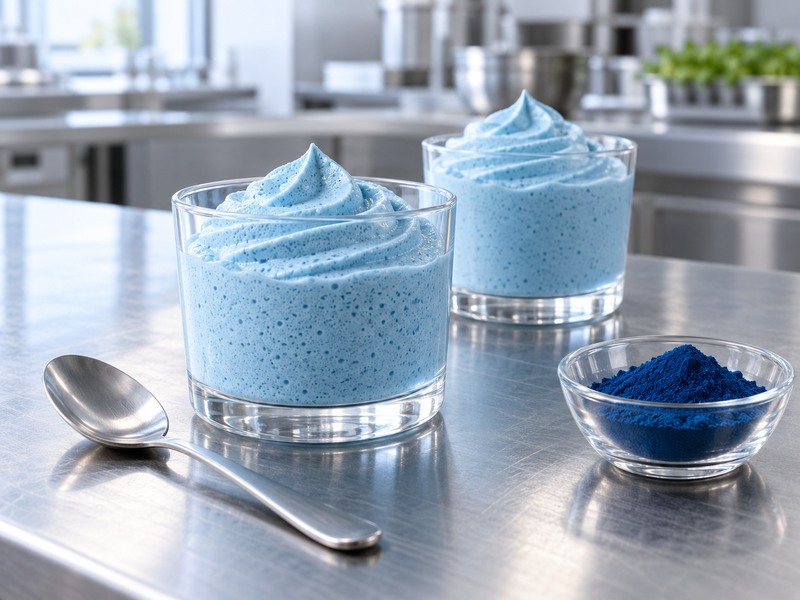
blue spirulina mousse is a light, chilled dessert colored with a blue spirulina extract rich in phycocyanin. The base may rely on whipped cream, aquafaba, tofu, or another aerated structure; each behaves differently when a water-soluble color is mixed in. Blue extract gives the hue, while the base determines fat, protein, sweetness, and set. Decide on the finished format before you select a recipe, because a piped café glass and a sealed retail pot face different handling demands.
What should the product brief state?
Write down the intended serving size, texture, hue, holding temperature, and length of display. Note whether the mousse must be dairy free or vegan and whether a fruit layer will touch the blue layer. Make a plain control batch first; it will show whether the base itself is yellow or too loose. Then add the extract in a small measured trial.
A successful spoon test should show air, a clean break, and even color without watery pockets.
- Name the aeration method and serving format.
- Set a chilled, end-of-display color target.
- Prepare an uncolored control.
| Checkpoint | What to record |
|---|---|
| Base | Cream, tofu, or plant foam |
| Service | Piped glass or sealed cup |
| Holding | Chilled display period |
The brief makes a color trial answer a real selling question rather than a photograph question.
Key Takeaway: Define texture and holding conditions before dosing the extract.
2. Which base shows a clean blue?
Blue spirulina mousse shows a cleaner blue in a pale base with a smooth texture and restrained yellow tint. Cream can be naturally ivory, coconut cream may bring a gray cast, and silken tofu can vary in opacity. A translucent gel may read darker than an opaque whipped base at the same extract weight. Taste also matters: a neutral base lets a delicate blue appearance lead without requiring an oversized pigment dose.
The recipe collection shows other cold applications you can compare with this base.
How do you compare bases without guessing?
Make equal-weight samples of two or three pale bases and color them with the same extract lot. Photograph each under one light source and taste after chilling. Check the base alone for graininess or separation before blaming the extract. If a coconut version forms a hard fat layer in the refrigerator, adjust the base formulation first.
Keep the intended dietary label in view; a dairy-free base may be worth a slight shade difference for the right audience.
- Hold the extract dose constant across bases.
- Check both surface and spooned interior.
- Taste at service temperature.
| Checkpoint | What to record |
|---|---|
| Whipped cream | Ivory tint and strong body |
| Silken tofu | Pale color and dense texture |
| Coconut cream | Flavor and fat separation |
The best base keeps its color and aeration after the full chill, not only after folding.
Key Takeaway: Pick the base from a chilled texture and color trial.
3. When should the extract go in?
Add blue spirulina mousse extract after hot steps have cooled and before the mousse is portioned, provided the food-safety process allows it. The pigment can be vulnerable to harsh heat, while a late addition can streak or deflate a delicate foam. The right point depends on the base: a tofu mixture can accept a premix during blending, but whipped cream often needs a gentle final fold. A commercial operation must also validate hygiene for any post-heat addition.
What mixing sequence protects the texture?
Disperse the weighed extract in a small amount of cool liquid from the formula, not an arbitrary splash of water. Blend that premix into the denser part of the base, then fold in the aerated component in stages. Watch the bowl for blue streaks and stop mixing when the color is even. Portion immediately into the intended glass or cup, chill, and inspect the set.
Record the mixing time so the next batch does not lose air through extra handling.
- Cool the base before adding pigment.
- Use recipe liquid for the premix.
- Fold only until the shade is even.
| Checkpoint | What to record |
|---|---|
| Early addition | Heat and color risk |
| Late addition | Streaks and foam loss |
| Approved point | Even color with safe handling |
A bright mousse that has flattened into pudding misses the intended texture.
Key Takeaway: Choose an addition point that protects both color and aeration.
4. How much powder gives the right shade?
Dose blue spirulina mousse by weight and compare the shade after the mousse has set, not while it is still in the bowl. Different extracts have different color strengths, and a cream or tofu base can mute the same dose. Excess color may increase cost or introduce an unwanted note. The aim is a stable blue in the finished serving rather than the strongest possible blue at mixing.
The ingredient guide can help you check what the purchased extract contains.
How should a dose ladder be judged?
Prepare three small batches from one base recipe and vary only extract weight. Photograph the set mousses on a neutral background, then taste them blind. Check the spooned interior as well as the surface, because a pale top can hide a darker streak below. Price the extract per serving using the selected dose.
Keep a record of the extract lot and its supplier color measurement so a future purchase can be checked against the approved trial.
- Report grams per kilogram of mousse.
- Taste after the planned chill.
- Calculate ingredient cost per cup.
| Checkpoint | What to record |
|---|---|
| Low | Pale but potentially acceptable |
| Target | Chosen color and taste |
| High | Extra color versus cost |
A measured target avoids silently changing the recipe when a new powder arrives.
Key Takeaway: Set the dose from the finished chilled portion.
5. Can a vegan mousse stay airy?
blue spirulina mousse can be vegan when its foam and setting system use plant ingredients and the exact extract grade contains no animal-derived components. Silken tofu, aquafaba, coconut cream, and plant whipping products each create a different mouthfeel. A vegan label also depends on toppings, carriers, and processing aids, not only the blue powder. If the product must avoid a particular allergen, check every ingredient’s documentation before calling the recipe suitable.
Which vegan tests matter most?
Try one primary aeration system at a time rather than blending several untested substitutes. Measure volume after whipping, after folding in blue premix, and after chilling. Taste for bean, coconut, or starch notes and decide whether the flavor concept can carry them. Check the vegan ingredient guide for supplier-level questions.
A dessert that is technically vegan but watery after two days still needs a stronger base.
- Confirm carrier and topping origin.
- Measure volume loss after folding.
- Retest texture after storage.
| Checkpoint | What to record |
|---|---|
| Aquafaba | Foam stability and drainage |
| Tofu | Dense but smooth body |
| Plant whip | Ingredient and allergen review |
The plant system must pass the same spoon and shelf test as the dairy version.
Key Takeaway: Qualify vegan status and texture for the exact finished formula.
6. Will fruit or acid change the blue?
Blue spirulina mousse can shift color where acidic fruit or sauce contacts the blue layer. Lemon curd, berry purée, and citrus garnish may make a localized purple border even when the plain mousse looks stable. A sauce held in a separate compartment can preserve contrast until service. If a layered pot is essential, test the boundary through the planned shelf period rather than judging it at assembly.
The cheesecake guide covers a similar cold dessert color challenge.
How can you test a fruit layer?
Make three samples: plain mousse, mousse with a fruit layer, and mousse with fruit folded through. Keep package, temperature, and extract dose constant. Photograph the boundary at filling, after one day, and at the planned end of life. Taste the layers together, because a technically stable color is not useful if the dessert becomes too tart.
Record measured pH where available and decide whether a separate topping is the better design.
- Check surface and layer boundary.
- Compare folded and separate fruit.
- Taste the assembled serving.
| Checkpoint | What to record |
|---|---|
| Plain | Baseline blue stability |
| Layered | Contact discoloration |
| Folded | Whole-cup hue and flavor |
A fruit layer can be visually attractive while creating a color problem during storage.
Key Takeaway: Approve fruit only after a contact and taste trial.
7. How do you keep the mousse set?
Keep blue spirulina mousse set by balancing the base’s aeration and stabilizing system before you adjust the color. Extra premix water can loosen a mousse, while over-whipping or rough folding can make it grainy. Gelatin, plant gums, or chocolate can stabilize some recipes, but each changes the ingredient statement and mouthfeel. Test the simplest base that meets the intended serving and handling conditions.
What failure signs should you record?
Inspect mousse immediately after filling and again after chilling. Look for free liquid at the bottom, a cracked surface, a dense lower band, or collapse when a spoon is inserted. If a retail cup will travel, run a small handling test rather than assuming a static refrigerator sample predicts delivery. The correction may be less premix liquid, a different base, or a gentler fold; adding more pigment will not repair a broken foam.
- Record fill height and chilled height.
- Check liquid separation.
- Test a realistic transport movement.
| Checkpoint | What to record |
|---|---|
| Drainage | Foam or stabilizer issue |
| Dense band | Mixing and fill issue |
| Graininess | Over-whip or fat separation |
A texture failure calls for a formulation change, not a stronger blue dose.
Key Takeaway: Set and color must both pass the final handling test.
8. How should you assess nutrition and claims?
Blue spirulina mousse nutrition comes chiefly from its cream, tofu, sweetener, and serving size. A small pigment addition does not turn a sweet dessert into a meaningful protein source by itself. Build the nutrition calculation from weighed components and supplier data. Claims about antioxidants or health effects require evidence and legal review in the market where the dessert is sold.
What belongs in the label worksheet?
Record every ingredient, including the extract carrier and any topping served as part of the product. Calculate the actual filled serving, not a bowl used for photography. Compare dairy and vegan versions separately because their fat, sugar, and allergen profiles can differ substantially. The protein comparison helps distinguish blue extract from whole green spirulina.
If a claim cannot be supported from the exact formula, keep the menu description focused on flavor and color.
- Weigh the sold portion.
- Include carriers and toppings.
- Review claims for the sales market.
| Checkpoint | What to record |
|---|---|
| Cream | Major fat source |
| Sugar | Varies with base and sauce |
| Extract | Small color addition |
A dessert can be appealing without attaching unsupported wellness promises to its pigment.
Key Takeaway: Describe the measured finished dessert rather than an ingredient halo.
9. Can you make mousse for a display case?
blue spirulina mousse can work in a chilled display case after the exact recipe and package pass color, texture, and food-safety checks for the intended period. Light, a clear lid, repeated door opening, and fruit contact can make a café sample behave differently from a sealed pilot cup. For a retail product, microbiological and shelf-life decisions belong in the site’s validated process. A beautiful day-zero mousse is a starting sample rather than shelf-life evidence.
What should the hold trial include?
Fill the intended cups, not only open dessert glasses, and store them in the expected display conditions. Photograph the top and spooned interior at set intervals, weigh any drainage, and taste near the intended sale limit. Compare a protected package with a clear one if light exposure is substantial. For foodservice, document the maximum display time and keep a retained sample.
If the mousse fails early, identify whether color, texture, or hygiene controls are responsible before reformulating.
- Use the real cup and lid.
- Track light, temperature, and time.
- Check spoon texture at end of life.
| Checkpoint | What to record |
|---|---|
| Day zero | Color and set baseline |
| Mid hold | Drainage or fade |
| Sale limit | Acceptability and safety |
The first failing attribute should guide the next experiment.
Key Takeaway: Approve the mousse in its real display environment.
10. What should you ask the supplier for?
Ask a blue spirulina mousse supplier for a color specification, ingredient and carrier statement, lot certificate, and sample for a chilled base trial. The supplier needs your mousse pH, fat system, addition temperature, and display conditions to recommend a grade. Confirm permitted use and labeling rules for the destination market. For scale-up, ask about lead time and lot variation as well as the powder’s price.
How do you make a useful supplier brief?
Send the target shade, base recipe category, dietary requirements, planned package, and photographs of a passing and failing sample. Request the technical sheet, allergen statement, microbiological limits, and lot-level certificate. Use the sample in a dose ladder and holding trial; do not accept a recommendation based only on color in water. The supplier should help you match the extract to the dessert process rather than promise that one grade fits every application.
- Share the actual mousse base and pH.
- Request lot and safety documents.
- Trial the grade through chilled display.
| Checkpoint | What to record |
|---|---|
| Grade | Color strength and carrier |
| COA | Lot-specific quality results |
| Pilot | Texture and color after hold |
A clear brief turns a supplier sample into a testable ingredient choice.
Key Takeaway: Qualify the exact grade in the finished chilled mousse.
Conclusion
A good blue mousse has to keep its color and its air through the actual serving window. The base, extract dose, folding method, fruit contact, and display case determine that result. If you are formulating a café or retail dessert, contact us with your base and target shelf period so we can help you test a suitable blue extract. We judge an ingredient by the dessert it helps you sell, not by the color of powder in a jar.
FAQ
Can I use coconut cream?
Yes. Coconut cream can work, but test its flavor and chilled fat separation before choosing it.
What’s the best way to add the blue powder?
Premix it in a small amount of cool recipe liquid. Fold that into the base without overworking the foam.
How do I know if the mousse is overmixed?
Check its volume and spoon texture. A dense or grainy result after folding suggests the foam has been damaged.
Can I put lemon on top?
You can, but test contact discoloration. Add citrus at service or separate it if the blue shifts during storage.
How do I know if a vegan label is appropriate?
Check the entire formula. The base, extract carrier, toppings, and processing aids all need review.