
Blue spirulina products may contain a phycocyanin-rich spirulina extract alone or a blend with carriers, flavors, sweeteners, and other ingredients, so read the exact label before buying. A bright blue powder in a photo cannot show what else is in the jar. If you are developing a drink or sourcing bulk color, that uncertainty affects your formula, claims, allergens, and cost. This blue spirulina ingredients guide explains how to read a label and a supplier specification without confusing the blue extract with whole green biomass.
1. What is the core ingredient in blue spirulina?
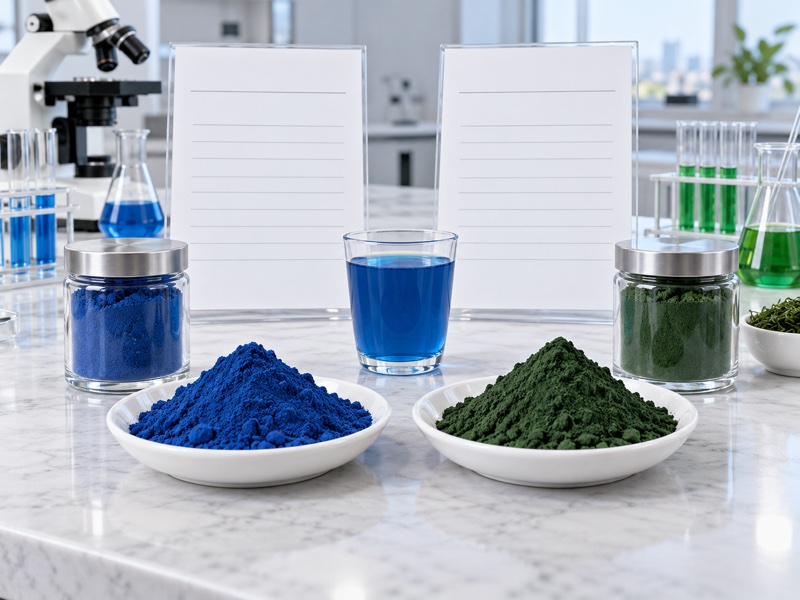
The core ingredient is usually a blue, phycocyanin-rich extract from cultivated spirulina biomass. In the US color-additive rule, spirulina extract is prepared by filtered aqueous extraction of dried Arthrospira platensis biomass, and phycocyanins are the principal coloring components. Commercial products can vary in grade and formulation, so the rule’s identity is not a substitute for a specific label. Whole dried spirulina powder contains other cellular components and often looks green. Ask whether the product is an extract, whole biomass, or a finished blend.
Why does that distinction matter?
The composition article explains the source and blue fraction. An extract may be used at a small color dose, while whole powder may be sold as a nutritional ingredient at a larger dose. Their tastes, shades, and nutrition values differ. A manufacturer cannot copy a whole-spirulina protein figure onto a blue extract. Label and product development should start with the exact purchased material.
| Label term | What to verify |
|---|---|
| Spirulina extract | Grade and carrier |
| Whole spirulina | Full biomass and nutrition |
| Blue spirulina blend | All additional ingredients |
The name on the front is less precise than the specification.
2. Can blue spirulina powder contain carriers?
Yes, a commercial powder may include suitable carriers or diluents to support drying, handling, or color performance. The exact carrier depends on the product, and it may affect solubility, nutrition, cost, and ingredient declaration. Do not assume every blue powder is pure isolated phycocyanin because it looks intensely colored. The US rule in 21 CFR 73.530 also addresses permitted diluents in color-additive mixtures. Review the supplier’s complete composition before approving a label.
What should the supplier disclose?
Ask for the ingredient statement, carrier identity, approximate or specified proportions where relevant, and any processing aids that matter to the market. The composition guide discusses how grades and preparations differ. A carrier can be technically useful, but a hidden carrier can make a “single ingredient” claim wrong. If a sample is reformulated, retest color and update the ingredient declaration. A transparent specification saves trouble at packaging approval.
| Carrier question | Why it matters |
|---|---|
| What is it? | Label and allergen review |
| How much? | Dose and nutrition |
| Does it change? | Reformulation control |
Carriers belong in the buying conversation early.
3. Are drink powders the same as color ingredients?
No, a drink powder may contain blue extract plus sweeteners, acid, flavors, electrolytes, or other actives. A pure color ingredient serves a narrower role. A flavored blend may taste good when stirred into water but complicate a manufacturer’s existing recipe. The front label may emphasize blue spirulina even when it is only one part of the formula. Check the full ingredient list and dose instructions before using any powder as a substitute for a technical color grade.
How can you compare two jars?
Write down the blue ingredient, every added substance, total serving size, and the intended use. Then make matched trials at equal finished color rather than equal spoonfuls. The blue drink guide shows why a sweetened blend and an unsweetened extract create different beverages. A preflavored product may be useful for a café, while a factory may need a clean ingredient to control its own sugar and acid. Neither is inherently better; they solve different problems.
| Product | Typical purpose |
|---|---|
| Technical blue extract | Color formulation |
| Flavored drink mix | Quick beverage preparation |
| Wellness blend | Multiple claimed ingredients |
Buy the formulation role you actually need.
4. What do color grade codes mean?
Color grade codes identify a supplier’s product tiers, not a universal amount of protein or pigment. Codes such as E3, E6, E18, E25, and E35 can be useful within one supplier’s catalog, but the underlying method and limits must be stated. Two grades may need different doses to reach the same shade. A higher grade number should not be turned into a percentage claim without an analytical definition. Ask for the lot-specific COA and test method.
How should procurement compare grades?
Test each grade in the same final recipe at the dose needed for an approved color. Compare flavor, dispersion, processing loss, shelf life, and landed cost per finished unit. The powder buying guide explains why price per kilogram alone is misleading. Keep a record of which lot produced the approved sample. If a supplier changes the grade method or carrier, reopen the trial.
| Comparison | Better measure |
|---|---|
| Color strength | Dose to target shade |
| Cost | Per finished serving |
| Consistency | Multiple lot results |
| Nutrition | Measured serving contribution |
A grade code is a starting question, not an answer.
5. Does the ingredient list reveal protein content?
No, the ingredient name alone does not tell you how much protein a serving provides. Phycocyanin is a pigment-protein complex, but a small color-use dose may contribute negligible dietary protein. A blend’s other ingredients can further dilute the percentage by weight. If protein is part of the product promise, calculate from tested composition and the exact serving. A whole-spirulina nutrition table cannot be applied to blue extract.
What numbers should you request?
Ask for the exact material’s protein result, the method, the amount of extract per serving, and finished-product nutrition data where a claim is made. The nutrition overview discusses why serving size matters to nutrition claims. The same discipline applies to iron, vitamins, and antioxidants. A product can be a useful color ingredient without being a useful nutrient source. Copy should not imply otherwise.
| Data | Decision |
|---|---|
| Protein per gram | Ingredient contribution |
| Extract grams per serving | Actual exposure |
| Finished product test | Claim eligibility |
Nutrition follows the serving, not the color.
6. What other ingredients can hide in a blue product?
Flavorings, sweeteners, acids, preservatives, other colors, and wellness ingredients may appear in a consumer blue powder or drink. These additions can change taste, caffeine, allergens, suitability for a market, and the finished product’s claims. A “blue spirulina” name is not a complete formulation. If a product promises a color-changing effect, verify whether it also contains butterfly pea or another pigment. Read the back label, not only the hero ingredient.
Which additions deserve special attention?
Check any caffeine source, concentrated botanical, sweetener, allergen-bearing carrier, or ingredient with a specific legal status. The caffeine guide explains why blue extract itself should not be blamed for caffeine in a mixed drink. A natural blue guide helps separate two blue color systems. In a commercial formula, request full composition before a pilot. If a supplier will not disclose enough for a legal label, find a different grade or supplier.
| Added component | Possible effect |
|---|---|
| Sweetener | Nutrition and taste |
| Acid | Blue stability |
| Caffeine source | Consumer warning or claim |
| Second colorant | Hue and declaration |
The rest of the ingredient list can change the entire product.
7. How do you check ingredient quality?
Check the exact grade and lot against a specification that covers identity, color method, moisture, microbiology, relevant contaminants, and storage. A vivid color is not a contamination test. Ask for a lot COA and traceability. If you need organic status, check the exact product, manufacturing site, and transaction documents; conventional non-organic is the default until verified. Quality data should match the batch you will receive, not an old sample.
What should receiving staff compare?
Match the purchase order, label, lot number, COA, packaging seal, and appearance against approved records. Factory information gives supplier background, while shipment acceptance needs product-specific proof. Retain a sample when your quality system calls for it. If a powder’s color or flow differs from the approved lot, quarantine it until investigated. A label that names the right ingredient cannot compensate for a wrong batch.
| Receiving item | Check |
|---|---|
| Lot and label | Match purchase record |
| COA | Meets agreed limits |
| Seal | Packaging integrity |
| Appearance | Consistent with standard |
Ingredient quality begins before mixing.
8. What should a food label say?
The food label should describe the complete formula and use the ingredient declaration required in its destination market. “Blue spirulina” may be a consumer-friendly phrase, while a formal color-additive name may be required on the ingredient list. Natural origin does not automatically make the finished food organic, allergen-free, or high in protein. Avoid claims that a color-use dose treats disease or supplies broad health benefits. Have the draft package reviewed with the exact product specification.
How can marketing avoid a misleading shortcut?
Put the front claim beside the ingredient statement and nutrition panel. Ask what a reasonable shopper would infer about the amount and role of spirulina. The natural-label article covers the gap between natural source and certification. If the blue extract is present only for color, a simple color description may be clearest. Do not use photos of whole green spirulina to imply the extract retains its full nutrient profile.
| Claim | Check |
|---|---|
| “With blue spirulina” | Actual material and amount |
| “Organic” | Valid certified chain |
| “High protein” | Finished-serving rule |
| “No added colors” | Full formula and market wording |
Claims should match the ingredient’s real role.
9. Why can the same ingredients perform differently?
The same ingredient names can produce different results because grades, carrier proportions, processing, pH, temperature, and packaging differ. Two labels that both say spirulina extract may have different color strength. A consumer powder and a food-industry grade can disperse differently. The finished food’s light exposure and shelf life can make one grade fail where another succeeds. Application testing is necessary even after the ingredient statement looks right.
What should an equivalence trial prove?
Prepare the old and proposed grades in the same recipe at doses that match the approved starting shade. Compare processing loss, flavor, texture, and shelf-end color. The natural blue guide discusses formula and stability limits. Keep both lot numbers and technical sheets in the trial file. A substitution is not equivalent merely because the packages use the same common name.
| Comparison point | Why it matters |
|---|---|
| Starting shade | Visual target |
| Process loss | Usable color |
| Flavor | Consumer acceptance |
| Shelf-end shade | Product promise |
Equivalence must be demonstrated in the finished product.
10. When is an ingredient list complete enough to buy?
It is complete enough when purchasing, quality, R&D, and regulatory staff can identify every component that affects the formula and label. They need the exact extract grade, carrier, additives, lot controls, market status, and change-notice terms. The specification should say what will ship, not only what the sample looked like. If a supplier cannot provide essential composition data, the product may be too risky for a commercial launch. A good buying decision joins label transparency with application performance.
What belongs in the final file?
Keep the approved ingredient declaration, specification, lot COA, formulation trial, label review, and supplier change-control agreement. Our team can discuss sample grades and documents for a specific application. Recheck the file if the carrier, grade, manufacturing site, or target market changes. A clear file lets a later team understand why the product was approved. It also makes substitutions deliberate rather than accidental.
| File item | Decision supported |
|---|---|
| Composition | Label and allergen review |
| Grade and COA | Quality release |
| Trial data | Formula fit |
| Market review | Lawful sale |
Buy the product you can describe completely.
Frequently Asked Questions
Can blue spirulina powder contain other ingredients?
Yes. Check the full label and supplier specification for carriers, flavors, sweeteners, and other additions.
What’s the best way to tell extract from whole spirulina?
Read the formal ingredient name and technical description. Whole powder is green biomass; blue extract is a separated color fraction.
How do I know if a powder has caffeine?
Check the complete blend. Pure blue extract is not the caffeine source, but tea or other additions may be.
Can I assume a blue powder is high in protein?
No. Calculate from the exact product’s analysis and the actual serving weight.
Can a blue spirulina product be organic?
Yes, if the exact product and supply chain have valid certification for the relevant market. Do not infer it from color or source alone.
Conclusion
The words “blue spirulina” can describe an extract, a formulated color, or a mixed consumer powder, and those differences shape a finished product. You now know how to read the composition, carrier, grade, quality file, and nutrition claim before buying. If you need a technical ingredient statement for a commercial project, contact us with your recipe and market. We believe an ingredient’s best feature is one you can verify on the label and in the batch.