
You can buy blue spirulina from food-ingredient manufacturers, distributors, and retail sellers, but the right source depends on whether you need one jar or a documented commercial grade. A low-priced listing can be tempting until you notice that it does not identify the extract, carrier, lot, or food-use status. If your goal is a reliable blue in a recipe, buy for the exact application and evidence you need. This guide shows where to buy blue spirulina and how to compare offers without treating every bright powder as the same ingredient.
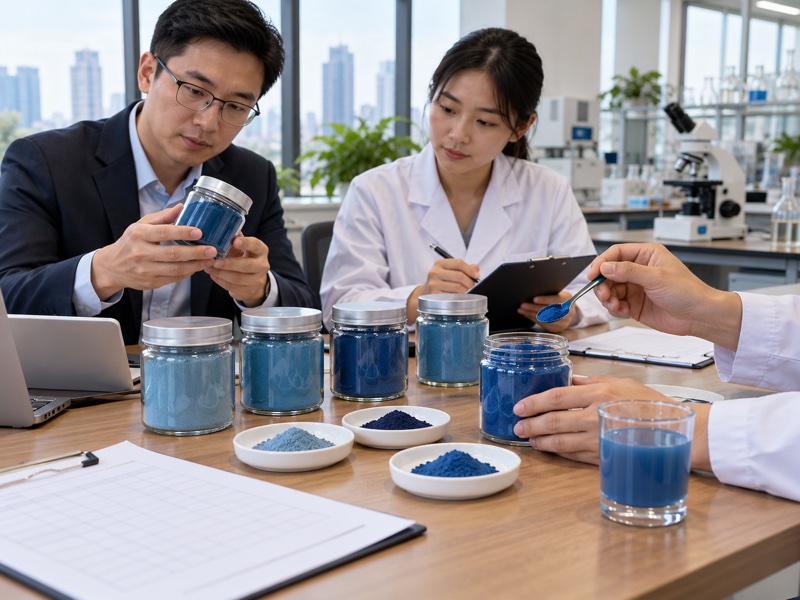
1. Where can you buy food-grade blue spirulina?
Food-grade blue spirulina can be purchased through a manufacturer, qualified ingredient distributor, or retail brand with transparent product information. Manufacturers and distributors are usually the better route for commercial trials, repeat orders, and technical documents. Retail packs can be convenient for a home recipe, but may not provide the specifications needed for food production. Check that the seller identifies the actual material and intended use. A blue appearance alone does not prove food suitability.
Which route suits your project?
Write down the amount needed, application, destination market, and documentation requirements. The blue powder guide explains why grade and form matter. A café may need a small food-grade pack with consistent reorder supply; a bottled-drink brand needs lot documents and technical support. Ask who manufactures the ingredient even when you buy through a distributor. That answer affects traceability and change control.
| Buyer | Likely route |
|---|---|
| Home cook | Reputable retail pack |
| Café | Food-service distributor or maker |
| Food factory | Qualified manufacturer or distributor |
The best seller is the one that can support your actual use.
2. What should a product listing tell you?
A useful listing should identify the ingredient form, full composition, intended food use, package size, storage conditions, and seller. For commercial buying, it should lead to a technical specification and a lot COA. Phrases such as “premium,” “pure,” or “superfood” do not replace those facts. Check whether the powder is blue extract or whole green biomass. Read the back label rather than relying on the title and product photograph.
Which missing details are warning signs?
Be cautious if the listing omits the manufacturer, lot, full ingredient statement, or contact route for technical questions. The composition guide shows how carriers and blends change the formula. A seller may use “blue spirulina” for a flavored drink mix rather than a single color ingredient. Ask before buying if the distinction matters to your recipe. A clear answer is more reassuring than a high review count.
| Listing detail | Why it matters |
|---|---|
| Full ingredients | Carriers and blends |
| Lot and date | Traceability |
| Food-use statement | Suitability |
| Technical contact | Problem resolution |
Buy the listed material, not the photograph.
3. How do you tell blue extract from green powder?
Blue extract is a phycocyanin-rich fraction used mainly for color, while whole spirulina powder is dried biomass that usually looks green. They differ in taste, shade, dose, and nutrition. A marketplace listing can blur them by using “spirulina” as a generic term. Ask for the formal ingredient name and specification. If a recipe needs bright cyan, the wrong form can waste a trial.
What should a sample check show?
Compare a small weighed amount in clear water for hue, dispersion, and flavor, then test it in the real recipe. The blue versus green article gives more detail. A greenish powder is not automatically poor quality; it may simply be a different ingredient. Do not transfer whole-spirulina nutrition claims to the blue extract. Keep both materials named separately in purchasing records.
| Feature | Blue extract | Whole powder |
|---|---|---|
| Main use | Blue color | Nutrition or green color |
| Typical appearance | Blue | Green |
| Flavor | Grade-dependent mild note | Often stronger note |
Identity comes before price comparison.
4. What documents should a business buyer ask for?
A business buyer should ask for a current specification, lot COA, full ingredient declaration, relevant microbiology and contaminant results, traceability, and market documents. The exact list depends on the food and country. If a seller claims organic status or a certified site, verify that the exact grade and transaction are covered. A sample sent without documents may be useful for screening but not enough to release a production order. Agree on documents before paying for a large quantity.
How should the file be checked?
Match the grade name, test method, units, lot number, and limits across the specification and COA. The powder buying guide explains why a grade code is not a universal purity percentage. Keep a copy of the lot’s label and sample photograph. If the manufacturer changes the carrier or processing site, ask for notice and a new trial. Documentation should identify the same material that reaches your factory.
| Document | Decision it supports |
|---|---|
| Specification | Agreed product |
| COA | Lot acceptance |
| Composition | Label review |
| Traceability | Recall response |
Paperwork should match the powder.
5. How should price be compared?
Compare the cost of achieving the target finished color, not only the price per gram of powder. Stronger and weaker grades may require different doses, and shipping or minimum order terms can change the landed cost. A small retail pack may be economical for a few recipes but expensive for a beverage line. An inexpensive bulk offer may require more storage than you can use before expiry. Test performance, then calculate cost per finished serving.
What belongs in the calculation?
Record powder price, dose to approved shade, freight, duties, packaging, shelf-life loss, and quality testing costs. The powder buying guide discusses commercial terms in more detail. Compare quotes on the same Incoterm and currency. If a powder fades in your product, any price advantage can disappear in rejected stock. A buying spreadsheet should use trial results, not catalog promises.
| Cost item | Why include it |
|---|---|
| Dose per serving | Real consumption |
| Landed price | Delivered cost |
| MOQ | Inventory risk |
| Stability loss | Waste and complaints |
Cheap powder can make an expensive product.
6. Is an online marketplace enough for a food business?
An online marketplace can help locate candidates, but a food business still needs direct verification before approving an ingredient. Marketplace ratings rarely establish batch identity, color method, permitted use, or change control. Ask the seller for the manufacturer’s details and current lot documents. Purchase a sample for application testing before a production lot. If the seller cannot support a quality inquiry, the listing is not a complete sourcing route.
How can you screen a marketplace offer?
Check seller history, business identity, product photos of actual packaging, full ingredients, lot documentation, and response quality. The factory page illustrates the type of production information buyers may want, but any claimed capability should be verified for the offered grade. Ask what happens if a delivered lot differs from the sample. A clear return and complaint route matters. Do not let a low price shorten the qualification process.
| Marketplace signal | Better question |
|---|---|
| Five-star reviews | Do they identify this grade? |
| Factory photo | Is it the actual production site? |
| Certificate image | Is scope current and relevant? |
| Low price | What is cost at use level? |
A listing is a lead, not a qualification.
7. Can you buy organic blue spirulina?
You may find products marketed as organic, but the claim must be verified for the exact material and supply chain. Natural origin does not mean organic certification. Requirements vary by market, and a company may sell both certified and conventional grades. Ask for current certificates, product scope, site details, and transaction documents. If the chain is incomplete, treat the material as conventional.
What should the certificate match?
Compare the named legal entity, facility, product, dates, and transaction to the seller’s offer. The natural-label guide explains the distinction. A certificate for whole spirulina may not cover a blue extract. A general website badge does not prove the lot on your order is certified. Make the evidence a condition of the purchase order when the finished product will claim organic status.
| Certificate field | Check |
|---|---|
| Product | Exact grade or category |
| Site | Relevant operation |
| Validity | Current dates |
| Transaction | Shipment chain |
Organic claims need a documented chain.
8. What should you test before a repeat order?
Test the exact grade in the finished recipe and compare more than one lot when color variation matters. A blue-water sample can screen hue and dispersion, but acid, heat, fat, and light in the final food may change performance. Set a target shade and accepted range. Taste for off-notes, check clarity or texture, and follow the product through its planned shelf life. A repeat order should buy the same performance, not just the same name.
What should the pilot record include?
Keep the grade, lot, carrier, dose, formula, process, package, and shelf observations. The natural blue guide explains the application tests. If a new shipment differs, compare lot documents and retained samples. A supplier should define how it will notify you of changes. Written acceptance criteria make a complaint easier to resolve.
| Pilot result | Buying response |
|---|---|
| Stable and on shade | Candidate approval |
| Needs high dose | Recalculate cost |
| Fades in process | Try another grade or system |
| Lot varies | Tighten controls |
The repeat order is the true test of sourcing.
9. What legal checks come before purchase?
Check whether the exact grade is permitted for the intended food category in each destination market and how it must be declared. In the United States, spirulina extract’s identity, specifications, and uses are listed in 21 CFR 73.530. Other markets differ. A seller’s “food grade” statement is not universal permission. Review claims such as natural, organic, high protein, or caffeine-free against the complete finished food.
What should regulatory staff receive?
Provide the ingredient specification, full formula, planned dose, process, package, food category, markets, and draft label. The benefits article helps separate color use from health promises. Keep the decision in the product file. If you later switch seller or grade, recheck it. A legal review after printing packaging can be costly.
| Review item | Reason |
|---|---|
| Food category | Permitted use |
| Exact grade | Identity and carrier |
| Label | Declaration and claims |
| Market | Local rules |
Buy only after the planned use is clear.
10. When have you found the right seller?
You have found the right seller when the ingredient matches your recipe, the documents match the shipment, the price works at use level, and repeat supply is credible. A nice sample alone is insufficient. Agree on grade, packaging, lead time, shelf-life minimum, and change notice. Keep a qualified backup if the product is critical. Revisit the approval when your food or market changes.
What should the final buying file contain?
Store the quote, specification, sample and lot records, pilot results, regulatory decision, and purchase terms. Our team can discuss available grades and documents for a specific commercial application. A home cook may need far less paperwork, but should still read the full label and choose a reputable seller. Good sourcing is proportionate to the risk and scale of the purchase. The goal is a blue result you can reproduce.
| Buyer question | Evidence |
|---|---|
| Is it the right ingredient? | Specification |
| Does it work? | Application test |
| Is it lawful? | Market review |
| Can it be repeated? | Supply terms |
The right place to buy is where the next order is as dependable as the first.
Frequently Asked Questions
Can I buy blue spirulina powder online?
Yes, but check the full ingredient list, food-use status, seller identity, and lot details. A commercial buyer needs more documentation.
What’s the best source for a beverage brand?
A qualified manufacturer or distributor that can supply the exact grade, lot evidence, technical support, and repeat volumes.
How do I know if a powder is truly blue extract?
Read the formal ingredient name and specification, then test a sample. Whole green powder is a different material.
Can I trust an organic badge on a listing?
Not by itself. Verify product, site, dates, and transaction scope before using an organic claim.
Can I buy one sample before a bulk order?
Usually yes. Test it in the actual finished formula and ask whether production lots will match the sample grade.
Conclusion
You can buy blue spirulina through several channels, but the best source is the one that provides the right grade, usable evidence, and repeat performance for your application. You now know how to read listings, compare cost, verify claims, and test a sample before ordering again. If you are sourcing for a commercial food, contact us with your formula, volume, and market. We believe a trustworthy blue ingredient should be as easy to trace as it is to see.