
Make blue spirulina yogurt by stirring a measured blue extract into a pale, already cultured yogurt and checking the color after the product has chilled. A cup that looks brilliant at mixing can turn dull on a retail shelf, especially when fruit acid, whey separation, or light enters the picture. You need a recipe that tastes like yogurt first and still looks blue when the customer opens it. This guide shows how to test that result in a kitchen, café, or product development line.
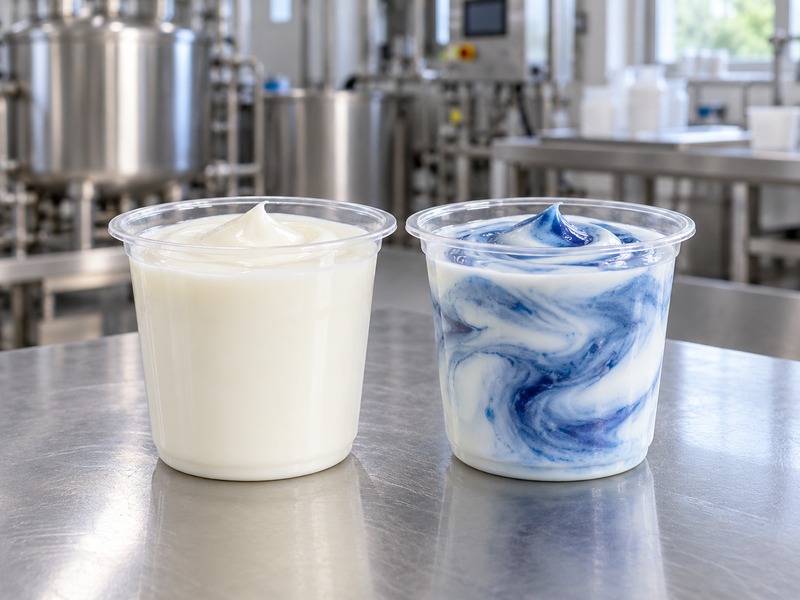
1. What is blue spirulina yogurt?
Blue spirulina yogurt is cultured dairy or plant-based yogurt colored with a phycocyanin-rich spirulina extract. The extract is usually present for its hue; the yogurt base supplies the protein, fat, sugar, and live cultures shown on a nutrition label. The ingredient-form guide explains why blue extract and whole green biomass cannot be swapped without changing appearance. If a blue blend has a carrier or sweetener, add those components to the recipe calculation as well.
What should be in the development brief?
Specify whether the final product is a stirred cup, a Greek-style bowl, a drinkable yogurt, or a fruit layer. Each has a different texture and color challenge. Record the target shade, serving size, process, distribution temperature, and sales market before selecting the ingredient. A plain, uncolored control will show whether the base itself is cream-colored or releases whey during storage.
- Name the yogurt style and culture system.
- Set the shade at end of shelf life.
- Identify fruit, sweetener, and package.
| Brief item | Why it changes the trial |
|---|---|
| Base opacity | Changes visible blue |
| Fruit layer | Adds color and acid |
| Package | Affects light exposure |
The first sample should answer the brief, not merely look good in a mixing bowl.
Key Takeaway: Decide on the finished yogurt format before dosing the extract.
2. Which yogurt base shows blue clearly?
A pale, smooth base usually shows blue spirulina yogurt more clearly than a yellow-tinted or heavily flavored base. Greek yogurt can appear lighter because of opacity, while some plant yogurts bring beige or gray tones. Coconut, oat, soy, and dairy also differ in flavor and protein structure. The blue-versus-green comparison helps when someone proposes whole spirulina as a cheaper color source; it will rarely produce the same clean hue.
How should you compare candidates?
Use the same extract lot and weight in each base. Stir gently, photograph in identical cups, and taste without toppings. Then chill and inspect again after the same interval. If a base looks blue only at a costly dose, note that before you optimize a flavor that may not be commercially viable.
- Keep dose and sample weight constant.
- Check color after chilling, not just mixing.
- Note any difference in tang or off-flavor.
| Base | Likely consideration |
|---|---|
| Dairy Greek | Opacity and thickness |
| Coconut | Fat separation and flavor |
| Oat | Beige cast |
The best color base still needs to meet the intended yogurt taste and texture.
Key Takeaway: Select the base from a chilled, tasted side-by-side trial.
3. When should the blue extract be added?
Add the extract after any heat step and after fermentation when the blue spirulina yogurt process and food-safety plan permit it. Phycocyanin can lose color under harsh heat, but late addition must be handled with validated hygiene controls. A home bowl and a sealed retail cup are different operations. For a commercial product, map the exact addition point, equipment, and microbiological requirements before a trial becomes a standard operating procedure.
Which stages are worth testing?
Compare a controlled post-culture mix with any alternative your plant can safely run. Measure color and pH immediately, then evaluate retained cups through the intended shelf period. A later addition may improve shade yet introduce mixing or contamination risk; if so, redesign the operation instead of treating color as the only pass criterion. The food-color application guide offers broader processing context.
- Record time, temperature, and pH.
- Use sanitary equipment for post-heat addition.
- Retain cups for color and microbiology checks.
| Addition stage | Main question |
|---|---|
| Before heat | How much color survives? |
| After culture | Is mixing and hygiene validated? |
| At service | Can staff repeat the appearance? |
A vivid cup that fails the site’s safety plan is not an acceptable formula.
Key Takeaway: Approve the addition stage only after color and process controls both pass.
4. How does yogurt acidity affect the blue?
Yogurt’s acidity can weaken or shift the color of blue spirulina yogurt, so pH belongs on every trial sheet. Fruit preparations may make the local environment more acidic than the plain base, especially at a swirl boundary. The visible result also depends on the extract grade and holding time.
Do not assume a color seen at mixing will survive weeks under refrigeration. A product-specific shelf trial is more useful than a broad claim that blue extract is either stable or unstable in all yogurt.
What should the pH trial record?
Measure the plain base and finished colored yogurt using the site’s normal method. Compare cups with and without fruit, then inspect the same positions over time. If the fruit layer bleeds into the blue, adjust the layer design or choose a different visual format. Record both instrument readings and photographs under consistent lighting; a number alone does not show the customer’s view.
- Measure pH after mixing and during storage.
- Inspect the fruit-yogurt boundary.
- Keep a color-free control.
| Observation | Possible next step |
|---|---|
| Blue fades evenly | Review grade and dose |
| Purple edge appears | Investigate fruit contact |
| Whey layer grows | Address base stability |
The useful question is how the complete cup changes, not how the dry powder looks.
Key Takeaway: Test the pigment in the final acidic formula through its intended life.
5. How much pigment gives the right shade?
Use the lowest weighed dose that gives blue spirulina yogurt an acceptable shade after chilling and storage. Color strength varies by supplier grade, so a teaspoon in an online recipe is not a production specification. Extra pigment can increase cost or change taste without fixing an unsuitable base.
The powder guide explains why grade labels need the supplier’s own test method. Build a dose ladder in the final yogurt and compare cups at the same fill weight.
What makes the dose decision defensible?
Put color, taste, and cost side by side. Weigh three or more doses, photograph after mixing and at end of life, and taste blind where possible. Include any added carrier in the ingredient statement and nutrition calculation. If a stronger grade uses less powder, verify that saving against its unit price and handling behavior rather than assuming it is cheaper.
- Report grams per kilogram of yogurt.
- Taste at the planned serving temperature.
- Include ingredient cost per cup.
| Dose level | Question to answer |
|---|---|
| Low | Is blue visible enough? |
| Target | Does shade hold without off-note? |
| High | Is the extra cost justified? |
An approved color needs a number that the next batch can reproduce.
Key Takeaway: Lock the dose by weight after testing the full storage period.
6. Can fruit or sweeteners stay in the formula?
Fruit and sweeteners can work in blue spirulina yogurt, but their color, acid, and flavor must be tested with the extract. Blueberry purée may turn a blue base purple, while a pale fruit layer can keep the contrast clearer. Honey and darker syrups may introduce an amber cast.
For a layered cup, test both separate layers and a stirred spoonful, because consumers will eventually mix them. The blue spirulina smoothie bowl guide covers a related cold application with different texture demands.
What is a useful flavor screen?
Start with plain blue yogurt, then add one fruit or sweetener at a time. Hold the finished cup, not just the ingredients, and inspect color bleed and whey separation. Taste at the sweetness level you intend to sell. If the flavor needs so much fruit that blue disappears, consider a white-and-blue swirl instead of forcing a uniformly blue cup.
- Change one addition per trial.
- Check the cup before and after stirring.
- Record sweetness and acidity together.
| Addition | Watch for |
|---|---|
| Pale fruit | Acid and water release |
| Dark berries | Purple or gray blending |
| Dark syrup | Brown cast |
You can preserve a fruit flavor without asking the color to do impossible work.
Key Takeaway: Choose layer design and flavor together, then test how customers eat the cup.
7. Does the color last in a refrigerated cup?
Blue spirulina yogurt may change during refrigerated storage, so a real shelf test is required for each recipe and package. Light, oxygen, pH, temperature fluctuations, and whey separation can alter the customer’s impression. The blue spirulina shelf-life guide addresses dry ingredient handling, while your finished yogurt needs separate validation. Keep retained cups from the same fill run and compare them under repeatable lighting at planned checkpoints.
Which shelf observations matter most?
Check appearance when the lid opens, after a gentle stir, and after a spoonful is removed. Record color, whey, taste, odor, texture, and package integrity; microbiological testing follows your product’s safety program. A cup may still be safe yet look unappetizing. That commercial failure deserves a place in the specification alongside laboratory results.
- Test several points through the target shelf life.
- Include light-exposed and protected packs if relevant.
- Photograph cups against a retained standard.
| Check | Customer-visible issue |
|---|---|
| Top surface | Fading or streaks |
| Stirred body | Uneven color |
| Whey | Pale or tinted separation |
A color claim should describe the cup at purchase, not its first day in the plant.
Key Takeaway: Set the shelf life from finished-cup evidence, not from the powder label.
8. What belongs on the nutrition and allergen label?
The nutrition and allergen label for blue spirulina yogurt must describe the complete served product, including the yogurt base, extract blend, fruit, and toppings. A small blue color dose should not be credited with the nutrient levels of whole spirulina. The nutrition-facts guide explains that difference. Dairy, soy, coconut, nuts, and other ingredients need a market-specific label review, including cross-contact controls where applicable.
How should a team calculate a serving?
Use weighed ingredients and actual filled cup weight. Obtain supplier nutrition and ingredient data for the exact blue SKU, then calculate or test the finished product under local rules. If toppings are added at service, document whether the menu values include them. Marketing words such as “protein-rich” or “immune-supporting” need separate substantiation and legal review; color does not establish them.
- Include fruit preparations and toppings.
- Check the blue blend’s carrier.
- Review allergen and claims rules for the market.
| Label item | Source of evidence |
|---|---|
| Calories | Full formula or test |
| Protein | Yogurt and other ingredients |
| Allergens | Ingredient and plant review |
The blue appearance is a design choice; the label must follow the recipe.
Key Takeaway: Base claims on the complete cup and the exact material purchased.
9. How do you make production repeatable?
Repeatable blue spirulina yogurt needs controlled mixing, fill weight, lot tracking, and an agreed color range. A hand-stirred bowl can hide streaks that become obvious in thousands of cups. Define mixing time, shear, temperature, and the point where the extract enters the batch.
The wholesale guide helps frame supplier documentation for repeat orders. Keep a retained reference cup or approved image under fixed lighting so operators share the same target.
What should a pilot run capture?
Take samples from the beginning, middle, and end of the fill. Note whether color settles, foam forms, or fruit distribution changes. Check the first and last cups after refrigeration as well as at the mixer. When a later lot looks different, the log should let you separate base variation, dosing error, and ingredient variation before anyone changes the recipe.
- Weigh extract into the batch.
- Record mixing and fill conditions.
- Compare cups across the run.
| Control | Why it matters |
|---|---|
| Extract lot | Traceability and color comparison |
| Mix time | Uniform shade |
| Fill weight | Nutrition and cost |
Production approval means the entire run works, not just a sample pulled from the tank.
Key Takeaway: Write process limits that operators can check while the line is running.
10. How should you choose a blue ingredient supplier?
Choose a supplier for blue spirulina yogurt by testing its exact food-grade extract in your base and reviewing current lot documents. Ask for the specification, certificate of analysis, ingredient composition, storage guidance, and application support. The manufacturer guide explains how to verify who makes and sells the material. An “organic” or grade claim applies only if the exact SKU and required chain of custody support it; do not assume every product in a catalog qualifies.
What belongs in the sample request?
Share the yogurt type, pH range, process temperatures, target shade, package, market, and expected volume. Request enough sample for a full shelf test, not merely a one-cup demonstration. Compare proposed lots by color, dispersion, taste, documentation, and supply terms. If a material performs well but the supplier cannot provide the documents your quality team requires, it is not ready for approval.
- Request the exact product specification.
- Review batch-specific quality results.
- Confirm repeat supply and lead time.
| Supplier check | Decision it supports |
|---|---|
| SKU composition | Recipe and label |
| Lot certificate | Release decision |
| Application trial | Color and process fit |
A tested relationship between grade and recipe is worth more than a generic blue-powder claim.
Key Takeaway: Approve the supplier only for the grade and use you have actually validated.
Conclusion
Blue yogurt succeeds when a pale cultured base, measured extract, controlled acidity, and suitable packaging hold together through the product’s real shelf life. You now have a practical way to test mixing, fruit layers, dose, labels, and supplier evidence before launch. For a sample and specification matched to your yogurt brief, contact us. Our view is simple: a natural color should survive the journey from formulation bench to the customer’s spoon.
FAQ
Can I add blue spirulina before fermenting yogurt?
Only after a process trial. Fermentation and any heat step may change the color, and the addition point must fit your food-safety plan.
What’s the best yogurt for a vivid blue cup?
Start with a pale plain base. Compare dairy and plant options at equal pigment dose after chilling and storage.
How do I know if fruit will spoil the shade?
Test the finished cup. Watch the fruit boundary and a stirred sample through the planned shelf period.
Can I market blue yogurt as high protein?
Only if the complete serving meets the applicable claim rules. A small color dose does not establish a protein claim.
How do I know if a supplier sample is suitable?
Check the exact lot. Review its specification and quality documents, then trial it in your real yogurt recipe.