
Make a blue spirulina mocktail by dispersing a measured blue extract in a little cool water, then combining it with a pale, balanced zero-proof base just before service. The drink that looks electric in a test glass can become green with citrus, gray with a dark mixer, or watery after ice melts. You need flavor and appearance to survive the same five minutes. This guide gives you a practical way to build, batch, and check a blue drink for a bar or bottled line.
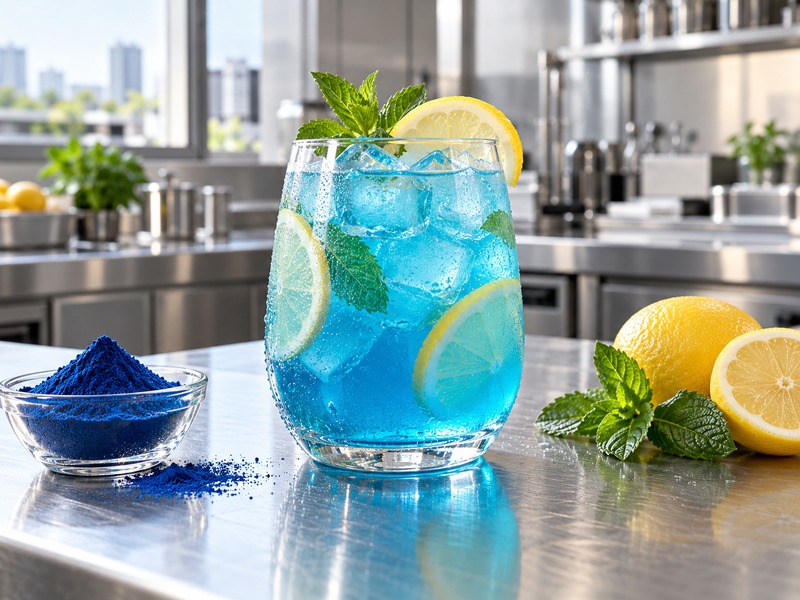
1. What makes a blue spirulina mocktail naturally blue?
A blue spirulina mocktail gets its color from a phycocyanin-rich extract of cultivated spirulina. The color ingredient is different from whole green spirulina and usually contributes little nutrition at a drink-color dose. The blue ingredient guide explains the forms. If a purchased powder contains sugar or another carrier, that belongs in the formula and label; the word “natural” does not tell you the full composition or legal status in every market.
What should the drink brief include?
Begin with a flavor, not a shade. State whether the drink is citrus, floral, tropical, or botanical, then identify sweetener, acid, carbonation, garnish, glass, and service time. A clear blue drink and a cloudy pastel one need different bases. Keep an uncolored control so you can taste whether the extract or another ingredient is responsible for an off-note.
- Set a target hue in the finished glass.
- Define sweetness and acidity ranges.
- Decide whether the drink is made to order or bottled.
| Brief choice | Effect on the result |
|---|---|
| Clear base | Deeper apparent blue |
| Cloudy base | Softer pastel shade |
| Citrus juice | Acid and yellow tint |
The blue ingredient can only color the drink you actually build.
Key Takeaway: Write the flavor and service brief before selecting the pigment dose.
2. Which base gives the clearest blue?
A pale or clear base usually gives a blue spirulina mocktail the cleanest blue. Water, light tonic, or a nearly colorless botanical infusion lets the extract show; pineapple juice and yellow lemonade can pull it toward green. The blue spirulina lemonade guide is useful when citrus is central to the drink. Dark cola, coffee, and strong berry purée may overwhelm the blue entirely, so compare them as separate concepts rather than chasing color with ever more powder.
How can you screen mixers quickly?
Make a small set of identical glasses with the same extract dose and ice mass. Change only the mixer, then photograph at pouring and after several minutes. Taste each glass before garnish. A mixer that produces a good shade but poor flavor should be rejected; a mocktail must work as a drink, not as a color demonstration.
- Use equal liquid and ice weights.
- Compare color in the same glassware.
- Taste after normal dilution.
| Mixer | Main concern |
|---|---|
| Clear tonic | Bitterness and carbonation |
| Pale juice | Yellow cast |
| Dark fruit | Purple or gray hue |
The right base reduces the amount of color you need.
Key Takeaway: Select the mixer with matched color and flavor trials, not a photograph alone.
3. How should the extract be mixed in?
Disperse blue extract in a small amount of cool water before it enters a blue spirulina mocktail, especially when the drink contains ice or carbonated liquid. Dry powder can cling to ice, float in specks, or collect at the bottom. A small, smooth slurry gives more even color without adding much dilution. The powder handling guide covers why dispersion differs across grades and blends.
What does a mixing trial reveal?
Compare direct sprinkling, a preblended slurry, and any measured syrup your bar may use. Inspect the glass from the side after one minute, then check for sediment or streaks after stirring. If a frother is used, record its time and speed so another worker can repeat the result. Keep the slurry cold and follow your site’s holding rules if it is prepared ahead.
- Weigh powder and water separately.
- Check for visible specks and sediment.
- Record the mixing tool and time.
| Method | Operational question |
|---|---|
| Dry addition | Does powder clump? |
| Cool slurry | Is color even? |
| Prepared syrup | Does it remain stable in service? |
Good dispersion is visible before the garnish goes on.
Key Takeaway: Standardize a small preblend if it gives a cleaner, faster pour.
4. Will lemon or lime turn the drink purple?
Lemon or lime can shift or weaken the color of a blue spirulina mocktail because phycocyanin responds to acidity, but the result depends on the exact formula and time. The fruit’s yellow tint also changes what you see, independently of pigment chemistry. Test acid at the concentration consumers will drink. Do not assume a bright blue seen in water will survive a sour mixer for an entire service period.
How do you build an acid ladder?
Hold extract dose and base volume constant, then add measured increments of citrus. Record pH, taste, and appearance immediately and after the expected wait on the table. A drink with too little acid can taste flat even if it stays blue, so the goal is a balanced formula. Consider a layered pour or a different flavor base if the desired sourness and blue shade cannot coexist.
- Measure citrus rather than squeezing by eye.
- Photograph at pour and after dilution.
- Taste at the planned serving temperature.
| Trial | Decision |
|---|---|
| Low acid | Is flavor lively enough? |
| Target acid | Does shade hold? |
| High acid | Is color loss acceptable? |
The customer’s first sip matters more than the pigment’s color in plain water.
Key Takeaway: Set acid by flavor, then confirm that the color meets the brief.
5. How much blue extract belongs in a glass?
Use the lowest weighed dose that produces the target shade in a fully mixed blue spirulina mocktail after normal ice dilution. A pinch varies by worker and ingredient density, making cost and color unpredictable. Stronger grades are not automatically better value; they need a matched drink trial. The food-color application guide explains why dose must be checked in the finished application.
What should a bar dose sheet show?
Record grams per drink, water used for preblending, mixer volume, ice mass, color, taste, and ingredient cost. Run at least three doses and blind-taste if the blue material has a noticeable flavor. Then repeat the selected formula during a busy service simulation. A specification should tell the bartender what to do, not ask them to interpret “a little blue.”
- Weigh low, middle, and high doses.
- Include dilution in the test.
- Cost the finished drink, not just the powder.
| Dose | What to assess |
|---|---|
| Low | First acceptable blue |
| Target | Appearance and taste |
| High | Extra cost or off-note |
Precise dosing is a quality control that also protects your margin.
Key Takeaway: Put a measured extract amount on every recipe card.
6. What role should sweetener and garnish play?
Sweetener should balance acidity in a blue spirulina mocktail without adding a brown cast or masking the drink’s intended flavor. Clear simple syrup is visually neutral; honey, caramel, and dark fruit syrups may change the hue. Garnish can help the drink read as fresh, but a large wedge that drips acid into the glass may alter color at the rim. The blue spirulina syrup guide covers a measured color concentrate if you prefer a prepared component.
How do you evaluate the final presentation?
Make the drink exactly as staff would serve it, including straw, garnish, and glass. Photograph it before and after a customer-length delay. Check whether herbs shed particles, fruit bleeds, or a syrup layer collects at the base. Remove any decoration that creates a maintenance problem or obscures the blue.
- Use weighed syrup, not an unmarked pour.
- Test garnish contact with the drink.
- Inspect after several minutes on ice.
| Component | Possible problem |
|---|---|
| Clear syrup | Excess sweetness |
| Dark syrup | Muddy shade |
| Citrus wedge | Local acid shift |
A garnish earns its place when it improves aroma or flavor as well as the photograph.
Key Takeaway: Treat sweetener and garnish as tested ingredients, not finishing touches.
7. Can a café batch the mocktail base?
A café can batch parts of a blue spirulina mocktail, but the holding period needs its own quality and safety checks. Carbonated mixers should usually be added at service, while a preblended color component may save time if it stays uniform. The shelf-life guide describes the dry ingredient, not a prepared drink. Once water, sugar, and fruit enter, the prepared component needs a separate time-and-temperature plan.
Which steps make batching practical?
Separate the recipe into a controlled color preblend, a measured flavor base, and a finishing mixer. Label each container with preparation time and use-by period under your food-safety procedure. Stir or mix as validated before portioning; a settling component can make early glasses pale and late glasses dark. Test the last glass from a batch, not just the first.
- Define preparation and disposal times.
- Check color uniformity across the batch.
- Add carbonation when serving.
| Component | Batching concern |
|---|---|
| Color preblend | Settling or color drift |
| Citrus base | Acid consistency |
| Sparkling mixer | Loss of bubbles |
Speed is valuable only when the last order looks and tastes like the first.
Key Takeaway: Validate the hold period for each prepared component.
8. Does a mocktail need special label or claim checks?
A bottled blue spirulina mocktail needs ingredient, nutrition, and color-use review for the market where it will be sold. A café menu also should not imply a health benefit from a small color dose. The blue spirulina nutrition facts guide explains the difference between an extract and whole biomass. Check the full formula, including carriers, sweeteners, and fruit, before making calorie or “no added sugar” statements.
What belongs in the review file?
Keep the exact SKU specification, ingredient statement, batch formula, calculated or tested nutrition, and intended claims. Confirm whether the proposed color is permitted for the particular food and jurisdiction. If a menu uses the word “natural,” make sure the statement fits local rules and the entire ingredient list. The quality team, not the photo team, should approve the final wording.
- Review the exact extract composition.
- Include all sweeteners and mixers.
- Check claims and color permission by market.
| Statement | Evidence needed |
|---|---|
| Calories | Complete serving formula |
| No added sugar | Every ingredient source |
| Natural color | Product and market review |
The blue look is a sensory feature, not proof of a wellness claim.
Key Takeaway: Let the recipe and jurisdiction determine what the menu or label says.
9. What changes when the drink is bottled?
A bottled blue spirulina mocktail is a new product with different processing and shelf-life demands from a made-to-order glass. Heat treatment, acidity, oxygen, light, and packaging can all affect the shade, while microbiological safety must be validated independently. The blue spirulina drink guide outlines the broader transition from café formula to beverage product. Do not simply scale up the bar recipe and assume the same result will survive distribution.
What should a pilot line measure?
Run a small production trial with the actual package and process. Sample bottles at fill, after storage, and at the proposed end of life; assess color, taste, sediment, carbonation, and package integrity. Keep a process log so a color change can be traced to heat, oxygen, or ingredient variation. If blue fades under the safe process, redesign the formula or product concept rather than weakening the safety step.
- Document pH and process conditions.
- Test the real package and light exposure.
- Review microbiology under the site’s program.
| Pilot check | Why it matters |
|---|---|
| Fill color | Starting standard |
| End-of-life color | Customer experience |
| Microbiology | Product safety |
A retail bottle has to pass after distribution, not just at the filling valve.
Key Takeaway: Treat bottling as a separate development project with its own validation.
10. How do you select a reliable blue supplier?
Choose a supplier for a blue spirulina mocktail by reviewing the exact extract grade, composition, lot documents, and performance in your drink. Ask for a current specification and certificate of analysis, then compare samples at the same dose and acid level. The manufacturer guide helps distinguish a manufacturing site from a reseller. A grade name alone does not establish purity, regulatory fit, or stable supply.
What should you send with a sample request?
Tell the supplier your base, approximate pH, process temperature, target color, pack, sales markets, and annual volume. Ask for dispersion and storage guidance, and confirm whether the proposed grade contains a carrier. Retain the approved sample to compare later lots. If the material meets color but not documentation or supply needs, keep testing rather than promising it on a menu or label.
- Request the exact SKU specification.
- Check batch-specific quality results.
- Confirm repeat supply and lead time.
| Supplier item | Buyer decision |
|---|---|
| Specification | Formula and label fit |
| Certificate of analysis | Lot release |
| Application test | Drink performance |
A good supplier makes the same drink possible next month, not just today.
Key Takeaway: Approve the material only after the drink and documentation both meet your brief.
Conclusion
A reliable blue mocktail begins with a pale, good-tasting base, a measured extract preblend, controlled acidity, and a service test on ice. You now have a way to check dose, garnish, batching, claims, and bottled-product risks before launch. For a sample and technical information matched to your drink, contact us. We believe natural color should make a beverage more appealing without asking customers to compromise on taste or transparency.
FAQ
Can I stir blue powder straight into sparkling water?
You can try, but a cool-water preblend is usually cleaner. It reduces clumps and gives a more even pour.
What’s the best mixer for a clear blue drink?
Start with a pale or clear mixer. Compare flavor and shade after normal ice dilution.
How do I know if citrus is too acidic?
Test it in the finished glass. Record taste, pH, and color at pouring and after the expected serving delay.
Can I batch a blue mocktail for a busy bar?
Yes, with a validated hold period. Keep carbonated components for service and check the last pour from each batch.
How do I know if a blue ingredient is food grade?
Review its exact specification and lot certificate. Confirm composition and permitted use for your sales market.