
Blue spirulina extract usually has a mild flavor in a smoothie at a color-use dose, but the exact grade, amount, and fruit base can make it noticeable. What does blue spirulina taste like in smoothies? Usually very little at a color-use dose, although the exact recipe can reveal a mild note. If your first blue smoothie tastes grassy, the problem may be whole green spirulina, an oversized scoop, or a poorly balanced recipe. A beautiful blue cup that people do not finish is a failed product. This guide shows you how to test what blue spirulina tastes like in smoothies without letting color bias the tasting panel.
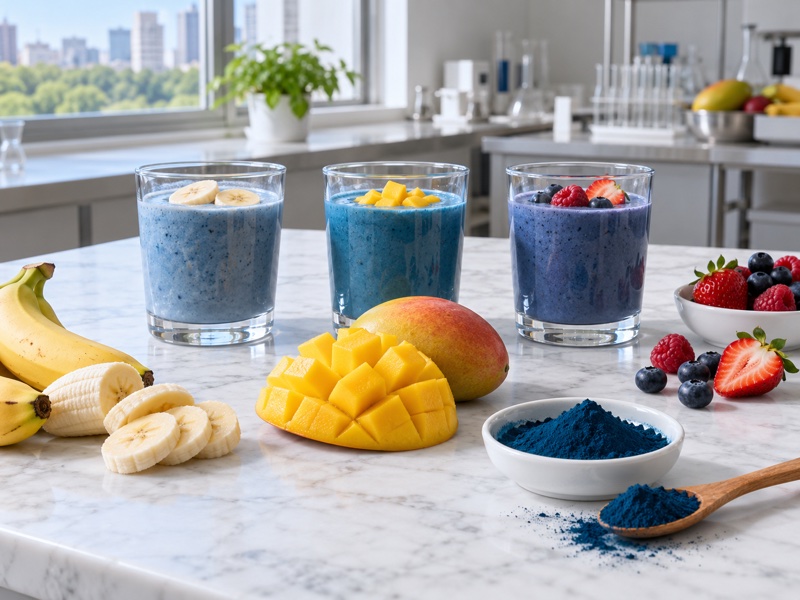
1. Does blue spirulina taste like the ocean in a smoothie?
Blue spirulina extract does not necessarily taste like the ocean in a smoothie, though some people may notice a mild earthy or mineral note. Taste varies with the product and dose. Whole green spirulina often has a more distinct flavor because it retains more biomass components. A smoothie with banana, mango, or yogurt may mask a small extract dose, while a water-based drink exposes it. Test the exact powder rather than relying on a general description.
How can you tell which material you used?
Check the ingredient name, color, specification, and any carrier. The blue versus green article explains why whole powder and blue extract behave differently. If a recipe calls for “spirulina” without specifying the form, a green powder can produce both a different color and a stronger taste. The US spirulina extract rule identifies the color material as a filtered aqueous extract of dried Arthrospira biomass. Ask the supplier for a product-specific sensory description, but confirm it in your own recipe. Flavor is a finished-food result.
| Ingredient | Likely smoothie effect |
|---|---|
| Blue extract | Blue color with grade-dependent note |
| Whole spirulina | Greener color and stronger note |
| Flavored blend | Taste also comes from added ingredients |
Identify the material before trying to fix the taste.
2. How much powder makes the flavor noticeable?
Flavor becomes more noticeable as the dose rises, but there is no universal threshold for every smoothie. A concentrated grade may give the desired color with less powder, while a weaker grade may need more. Fruit ripeness, fat, sweetness, and serving temperature change perception too. Use weighed dose levels rather than a spoonful. The best dose reaches the approved shade without leaving an off-note or high cost.
What should a dose ladder include?
Make an uncolored control and several measured blue levels in the same base. Taste them blind in opaque cups first, then reveal the color and compare appearance. The blue powder guide explains why grade and carrier affect dose. A vivid sample may be judged more favorably by sight even when tasters prefer a paler version. Record both results before choosing the formula.
| Dose observation | What it suggests |
|---|---|
| Pale and neutral | Test stronger grade or modest increase |
| Bright and neutral | Candidate dose |
| Bright with off-note | Reduce dose or rebalance base |
| Cloudy or gritty | Check dispersion |
Color and taste need separate scores.
3. Which fruit base hides the note best?
A ripe banana or mango base often provides sweetness and body that can soften a mild extract note, but it can also turn the blue greenish. Berries may mask taste well while obscuring the blue entirely. Coconut and pale melon bases can keep the shade cleaner but may need flavor balance. The best fruit depends on the drink you want, not a rule that one fruit always wins. Compare at equal finished sweetness and texture.
How do you run a fruit-base comparison?
Use the same blue grade, dose, liquid, and serving temperature. Change only the fruit base, then judge flavor and color separately. The blue smoothie article covers the general recipe options; this test isolates taste. If one fruit is much sweeter, adjust the control so the panel does not simply choose sweetness. Record ripeness and supplier because fruit varies across seasons.
| Base | Taste effect | Visual risk |
|---|---|---|
| Banana | Creamy sweetness | Yellow shifts blue |
| Mango | Strong fruit flavor | Orange tone |
| Berries | Masks notes | Blue hidden |
| Coconut | Mild, pale base | May need more flavor |
Choose the base that tastes good before adding color.
4. Does yogurt change the taste?
Yogurt changes the smoothie because acidity, dairy flavor, protein, and texture can alter both the taste and shade. A thick yogurt may make the blue pastel and reduce the perception of a slight extract note. A sour yogurt can make the finished drink sharper and challenge color stability. Plant-based yogurts have different flavors and ingredients, so they need their own tests. Do not assume the blue extract will taste identical in every creamy base.
Which yogurt variables matter?
Compare plain, sweetened, and plant-based versions at the same serving size and blue dose. Record pH where relevant, sweetness, viscosity, aftertaste, and color after holding. The smoothie bowl guide shows how a thicker format can make a pastel blue desirable. If the yogurt’s tang dominates, more fruit may help the flavor but change the hue. Adjust one variable at a time.
| Yogurt property | Possible result |
|---|---|
| Acidity | Sharper taste, color stress |
| Fat | Creamier mouthfeel |
| Native color | Pastel or teal shift |
| Added sugar | Masks mild notes |
The base should not be chosen only for its color.
5. Can protein powder make the smoothie taste worse?
Yes, protein powder can add chalkiness, sweetness, bitterness, or aroma that may be mistaken for the blue extract. It can also thicken the drink and turn a transparent blue into a pale opaque shade. Test the protein base without blue first. If the plain protein smoothie is unpleasant, adding a blue pigment will not fix it. The final formula should meet its nutrition target and taste target together.
How can you isolate the source of an off-note?
Prepare four versions: base alone, base plus protein, base plus blue, and base plus both. Taste them blind and compare the differences. The nutrition overview explains why a small blue extract dose should not be treated as the smoothie’s protein source. Record the protein brand and flavoring because vanilla and unflavored versions can behave differently. A simple four-cup test can save a month of wrong formulation changes.
| Sample | What it reveals |
|---|---|
| Base | Fruit and liquid flavor |
| Base + protein | Protein contribution |
| Base + blue | Extract contribution |
| Base + both | Interaction |
Fix the ingredient that creates the off-note.
6. Why might a smoothie taste grassy or fishy?
A grassy or fishy impression may come from whole spirulina, an unsuitable or poorly handled product, another ingredient, or an unusually high dose. It should not be assumed to represent every blue extract. Check the label and lot first, then taste the powder at a controlled dilution if the quality team considers that appropriate. If the odor is abnormal or the product is out of specification, do not try to hide it with fruit. Investigate quality before reformulating.
What should the quality check cover?
Compare the lot with its COA, packaging seal, storage history, and approved retained sample. The taste overview gives a broader discussion of expected notes. If the new batch differs materially, contact the supplier with the lot number and an objective description. A stronger fruit flavor is not a substitute for resolving a quality concern. Sensory testing and lot release should work together.
| Symptom | First investigation |
|---|---|
| Green hue and strong flavor | Whole biomass identity |
| New off-odor | Lot and storage |
| Grit | Dispersion and grade |
| Bitter finish | Protein or flavor blend |
Do not mask a questionable lot.
7. Does sweetness hide the extract flavor?
Sweetness can mask a mild note, but too much sugar can make a blue smoothie cloying and undermine the product concept. Fruit sweetness varies with ripeness, and syrups can add their own color. Aim for a balanced drink at the serving temperature. A sweetener trial should start from a smoothie whose base is already pleasant. The smallest adjustment that solves the problem is usually easier to reproduce.
How should sweetener tests be compared?
Make equal-volume samples with the same blue dose and measured sweetener levels. Ask tasters about first sip, aftertaste, and whether they would finish the whole serving. The blue drink guide applies the same discipline to a thinner beverage. Include an unsweetened control. If high sweetness is needed to hide the powder, another grade or lower dose may be a better ingredient decision.
| Sweetness level | Assess |
|---|---|
| None added | True base flavor |
| Light | Balance |
| High | Masking versus cloying |
Balance is more valuable than concealment.
8. What does temperature do to flavor?
Cold service can reduce some aroma perception and make a smoothie feel fresher, while a warming glass can reveal aftertaste. Ice dilution also changes sweetness and texture. Judge the smoothie at the temperature and time a customer actually drinks it. A frozen bowl and a ready-to-drink bottle have different conditions. Do not approve the formula only at the moment it leaves the blender.
What is a realistic service test?
Taste immediately, after 15 minutes, and after the planned hold in the intended cup or bottle. Record temperature, color, separation, and flavor. The blue ice cream article shows how cold formats change the sensory experience. If an off-note appears as the drink warms, adjust the base or serving format. A customer may drink the last third at a very different temperature from the first sip.
| Moment | Why check it |
|---|---|
| Just blended | Starting impression |
| Mid-service | Dilution and warming |
| End of hold | Late flavor and separation |
Taste the drink through its real life.
9. How should a business test consumer acceptance?
Use a small, structured sensory panel with the target customer in mind. Do not show the brand story or powder claims before a blind taste, because expectations can influence ratings. Ask about flavor, texture, color, aftertaste, and purchase intent separately. Include a control smoothie without blue. If you compare grades, match the finished shade so one sample is not preferred only because it is brighter. This is how a brand can answer “what does blue spirulina taste like in smoothies?” for its own formula.
What should the panel form ask?
Use short questions: Would you finish this serving? What flavor do you notice? Is the blue appealing? Does anything linger after swallowing? The blue smoothie recipe guide can provide a consumer-style starting formula, while the panel tests a commercial version. Record dose, lot, base, and preparation order for every sample. A preference without a recipe record cannot guide production.
| Question | Decision supported |
|---|---|
| Would you finish it? | Overall acceptance |
| What tastes off? | Reformulation target |
| Is the shade right? | Color standard |
| Would you buy it? | Market signal |
The finished cup, not the ingredient story, must win.
10. When is the smoothie formula ready?
It is ready when the flavor, shade, texture, safety, and cost are repeatable with the intended ingredient grade and production method. A café needs a clear recipe and service window; a bottled smoothie needs process, package, shelf-life, and label validation. Keep the exact blue dose and fruit specification with the signed formula. Recheck after a supplier or seasonal fruit change. A vivid color should help people choose a smoothie they enjoy drinking again.
What belongs in the handoff?
Include the ingredient specification, lot record, fruit and liquid quantities, mixing order, shade reference, sensory results, and approved claims. Our team can provide extract samples and batch documents for a business trial. If the product is packaged, quality and regulatory staff should review the final serving and claims. Keep a retained sample when your system requires it. Good handoffs turn one successful tasting into a repeatable product.
| Handoff item | Why it matters |
|---|---|
| Weighed dose | Flavor and shade consistency |
| Base specification | Seasonal control |
| Sensory standard | Customer experience |
| Quality file | Batch traceability |
Launch a smoothie people want to finish.
Frequently Asked Questions
Can I taste blue spirulina in a smoothie?
Sometimes, especially at a high dose or in a mild base. Test the exact extract and recipe rather than assuming it is flavorless.
What’s the best fruit to mask the taste?
Banana or mango may help, but they can shift the blue. Choose the fruit that gives the best total flavor and appearance.
How do I know if I used whole spirulina instead?
Check the ingredient name and specification. Whole powder usually looks green and can have a stronger flavor.
Can protein powder cause the bad taste?
Yes. Compare the base with and without protein and blue extract in a four-sample test.
Can I make a blue smoothie taste neutral?
Often a mild result is possible with a suitable grade and dose. Flavorless should not be promised without testing the finished smoothie.
Conclusion
Blue spirulina extract can taste mild in smoothies, but the fruit, yogurt, protein, dose, temperature, and product grade decide what a customer actually tastes. You now have a simple way to separate those effects and select a formula for repeat purchases. If you are developing a commercial smoothie, contact us with your base, target shade, and market for extract information. We believe a blue smoothie should be remembered for its flavor as well as its color.