
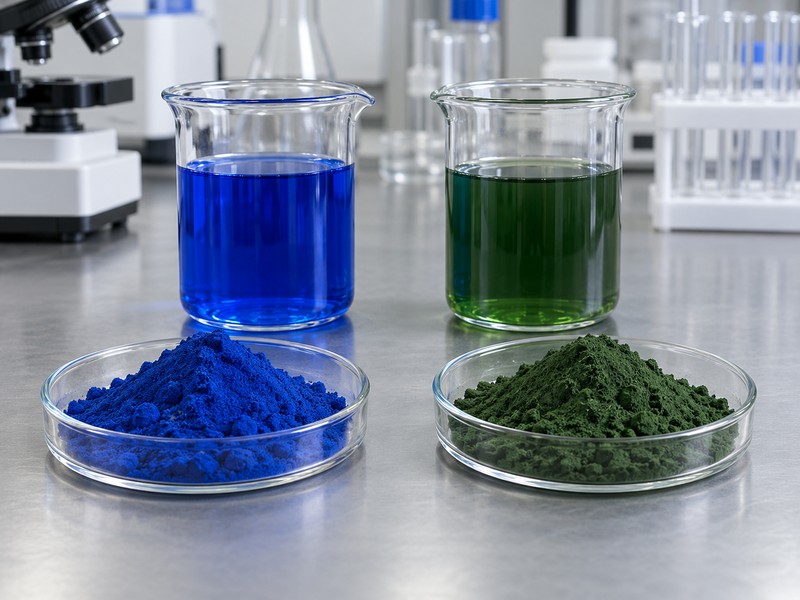
Blue spirulina is usually a phycocyanin-rich extract; green spirulina is generally dried whole biomass. If you are buying an ingredient for a bright drink, that distinction changes color, flavor, nutrition assumptions, and label review. A supplier might show both powders under the same “spirulina” heading, but a one-for-one substitution can ruin a recipe. This blue spirulina vs green guide helps you choose by the job the ingredient must do.
1. What is the basic difference between blue and green spirulina?
The basic difference is that blue spirulina is typically an extract selected for its blue phycocyanins, while green spirulina is the whole dried organism. Extraction changes which components are concentrated and which are left behind. Commercial blue powders may also contain carriers, so “blue” does not mean purified phycocyanin. Your first comparison should be the actual ingredient statements and specifications, not two product photographs.
What should a buyer request first?
Ask for the source organism, manufacturing description, carrier declaration, grade method, and current lot-specific COA. A blue spirulina extract may be offered in different color grades. A whole spirulina powder belongs in a different specification file. Keep the two records separate so a nutrition or health claim attached to one material is not casually copied onto the other.
| Ingredient | What the name usually describes |
|---|---|
| Blue spirulina | A phycocyanin-rich extract, sometimes with carrier |
| Green spirulina | Dried whole biomass |
| Isolated phycocyanin | A more specific pigment-protein material |
The definitions must still be confirmed on the offered SKU.
2. Why are their colors so different?
Their colors differ because whole spirulina contains several pigments, while the blue extract emphasizes phycocyanins. Green biomass can give a muted green shade and may change a pale drink’s appearance. Blue extract can create a bright cyan or blue tone when the base and process allow it. The final shade depends on use level, pH, heat, light, and other ingredients, so no powder guarantees a specific color in every food.
How should you compare color strength?
Blend both products into the same neutral base at measured weights, then adjust to a similar visual target. Photograph under controlled light or use an agreed color measurement method. Do not compare dry powders side by side: particle size and surface reflection can mislead you. Next, test both in the real formula after the planned process and storage time. The powder that looks brighter in water may not win in a yogurt or baked filling.
If a supplier gives an E-grade for the blue extract, ask how it was measured. It is not a universal percentage of phycocyanin in every supplier’s product.
3. Which one tastes milder in food?
Blue spirulina extract often tastes milder than whole green spirulina, but the exact difference depends on grade, carrier, and dose. Whole biomass can bring a more pronounced grassy or marine note. A concentrated blue extract may need less weight to reach a color target, which can also reduce flavor impact. That advantage disappears if the formula needs a high dose or the extract has its own off-note.
What is a fair sensory trial?
Set the functional goal before tasting. If color is the goal, adjust each ingredient until it reaches the intended shade, then compare flavor in the same base. If nutrition is the goal, compare at the intended serving and nutrient contribution instead. Use blind samples, including a control without spirulina, and record first sip, aftertaste, and mouthfeel. Repeat at serving temperature and after storage.
| Goal | Fair comparison basis |
|---|---|
| Natural blue color | Same final shade and processing conditions |
| Whole-food positioning | Same serving and declared nutrient contribution |
| Low flavor impact | Same base with a blind control |
The dose basis changes the outcome, so document it.
4. Do blue and green spirulina offer the same nutrients?
They should not be assumed to offer the same nutrients. Whole green spirulina contains a broader range of components from the biomass, while a blue extract is selected mainly for its pigment. The nutritional contribution of a small color dose can be negligible in a finished serving, even when the ingredient itself contains a protein pigment. Carriers can dilute or change what a blue powder contributes.
How should a nutrition claim be checked?
Use measured nutrient data for the purchased material and calculate the amount in the finished food. If the claim is material, test the final product and apply the labeling rules of the destination market. Do not borrow a study or nutrition panel for whole spirulina to describe a blue extract. A smoothie with a blue color can still have more sugar than protein; the full formula determines its nutrition story.
The green spirulina product category is relevant if you need whole-biomass nutrition. The blue extract is usually the better starting point for a vivid blue visual brief.
5. Are their health claims interchangeable?
No, health claims for blue and green spirulina are not interchangeable. Many studies of spirulina use whole biomass, while other experiments use isolated phycocyanin or a particular extract. The material, dose, study population, and outcome must match the proposed claim. Research in cells or animals can raise a question, but it does not prove an effect in people consuming a finished food.
What should marketing review before writing copy?
For each proposed sentence, ask what ingredient was tested, how much was used, whether the study involved people, and what was measured. If a blue product relies on a green-spirulina trial, narrow the claim or remove it. Check the market’s rules for food and supplement claims before packaging is approved. A strong and honest product story can focus on verifiable color, ingredient identity, and recipe experience.
| Evidence mismatch | Why it matters |
|---|---|
| Whole biomass study used for blue extract | Composition differs |
| High supplement dose used for color serving | Exposure differs |
| Cell assay used for consumer benefit | Human outcome untested |
The research material matters as much as the result headline.
6. Which works better in beverages?
Blue extract is usually the better starting point for a bright blue beverage; whole green spirulina fits a deliberately green product. Even with the blue extract, heat, acid, and light can change performance. A chilled smoothie and a hot-filled acidic drink are different technical problems. Choose the visual and sensory goal first, then qualify the ingredient against the actual process.
What should a beverage pilot test?
Use measured doses, the real base, the intended package, and the production heat or pressure profile. Check shade, pH, taste, sediment, and shelf-life stability. If the product is sold in a clear bottle, test retail light exposure. If a blue grade fades, do not simply add more powder; investigate the matrix and packaging. An extract that works in cold water may fail after hot filling.
The contact page is useful when requesting application-matched samples. Include the intended beverage type and destination market so the discussion covers more than color.
7. Which is better for frozen desserts and sweets?
Blue extract suits a blue frozen dessert or confection when the process preserves its shade and the carrier fits the recipe. Green spirulina can be useful when a green tone or whole-biomass positioning is intended. Neither choice is automatic for ice cream, gummies, or frosting. Sugar level, dairy proteins, acidity, heat, and freeze-thaw cycles can all affect the result.
How should a dessert developer decide?
Run a small batch with each material at a measured dose. Check the product just after production and after the planned storage cycle. For ice cream, inspect shade and flavor after hardening and tempering; for confectionery, test the cooking and setting steps. If an extract is added after heat, document the process control that makes that possible at scale. A development sample should be made with the same equipment sequence as the intended production batch.
| Application | Main comparison |
|---|---|
| Ice cream | Shade after freezing, flavor, and label fit |
| Frosting | Color at room temperature and light exposure |
| Gummy or candy | Heat and acid tolerance in the real process |
A good ingredient is the one that survives the product’s hardest step.
8. How do safety checks differ?
Both products need identity, contaminant, microbiological, and traceability checks, but their specifications may differ. Whole green biomass and a filtered aqueous extract do not have identical processes or legal definitions. For example, the current U.S. spirulina extract color rule defines the extract and sets particular specifications for that regulated use. It should not be treated as a universal standard for all spirulina products or markets.
What belongs in each supplier file?
Keep the ingredient statement, specification, lot-specific COA, source and process description, storage guidance, and relevant market approvals. Check heavy metals, microbiology, and other hazards according to the product and destination market. If a supplier claims organic status or a factory certification, verify coverage of the exact SKU and production route. A certificate for one product or site cannot silently cover another.
Procurement should also record the approved sample lot. If later deliveries look or taste different, that record helps quality investigate quickly.
9. Can you substitute one for the other in a recipe?
You should treat a switch between blue and green spirulina as a reformulation, not a simple ingredient replacement. Color strength, hue, flavor, particle behavior, and nutrient profile can all change. The label and regulatory category may change too. Even a small use level needs a new technical review when the visible result is central to the product.
What should be retested after a switch?
Start with color and sensory targets, then examine dispersion, pH, stability, nutrition label, ingredient declaration, and delivered cost. Keep a control made with the original ingredient. If a brand changes only the supplier but stays within blue extracts, it still needs a bridge trial because carriers and grade methods can differ. Document the reason for the switch and the criteria for accepting the new material.
| Change | Minimum check |
|---|---|
| Green to blue | Full recipe, label, and claim review |
| Blue to green | Full recipe, label, and claim review |
| Blue grade to another | Color, carrier, taste, and stability bridge |
This prevents a procurement saving from becoming a product defect.
10. How should a brand choose between blue and green?
Choose blue when the main requirement is a vivid blue color with a relatively mild flavor; choose green when whole biomass and its own sensory profile fit the product. Then verify the actual SKU against the target market and recipe. The decision should be written into the product brief so suppliers quote the same material. Calling both “spirulina” in a purchase order invites an avoidable mismatch.
What goes in the final decision record?
State the intended ingredient identity, color or nutrition objective, approved grade, carrier, dose, sample lot, COA limits, and change-control trigger. Attach the pilot results. Share the record with R&D, quality, regulatory, and purchasing before scale-up. If a claim is planned, attach the evidence reviewed for the exact material and serving. This makes the next reorder easier and prevents a new team member from repeating the entire comparison.
If you need to compare Spirulina CN product categories, send a short application brief. A useful recommendation depends on the finished product, not just the desired ingredient name.
Frequently Asked Questions
Can I use blue spirulina instead of green in a smoothie?
Yes, after reformulation. Expect changes in color, flavor, and possibly nutrition and label wording, so retest the full recipe.
What is the best choice for a bright blue drink?
A food-grade blue extract is usually the starting point. Test its shade and stability in the actual beverage before choosing a grade.
How do I know whether a powder is whole spirulina?
Read the ingredient declaration and specification. A filtered blue extract and dried whole biomass should be identified differently.
Can I make the same health claims for both?
No. Claims need evidence for the same material, dose, outcome, and market; studies of one ingredient do not automatically support the other.
What is the best way to compare price?
Calculate cost per successful finished serving. Include dose, yield, stability, freight, and any formulation changes.
Conclusion
The useful choice is the ingredient that performs the job your product needs. You now have a way to compare blue extract and whole green biomass on color, flavor, nutrition, claims, and lot quality. If you are selecting material for a drink or food launch, contact us with the formula and market so we can discuss suitable samples and documents. A clear ingredient identity prevents costly surprises after the first order.