
Blue spirulina nutrition facts depend on the exact product and serving size: a blue phycocyanin-rich extract is not nutritionally identical to whole green spirulina powder. You may see a colorful smoothie described as “high protein,” then discover that its blue ingredient was added only at a tiny color dose. That gap between ingredient reputation and finished-food nutrition is where labels become misleading. This guide shows you which numbers to request, how to calculate a serving, and when a claim needs more evidence.
1. What are blue spirulina nutrition facts?
Blue spirulina nutrition facts are the measured or calculated nutrient values for a specific blue extract or finished product at a stated serving size. There is no single universal panel for every product sold as “blue spirulina.” Extraction, carriers, moisture, and dosage all change the numbers. The ingredient-form guide explains why an extract cannot inherit the nutrition panel of whole biomass. Start with the exact SKU specification and its proposed use level.
What should you request first?
Ask the supplier for a current ingredient specification, composition statement, and nutrition data with methods and units. Confirm whether values refer to powder as sold or to dry matter. Then identify the amount that enters one finished serving. A nutrient value per 100 grams can sound large while contributing almost nothing when the recipe uses a fraction of a gram.
- Confirm exact product identity and carrier.
- Check units and basis of measurement.
- Calculate the ingredient amount per serving.
| Document | Why it matters |
|---|---|
| Specification | Defines the material |
| Nutrition data | Supplies measurable values |
| Recipe sheet | Converts data to a serving |
The serving calculation is the bridge between a supplier sheet and a truthful product label.
Key Takeaway: Ask for the exact product’s data before repeating a spirulina nutrition claim.
2. Is blue extract the same as whole spirulina?
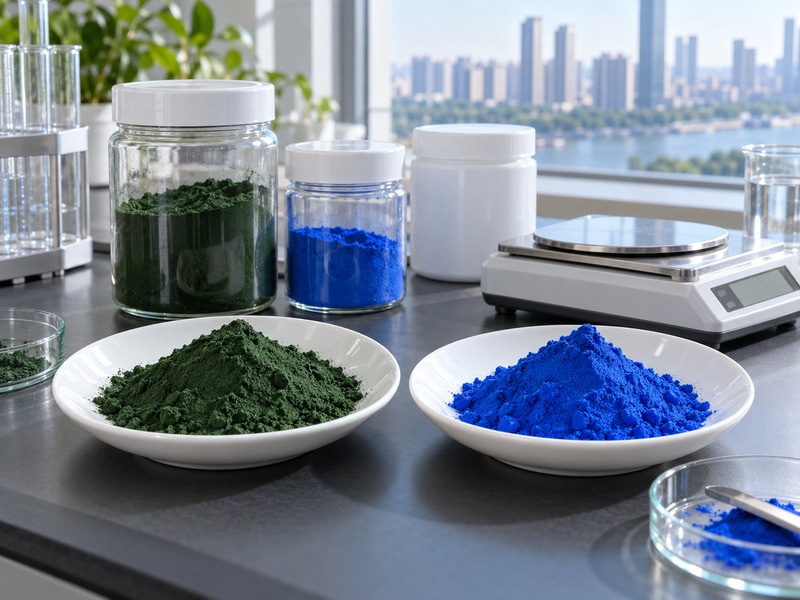
No; blue spirulina nutrition facts for an extract should be assessed separately from whole spirulina powder. Whole biomass contains a wider mix of proteins, pigments, minerals, and other cell components. A blue extract is processed to concentrate the color fraction and may contain carriers.
The blue-versus-green comparison lays out the practical difference. Neither form is inherently “better” for every purpose; a food color and a whole-food ingredient serve different formulation roles.
How do you prevent an invalid comparison?
Line up like with like: product form, serving weight, and nutrient method. If a study reports grams of whole spirulina, do not transfer its outcome to a beverage containing milligrams of extract. Ask what fraction of the blue SKU is extract and whether it is standardized for color rather than nutrition. A visually dramatic drink can still have minimal nutrient contribution from the color.
- Separate extract from whole biomass.
- Compare equal serving amounts.
- Note added carriers or sweeteners.
| Product form | Typical formulation role |
|---|---|
| Whole spirulina | Ingredient or supplement |
| Blue extract | Natural color component |
| Blue blend | Color plus carrier or other ingredients |
The form on the invoice matters more than the shared word “spirulina.”
Key Takeaway: Never borrow whole-powder nutrition values for a blue extract without matching evidence.
3. Does blue spirulina provide useful protein?
Blue spirulina nutrition facts may list protein, but a small color dose usually adds far less protein than yogurt, milk, seeds, or a dedicated protein ingredient. The amount depends on the exact extract and recipe, so calculate it instead of guessing. The blue spirulina protein guide explains why a pigment fraction should not be marketed as a protein powder. A serving can be blue and high in protein for reasons unrelated to the blue color.
What is the serving-level calculation?
Multiply the protein per gram of the exact blue product by grams used in one serving, then add protein from every other ingredient. Check whether the supplier value is measured or estimated and whether local rules permit the proposed claim. For example, an extract used mainly for hue should be assessed in its actual amount, not at an imagined supplement dose. Keep the calculation with the approved formula.
- Record extract grams per serving.
- Use the product-specific protein value.
- Include the base and toppings.
| Source | Likely role in a blue yogurt |
|---|---|
| Yogurt base | Major protein contributor |
| Seeds or protein blend | Possible added contributor |
| Blue color dose | Calculate, do not assume |
Protein claims belong to the complete serving.
Key Takeaway: Credit blue extract only for the protein it actually contributes at the working dose.
4. How many calories are in a blue serving?
The calories associated with blue spirulina nutrition facts depend on the ingredient’s composition and the amount used, while the finished food’s calories usually come mainly from its base. Sugar syrup, fruit, milk, cream, and toppings can outweigh a small pigment dose by a wide margin. The blue spirulina calories guide explains how to keep ingredient and finished-product numbers separate. A blue latte is not automatically low calorie, and a blue dessert is not nutritionally transformed by its color.
How do you avoid a misleading number?
Start with a weighed finished recipe and the serving actually sold. Obtain nutrition data for each ingredient, including the blue blend’s carrier, and calculate or test according to the market’s rules. If serving size varies at a café, use a controlled recipe card and record the normal portion. Do not present the powder’s per-100-gram value as though a consumer eats that amount.
- Include syrups, sweeteners, and toppings.
- Use the real serving weight.
- Confirm the blue blend’s composition.
| Product | Main calorie contributors |
|---|---|
| Blue latte | Milk and syrup |
| Blue smoothie bowl | Fruit and toppings |
| Blue frosting | Sugar and fat |
Color can affect perception; it does not erase calories in the rest of the recipe.
Key Takeaway: Calculate calories for the finished portion, not for the color ingredient in isolation.
5. What about vitamins, minerals, and antioxidants?
Vitamin, mineral, and antioxidant claims in blue spirulina nutrition facts require data for the exact extract at the actual serving dose. Whole spirulina’s mineral profile cannot be assumed to survive extraction unchanged. Phycocyanin is a protein pigment studied in laboratories, but a laboratory measure of antioxidant activity does not establish a health benefit from a colored food. The phycocyanin guide separates color chemistry from consumer outcomes.
Which evidence is useful to a label team?
Request quantitative nutrient results with methods and lot or product scope. Then compare serving-level amounts to the relevant nutrient claim thresholds in the sales market. For antioxidant messaging, ask what measured endpoint supports the exact wording; avoid treating a test-tube result as proof of disease prevention. When data are missing, describe the food’s color or flavor instead of inventing nutrient value.
- Verify the nutrient in the sold SKU.
- Calculate its amount per serving.
- Review claim rules and evidence.
| Claim type | Evidence required |
|---|---|
| Vitamin or mineral | Quantified serving amount |
| Protein | Complete recipe and legal threshold |
| Health effect | Appropriate human evidence and permission |
A measured pigment level is not a measured health outcome.
Key Takeaway: Use nutrient or health language only when the finished serving and market rules support it.
6. Can carriers change the nutrition panel?
Yes; carriers in a blue spirulina nutrition facts panel can change carbohydrate, sugar, or calorie values, especially when the purchased product is a formulated blend rather than a concentrated extract. Some carriers are added for handling or dispersion. The ingredient statement should identify them, and the recipe calculation must include their contribution. The blue spirulina ingredients guide is a useful checklist when two blue powders look similar but differ in composition.
What should a buyer compare across suppliers?
Compare the same basis: color strength, required usage level, carrier percentage, cost per finished serving, and label impact. A cheaper kilogram can require more powder and add more sugar or solids. Ask the supplier to explain its grade method rather than assuming the grade name is an industry-wide purity standard. Test taste and dispersion in the intended food.
- Request full composition.
- Compare working dose, not bag price.
- Recalculate nutrition after any grade change.
| Supplier difference | Finished-product effect |
|---|---|
| Carrier type | Label and texture |
| Color strength | Dose and cost |
| Added sugar | Nutrition and claims |
A color swap may be a formula change even when the shade looks the same.
Key Takeaway: Review the whole blue ingredient, including what carries the pigment.
7. How should a nutrition label be calculated?
Calculate blue spirulina nutrition facts for a packaged food from the complete formula and a defensible serving size, then validate under the rules of its sales market. Ingredient data may be sufficient for some calculations; other claims or products call for laboratory testing. Keep versioned recipes and supplier data so a label can be traced back to what was actually manufactured. A recipe change in fruit, syrup, or extract blend can invalidate a panel even if the front of pack remains identical.
What is the minimum working file?
Keep the finished batch yield, each ingredient weight, its nutrition source, process loss if relevant, serving weight, and rounding method. Check that the values are reported in the units required for the market. The blue spirulina wholesale guide can help organize lot and supplier documents for repeat purchasing. Label approval should occur after the production recipe is stable.
- Use one controlled formula version.
- Record actual yield and serving weight.
- Retain data sources and calculation method.
| File item | Purpose |
|---|---|
| Formula | Ingredient amounts |
| Supplier data | Nutrient input values |
| Yield | Per-serving calculation |
A label is only as reliable as the recipe version behind it.
Key Takeaway: Make every number on the panel traceable to a measured ingredient or calculation.
8. What safety information belongs beside nutrition?
Blue spirulina nutrition facts do not tell you whether a lot is suitable for use; safety and quality require separate evidence. Review identity, microbiological limits, relevant contaminants, allergens, and storage conditions for the exact material. The blue spirulina allergy guide explains why reactions are possible even when uncommon. A supplier’s certificate of analysis should relate to the actual lot being used, not an undated marketing sheet.
Which questions should quality ask?
Ask where and how the source material is cultivated and processed, which tests are performed, and how traceability works. Review the certificate against your product specification and local requirements. For an allergen concern, assess both the blue ingredient and every other component in the finished food. A colorful label claim cannot compensate for a missing quality file.
- Check lot-specific quality results.
- Review ingredient and cross-contact risks.
- Confirm storage and traceability.
| Quality item | Why it is separate from nutrition |
|---|---|
| Microbiology | Product safety |
| Contaminants | Raw-material suitability |
| Allergen review | Consumer protection |
Nutrition and safety answer different questions about the same product.
Key Takeaway: Review a nutrition panel and a quality file before approving use.
9. Does organic status change the nutrition facts?
Organic status does not automatically change blue spirulina nutrition facts or prove that a blue powder has more nutrients. Certification is a production and chain-of-custody claim that must cover the exact product and market. The organic blue powder guide explains what documentation to request. A conventional extract can still meet a food-color brief; an organic claim must be evidenced rather than inferred from the source organism.
What should be checked before printing “organic”?
Verify the operator certificate, product scope, processing steps, and transaction records required for the destination market. Confirm that any carrier and downstream blending are covered. Then compare nutrition data as you would for any other SKU; do not assume a nutrient premium. Keep the organic and nutrition approvals as separate decisions in the product file.
- Check exact SKU in certification scope.
- Review carrier and processing chain.
- Calculate nutrients from product data.
| Question | Evidence |
|---|---|
| Is it organic? | Valid scope and chain records |
| What nutrients are present? | Product-specific analysis |
| What does one serving deliver? | Formula calculation |
One certificate does not replace the other measurements.
Key Takeaway: Treat organic status and nutritional value as distinct claims.
10. How do you explain the numbers to customers?
Explain blue spirulina nutrition facts in terms of the exact serving and product form, using plain language. Say that an extract supplies blue color when that is its main role, and describe protein or vitamins only if the complete food qualifies. The blue spirulina powder guide can help customers understand why powders sold under one familiar name have different purposes. Avoid “superfood” as a substitute for a measurable statement.
What makes product copy trustworthy?
State the ingredient form, serving size, and what the customer can verify on the label. If a blue yogurt is high protein because of its dairy base, say so. If a drink has little sugar, show the recipe basis rather than implying the pigment caused it. When the evidence is limited, explain the limit; this is more useful than a broad promise no one can check.
- Name the blue ingredient accurately.
- Tie each nutrient claim to the serving.
- Keep color and health claims separate.
| Customer question | Clear response |
|---|---|
| Is it protein powder? | Identify the actual form |
| How many calories? | Give the finished serving value |
| Does blue mean healthier? | Explain what is measured |
Specific answers travel farther than a vague wellness slogan.
Key Takeaway: Give customers numbers and context they can use, not an ingredient halo.
Conclusion
Blue spirulina nutrition facts begin with product identity and end with the amount in a real serving. You now have a way to separate extract from whole powder, calculate protein and calories, review carriers, and keep quality and organic claims distinct. For specifications and sample data for your formula, contact us. We believe a beautiful blue food should also be described with numbers that stand up to scrutiny.
FAQ
Can I use whole spirulina nutrition data for blue extract?
No. The products differ in composition, so request data for the exact extract and dose.
What’s the best way to calculate calories in a blue drink?
Use the finished recipe. Include milk, fruit, syrups, and the blue blend at the actual serving size.
How do I know if blue spirulina adds protein?
Calculate it. Multiply the product-specific protein value by the grams used in one serving.
Can I call a blue smoothie antioxidant-rich?
Only with appropriate evidence and market review. A laboratory result for a pigment is not a finished-food health claim.
How do I know if an organic claim is supported?
Check certification scope and chain records for the exact SKU and destination market.