
Make blue spirulina pudding by adding a measured blue extract to a pale pudding base after any major heating step, then chilling and checking the set, shade, and flavor in the served cup. A mixture that looks bright before refrigeration can separate, turn gray beside fruit, or form a weak gel. The pudding needs to be spoonable and stable as well as blue. This guide covers a cold chia option, a cooked starch option, and the checks that matter for cafés or packaged desserts.
1. What is blue spirulina pudding?
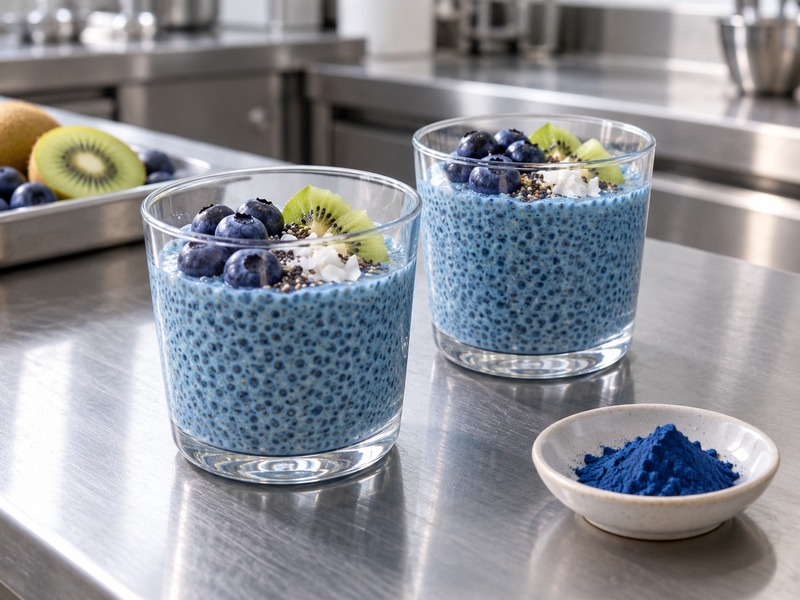
Blue spirulina pudding is a spoonable dessert colored with a phycocyanin-rich spirulina extract. The base may be chia, starch, dairy, coconut, oat, or another system; the color ingredient does not define the pudding’s texture or nutrition. The ingredient-form guide explains why blue extract differs from whole green spirulina. Check the exact blue powder for carriers and sweeteners before adding it to a formula or label.
What should the dessert brief state?
Set the desired shade, spoon texture, serving weight, sweetness, fruit layer, package, and chilled life. A chia pudding shows seeds through the blue, while a smooth starch pudding can look more uniform. Keep an uncolored control to reveal whether the base itself is white, beige, or yellow. A clear cup may display layers beautifully but also expose separation.
- Choose chia or smooth pudding format.
- Define the served color and texture.
- Record package and storage conditions.
| Format | Main visual concern |
|---|---|
| Chia | Seed pattern and hydration |
| Starch | Heat and gel clarity |
| Layered cup | Color migration |
The base is part of the color decision.
Key Takeaway: Define the spoonable product before selecting a blue dose.
2. Which base gives the cleanest blue?
A pale, mildly flavored base usually gives blue spirulina pudding the clearest blue. Coconut milk may add a pleasant white background but can separate; oat milk may cast beige; dairy milk varies with fat and heat treatment. The blue-versus-green guide explains why whole green powder is unlikely to give the same shade. Compare bases after setting and chilling rather than in liquid form alone.
How do you screen candidate milks?
Prepare equal-weight cups using the same extract lot and dose. Chill each for the same time, then inspect from the top and side. Taste plain before fruit or garnish. If one base needs more pigment to look blue, include that cost and any off-note in the decision.
- Hold dose and cup size constant.
- Check separation after chilling.
- Taste without toppings.
| Base | Watch for |
|---|---|
| Dairy milk | Cream tint |
| Coconut milk | Fat separation |
| Oat drink | Beige cast |
The best color base must still give a good pudding texture.
Key Takeaway: Select the base after a chilled, spooned comparison.
3. How do you make a cold chia version?
A cold chia blue spirulina pudding can begin with roughly 200 g of a pale milk base and 30 g chia seeds per small trial, plus a measured sweetener and blue extract dose. Stir, let the seeds hydrate, stir again, then chill until spoonable. This is a pilot ratio, not a validated packaged-food recipe. The smoothie bowl guide addresses a related cold format, but chia hydration creates its own texture and water-activity questions.
What makes the first trial useful?
Divide one milk batch into equal cups and vary only extract dose. Add chia at the same weight, stir at fixed intervals, and check texture after chilling. Seeds can clump if left untouched early; a second stir helps distribute them. Record how the blue looks around the seed pattern and whether liquid separates at the top.
- Weigh milk and chia.
- Use a consistent hydration time.
- Check clumps and separation.
| Pilot component | Starting amount |
|---|---|
| Pale milk base | About 200 g |
| Chia seeds | About 30 g |
| Blue extract | Supplier-informed dose ladder |
The trial should tell you whether chia’s texture suits the color concept.
Key Takeaway: Standardize hydration before adjusting the pigment.
4. Can a cooked starch pudding stay blue?
Blue spirulina pudding made with cooked starch can stay blue if the extract is added after the strongest heat step under a validated safe process, then dispersed before the gel fully sets. Heating phycocyanin with the starch mixture may dull color. The food-color application guide explains the heat sensitivity. A post-cook addition is a process decision with hygiene and mixing implications, not a shortcut around food safety.
What should the process trial compare?
Make matched batches with extract added before cooking and at a controlled cool-down stage. Measure color, gel strength, smoothness, and microbiology under the site’s plan. A late addition may leave streaks if the pudding thickens too quickly. If the safer approved process fades the blue, redesign the recipe or choose a different visual finish.
- Log time and temperature.
- Check uniformity before filling.
- Validate the post-heat step.
| Stage | Main question |
|---|---|
| Before cooking | Does blue survive? |
| During cool-down | Can it disperse? |
| Filling | Does the gel set evenly? |
The correct process balances color, texture, and safety.
Key Takeaway: Choose an addition point only after a production-relevant trial.
5. How much extract should a cup contain?
Use the lowest weighed extract dose that gives blue spirulina pudding its target color after setting and chilling. The opacity of milk and the visual texture of chia can make a dose look different from one in water. The blue powder guide explains why supplier grades are not interchangeable scoop measures. Compare low, middle, and high doses in the same base, then calculate cost per cup.
What should the dose sheet record?
Write grams of extract per kilogram of pudding, cup fill weight, color, taste, and cost. Photograph after chilling and near the proposed end of life. If a stronger grade uses less powder, verify dispersion and flavor as well as price. A high dose that gives no visible improvement after the pudding sets is wasted.
- Weigh at least three levels.
- Judge the chilled cup.
- Include ingredient cost per serving.
| Dose | Decision |
|---|---|
| Low | First useful blue |
| Target | Shade and flavor balance |
| High | Diminishing return |
The serving cup, not the colored mixing liquid, sets the working dose.
Key Takeaway: Lock a gram amount after evaluating the finished pudding.
6. Will blueberries or lemon change the shade?
Blueberries and lemon can change the appearance of blue spirulina pudding: berries add purple pigments, while lemon adds acid and yellow color. A layered cup may keep a clean blue section while still offering fruit flavor. The blue spirulina yogurt guide covers a related acidic dairy system. Test the spoonful a customer actually takes, because separate layers are usually mixed during eating.
How should fruit be tested?
Prepare plain blue pudding, pudding with fruit mixed in, and a separate fruit layer. Compare color at filling, after chilling, and after storage. Look for juice bleed at the boundary and water release into the pudding. If a tart layer improves flavor but makes the blue muddy, revise the design rather than raising pigment dose without limit.
- Measure fruit and acid additions.
- Check the layer boundary.
- Taste a mixed spoonful.
| Fruit design | Color question |
|---|---|
| Mixed berries | Does blue turn purple? |
| Fruit layer | Does juice bleed? |
| Lemon flavor | Does acid weaken blue? |
Layering is useful only if the whole cup still tastes balanced.
Key Takeaway: Decide fruit placement from a stored, eaten-cup trial.
7. Can the pudding be vegan?
Vegan blue spirulina pudding is possible with plant milk and suitable setting ingredients, provided the blue extract blend and every topping meet the chosen standard. Chia naturally forms a gel, while a smooth vegan pudding may need starch or another suitable thickener. The blue spirulina vegan guide explains why pigment origin alone does not certify a finished food. Plant bases can be beige or strongly flavored, so the vegan version needs its own color and taste trial.
What should a vegan review include?
Check the milk, sweetener, stabilizer, flavor, topping, and blue carrier. Compare set, water release, and taste after the intended chill period. If a certification mark is planned, confirm process and facility requirements with the relevant program. A product can be vegan and still contain allergens such as soy or nuts.
- Review every component’s origin.
- Test the complete chilled cup.
- Keep allergen review separate.
| Ingredient | Question |
|---|---|
| Plant milk | What is its base and color? |
| Setting agent | Does it meet the standard? |
| Blue blend | What are its carriers and aids? |
The vegan claim should describe the whole dessert, not a hero ingredient.
Key Takeaway: Validate the plant-based formula and claim together.
8. How long can a blue pudding be held?
Blue spirulina pudding needs its own finished-product shelf study; the dry powder’s shelf life cannot be copied onto a chilled cup. Texture, separation, color, flavor, and microbiological safety may fail at different times. The blue spirulina shelf-life guide covers ingredient storage. For ready-to-eat pudding, use the actual process and package to set the sale period and any after-opening instruction.
Which samples should be retained?
Hold control and colored cups from the same production batch under planned distribution conditions. Check top and side appearance, spoon texture, liquid separation, flavor, and package integrity at set checkpoints. Follow the site’s microbiological validation plan. A cup may remain safe yet lose its intended blue or become watery; either can limit commercial life.
- Test the real package.
- Record quality and safety separately.
- Inspect at the proposed end of life.
| Check | Why it matters |
|---|---|
| Color | Customer expectation |
| Gel and separation | Eating quality |
| Microbiology | Product safety |
The date should describe the cup a customer opens, not the day it was filled.
Key Takeaway: Set shelf life from the finished pudding’s evidence.
9. What should the nutrition label count?
The nutrition label for blue spirulina pudding should count the full serving: milk, chia or starch, sugar, fruit, toppings, and the blue blend. A small color dose does not make the pudding high protein or low calorie by itself. The nutrition facts guide explains the extract-versus-whole-powder distinction. Weigh real filled cups and include any separately packed topping if it is part of the sold product.
How should claims be checked?
Calculate or test the finished serving under the market’s rules. Review fiber or protein claims from chia and other ingredients using actual amounts. Check allergens in milk, soy, coconut, nuts, or toppings. Avoid a broad “superfood pudding” promise when the product file only supports a blue color description.
- Use actual cup fill weight.
- Include fruit and toppings.
- Review claims and allergens separately.
| Label item | Evidence |
|---|---|
| Calories | Complete cup formula |
| Protein or fiber | Serving-level data |
| Allergens | Full ingredient and site review |
The blue appearance should never stand in for a nutrition calculation.
Key Takeaway: Label the whole cup customers eat.
10. How do you scale pudding production?
Scaling blue spirulina pudding requires controlled mixing, extract dosing, filling, setting, and lot documentation. A large tank may disperse powder differently from a hand-stirred cup; a chia mix may thicken while the line is still filling. The manufacturer guide helps buyers qualify an extract for repeat supply. Sample cups from the beginning, middle, and end of the run before approving a commercial process.
What belongs in the pilot record?
Document ingredient lots, mixing order and speed, temperature, hydration or cooking time, fill weight, and chill conditions. Compare texture, color, and fruit distribution across the run and through storage. If early cups are thin and late cups are thick, adjust the process window rather than changing pigment. Keep an approved reference cup or image under controlled lighting.
- Lock dose and mix procedure.
- Monitor viscosity during filling.
- Check color across the run.
| Production control | Purpose |
|---|---|
| Extract lot | Shade and traceability |
| Fill weight | Nutrition and cost |
| Set time | Consistent spoon texture |
The line succeeds when every cup meets the same eating standard.
Key Takeaway: Approve production by comparing real filled cups across the batch.
Conclusion
Blue pudding works when a pale base, measured extract, suitable setting method, and controlled chilled life produce a spoonable cup with lasting color. You now have a way to test cold chia and cooked starch formats, fruit layers, vegan claims, labels, and scale-up. For an extract sample suited to your pudding concept, contact us. We believe a natural blue dessert should be judged by the last spoonful as carefully as by the first photograph.
FAQ
Can I make blue spirulina chia pudding without cooking?
Yes. Start with a pale milk base, weighed chia, and a measured blue dose, then validate hydration and chilled storage.
What’s the best time to add extract to cooked pudding?
Test a controlled cool-down addition. It may preserve color, but the process must meet hygiene and mixing requirements.
How do I know if fruit will change the shade?
Store matched cups. Compare mixed and layered fruit designs at the planned end of life.
Can a vegan version use coconut milk?
Yes, if the full formula qualifies. Check separation, flavor, color, and other ingredients.
How do I know when the pudding expires?
Run a finished-cup shelf study. The blue powder’s date does not establish pudding safety or quality.