
Make blue spirulina overnight oats by mixing a measured blue extract into a pale oat-and-milk base, then chilling the covered jar until the oats soften. You may have seen a brilliant blue breakfast online, only to find your own jar gray by morning or dry around the edges. The disappointment usually comes from the base, the liquid ratio, or a casual spoonful of powder. A weighed trial gives you a jar you can repeat, whether you are making breakfast at home or testing a chilled retail cup. The blue spirulina overnight oats in this guide use blue extract for color; oats, milk, seeds, and toppings supply the meal’s substance.
1. What are blue spirulina overnight oats?
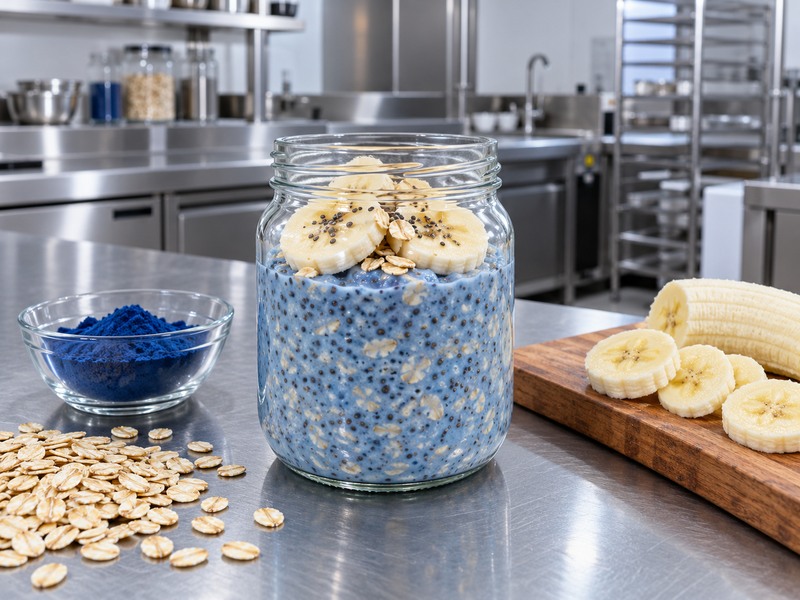
blue spirulina overnight oats are soaked oats tinted with a phycocyanin-rich blue spirulina extract. The oats hydrate in a cold liquid while the extract colors that liquid and the visible surface. This is a breakfast format rather than a concentrated spirulina supplement, so judge the finished bowl by its actual ingredients and serving size. A glass jar helps you see both color and hydration before you add toppings.
What belongs in the first trial?
Start with rolled oats, a light-colored milk, and a small weighed portion of extract. Add chia or flax only if you want their thicker texture; they can absorb enough liquid to change the result overnight. Mix the pigment into the milk before adding oats so you can spot clumps. Prepare an uncolored control in an identical jar, then compare both after the same chilling time.
A single attractive spoonful at mixing tells you little about the morning texture.
- Weigh oats, liquid, and extract separately.
- Label a matching uncolored control.
- Keep both jars covered in the refrigerator.
| Checkpoint | What to record |
|---|---|
| Oat type | Rolled, quick, or steel-cut |
| Milk | Type and starting color |
| Rest | Time and refrigerator temperature |
If the control is already too firm, adjust the liquid before changing the pigment dose.
Key Takeaway: Treat the blue extract as a color ingredient within a complete oat recipe.
2. Which oats hold the best texture?
Blue spirulina overnight oats work best with rolled oats when you want distinct, soft grains after a night in the refrigerator. Quick oats can turn pasty, and steel-cut oats may still feel chewy after the same rest. The right choice depends on whether you want a spoonable jar, a thick café topping, or a packaged cup that must survive several days. Test the oat itself before debating shade; a bright but gluey breakfast is unlikely to earn a second purchase.
The recipe collection shows other cold applications you can compare with this base.
How can you compare oat grades fairly?
Use one milk, one extract lot, and one oat-to-liquid ratio across three small jars. Check each jar after its intended rest and again after a further day if you plan to sell it chilled. Stir once and note how much free liquid appears, how evenly the color moves, and whether the grains keep definition. Record a weight-based ratio so a later production run can reproduce the texture without interpreting a household cup measure.
- Compare rolled and quick oats side by side.
- Photograph the surface before stirring.
- Taste at the intended serving temperature.
| Checkpoint | What to record |
|---|---|
| Rolled | Defined grains and moderate body |
| Quick | Smoothness or excess paste |
| Steel-cut | Remaining bite after resting |
The grain that tastes best at service may differ from the one that photographs best immediately.
Key Takeaway: Choose oats from the chilled eating test, not the dry ingredient label.
3. How much blue extract should you add?
Dose blue spirulina overnight oats by weight, starting low and raising the extract only until the chilled oats reach your target shade. The pigment concentration differs among suppliers, so a teaspoon copied from another recipe has no reliable meaning for your powder. Higher doses can add cost or an off-note without solving a beige milk or dark fruit base. The target is a repeatable appearance after rest, not a blue cloud in the mixing bowl.
What makes a useful dose ladder?
Prepare three identical jars with low, middle, and high weighed additions of one extract lot. Photograph them under the same light immediately and next morning. Taste them blind, then calculate extract cost per finished jar using your actual portion size. If the middle dose looks as good as the high dose after chilling, choose the lower-cost option and keep the high jar as a tolerance check.
Record the lot’s color specification with the result.
- Use grams of extract per kilogram of base.
- Keep the milk and oat weights fixed.
- Compare taste and cost with color.
| Checkpoint | What to record |
|---|---|
| Low dose | Minimum visible blue |
| Middle dose | Target after chilling |
| High dose | Color gain versus cost |
A numeric dose range is more useful to a production team than a photograph alone.
Key Takeaway: Set dose from a chilled side-by-side trial using the exact extract grade.
4. Which milk gives a clean blue color?
Blue spirulina overnight oats show a cleaner blue in a pale milk than in a tan or strongly flavored liquid. Dairy, oat, soy, coconut, and almond milks also vary in sweetness, protein, and viscosity. A milk that makes a good drink may leave a dense oat jar, while one that looks white in the carton may be beige after mixing. If the finished cup must be vegan or allergen controlled, those requirements narrow the base before color testing begins.
The ingredient guide can help you check what the purchased extract contains.
What should you look for beyond color?
Mix the same oat and extract weights into each candidate milk. Inspect the liquid before soaking and the whole jar the next day. Taste without fruit, because berries can hide an unwanted note. For a commercial cup, check whether the chosen milk separates, thickens, or needs an allergen declaration.
Keep a record of the exact milk product: changing brands can alter color and texture even when the label says the same milk type.
- Compare at least two pale bases.
- Check separation after chilling.
- Confirm allergens and dietary positioning.
| Checkpoint | What to record |
|---|---|
| Dairy | Opacity and lactose sweetness |
| Oat milk | Beige cast and added starch |
| Coconut | Fat layer and coconut flavor |
A slightly less vivid milk can still win if the jar tastes better and remains stable.
Key Takeaway: Choose the milk from a finished-jar comparison, including taste and label needs.
5. Can you prep the jars the night before?
blue spirulina overnight oats can be mixed the night before when the prepared jar stays covered and refrigerated. A typical home routine is to combine the colored milk and oats in the evening and check thickness at breakfast. The exact rest depends on oat grade and recipe, so use texture rather than a universal clock as the pass condition. Keep perishable milk and prepared oats within the food-safety limits that apply to your operation.
How can you make the morning result predictable?
Dissolve or disperse the extract in a small portion of cold milk first, then stir it through the rest. Add oats and any seeds, scrape the jar wall, cover, and chill promptly. In the morning, stir once and add a measured splash of milk only if the jar is too thick. For cafés, write this correction into the service recipe rather than letting each shift improvise.
For packaged food, validate your own process and refrigerated shelf life.
- Premix the pigment without hot water.
- Use a covered, dated container.
- Record any morning liquid adjustment.
| Checkpoint | What to record |
|---|---|
| Evening | Mix and refrigerate promptly |
| Morning | Check thickness and shade |
| Service | Add fresh toppings last |
The overnight rest is part of the recipe, so sample it at the same point customers will eat it.
Key Takeaway: Standardize the evening mix and morning check before scaling the recipe.
6. Which toppings keep the color visible?
Blue spirulina overnight oats keep their blue surface when toppings are light, sparse, and added shortly before serving. A thick blanket of granola hides the feature people came to see, and wet berries can bleed purple into the oats. Banana slices, coconut, pale seeds, or a small berry accent can work if they fit the flavor. Dark syrup across the entire jar often muddies the color even when the oats beneath remain bright.
The smoothie bowl guide offers a useful comparison for cold toppings.
How should you stage a topping trial?
Photograph the plain jar first, then test each topping at the planned serving weight. Look again after ten minutes to see whether fruit juice bleeds or granola softens. If a retail product needs a long shelf life, separate crunchy toppings into a dry compartment and evaluate the assembly a buyer would make. The point is to give a customer a good breakfast, not to preserve a studio photograph at the expense of texture.
- Keep the first blue surface visible.
- Measure fruit and crunchy additions.
- Test bleeding and sogginess over time.
| Checkpoint | What to record |
|---|---|
| Banana | Light color but browning |
| Blueberry | Flavor with possible purple bleed |
| Granola | Crunch that softens when packed wet |
A topping succeeds when the jar still looks and tastes right after the expected wait.
Key Takeaway: Add toppings with the actual serving window in mind.
7. Will the color change in the refrigerator?
blue spirulina overnight oats can lose or shift color in refrigeration when the formula includes acid, strong light, or an unsuitable extract grade. The milk, fruit, and storage package matter more than the dry powder’s appearance. A blue jar may look fine after eight hours yet drift during a longer commercial shelf period. Color is a product-specific result, so test the complete recipe rather than assuming every blue extract behaves alike.
What belongs in a color retention check?
Hold matched jars under the same refrigerator conditions and photograph them against a fixed white background. Check the top, center, and fruit-contact edges; local purple patches may point to fruit acid rather than an overall pigment problem. Record pH where your process requires it, plus light exposure and package type. If color fades only near a clear lid, trial a more protective package before raising the pigment dose.
- Keep an uncolored control and a day-zero photo.
- Inspect fruit-contact areas separately.
- Check through the intended sale period.
| Checkpoint | What to record |
|---|---|
| Uniform fade | Review grade, light, and holding time |
| Purple edge | Inspect acid contact |
| Gray base | Revisit milk and toppings |
A retention trial tells you whether the package, formula, or dose deserves the next change.
Key Takeaway: Approve color after the intended chilled holding period.
8. Are these oats a source of protein?
Blue spirulina overnight oats may provide protein, but most of it comes from the oats, milk, seeds, or added protein ingredient. A small amount of blue extract should not be treated as the nutritional equivalent of whole spirulina biomass. The nutrition statement has to reflect the exact formula and serving, including sweetened milk and toppings. If you want a protein claim, calculate it from verified ingredient data and check the claim rules for the sales market.
How do you keep the nutrition story honest?
Build a recipe sheet with each component in grams and its supplier nutrition data. Check whether added milk protein or yogurt changes the texture after soaking. Compare the final portion with and without toppings so a menu board does not silently count an optional extra. The protein comparison explains why extract and whole biomass should be evaluated separately.
A color-led breakfast can still be satisfying without a strained protein promise.
- Calculate the full recipe per serving.
- Separate extract from protein-rich ingredients.
- Check any claim against local rules.
| Checkpoint | What to record |
|---|---|
| Oats | Carbohydrate and some protein |
| Milk | Varies by selected base |
| Extract | Small colored addition |
A defensible label begins with the weighed recipe rather than a superfood adjective.
Key Takeaway: Attribute protein to the ingredients that actually supply it.
9. How do you scale a batch without streaks?
Scale blue spirulina overnight oats by premixing the extract into part of the cold liquid before it enters the full batch. Dumping dry powder into a thick oat mass can leave dark flecks and light pockets. Larger batches also hydrate at different rates if mixing time and fill order vary. A small pilot should establish the premix volume, mixing sequence, and maximum hold before you commit to equipment or printed labels.
What should the production sheet include?
Weigh the extract and disperse it in a defined amount of liquid until no dry islands remain. Blend that premix into the remaining liquid, then add oats under the chosen agitation. Fill several jars from the beginning, middle, and end of the batch, and compare their color and weight next morning. Ask the supplier for lot documentation and use a new-lot verification sample; a visual match is a more realistic release check than assuming all lots are identical.
- Define the premix-to-batch ratio.
- Sample early and late filled jars.
- Retain a color reference and lot record.
| Checkpoint | What to record |
|---|---|
| Streaks | Improve premix dispersion |
| Fill drift | Check agitation and oat settling |
| Lot shift | Compare approved shade range |
If the last jar differs from the first, the process needs work before the ingredient dose changes.
Key Takeaway: Write the mixing and fill order into a repeatable batch record.
10. What should buyers ask an extract supplier?
Buyers should ask a blue spirulina overnight oats supplier for the exact extract grade, carrier details, food-safety records, and a recent lot certificate. The use case is a chilled oat cup, so the supplier should understand the target pH, milk base, packaging, and storage duration. Request a sample large enough for a dose ladder and retention trial. Confirm that the ingredient is permitted and correctly declared in the intended market before writing color or nutrition claims.
Which documents make a pilot easier?
Obtain the technical specification, ingredient statement, allergen statement, microbiological limits, and lot-level certificate of analysis. Ask how the color is measured and what variation is expected between lots. If you intend to buy at scale, discuss lead times and packaging that protects the powder before opening. A short trial brief with photographs of the next-day jars will help the supplier recommend a suitable grade instead of a generic powder.
- Request the exact grade and carrier declaration.
- Check microbiology and lot traceability.
- Share your chilled oat application brief.
| Checkpoint | What to record |
|---|---|
| Specification | Color strength and ingredient form |
| COA | Results for the supplied lot |
| Trial sample | Enough for texture and shelf tests |
A supplier answer is useful only when it relates to the product you are making.
Key Takeaway: Qualify the grade in your actual oat and milk formula.
Conclusion
A dependable blue breakfast comes from the oat grade, milk color, weighed extract, and a trial held until the moment of eating. You now have a way to test texture, toppings, nutrition, and supplier quality without judging the recipe from its first five minutes. If you are developing a chilled oat product, contact us with your base, target shade, and intended shelf period so we can help you test the right extract grade. Our standard is a blue product that still performs when the customer opens the jar.
FAQ
Can I use quick oats?
Yes. Quick oats soften faster, but they can become pasty; test the texture after your normal overnight rest.
What’s the best milk for a bright blue jar?
A pale milk is the best starting point. Choose the final one by taste, texture, allergens, and next-day color.
How do I know if I added too much extract?
Compare weighed trial jars. If extra powder adds cost or off-flavor without a better chilled shade, reduce the dose.
Can I add berries the night before?
You can, but test for purple bleeding and soft texture. Adding fruit at service often keeps the blue clearer.
How do I know if the oats are ready?
Taste a chilled jar. The oats should be soft enough for the intended eater while retaining the texture you promised.