
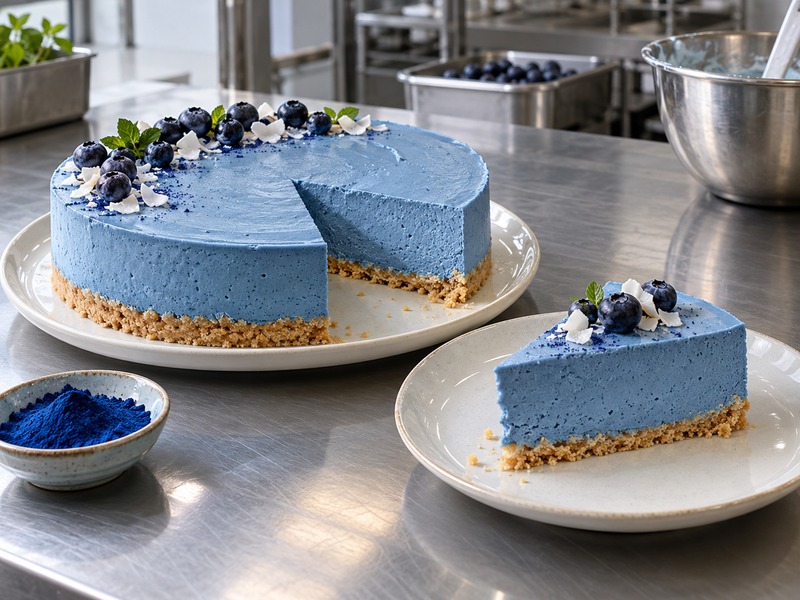
Make blue spirulina cheesecake by blending a measured blue extract into a pale, cool filling and setting it without a high-heat bake, then checking the cut slice after refrigeration. A vivid mixing bowl can yield a dull cake once lemon, cream-cheese acidity, crust color, and condensation meet. The recipe has to slice cleanly and taste like cheesecake. This guide offers a pilot structure and the checks needed for a bakery or packaged-dessert version.
1. What is blue spirulina cheesecake?
Blue spirulina cheesecake is a cheesecake whose filling, swirl, or topping is colored with a phycocyanin-rich spirulina extract. The extract is used for appearance, while cream cheese, sugar, cream, and crust supply most of the flavor and nutrition. The ingredient-form guide explains why whole green spirulina is not a direct substitute for a clean blue. Check whether the blue SKU contains a carrier before adding it to the formula and label.
What should the dessert brief define?
Choose a no-bake cake, baked cake, individual cup, or layered slice. A no-bake filling avoids oven heat but still faces acidity, refrigeration, and water movement. Record target shade on the cut face, serving size, crust type, storage period, and package. Keep a plain control so any change in flavor or texture can be traced to the blue ingredient.
- Select the cake format.
- Define the shade after chilling.
- Set slice or cup weight.
| Format | Main visual challenge |
|---|---|
| No-bake slice | Acid and set texture |
| Baked cake | Heat and browning |
| Dessert cup | Layer bleed and condensation |
The cut slice is the customer’s view that matters most.
Key Takeaway: Set the finished presentation before choosing the pigment dose.
2. Which filling base gives a clear blue?
A pale, smooth filling gives blue spirulina cheesecake its clearest hue. Yellow cream cheese, brown sweeteners, and dark vanilla can push blue toward teal or gray. The blue-versus-green guide helps explain why a whole spirulina substitution changes both color and taste.
A white plant-based filling can work too, but it needs its own texture and flavor trial. Compare bases after chilling, when fat and opacity change how blue appears.
How should candidate fillings be compared?
Prepare small equal-weight samples with the same extract lot and dose. Chill each for the same period, then cut or spoon them under identical lighting. Taste without crust or toppings first. If one base requires a much higher dose to appear blue, include the cost and any flavor change in the decision.
- Keep dose and chill time constant.
- Compare color on a cut surface.
- Taste the plain filling.
| Base | Watch for |
|---|---|
| Cream cheese | Ivory tone and acidity |
| Mascarpone blend | Richness and fat |
| Plant-based filling | Flavor and setting behavior |
The best-looking filling still has to make a good cheesecake.
Key Takeaway: Choose the base by chilled color, taste, and slicing performance.
3. What is a useful no-bake pilot formula?
A no-bake pilot for blue spirulina cheesecake can start with a pressed biscuit crust and a pale cream-cheese filling, then adjust the setting system to your process. For a small test, use about 200 g plain biscuit crumbs with 80 g melted butter for the crust, and 500 g cream cheese, 200 g whipped cream, and 100 g sugar for the filling; this is a starting comparison, not a validated commercial recipe. Add extract in a measured dose ladder after making a plain control. Follow refrigerated food-safety procedures throughout.
How do you build the first trial?
Press the crust evenly and chill it. Beat the cream cheese and sugar until smooth, fold in whipped cream, then divide the filling into weighed portions for color tests. Add a cool extract slurry to the blue portion and chill under the same conditions as the control. Adjust sweetness and setting only after you know whether the color works.
- Weigh the filling portions.
- Preblend extract in cool liquid if needed.
- Check set and slice after chilling.
| Component | Pilot amount |
|---|---|
| Biscuit crumbs | About 200 g |
| Cream cheese | About 500 g |
| Whipped cream | About 200 g |
The pilot gives a controlled comparison; commercial use needs a validated recipe and shelf study.
Key Takeaway: Start with one pale formula and test color before redesigning the cake.
4. Will lemon change the blue filling?
Lemon can shift or weaken blue spirulina cheesecake color because its acid changes the filling environment, while yellow juice also affects the visible hue. A lemon-flavored cake can still work if the acid is limited, buffered by the recipe, or kept in a separate layer. The blue spirulina yogurt guide covers another acidic dairy application. Test the exact lemon amount and holding time rather than assuming a bright blue mixed sample will last.
What is a practical lemon trial?
Compare plain blue filling, lightly lemon-flavored blue filling, and a blue layer next to a separate lemon layer. Record pH where appropriate, flavor, and color at set and after storage. Inspect the boundary for moisture or color migration. If more lemon improves taste but damages the blue, keep the tart flavor in a distinct layer instead of adding more pigment.
- Measure lemon juice or acid.
- Compare layered and blended versions.
- Check the cut face over time.
| Design | Question |
|---|---|
| Blue with lemon mixed in | Does color hold? |
| Blue and lemon layers | Does the edge bleed? |
| Lemon topping | Does it wet the surface? |
Separation can preserve both flavor and the intended blue.
Key Takeaway: Test lemon placement as carefully as lemon amount.
5. How much pigment should the filling contain?
Use the lowest weighed extract dose that gives blue spirulina cheesecake the desired shade after it sets. Color strength varies by grade, and a thick white filling may look pastel even when a clear liquid appears deep blue. The blue powder guide explains why supplier grade names need their own methods. More pigment can raise cost or introduce a note without correcting a yellow base.
What belongs in a dose ladder?
Make low, middle, and high samples from the same filling batch. Record grams per kilogram of filling, taste, texture, color after set, and cost per slice. Cut each sample to compare the interior, not just the top. If the chosen dose differs across lots, investigate the extract and base rather than silently changing the production recipe.
- Weigh every color dose.
- Compare after the same chill time.
- Include cost per served slice.
| Dose | Decision |
|---|---|
| Low | First visible blue |
| Target | Shade and taste fit |
| High | Cost or off-note? |
The settled cake, not the blue slurry, sets the dose.
Key Takeaway: Specify pigment by weight in the final filling.
6. Can a vegan cheesecake stay blue?
A vegan blue spirulina cheesecake can stay blue if the plant-based filling is pale enough and the extract blend and all other ingredients meet the chosen vegan standard. Coconut, oat, tofu, or cashew bases vary in color, flavor, acidity, and setting. The blue spirulina vegan guide explains why pigment origin does not certify the whole dessert. A plant-based formula needs its own chill and slice trial; replacing cream cheese by weight is rarely enough.
What should the vegan pilot compare?
Choose one plant-based base at a time, then assess set, water release, flavor, and color after refrigeration. Review the crust, stabilizer, sweetener, and decoration as well as the blue powder’s carrier. If the filling is beige, a blue-and-white layered design may work better than forcing a uniform cyan. Keep allergens such as soy and tree nuts in the label review.
- Test set and water release.
- Check every component’s origin.
- Review allergens separately from vegan status.
| Base | Common challenge |
|---|---|
| Coconut | Flavor and fat separation |
| Cashew | Beige tint and nut allergen |
| Tofu | Texture and soy allergen |
Vegan suitability and dessert quality must both pass.
Key Takeaway: Develop the plant-based version as its own formula.
7. How long will the blue cake hold?
Blue spirulina cheesecake needs a finished-dessert shelf test; the powder’s date does not determine how long the cake can be sold. Refrigeration, moisture migration, filling acidity, crust softening, and light exposure all affect quality. The blue spirulina shelf-life guide explains the ingredient side of the problem. Validate food safety under the site’s plan and judge color on a cut slice at realistic display times.
What should the shelf study inspect?
Retain whole cakes and cut slices in the actual package or display case. Check surface color, cut-face color, condensation, crust texture, flavor, and microbiology at planned intervals. A cake can stay safe but lose its clean layers or become soggy. Set the sale period from the earliest relevant failure, not the most optimistic test.
- Compare whole and cut products.
- Use actual display lighting.
- Record quality and safety separately.
| Check | Customer effect |
|---|---|
| Blue cut face | Visual promise |
| Crust crispness | Eating quality |
| Moisture or whey | Appearance and texture |
The sale date should describe the cake the customer opens.
Key Takeaway: Validate the finished slice through its real service life.
8. What does blue color mean for nutrition?
The blue color in blue spirulina cheesecake does not make the dessert low calorie or high protein by itself. Cream cheese or its alternative, sugar, cream, and crust determine most of the serving’s nutrition. The blue spirulina calories guide explains why a color dose should not dominate the nutrition story. Calculate the actual slice, including topping and crust, and review any claim under the rules of the sales market.
How should a bakery calculate a slice?
Weigh the finished cake and measure typical slices rather than assuming perfect division. Include every filling layer, crust, garnish, and sauce. If a menu offers a vegan version, calculate it separately. Avoid phrases such as “guilt-free” or “healthy because spirulina”; customers benefit more from clear ingredient and serving information.
- Weigh real portions.
- Include all layers and garnish.
- Use exact extract data if making a claim.
| Item | Nutrition effect |
|---|---|
| Crust | Flour, sugar, and fat |
| Filling | Dairy or plant-base nutrients |
| Blue extract | Calculate at working dose |
The color is a design feature, not a nutrient calculation.
Key Takeaway: Build nutrition statements from the whole slice.
9. How do you scale the cheesecake for sale?
Scaling blue spirulina cheesecake requires control of filling weight, mixing, setting, layer thickness, cut size, and cold-chain handling. A small bowl can hide streaks that become obvious in a large cake or production pan. The blue spirulina icing guide offers another cool color application, but the cheesecake’s moisture and acidity need their own controls. Keep a visual standard of the cut face and a production log.
What should a pilot run record?
Document ingredient lots, mixing order, extract dose, temperature, fill depth, chill time, yield, and rejected slices. Sample from different pans or cups. Check how cleanly the cake cuts after normal display time. If a later batch looks teal, investigate base color, acid, and extract lot before adding more blue automatically.
- Weigh filling into each pan.
- Check color across the batch.
- Record chilling and cut conditions.
| Control | Reason |
|---|---|
| Extract lot | Shade and traceability |
| Layer weight | Consistent slice |
| Chill time | Set and service |
A successful launch needs many good slices, not one styled photograph.
Key Takeaway: Specify the cut result and the process that produces it.
10. How should you choose the ingredient supplier?
Choose a blue extract supplier for blue spirulina cheesecake by testing its exact food-grade SKU in your filling and reviewing its composition and lot documents. Request a specification, certificate of analysis, storage instructions, and change-control process. The manufacturer guide helps clarify who makes and releases the ingredient. A strong color grade may reduce usage, but the total cost per slice and performance after chilling decide value.
What should your sample request contain?
Share the filling base, approximate pH, target shade, process temperature, package, market, and projected use. Ask for enough sample to run a dose ladder and shelf study. Keep an approved retained sample for comparing future lots. If a supplier claims organic or vegan status, verify the exact SKU and processing route rather than assuming the claim follows every blue powder it sells.
- Confirm product code and carrier.
- Review batch-level quality results.
- Test color through the shelf period.
| Supplier item | Buyer decision |
|---|---|
| Composition | Recipe and label |
| COA | Lot release |
| Application test | Finished cake quality |
The right ingredient is the one the bakery can source and use again.
Key Takeaway: Approve the exact grade only after it performs in the chilled cake.
Conclusion
A blue cheesecake succeeds when a pale cool filling, measured extract, controlled acid, and suitable cold storage hold together on the cut slice. You now have a pilot structure and a way to test layering, vegan alternatives, color life, labels, and production. For a sample matched to your dessert base, contact us. We believe a natural color earns its place when the dessert still tastes and slices like a cheesecake.
FAQ
Can I bake blue spirulina into cheesecake?
You can test it, but oven heat may dull the blue. A no-bake filling is a useful first comparison.
What’s the best way to add lemon flavor?
Test a separate lemon layer. It may protect the blue better than mixing a large acid dose into the colored filling.
How do I know if the blue dose is right?
Cut the chilled cake. Compare low, middle, and high weighed doses for shade, taste, and cost.
Can I make a vegan blue cheesecake?
Yes, with a separate plant-based formula. Check set, color, ingredients, and allergens after chilling.
How do I know how long to sell the cake?
Run a finished-dessert shelf study. Powder expiry does not establish cake safety or appearance.