
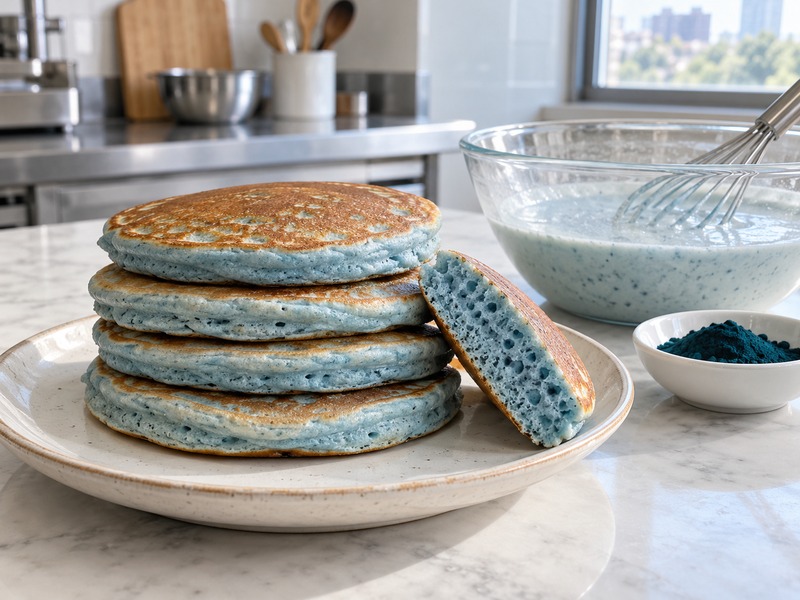
Make blue spirulina pancakes by adding a measured blue extract to a pale batter, cooking gently, and checking the color inside a finished pancake rather than judging the raw mix. A batter can look vivid before the griddle and turn gray or brown where heat meets the surface. The recipe still has to rise, taste good, and hold during breakfast service. This guide gives you a pilot formula and a method for deciding whether blue belongs in the batter, a cool topping, or both.
1. What are blue spirulina pancakes?
Blue spirulina pancakes are pancakes colored with a phycocyanin-rich spirulina extract, usually in the batter or a topping. The blue form differs from whole green spirulina, which can change flavor and produce a greenish hue. The blue-versus-green guide explains that distinction. A small color dose should not be described as a meaningful protein or vitamin addition without serving-level data.
What should a pancake brief include?
Decide whether the target is a blue cut surface, a blue exterior, or a conventional pancake with a blue sauce. Griddle browning makes a uniformly blue exterior difficult, so set a realistic visual target. Name the flour, milk, egg or vegan replacement, serving size, toppings, and hold period. Compare against an uncolored control to separate pigment issues from the base recipe.
- Define the visible color target.
- Set portion size and service time.
- Record the exact extract grade.
| Format | Likely appearance |
|---|---|
| Blue batter | Blue interior, browned surface |
| Blue topping | Brighter cool surface |
| Both | More color with added process steps |
The best format depends on what the customer sees when the plate arrives.
Key Takeaway: Choose the visual format before increasing pigment dose.
2. What is a workable pilot batter?
A workable starting batter for blue spirulina pancakes uses a pale flour-and-milk base with a measured color dose, then adjusts liquid and leavening after a small test. For a pilot, try 120 g plain flour, 6 g baking powder, 10 g sugar, one egg, about 170 g milk, and 10 g neutral oil; adjust liquid for your flour and equipment. This is a trial formula, not a validated production recipe. Add the blue extract using a supplier-informed dose ladder rather than an arbitrary tablespoon.
How should the first batch be mixed?
Whisk the dry ingredients, blend the wet ingredients, and combine just until no dry pockets remain. Preblend the extract in a small portion of cool milk if it clumps. Let the batter rest briefly, then cook a control and color samples at the same griddle setting. Overmixing can toughen pancakes and make the blue trial look worse for reasons unrelated to pigment.
- Weigh ingredients and final batter yield.
- Keep mixing and rest time consistent.
- Cook color samples beside a control.
| Pilot ingredient | Starting amount |
|---|---|
| Plain flour | 120 g |
| Milk | About 170 g |
| Egg | One, or tested alternative |
The first formula is a comparison point; the griddle result decides the next revision.
Key Takeaway: Start with a pale, measured batter and change one variable at a time.
3. When should the blue extract be added?
Add the extract to the cool wet ingredients or a small cool-liquid slurry before it enters blue spirulina pancakes batter. This can distribute the pigment more evenly than sprinkling dry powder into a thick mix. The powder handling guide explains why grades disperse differently. Check the batter after resting, because specks or streaks may become more visible during cooking.
What does a mixing comparison show?
Prepare equal batter portions with direct dry addition and with a cool preblend. Keep dose, mixing time, and rest period consistent. Cook identical portions, then cut them open to inspect distribution. A preblend adds a step, so it should earn its place by producing a more uniform pancake or faster service.
- Check raw batter for specks.
- Cut cooked pancakes to view the interior.
- Record any added mixing time.
| Method | Check |
|---|---|
| Dry addition | Clumping or streaks |
| Cool preblend | Uniform shade |
| Prepared base | Holding stability |
The final cut surface is the useful mixing test.
Key Takeaway: Use the addition method that gives even color without slowing service unduly.
4. Why does the griddle dull the blue?
Griddle heat and browning can dull the surface of blue spirulina pancakes even when the interior stays blue. Phycocyanin is heat-sensitive, and a brown crust changes the color the eye perceives. The food-color application guide explains why the same extract behaves differently in cold foods and baked goods. Do not keep raising the dose to overcome ordinary browning; it may be costly and may affect flavor.
How should cooking be tested?
Compare a few griddle temperatures while keeping pancake size and batter weight constant. Cook to a safe, acceptable texture, then record time, surface color, and interior shade. A lower heat can reduce browning but may produce a dense or undercooked center if the process is not adjusted. Food safety and texture take priority over an impossible fully blue crust.
- Record griddle temperature and time.
- Check internal doneness.
- Compare exterior and cut surface.
| Result | Next question |
|---|---|
| Brown surface, blue center | Is that acceptable? |
| Pale surface, raw center | Is heat too low? |
| Gray throughout | Is extract or base unsuitable? |
A bright interior can be a deliberate feature rather than a defect.
Key Takeaway: Set a realistic color target that survives safe cooking.
5. How much blue extract should the batter contain?
Use the lowest weighed dose that gives blue spirulina pancakes an acceptable interior color and taste after cooking. Grade strength, flour color, griddle heat, and serving thickness all affect the result. The blue powder guide helps explain why a supplier’s grade name is not a universal dosage instruction. Build a low, middle, and high dose ladder in one batter formula and cook all samples together.
What should the dose sheet include?
Write grams of extract per kilogram of batter, cooked color, flavor, and cost per pancake. Taste without syrup first; a topping can hide an off-note in development. Record how the blue looks after the pancakes sit under a heat lamp or in a delivery pack. If a higher dose improves the raw batter but not the cooked food, stop increasing it.
- Weigh each dose.
- Assess cooked, plain pancakes.
- Include service holding in the comparison.
| Dose | Decision |
|---|---|
| Low | First visible blue inside |
| Target | Color and flavor balance |
| High | Added cost without benefit? |
The cooking step determines the useful dose.
Key Takeaway: Approve pigment based on the served pancake, not the mixing bowl.
6. Can a cool topping keep the blue brighter?
A cool topping can give blue spirulina pancakes a brighter visible blue than pigment baked into the batter. Yogurt, pale frosting, or a carefully designed syrup may show color without griddle heat. The blue spirulina syrup guide covers a measured pourable option. Toppings change sweetness, allergens, calories, and service speed, so they need the same recipe control as the pancakes themselves.
What should a topping trial measure?
Compare a thin drizzle, a yogurt dollop, and an icing finish at equal color targets. Check how each moves across a warm pancake over several minutes. A watery sauce may soak in and disappear; a thick topping may hold its shape but dominate flavor. Choose a serving pattern staff can repeat without turning breakfast into a plating exercise.
- Test on warm pancakes.
- Measure topping weight per serving.
- Include allergen and nutrition changes.
| Topping | Main issue |
|---|---|
| Syrup | Dilution and sweetness |
| Yogurt | Acidity and temperature |
| Icing | Extra sugar and handling |
The most visible blue may come from a small, controlled accent.
Key Takeaway: Test a cool topping before forcing more pigment into hot batter.
7. Can you make vegan blue pancakes?
You can make vegan blue spirulina pancakes with a tested egg replacement and plant milk, provided the blue extract blend and every topping also fit the chosen vegan standard. The color’s source alone does not certify the full plate. The blue spirulina vegan guide lists the carrier and processing questions to ask. Plant milks can be beige or strongly flavored, so color and taste trials need to be repeated rather than copied from a dairy formula.
Which substitutions matter most?
Change one component at a time: milk, egg replacement, fat, then topping. Check rise, tenderness, browning, and shade after each change. Some egg alternatives thicken batter and demand more liquid. A vegan pancake that looks blue but cooks gummy will not meet the product brief.
- Confirm every ingredient’s source.
- Measure batter viscosity after substitutions.
- Test texture and doneness.
| Swap | What to check |
|---|---|
| Plant milk | Base color and flavor |
| Egg alternative | Rise and binding |
| Vegan topping | Composition and cross-contact |
The vegan version needs its own validated recipe.
Key Takeaway: Rebuild and test the full formula after changing the base.
8. Are blue pancakes healthier than ordinary ones?
Blue spirulina pancakes are not automatically healthier than ordinary pancakes because the extract is often used at a small color dose. Flour, milk, eggs, sugar, oil, and toppings determine most of the serving’s nutrition. The nutrition facts guide explains why blue extract should not inherit whole-spirulina nutrient claims. If you want a high-protein breakfast, design that outcome through ingredients and calculate the finished serving.
How should a menu claim be assessed?
Weigh the pancake portion and toppings, then use product-specific ingredient data. Review any “high protein,” “low sugar,” or “natural color” wording under the target market’s rules. Do not use a blue photograph as shorthand for a wellness promise. Customers can decide for themselves when the menu gives them clear ingredients and sensible portion information.
- Include toppings in serving data.
- Use the exact extract’s nutrition values.
- Review claims separately from color.
| Claim | Evidence |
|---|---|
| Protein | Full serving calculation |
| Calories | Cooked portion and toppings |
| Vegan | Complete ingredient review |
The blue is a visual feature; nutrition comes from the whole plate.
Key Takeaway: Describe the recipe you serve, not the reputation of one ingredient.
9. How do you hold pancakes for café service?
Holding blue spirulina pancakes for service requires checking temperature, texture, and visible color over the actual wait period. A warm stack may steam itself soft, while a heat lamp can dry edges and dull the blue. The blue spirulina icing guide offers a cool finish that might be added only at pickup. Do not extend holding to save labor without testing the customer’s plate.
What should a line trial measure?
Cook a normal rush batch, then serve samples immediately and after planned holding intervals. Record internal temperature under your food-safety procedure, texture, appearance, and topping behavior. Compare dine-in and delivery packaging. A blue pancake that survives the griddle but turns soggy in a closed box needs a packaging change, not necessarily a pigment change.
- Test rush-hour batch size.
- Separate pancake and topping holds.
- Check delivery condensation.
| Format | Risk |
|---|---|
| Dine-in | Cooling and browning |
| Heat hold | Dryness or fading |
| Delivery | Condensation and sogginess |
The customer’s wait is part of the recipe’s performance.
Key Takeaway: Set a holding limit based on the plated product.
10. How do you scale a blue pancake mix?
Scaling blue spirulina pancakes requires a controlled dry mix or batter procedure, measured extract dose, and tests on the commercial griddle. A larger mixer can leave pigment streaks, while different flour lots can change batter thickness and color. The manufacturer guide helps buyers qualify an extract for repeated production. Keep a retained standard for both raw mix and cooked pancake, and record every lot change.
What belongs in the production file?
Specify ingredient weights, mixing order, rest time, griddle setting, portion weight, and acceptable cooked color. Sample pancakes across the run and taste them plain. Confirm label and allergen information for the exact mix and toppings. If a new extract lot changes shade, investigate dosing and quality data before reformulating every store recipe.
- Lock the approved formula and grade.
- Check color across the batch.
- Record griddle and serving conditions.
| Control | Purpose |
|---|---|
| Extract lot | Shade and traceability |
| Batter weight | Portion consistency |
| Cooked standard | Customer appearance |
The production goal is a good breakfast that remains repeatably blue inside.
Key Takeaway: Scale the cooked result, not the raw batter photograph.
Conclusion
Blue pancakes work when a pale measured batter, controlled griddle, realistic color target, and optional cool topping are tested together. You now have a pilot formula and a way to adjust dose, vegan swaps, nutrition claims, holding, and commercial production. For a blue extract sample suited to your breakfast concept, contact us. We believe a colorful breakfast should still earn its place on the menu through taste and repeatable cooking.
FAQ
Can I make the whole pancake bright blue?
Usually not after browning. Aim for a blue interior or use a cool blue topping for a brighter surface.
What’s the best time to add the extract?
Mix it into cool wet ingredients or a small slurry before combining the batter, then check for streaks.
How do I know if the griddle is too hot?
Compare cooked samples. Excess browning or a pale raw center signals that the time-temperature balance needs work.
Can I make a vegan version?
Yes, with a tested plant-based formula. Recheck the blue blend, toppings, texture, and claim.
How do I know if the blue adds protein?
Calculate the exact extract contribution at the serving dose. Do not borrow values from whole spirulina powder.