
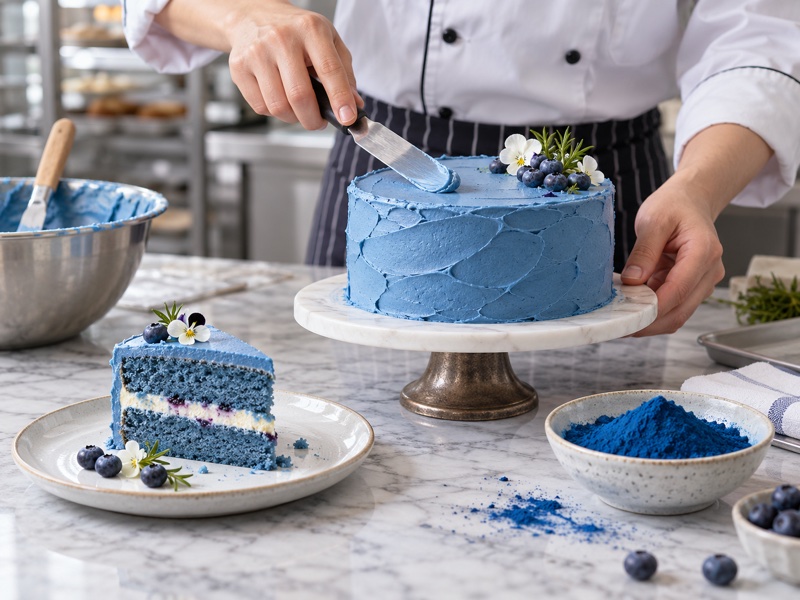
Make blue spirulina cake by using a food-grade blue extract in a pale cake or frosting component, then testing the finished color after baking, chilling, and display. The cake in a recipe photo may be vividly blue because the pigment went into a cold frosting, not the hot sponge. If you want a blue slice that looks appealing in a bakery case, that distinction saves wasted trials. A reliable blue spirulina cake needs a clear plan for flavor, heat, acidity, and service time. Start with the part of the cake that actually needs to be blue.
1. Which part of a blue spirulina cake should be colored?
The frosting, filling, or chilled topping is usually the easier first place to use blue spirulina extract. These components can avoid the full heat of baking, and their pale bases show blue more clearly. A blue sponge is possible to test, but oven heat, browning, and batter acidity may leave a duller shade. Decide whether the customer expects blue on the outside, inside, or both. A cake with an attractive frosting and ordinary sponge can be a stronger product than a forced all-blue design.
What should the first development brief say?
Specify the target hue in a cut slice and the display conditions, not just a mood-board image. Note cake flavor, base color, frosting type, portion size, and shelf-life target. A blue spirulina recipes guide can inspire formats, but the bakery needs its own shade and process standard. If a filling or frosting is the visual feature, allocate pigment to that component first. This avoids using more extract in a sponge where the color may not survive.
| Component | Color challenge |
|---|---|
| Cold frosting | Mix evenly without specks |
| Cream filling | Prevent separation and fading |
| Baked sponge | Heat and browning |
| Glaze | Acidity and light |
Put the pigment where it performs best.
2. Can blue extract survive baking?
It may retain some color in a baked system, but heat can weaken phycocyanin and change the final shade. The result depends on oven profile, time, batter pH, moisture, and how much browning occurs. A batter that looks bright blue before baking may become gray, greenish, or pale afterward. Do not promise a specific baked shade based on a cold frosting test. Run a small batch in the actual pan and oven used for production.
How do you design a useful bake test?
Make a control cake and several measured blue levels, keeping the rest of the recipe constant. Record batter color, center and crust color after baking, crumb color after cooling, and shade after a day of storage. The composition guide explains why pigment grade and process fit matter. If heat loss is too great, use blue in a post-bake component rather than making the sponge increasingly expensive. Taste the highest dose before accepting it.
| Test stage | What to photograph |
|---|---|
| Mixed batter | Starting hue |
| Freshly baked | Heat effect |
| Fully cooled | True serving color |
| Next day | Display stability |
The slice, not the batter bowl, is the color standard.
3. Which frosting gives the clearest blue?
A pale, neutral frosting gives the clearest blue because its background color does not compete with the pigment. White buttercream, whipped-style frostings, and some non-dairy alternatives can each work, but fat, air, sugar, and temperature affect the final appearance. A yellow buttercream may shift the blue toward teal. A very aerated frosting can look pastel even when the liquid premix was intense. Choose the frosting for eating quality as well as color.
How should you compare frosting bases?
Use the same extract lot and weighed dose across small batches, then pipe each through the production nozzle. Compare shade, smoothness, flavor, crusting, and color after refrigerated display. The blue spirulina ice cream article shows how dairy and cold storage can alter color perception in another dessert. If a frosting requires more blue than expected, check its native yellow tone before raising the dose. A whiter base may be the less costly fix.
| Frosting property | Likely effect |
|---|---|
| Yellow fat tone | Teal shift |
| High aeration | Paler appearance |
| Warm display | Texture and color drift |
| Acidic flavoring | Pigment stress |
The best frosting stays pleasant after the cake leaves the kitchen.
4. How much powder should a baker add?
Add the lowest weighed amount that reaches the approved shade in the finished frosting or slice. Powder strength varies by grade, so a teaspoon instruction is not a reliable bakery standard. A high dose can add haze, specks, or flavor and raise the cost per cake. Weigh the blue for each batch and record the quantity per kilogram of component. The total cake serving may contain less extract than the frosting’s concentration suggests.
What does a bakery dose ladder include?
Prepare an uncolored control and several blue levels in the same frosting or batter. Pipe or bake them exactly as the sale item will be made. Assess color in daylight and in the actual display lighting. The blue powder article explains why supplier grade should appear on the recipe card. If you change grade or carrier, rerun the ladder even if the package calls both products “blue spirulina.”
| Measure | Record |
|---|---|
| Extract weight | Grams per batch |
| Component weight | Kilograms of frosting or batter |
| Approved shade | Photo or color standard |
| Cost | Per finished cake |
A repeatable weighed dose is cheaper than inconsistent decoration.
5. Why do acids and flavors matter in cake?
Acids and flavors matter because they can change both the pigment environment and the taste of the finished cake. Lemon, yogurt, cream cheese, berries, and some flavor preparations can introduce acidity or their own color. A blue cheesecake-style filling may behave differently from a vanilla buttercream. Do not assume a blue powder is stable just because it blends into a neutral frosting. Test the actual flavored component and its expected hold time.
How can you separate color from flavor changes?
Make a plain blue control, then add one flavoring at a time at the planned level. Record pH where it is relevant, shade, texture, and taste immediately and after storage. The blue spirulina lemonade guide demonstrates how acid can challenge blue in a beverage; a frosting adds fat and solids but does not make the chemistry disappear. If the flavor is essential and color fails, choose another decoration strategy rather than masking the problem with more powder. A successful cake must taste like the flavor on the menu.
| Flavor addition | Check |
|---|---|
| Lemon | Acid and yellow tone |
| Berries | Color bleed |
| Cream cheese | pH and native color |
| Vanilla | Background warmth |
Flavor belongs in the same trial as color.
6. How do you prevent blue specks in frosting?
Premix the extract into a small amount of compatible liquid or frosting before adding it to the full batch. Dry powder poured directly into a large bowl can leave dark specks that become obvious when piped. Sift only if the grade and process call for it; the more important step is controlled wetting and mixing. Avoid adding so much liquid that the frosting loses structure. A small test will show whether a premix or gradual addition works best.
What should the decorator record?
Record premix ratio, mixing tool, speed, duration, batch temperature, and whether the frosting rested before piping. Check the first and last portions from a bowl for even color. The blue smoothie bowl guide offers another example of why visible specks matter in a smooth pale base. If the piping bag shows streaks, the batch may need more mixing, not more pigment. A consistent method lets different decorators produce the same cake.
| Defect | First check |
|---|---|
| Dark specks | Wetting and premix |
| Streaks | Batch mixing |
| Soft frosting | Extra liquid in premix |
| Uneven piping | Temperature and rest |
Texture defects can spoil a good shade.
7. How should a finished cake be stored?
Store the finished cake according to its food safety and texture requirements, then test whether that storage preserves the blue. Refrigeration, freezing, thawing, humidity, and display light can change appearance. A cut slice has more exposed surface than a whole cake. Frosting can crust, weep, or absorb color from nearby ingredients. The display period should be validated for the complete cake, not just a cup of blue frosting.
What belongs in a display trial?
Set aside whole cakes and cut slices in the actual case or package. Photograph and taste them at planned times while checking food-safety temperatures. Compare a covered control with the retail display version. The blue chia pudding article shows a chilled food where texture and color also develop during holding. If the case light washes out blue, packaging or shelf placement may matter more than dose. Set a discard time based on safety and quality together.
| Storage event | Risk to test |
|---|---|
| Refrigeration | Condensation and shade |
| Freezing | Texture and thaw appearance |
| Case lighting | Fading |
| Cut display | Drying and color contrast |
The slice customers buy should match the approved sample.
8. Can a bakery call the cake natural or organic?
It can use those claims only when the full recipe and supply chain meet the applicable market rules. A spirulina-derived blue extract may support a natural-color story, but that does not automatically make the complete cake “natural” or “organic.” Carriers, other colorants, flavorings, and processing all matter. Verify any organic certificate for the exact ingredient, production site, and transaction before using the term. The cake’s label should also identify ingredients and allergens correctly.
What should label review receive?
Send the full formula, supplier specification, ingredient declarations, allergen information, draft package, and destination market. For US food color use, check the current conditions in 21 CFR 73.530. The natural-label guide separates natural origin from certification. A bakery serving unpackaged slices still needs accurate menu and allergen information under local rules. Claims should describe the sold cake, not just one attractive ingredient.
| Claim | Evidence to check |
|---|---|
| Natural color | Exact color ingredient and market rule |
| Organic | Certified recipe and chain |
| Allergen-free | Whole formula and cross-contact |
| Nutrition | Finished serving data |
The label should be as carefully built as the recipe.
9. What makes a cake viable for wholesale?
A wholesale cake needs a repeatable formula, stable appearance, defined shelf life, food-safe process, and transport plan. A single decorated cake is not enough evidence for a supermarket or distributor. Packaging may protect the blue from light but can cause condensation against frosting. Portioning and cold-chain handling add more variables. The cake should arrive looking and tasting as it did when it left the bakery.
Which pilot checks matter most?
Run a small production batch with the intended equipment, pack, and delivery route. Sample cakes from the first and last part of the run. Check weight, shade, frosting structure, temperature, and cut-slice appearance after transport. A powder buying guide helps procurement compare ingredient grades at scale, while bakery quality owns the finished cake. If a recipe depends on a single delicate garnish, consider whether the retail channel can support it.
| Wholesale control | Reason |
|---|---|
| Shade standard | Repeat orders |
| Pack test | Transport protection |
| Shelf-life trial | Saleable period |
| Lot record | Traceability |
Design for the journey to the customer, not only the kitchen bench.
10. When is the blue cake ready to sell?
It is ready when the finished slice passes taste, appearance, safety, label, and storage checks under real production conditions. Approve the exact blue extract grade and measured dose, the component that receives it, the mixing method, and the display standard. Keep a reference photo under normal lighting and a record of the first validated batch. Train staff to notice color or texture drift. A change in frosting, flavor, supplier, or package should trigger a focused retest.
What belongs in the launch file?
Include the signed recipe, ingredient specifications, batch record, allergen matrix, display and transport results, and approved label. Our team can discuss suitable extract samples and lot documents for a bakery trial; your bakery validates the cake itself. Set a practical rework or discard rule for out-of-standard frosting. If the approved blue only works in a professional photograph, refine the formula before selling it. Product quality lives in the ordinary display case.
| Launch item | Proof |
|---|---|
| Color | Finished-slice standard |
| Safety | Validated handling |
| Shelf life | Stored-cake results |
| Supply | Approved grade and documents |
Launch the cake that can be made again tomorrow.
Frequently Asked Questions
Can I bake blue spirulina into cake batter?
Yes, but test the baked crumb. Heat and browning can weaken or change the blue.
What’s the best frosting for a bright blue cake?
A pale, neutral frosting is the easiest starting point. Compare the actual fat, flavor, and storage conditions you will use.
How do I know if I added too much blue powder?
Compare weighed dose levels for shade, flavor, specks, and cost. More blue is not always more attractive.
Can I color cream cheese frosting blue?
You can test it, but the base’s acidity and yellow tone may shift the result. Check the finished frosting after refrigeration.
Can I sell a naturally blue cake as organic?
Only if the complete cake and supply chain meet the relevant certification rules. A naturally derived color is not enough.
Conclusion
A dependable blue spirulina cake starts with a component that shows the color well, then passes baking, frosting, storage, and label tests. You now know where the pigment is most likely to succeed and how to judge the slice customers will actually buy. If your bakery needs extract samples or batch documents, contact us with your formula and market. We believe a natural color is worth using when the last slice looks as considered as the first.