
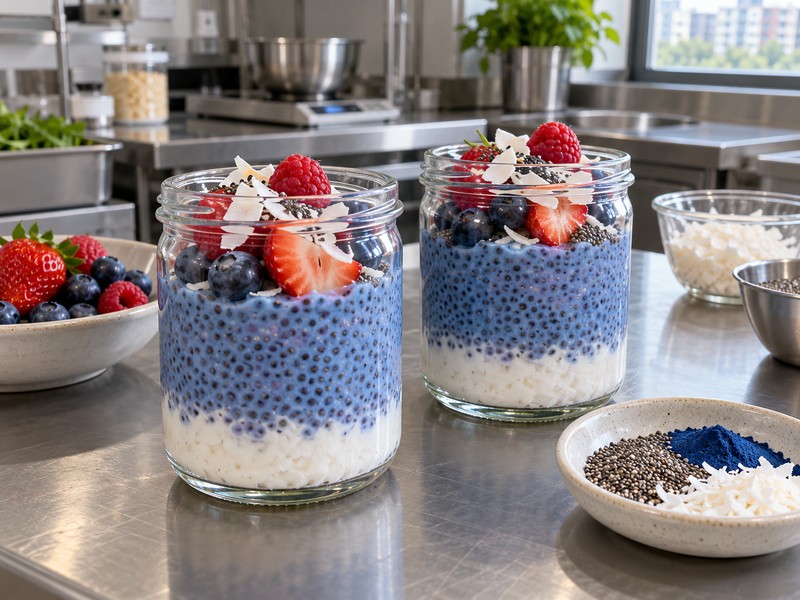
Blue spirulina chia pudding is a chilled chia-and-milk mixture colored with a phycocyanin-rich spirulina extract. It is easy to make a small blue cup, but harder to keep the texture smooth, the color even, and the layers attractive after an overnight hold. If you are building blue spirulina chia pudding for a café, meal kit, or packaged dessert, this guide helps you set a repeatable recipe and test it at the time customers will actually eat it.
1. What gives chia pudding its blue color?
Phycocyanins in a spirulina-derived extract give the pudding its blue color. The extract should be distinguished from whole green spirulina powder, which creates a different shade and flavor. The milk base, extract grade, and dose all affect the final look. Chia seeds also darken and scatter light as they hydrate, so a liquid that looks bright blue at mixing can appear muted the next morning.
What should be checked on the powder label?
Request the blue extract specification, full ingredient declaration, carrier information, and lot-specific COA. Different grades may need different amounts for the same shade. An E-grade is a supplier’s color measure, not a universal percentage of phycocyanin. Record the exact lot and dose for each pudding trial so a successful sample can be repeated in production.
| Powder detail | Recipe consequence |
|---|---|
| Color grade | Dose needed after hydration |
| Carrier | Sweetness, label, and mouthfeel |
| Lot | Traceability and shade comparison |
Approve the hydrated pudding, not only the freshly mixed liquid.
2. Which milk base works best?
A pale milk base usually shows the blue most clearly, but the best option also has to taste good and set to the right texture. Coconut milk can give a bright visual and noticeable coconut flavor. Dairy milk, oat milk, and almond milk each change color, sweetness, fat, and allergen handling. Compare them at the same chia and extract levels before committing to a menu claim.
How should you compare bases?
Make small jars with identical chia weight, liquid weight, sweetener, and extract dose. Record color at mixing and after full hydration. Taste blind, then check appearance, spoon texture, and any liquid separation. If the pudding will be layered with fruit, test the base again with that fruit. A pale base that looks perfect alone may appear gray beside a dark purée.
The contact page can help frame a sample request when you know the milk base and market.
3. When should blue spirulina be added?
Add blue spirulina to the liquid before the chia seeds so the pigment can disperse evenly. Mixing powder into an already thick gel can leave blue streaks and dry pockets. A small premix in part of the milk can help, especially in a larger batch. The mixing sequence should be written for the actual equipment and batch size.
What is a repeatable small-batch sequence?
Weigh the liquid, extract, and sweetener; blend or whisk until the color is uniform. Add the chia seeds while mixing, then stir again after an initial rest if the recipe requires it. Portion into the intended jars and refrigerate under a validated process. Record mixing time and any sediment. If staff use a large bowl, check jars filled at the beginning and end of the batch for color and seed distribution.
| Mixing step | Problem it prevents |
|---|---|
| Powder premix | Blue clumps |
| Controlled chia addition | Seed clusters |
| Second stir | Uneven hydration |
| Batch-end check | Different jars from one mix |
A good sequence reduces both visual defects and waste.
4. How much extract should a serving contain?
Use the lowest measured extract dose that gives the approved color after hydration and storage. A teaspoon is not precise enough for commercial production because powder density and scoop technique vary. Chia seeds can make the color appear less intense, so dose based on the final jar rather than the liquid premix. Compare grades on cost per saleable serving, not only price per kilogram.
How do you build a dose ladder?
Prepare a no-color control and several weighed blue levels in the same base. Hydrate all jars for the same time and temperature. Score final shade, flavor, streaks, and cost. Recheck the best dose with the fruit layer and toppings. If more powder creates an earthy note before reaching the desired color, try a different base or extract grade rather than adding sugar to hide it.
The blue spirulina product range is a starting point for selecting grades, but the jar test decides the amount.
5. How does chia hydration affect texture and shade?
Chia hydration determines the finished pudding’s thickness and can change how blue it looks. Seeds absorb liquid over time, forming a gel; too little liquid gives a stiff mass, while too much can leave a loose layer on top. A well-mixed blue base may still separate as the chia swells. The recipe should be judged after the same overnight hold customers will receive.
What should be measured after hydration?
Record chia-to-liquid ratio, temperature, hold time, spoon texture, visible free liquid, and color uniformity. Compare the top, middle, and bottom of a jar. If seeds settle, adjust mixing or portioning before changing the extract dose. Taste the final gel with a standard spoonful; a pudding that looks smooth may still feel gritty or overly firm.
| Observation | Likely next test |
|---|---|
| Seeds at bottom | Stirring and portioning sequence |
| Watery top | Liquid ratio and hold time |
| Pale after overnight hold | Dose or base color, then stability |
Texture and color should be approved together.
6. Can acidic fruit layers touch the blue pudding?
They can, but an acidic fruit layer may change the blue shade at the contact surface over time. Lemon, berry, and passion-fruit components bring both acid and their own pigments. A layered jar that looks clean at assembly may develop a dull band by sale time. Test the exact fruit, thickness, layer order, and storage period before finalizing the presentation.
How should you test a layered jar?
Make jars with blue base alone, fruit on top, and fruit below the blue base. Photograph the contact zone at assembly and at storage checkpoints. Taste after stirring because customers may combine the layers. If the interface discolors, try a different fruit, a physical separation, or a shorter hold. Do not alter pH simply to protect blue without reviewing food safety and flavor.
A product photograph should show the jar at the time it is sold, not only when it is layered by a stylist.
7. How long can the pudding be stored?
The safe storage time must be validated for the exact formula, process, package, and refrigeration conditions. Chia pudding contains hydrated ingredients and often fruit or dairy, so microbiological safety matters alongside color. A café batch and a retail chilled cup need different levels of documentation. The supplier’s powder shelf life does not establish the finished pudding’s shelf life.
What should a refrigerated trial include?
Prepare a representative batch and fill the intended jars. At planned checkpoints, assess temperature, appearance, odor, taste, texture, separation, and microbiology as set by your quality team. Keep unopened controls. If the recipe or packaging changes, rerun the relevant study. A pudding can hold its blue color yet fail another safety or quality criterion.
| Format | Main decision |
|---|---|
| Café jar | Safe preparation and service window |
| Meal kit | Transport and consumer holding instructions |
| Retail chilled cup | Validated process and labeled shelf life |
Color is only one part of release.
8. Does blue spirulina make chia pudding healthier?
The blue extract does not automatically make chia pudding healthier. Its main function at a typical color dose is visual. The finished product’s nutrition depends more on chia, milk, sweetener, fruit, and serving size. Claims about protein, antioxidants, skin, or immunity should be based on the actual formula and direct evidence, not the pigment’s name.
What should be checked before menu copy?
Calculate the full nutrition panel and verify any nutrient claim under the destination market’s rules. Check the extract’s carrier and actual use level. A study of whole green spirulina does not prove a benefit from a small blue extract dose. Use clear language about flavor, color, and ingredients unless a specific health claim has been properly supported. The whole spirulina range is a separate ingredient category if that is the product brief.
The best customer promise is one the finished jar can deliver.
9. What should a café put on its preparation card?
A café card should state ingredients by weight, mixing order, jar size, refrigeration procedure, hold limit, topping weights, and the acceptable color range. This prevents one shift from making a pale pudding and the next making a bitter one. Include allergen information for milk and toppings. A small photograph under ordinary service lighting is a useful visual reference, but it should sit beside measured instructions.
How should staff training be checked?
Ask two staff members who did not develop the recipe to prepare a batch from the card. Compare their jars after the full hydration period. Look for variation in color, seed distribution, texture, and fill weight. If results differ, simplify the procedure or add a clear checkpoint. Track waste from unsold jars and remakes during the first weeks of service.
| Card item | Why it matters |
|---|---|
| Extract weight | Controls color and cost |
| Chia-to-liquid ratio | Controls texture |
| Mixing sequence | Prevents streaks and seed clusters |
| Hold limit | Controls quality and safety |
A recipe card is successful when another person can use it without coaching.
10. How does a brand scale a blue chia dessert?
Scale by reproducing the ingredient ratios and mixing sequence, then validating the new process and package. A large tank can distribute seeds differently from a kitchen bowl. Fill order can cause jars from the same batch to vary. The product also needs a traceable extract lot, controlled cold chain, and label review for every target market. A successful café jar is a prototype, not proof of retail readiness.
What belongs in the scale-up file?
Keep the signed extract specification, lot-specific COA, approved sample, full formula, process map, fill-weight checks, texture and color references, shelf-life data, and allergen controls. Define change triggers for milk brand, fruit layer, extract carrier, or packaging. If one changes, run a bridge test before using the new version at scale. A written comparison can prevent an attractive launch from drifting after the first production run.
For a Spirulina CN ingredient discussion, send the dessert format, base, target shade, and market. Those details determine which sample and documents are useful.
Frequently Asked Questions
Can I make blue chia pudding the night before?
Yes, if the recipe is designed and validated for that refrigerated hold. Check the final color, texture, and safety at service time.
What is the best milk for a bright blue jar?
A pale base is a good visual starting point. Compare dairy and plant milks for taste, gel texture, color, and allergens.
How do I know if the blue powder has dispersed?
Check the liquid before adding chia, then inspect the hydrated jar for streaks or specks. A weighed premix often helps.
Can I layer berry puree with the blue pudding?
Yes, but test the contact zone after storage. Acid and berry pigments may change the blue interface.
What is the best dose of blue spirulina?
Use the lowest weighed dose that gives the desired color in the fully hydrated pudding without an off-note. The amount varies by grade and base.
Conclusion
Blue spirulina chia pudding is ready when its color and texture survive the overnight hold and the jar remains safe through service. You now have a way to choose the base, mix the extract, set the dose, test layers, and write a preparation card. If you are developing a café or retail dessert, contact us with the formula and market so we can discuss suitable samples and documents. A good chilled dessert should look as deliberate the next morning as it did at mixing.