
Blue spirulina comes from a cultivated biological source, but whether a specific powder can be labeled “natural” depends on its processing, other ingredients, intended use, and market rules. A blue sample can look plant-derived while containing a carrier that changes the label. If you are asking “is blue spirulina natural?” for a food or beverage launch, start with the exact SKU rather than the marketing name. This guide shows what to verify before you use natural, clean-label, or organic language.
1. Where does the blue color originate?
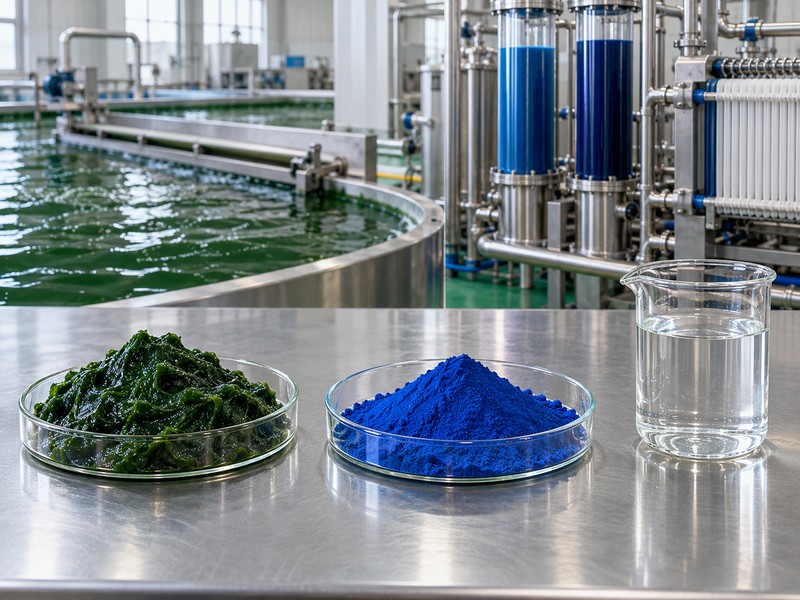
The blue color originates from phycocyanins in cultivated spirulina, often identified as Arthrospira platensis. The organism is grown, harvested, and processed to obtain the extract. That biological origin is relevant, but it is only the beginning of a natural-color claim. The finished powder may contain a carrier, and the final food may use other colors or additives.
What should an origin file contain?
Ask for the organism, source route, extraction method, ingredient declaration, and lot-specific traceability. The current U.S. spirulina extract color rule defines a filtered aqueous extract of dried Arthrospira platensis for regulated food-color use. Other markets may define or label the ingredient differently. A supplier profile cannot replace documents for the actual batch you buy.
| Origin question | Relevant record |
|---|---|
| What organism? | Identity specification |
| How was it processed? | Manufacturing description |
| What is in the final powder? | Ingredient statement |
| Which batch? | Lot number and COA |
The color’s source and the powder’s full composition are separate facts.
2. Is blue spirulina the same as whole green spirulina?
No. Blue spirulina is usually a phycocyanin-rich extract, while green spirulina is generally whole dried biomass. The extraction process changes the composition, color, and flavor. Calling both “spirulina” does not make them interchangeable on a label or in a clinical claim. A food developer should choose the ingredient by its intended function and verify what was actually supplied.
Why does the distinction matter to a label?
A whole-biomass powder may support a different ingredient statement and nutrient profile from a blue extract with a carrier. A small color dose does not automatically deliver the nutritional qualities associated with whole green spirulina. If a product says “with spirulina,” the brand should know whether that wording accurately describes the ingredient and fits local rules. The blue extract range and green spirulina range need separate qualification files.
The choice also affects taste: a green powder can bring a stronger grassy or marine note.
3. What does extraction mean for a natural claim?
Extraction does not automatically make an ingredient unnatural, but the process must be assessed against the rules and expectations of the target market. Aqueous extraction separates blue pigment from the biomass. Other steps, such as filtration, concentration, and drying, may follow. A supplier should be able to describe the process enough for a brand to review identity and label wording without revealing proprietary settings.
What process questions should a buyer ask?
Ask which extraction medium is used, whether processing aids remain in the final product, and which carriers are added before drying. Check how those ingredients appear in the final declaration. If a marketing claim says “unprocessed,” it may be inaccurate for an extract. A more precise statement about source and function is often easier to support. Have a local regulatory reviewer evaluate any “natural” claim before packaging is printed.
| Processing term | Why it matters |
|---|---|
| Aqueous extraction | Describes how pigment is separated |
| Filtration | Distinguishes extract from whole biomass |
| Drying | Creates the saleable powder form |
| Carrier addition | Affects full composition and label |
The process description should agree with the ingredient statement.
4. Can a carrier still fit a natural-color product?
A carrier can fit some natural-color product concepts, but its identity and market status must be reviewed. Commercial blue powders may use carriers for handling, dispersion, or stability. Two powders with the same shade can have different ingredient lists. A brand that wants a particular clean-label profile should state that requirement before sampling, not after artwork is approved.
How should carriers be compared?
Request the full composition of each grade and test it in the intended recipe. Compare dose, shade, taste, dispersion, and label wording. A carrier that is acceptable in one market or channel may not fit another brand’s policy. Do not assume a higher E-grade is “purer” without the supplier’s grade method and actual assay. The best ingredient is the one that meets both the technical and label brief.
If your formula has a strict carrier policy, contact the supplier with the requirement before ordering a pilot lot.
5. Does “natural” mean “organic”?
No. Natural origin and organic certification are different claims. A spirulina-derived blue powder can come from a biological source without being certified organic. Organic status must be verified for the exact product, production site, transaction, and destination market. A generic company certificate or another SKU’s label does not prove the powder in your purchase order qualifies.
What documents support an organic statement?
Request the current product certificate, scope, site information, transaction or chain-of-custody documents where required, and lot-linked purchase records. Match names and addresses across them. If any link in the chain is missing, leave organic wording off the label until it is resolved. A conventional product can still be a valid choice for color, provided its quality and use are properly documented.
| Claim | Evidence needed |
|---|---|
| Spirulina-derived | Identity and process record |
| Natural color | Market-specific ingredient and process review |
| Organic | Exact product and transaction certification chain |
Using the terms as synonyms creates avoidable label risk.
6. Is blue spirulina a synthetic dye?
Blue spirulina extract is derived from cultivated spirulina rather than synthesized as a petroleum-based dye. That does not answer every regulatory question about how it is classified or named in a specific food market. The United States regulates spirulina extract as a color additive with defined identity, specifications, and permitted uses. Other jurisdictions can take different approaches. The finished food’s ingredient declaration should follow its own market’s rules.
How should a brand compare color options?
Compare natural-origin blue extract with other permitted colors on the same finished-product brief. Record shade, dose, taste, process stability, label wording, supply consistency, and cost per unit. A synthetic color may be more stable in a harsh acid or heat process; that is a technical comparison, not a reason to misstate the origin of spirulina extract. A product brief should make the tradeoffs visible before claims are drafted.
The blue extract product page can begin sample selection. The final choice comes from the actual formula and market.
7. Can a natural blue color survive every recipe?
No. A spirulina-derived blue color can be sensitive to heat, acidity, light, and the food matrix. A powder’s biological origin does not make it universally stable. A cold pale smoothie may keep a bright hue while a hot-filled acidic beverage fades. A brand should test the ingredient under the intended process and storage conditions before promising a particular shade.
What is a fair stability trial?
Use measured doses of the exact extract lot in the complete recipe and intended package. Record color before and after processing, then at planned shelf-life checkpoints. Measure pH where relevant and note light exposure, sediment, taste, and safety results. If the color fails, change one variable at a time. Adding more powder may raise cost and flavor impact without fixing the underlying instability.
| Stress | What to observe |
|---|---|
| Heat | Shade after the actual process |
| Acid | Hue and intensity at measured pH |
| Light | Change in clear versus protected packaging |
| Storage | Color and flavor through planned sale period |
The finished-food trial is stronger evidence than a supplier’s water sample.
8. What quality tests should a natural-color buyer request?
Request identity, color value, contaminant, microbiological, and traceability data for the offered lot. A claim about natural origin does not replace those safety checks. The required test panel depends on the destination market and food application. The current U.S. spirulina extract rule includes specific heavy-metal limits and a negative microcystin requirement for the regulated color ingredient.
How should a COA be reviewed?
Check that its lot number matches the package and purchase order. Compare method, unit, acceptance limit, and actual result with the signed specification. Ask for clarification if a report lists “complies” without enough detail to judge a critical result. Verify that certificates cover the exact SKU and manufacturing site. A lot’s color and safety records should both be in the approval file.
The factory information can help explain production capabilities; the lot-specific documents determine whether this material meets your brief.
9. Which marketing phrases need extra care?
Phrases such as “pure,” “chemical-free,” “detoxifying,” or “safe for everyone” need more than a biological source story and may be misleading. A food-grade extract is produced through physical and chemical processes in the ordinary scientific sense; “chemical-free” says very little. A carrier can make “pure phycocyanin” inaccurate. Health promises need direct evidence on the relevant extract, dose, and outcome, plus market review.
What can a brand say clearly?
Describe the ingredient’s verified origin and its function as a blue color, using wording that fits the destination market. State the full ingredient declaration, not a shorthand that hides a carrier. If organic is important, wait for the exact certification chain. If a supplier offers a specific color grade, explain it using that supplier’s test method rather than an unsupported percentage. Clear labels often sound less dramatic because they answer real buyer questions.
| Phrase | Better evidence question |
|---|---|
| “Pure” | Pure relative to what assay and carrier? |
| “Organic” | Which product and transaction documents? |
| “Natural” | Which market definition and process record? |
| “Healthy” | Which finished-product evidence? |
The wording should be the last step of product qualification.
10. How should a brand approve a natural-blue claim?
Approve the claim only after the exact powder, process, finished formula, and target market have been reviewed together. The supplier can provide identity and quality documents; the brand owns its label and product performance. Keep the approved sample and lot with the claim file. If the carrier, production site, or recipe changes, review the claim again before using the new material.
What belongs in the approval record?
Include the ingredient specification, full declaration, COA, process description, applicable certificates, regulatory opinion, finished-product trial, and final artwork wording. Record the market and date of review. Make purchasing use the approved SKU and change-control terms, so a cheaper substitute cannot quietly alter the label. This process lets a natural-origin story rest on facts that can be checked later.
If you are choosing Spirulina CN blue extract, provide the formula and market with the request. The supplier can then return a relevant product file rather than a general natural-color claim.
Frequently Asked Questions
Can I call every blue spirulina powder natural?
No. Check the exact composition, process, and rules in the destination market before using that word on a label.
What is the best proof of natural origin?
Start with source identity, extraction description, ingredient declaration, and lot traceability. A blue photograph is not evidence of origin.
How do I know if the powder is organic?
Request current certification and transaction records for the exact product, site, and market. Do not rely on a company-wide statement.
Can I say the powder is pure phycocyanin?
Only if a defined assay and ingredient declaration support that wording. Many commercial powders include carriers or other components.
What is the best way to compare natural blue colors?
Test each candidate in the same finished recipe. Compare shade, dose, taste, stability, label fit, and cost per unit.
Conclusion
Blue spirulina comes from a biological source, while a defensible natural claim depends on the exact product and market. You now know how to check extraction, carriers, organic status, quality tests, and label wording before a launch. If you are sourcing a blue color ingredient, contact us with your formula and destination market so we can discuss suitable samples and documents. The clearest label begins with the clearest specification.