
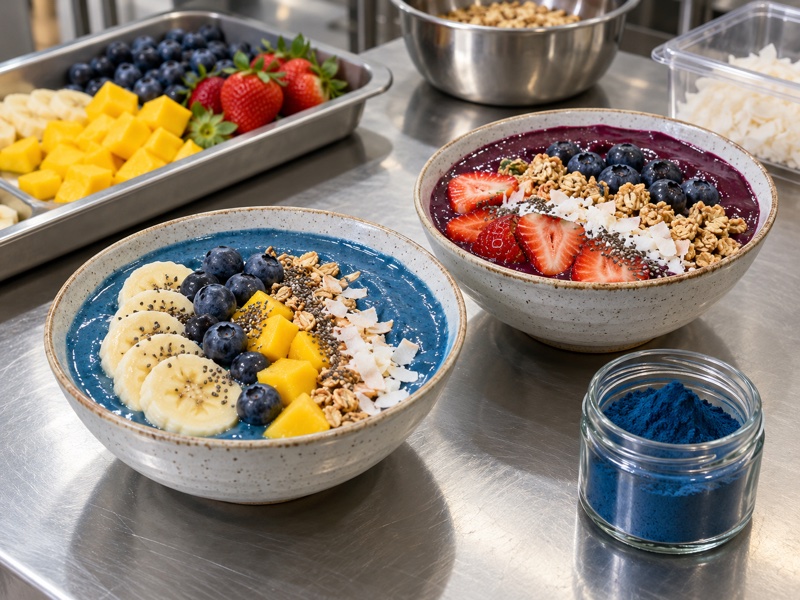
A blue spirulina acai bowl combines a phycocyanin-colored base or layer with an acai component, usually served cold and topped with fruit or crunchy ingredients. The idea looks simple in a photograph, but acai’s dark purple color can swallow the blue as soon as the two bases are blended. If you are developing a blue spirulina acai bowl for a café or frozen-pack line, decide whether you want a distinct blue layer, a swirl, or a blue-tinted acai mix. That choice controls ingredients, process, shelf-life testing, and how honestly the menu can describe the finished bowl.
1. What makes an acai bowl visibly blue?
A separate pale base colored with blue spirulina extract makes the clearest blue element. Acai itself is deep purple, so simply adding blue powder to a concentrated acai purée usually creates a darker violet or muddy shade. A two-part bowl can show both ingredients without forcing one to do an impossible color job. Blue extract supplies phycocyanin pigment; it does not turn every dark food electric blue. Define the look in a real bowl before writing a recipe.
Which color approach should a shop choose?
Compare three prototypes: a blue base beside acai, a layered bowl, and a fully blended mix. Use the same total serving weight, toppings, and photography light. Note which option looks good after a few minutes of softening, not just at assembly. A distinct blue half may need a pale banana or coconut base, while acai can remain rich purple. The blue spirulina smoothie bowl guide covers the texture needs of the blue side.
| Design | Likely color result | Main challenge |
|---|---|---|
| Side-by-side | Clear blue and purple | Clean portioning |
| Layered | Strong first impression | Color bleed at interface |
| Fully blended | Dark violet | Limited visible blue |
Choose the design a server can reproduce on a busy shift.
2. Which base works with the acai layer?
A pale, thick base makes blue spirulina more visible and can contrast with acai’s tart, berry-forward flavor. Frozen banana, coconut yogurt, and some oat or dairy bases are practical starting points, but each changes sweetness, allergens, and melt behavior. Acai purée may contain added sugar or guarana depending on the product. Read its specification before assuming a particular nutrition or caffeine profile. The blue base should taste good on its own and after both colors mix in the spoon.
How should bases be compared fairly?
Fix the acai component, portion weight, and topping mix. Prepare two or three blue bases at the same measured pigment level, then freeze and blend them under identical conditions. Score color, thickness, flavor balance, and melt after service time. If a pale base needs a lot of sweetener to balance the acai, adjust the overall bowl rather than adding sugar only to the blue side. The smoothie formulation article can help identify base-color and separation issues before scale-up.
The best contrast should still make a coherent mouthful.
3. Does acai change the blue pigment?
Acai can change the appearance of blue pigment when the components touch or blend because it brings dark anthocyanin color and acidity. A clean boundary may blur as the bowl warms. The exact result depends on the acai formulation, pH, sugar, and how much mixing occurs during service. Test the real purée and blue base together. Do not assume that a stable blue smoothie will behave the same beside a concentrated fruit layer.
What should an interface trial record?
Spoon the components into the proposed bowl at the intended temperature and thickness. Photograph the border immediately, after five minutes, and at the usual end of service. Stir a sample to see the color customers get when they mix it themselves. Note whether the acai bleeds, whether toppings drag purple across the blue, and whether an acidic edge dulls the pigment. A different layer order or thicker blue base may help more than adding extra powder.
| Observation | First adjustment to test |
|---|---|
| Purple runs into blue | Base thickness or assembly order |
| Blue fades at contact | Acid level and service time |
| Entire bowl looks gray | Separate the components visually |
The border is part of the finished product, not a styling detail.
4. How much blue extract should the recipe use?
Use the lowest weighed dose that achieves the approved blue shade in the frozen base at serving time. Powder grades vary in color strength and carrier composition, so a teaspoon copied from another recipe is not a robust commercial standard. Acai bowls contain competing colors, and a stronger dry powder will not necessarily overcome a dark base. Calculate grams per kilogram of blue component, not per bowl if portion weights vary. Recheck after a supplier or base change.
How can a dose ladder prevent waste?
Make a no-color control and several measured blue levels in the same pale base. Freeze, blend, and portion them consistently. Taste blind, then compare color after five minutes beside the acai layer. A high dose may add cost or an off-note without improving the visible contrast. The blue powder guide explains why carrier and color grade belong in a price comparison.
| Trial measure | Decision it supports |
|---|---|
| Powder grams | Repeatable cost and shade |
| Finished blue color | Dose approval |
| Flavor note | Sensory limit |
| Five-minute appearance | Service viability |
Buy the dose that works in a finished bowl.
5. What texture keeps two colors distinct?
Both components need enough body to hold their position when the bowl is assembled. A thin blue smoothie can flow beneath the acai, while an overly stiff base may be difficult to portion and unpleasant to eat. Frozen fruit, yogurt, liquid amount, and blending time control the texture more than the blue pigment does. Aim for similar spoon resistance on both sides. Evaluate after the toppings are added, because heavy fruit can collapse a soft layer.
How should a service test be run?
Use the planned bowl, scoop, blender, and portion tools. Have different staff members make the same design from a written recipe. Measure how long it takes and whether the colors stay distinct through a realistic service window. Check for melting on the counter and in delivery packaging if takeout is planned. The chia pudding article illustrates a related problem: attractive layers can shift after hydration or holding.
The bowl has to work outside the test kitchen.
6. Which toppings help rather than hide the colors?
Pale toppings and deliberate placement can support the blue-and-purple contrast; dark granola and dense fruit can conceal it. Coconut flakes, sliced banana, and light seeds may show clearly over blue, while berries can sit over the acai side. Consider flavor, allergens, moisture, and cost as well as photography. A bowl that is only beautiful from directly overhead may be less convincing when carried across a café. Keep a repeatable topping map for staff.
What should the menu photo show?
Photograph a standard portion made from the approved recipe after a normal service interval. Include the real amount of acai and blue base. Avoid a photograph dominated by an exaggerated pile of fruit if the regular bowl contains less. If toppings cause bleeding or sink into the base, adjust their cut size or placement. The recipes collection provides other applications, but the acai bowl needs its own tested presentation.
| Topping choice | Visual benefit | Operational check |
|---|---|---|
| Coconut flakes | Clear against blue | Allergen and portion control |
| Dark berries | Echo acai color | Bleeding after thaw |
| Granola | Texture contrast | Moisture and sinking |
Toppings should reveal the bowl, not cover it.
7. Can a frozen acai bowl be packaged for retail?
It can, but a retail version needs separate stability, safety, and packaging work. A shop bowl eaten within minutes is not the same as a frozen pack transported, stored, and thawed by customers. Color boundaries can blur during temperature cycling; fruit and toppings can lose texture. The blue pigment may face light exposure if the pack has a clear window. Test the intended package and distribution conditions instead of extrapolating from a café prototype.
What belongs in a frozen-pack trial?
Record fill temperature, package seal, freezer temperature, light exposure, and planned storage time. Assess the unopened pack, a partially thawed bowl, and the serving state specified on the label. Note ice crystals, water separation, color bleed, flavor, and topping texture. A microbiological and shelf-life plan belongs with the manufacturer’s quality team. The ice cream article offers related color and frozen-texture checks.
The retail test should use the product customers will actually open.
8. What nutrition claims can the bowl support?
Nutrition claims must come from the whole bowl, not from the fact that its blue side contains spirulina extract. Acai bases vary in sugar, fruit content, and added ingredients. The blue component may be mainly banana or coconut, while a color-use dose contributes little measurable nutrition. Calculate the full serving with toppings and validate any claim for the destination market. Avoid suggesting that a blue color by itself provides a health benefit.
Which numbers should a brand verify?
Measure or calculate serving energy, sugars, protein, fiber, and any nutrient the brand plans to mention. Check the acai supplier’s ingredient declaration for added sweeteners or other actives. If the bowl is sold as “high protein,” verify the finished serving against the market’s rule. The benefits article separates research on a pigment from claims about a finished food. A good nutrition panel also makes a menu description easier to defend.
| Claim idea | Required basis |
|---|---|
| Low sugar | Full bowl, including acai and toppings |
| High protein | Finished serving and market threshold |
| Caffeine-free | Acai and all added ingredients |
The complete recipe decides the label.
9. What should the ingredient list say?
The ingredient list should reflect the actual acai base, blue extract, carrier, sweeteners, and toppings according to the market’s rules. Do not assume that blue spirulina means whole green spirulina or that a supplier’s organic certificate covers every component. In the United States, 21 CFR 73.530 sets conditions for spirulina extract as a color additive in specified foods. A regulatory reviewer should check the exact bowl category and current rule. Allergy and cross-contact statements depend on the full operation.
Which supplier records should be retained?
Keep specifications and lot COAs for the acai, blue extract, and any other relevant ingredient. Record the blue grade and carrier. Match certifications to the purchased product and transaction, not a different SKU. The natural-label guide explains why “natural” and “organic” need distinct support. Review the label again when a fruit purée, yogurt base, or powder supplier changes.
Documentation should keep pace with recipe revisions.
10. How can a café standardize the bowl?
A café can standardize the bowl with a measured recipe, color reference, assembly sequence, and short service test. Weigh both bases and toppings, define blend time and temperature, and show staff a photograph of the approved five-minute appearance. Record batch yield and waste. If a supplier lot changes shade, compare it with the retained sample before silently increasing dose. A reliable bowl should be recognizable across shifts and locations.
What should go on the recipe card?
Include grams of blue base, acai base, pigment, and each topping; note the mixing order and assembly pattern. State the storage and serving conditions approved by the quality team. Add a simple rejection rule for a gray, watery, or separated bowl. The contact team can discuss appropriate blue grades and documents for a commercial application. The café remains responsible for validating its own recipe and food safety.
| Recipe-card item | Why it matters |
|---|---|
| Weighed portions | Consistent cost and look |
| Color reference | Objective approval |
| Service time | Realistic presentation |
| Lot record | Traceability |
The simplest standard is one staff can follow during a rush.
Frequently Asked Questions
Can I mix blue spirulina straight into acai?
Yes, but expect a darker violet shade rather than a clean blue. A separate pale layer is usually a better choice when blue is the visual goal.
What’s the best base for the blue side?
A pale, thick base such as banana and coconut can work well. Test flavor, allergens, and melt behavior with the exact acai component.
How do I know if the bowl has caffeine?
Check the complete acai product and all additions. Blue spirulina extract is not naturally caffeinated, but some acai mixes or toppings can include stimulant ingredients.
Can I prepare blue and acai layers ahead of time?
Possibly, if your food-safety process allows it and the layers stay attractive. Test the planned hold and service conditions before offering a make-ahead claim.
Can a blue acai bowl claim extra health benefits?
Only with evidence for the finished serving and an approved market claim. The blue color alone does not establish a nutritional benefit.
Conclusion
A blue spirulina acai bowl works best when blue and acai each have a defined role: one supplies vivid contrast, the other its dark fruit character. You can build a dependable version by testing the base, layer boundary, dose, service time, toppings, and finished nutrition. If you are developing a menu or frozen pack, contact us with the application and target market so we can discuss suitable extract samples and documents. The bowl should look as considered at the table as it did in the photograph.