
Blue spirulina extract contains a protein-bound pigment, but a small amount used to color food is not a practical stand-alone protein powder. A blue gym drink can suggest muscle nutrition even when most of its protein comes from milk, soy, or an added isolate. The phrase blue spirulina protein therefore needs a serving-level calculation, not a glance at the powder’s color. This guide helps you compare blue extract, whole green spirulina, and dedicated protein ingredients before you build a formula or believe a claim.
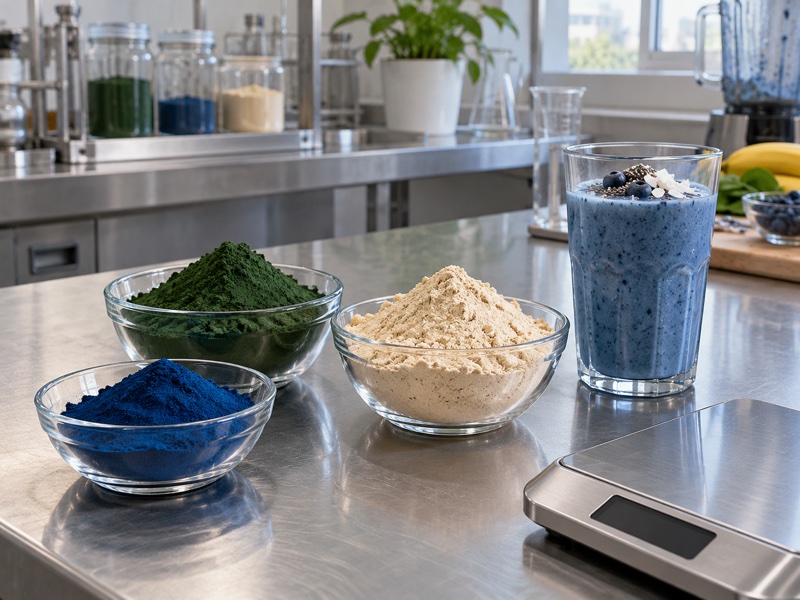
1. Is blue spirulina actually protein?
Blue spirulina extract contains phycocyanin, a pigment-protein complex, but the commercial powder may also contain carriers and other solids. The presence of protein does not tell you the grams delivered by a finished serving. Most blue food applications use the extract to create a shade, not to meet a protein target. Ask for the exact grade’s tested composition and the amount in the recipe. A product can be strongly blue with very little extract by weight.
Why does the chemistry confuse labels?
The word “protein” appears in the pigment’s scientific description, which can sound like a nutrition claim. The blue pigment guide explains that chemistry. A scientific review describes extraction and stability, but it does not establish protein grams in your smoothie. Keep molecular identity, powder composition, and serving contribution separate. Each needs a different piece of evidence.
| Statement | Question |
|---|---|
| “Phycocyanin is a protein complex” | What is in the powder? |
| “Powder contains protein” | How much per gram? |
| “Drink is high protein” | How much per finished serving? |
The final serving is the number customers need.
2. How is blue extract different from whole spirulina?
Blue extract is processed to enrich the water-soluble blue fraction, while whole dried spirulina retains more of the biomass. Whole material often appears green and can have a larger protein percentage by weight. The two products are used at different doses and give different taste and color. A whole-spirulina nutrition table should not be pasted into a blue extract sales sheet. Check the formal material name before comparing protein figures.
How can you verify the distinction?
Read the specification and full composition, then compare samples in the same base. The blue versus green guide explains why the whole powder colors a drink differently. The USDA dried spirulina record describes whole dried material, not every commercial blue extract. If a seller uses that record to market a blue color powder, ask for product-specific analysis. The answer may be very different.
| Material | Buying role |
|---|---|
| Whole spirulina | Nutrient-containing biomass |
| Blue extract | Blue color fraction |
| Protein isolate | Protein grams per serving |
Comparing them at equal spoonfuls answers the wrong question.
3. How do you calculate protein from the extract?
Multiply the tested protein fraction of the exact as-sold extract by the grams used in one finished serving. For example, if a hypothetical powder contains 20% protein and a drink uses 0.2 g, its contribution is 0.04 g. That example is arithmetic, not a specification for a real product. Then add protein from the rest of the formula. Rounding and claim rules depend on the market, so a regulatory reviewer should confirm the label.
What records make the math credible?
Keep the lot or product protein result, method, serving dose, recipe version, and finished-product nutrition data where needed. The nutrition overview walks through the common misconception. Do not calculate from a dry-basis figure if the bought powder is sold with a different moisture or carrier basis without conversion. If the blue dose changes to meet shade, update the nutrition calculation too. A spreadsheet can be simple as long as its inputs are correct.
| Input | Example only |
|---|---|
| Powder per serving | 0.2 g |
| Tested protein | 20% |
| Contribution | 0.04 g |
Color strength and protein contribution are separate outputs.
4. Can blue spirulina replace whey or pea protein?
No, a color-use dose of blue extract should not be used as a gram-for-gram replacement for whey or pea protein. Those ingredients are selected to deliver meaningful protein amounts and have their own solubility, flavor, and quality specifications. Blue extract is selected for shade and often used in much smaller quantities. A formula can include both. The protein source may make the blue paler or change texture, so test them together.
What does a two-ingredient trial show?
Make a plain base, a base plus protein, a base plus blue, and a base plus both. Compare protein grams, flavor, texture, color, and shelf behavior. The taste guide explains how to isolate off-notes. If the protein base tastes chalky, adding blue will not solve it. If the blue fades in the protein system, change the formulation rather than crediting the extract with protein it does not supply.
| Trial | Main question |
|---|---|
| Base only | Is the recipe good? |
| Base + protein | Does it meet nutrition and taste? |
| Base + blue | What does color add? |
| Both | Do they work together? |
Assign each ingredient a job it can perform.
5. Is phycocyanin a complete protein?
Calling phycocyanin a pigment-protein complex does not establish that a blue extract serving is a complete or practical protein source. Protein quality involves amino-acid profile, digestibility, and the amount eaten. Those questions cannot be answered from a color grade or a dark powder photograph. If a brand wants a protein-quality claim, it needs relevant data for the exact ingredient and finished serving. In most colored foods, that investigation will point to a dedicated protein ingredient instead.
What should the technical team request?
Request amino-acid data if available, protein method and result, carrier composition, and actual use level. The ingredient composition guide explains why extract data cannot be inherited from whole biomass. Ask the nutrition team whether the planned serving could meet any claim threshold even under a favorable assumption. If not, stop using protein as a front-of-pack reason to add the extract. The color can still be valuable.
| Question | Evidence |
|---|---|
| Which amino acids? | Profile for exact material |
| How digestible? | Suitable quality data |
| How much consumed? | Weighed serving dose |
Protein quality matters only after protein quantity matters.
6. Can a blue smoothie be high protein?
Yes, if the full smoothie has enough protein and meets the destination market’s claim conditions. The blue extract does not need to supply those grams. Yogurt, soy milk, cow’s milk, or a tested protein powder can provide them. Choose the protein source for nutrition and sensory fit, then add blue extract at a color-use dose. Test the final drink’s nutrition, flavor, and appearance together.
How should a label present it?
State protein based on the finished serving, not a per-100-g figure for an ingredient. The smoothie guide shows a base that can be modified, but any high-protein version needs its own calculation and test. Do not imply that the blue ingredient is the protein source if it contributes very little. Consumers can understand that a smoothie is high protein and blue for two different reasons. Clarity is more persuasive than an ingredient halo.
| Label element | Basis |
|---|---|
| Protein grams | Finished-serving test |
| Blue color | Spirulina extract grade |
| Allergen | Complete formula |
A high-protein blue smoothie is possible without a misleading claim.
7. Do grades change protein contribution?
Yes, grades can change the powder’s composition and the dose needed for color, which can change protein contribution. A more concentrated blue grade might contain more phycocyanin per gram yet require less powder per drink. The result may be similar or smaller total protein per serving. Supplier codes such as E3 or E18 are not universal protein percentages. Ask for the exact grade’s method and composition, then calculate from the formula.
How should two grades be compared?
Prepare both at equal finished shade and record powder grams per serving. Multiply each by its tested protein fraction. The powder buying guide explains why equal color performance is the right commercial comparison. Also check taste, cost, stability, and label declaration. A higher grade may be better for color even if it adds less nutrition. That is not a contradiction; it reflects different ingredient roles.
| Comparison | Better basis |
|---|---|
| Color | Approved finished shade |
| Cost | Per finished serving |
| Protein | Grams per finished serving |
Do not turn a grade code into a nutrient promise.
8. What quality checks matter for a protein claim?
The buyer needs identity, lot-specific composition, appropriate test methods, and a safe food-grade material before making any nutrition claim. Contaminant and microbiology controls remain relevant even if the extract is used mainly for color. The finished product may need independent nutrition testing. Check that the laboratory method and basis fit the label calculation. If a supplier changes carrier or source, the previous result may no longer apply.
What should the file contain?
Keep the specification, lot COA, protein method, carrier statement, traceability, and finished-product data. The natural-label guide explains why organic status is separate from nutrition and quality. For US color use, check the current conditions in 21 CFR 73.530. A food-grade label does not automatically support a high-protein claim. Different claims need different evidence.
| Record | Why it matters |
|---|---|
| Lot identity | Correct material |
| Protein test | Calculation input |
| Finished nutrition | Label result |
| Regulatory review | Claim eligibility |
Good data should survive a recipe change.
9. What marketing language should be avoided?
Avoid calling a blue drink a “spirulina protein shake” if its protein comes almost entirely from another ingredient and the wording would mislead consumers. Also avoid implying that a pigment’s protein structure delivers muscle gain or recovery. A food-color dose is not clinical evidence. Marketing can describe the vivid blue and the actual protein source accurately. Review front-of-pack text, images, and influencer instructions together.
How can copy be made clearer?
Use wording such as “high-protein smoothie colored with spirulina extract” only if the finished serving qualifies and the color declaration is lawful. The benefits guide explains why athletic claims should not be assigned to the pigment. If protein is added, name its source and check allergens. Keep the blue extract dose on the formulation sheet. An honest product can still be visually distinctive.
| Wording | Review question |
|---|---|
| “Spirulina protein” | Which ingredient supplies grams? |
| “Muscle support” | What direct evidence? |
| “Colored with extract” | Is declaration correct? |
Let the label distinguish color from nutrition.
10. When should you choose blue extract and protein together?
Choose both when the product brief needs a specific blue shade and meaningful protein grams, and the two ingredients work together in the finished formula. Start with the protein target and base, then add blue extract at the tested color dose. Check pH, heat, package, and storage because the protein system may change shade or texture. Validate the complete nutrition label. A product can deliver both benefits without asking one ingredient to do both jobs.
What should the final brief contain?
State grams of protein per serving, exact protein source, blue grade and dose, shade standard, process, package, market, and quality documents. Our team can discuss color-grade samples for a commercial trial. The product manufacturer should verify nutrition and shelf life. Record substitution rules for both ingredients. A clear brief prevents a later purchasing change from changing the claim or color.
| Product target | Responsible evidence |
|---|---|
| Protein | Finished-serving analysis |
| Blue shade | Application standard |
| Stability | Shelf-life study |
| Claims | Market review |
Give nutrition and color separate owners.
Frequently Asked Questions
Can blue spirulina replace protein powder?
No, not at a normal color-use dose. Use a tested protein ingredient for meaningful grams.
What’s the protein in one blue smoothie?
It depends on the full recipe. Calculate from every ingredient and verify the finished serving.
How do I know if a blue powder is high protein?
Read its product-specific analysis and serving size. A pigment-protein complex does not prove a useful dietary dose.
Can a blue smoothie be sold as high protein?
Yes, if the complete serving meets the applicable claim rules. The protein may come from milk, soy, or another added source.
Can I use whole spirulina instead of blue extract?
You can test it, but the color, flavor, and nutrition will differ. It is not a direct replacement for a clean blue shade.
Conclusion
Blue spirulina extract contains a protein-bound color, but it should not be mistaken for a practical protein powder at normal coloring doses. You now know how to calculate the actual contribution, compare it with whole spirulina, and build a blue high-protein food honestly. If your team needs an extract grade for a protein beverage, contact us with the formula and market. We believe a good label gives each ingredient credit for the job it truly performs.