
Make blue spirulina juice by choosing a pale juice base, cooling it, and mixing in a measured food-grade blue extract before you adjust citrus or sweetness. A vivid blue glass can become muddy when apple concentrate, orange juice, or pulp is added. If you want a recipe that another person can make or a brand can bottle, the order of testing matters. This blue spirulina juice recipe begins with a fresh-serving version, then shows what has to change for a commercial pack.
1. What is a workable blue spirulina juice recipe?
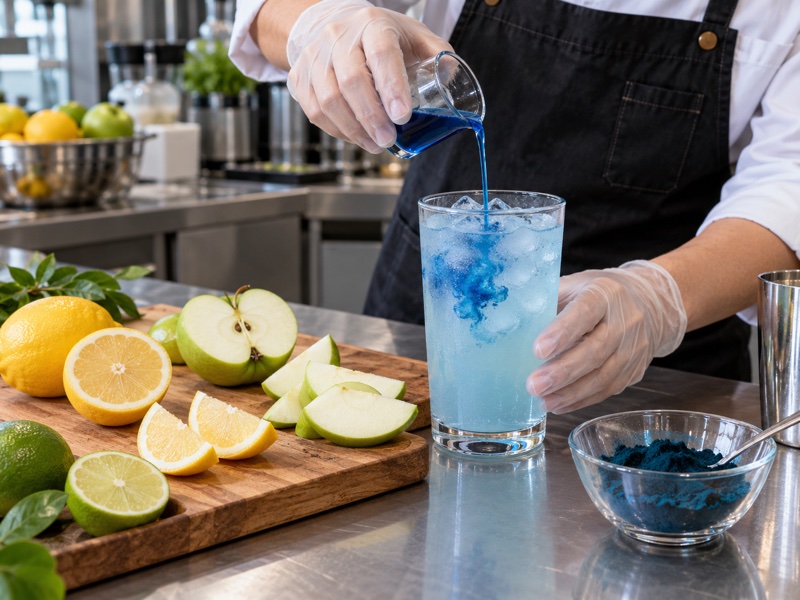
A workable blue spirulina juice recipe pairs a pale, pleasant juice with a weighed blue extract dose and a repeatable mixing method. For a single test glass, use about 200 to 250 mL of chilled pale apple, white grape, or similarly light juice, then add a small premix of food-grade extract. The exact amount depends on the grade and desired hue. Taste before adding sweetener because many juices are already sweet. This is a bench starting point, not a validated bottled formula.
What should the first glass record?
Write down juice brand or specification, volume, extract lot and weight, mixing time, temperature, and final shade. Make a plain control so you can identify the color’s flavor contribution. The blue juice overview explains the broader formulation context; this recipe focuses on the measured steps. Photograph the glass immediately and after 20 minutes. If it only looks blue for the first minute, the base needs work.
| First-glass input | Why it matters |
|---|---|
| Juice source | Native color and acid |
| Blue extract grade | Dose and shade |
| Temperature | Mixing and stability |
| Hold time | Serving performance |
Start with a glass you can reproduce.
2. Which juice base keeps the blue bright?
A pale, low-color base gives the blue the clearest chance. White grape and light apple juices may work visually, while orange, beet, berry, or green vegetable juices can obscure or alter the shade. Their acidity and flavor also differ. A clear base is not automatically the best-tasting base, so screen both appearance and sensory quality. Choose the juice that supports a real drink rather than one that only looks good in a photo.
How do you compare juices fairly?
Use the same blue extract lot and weight in equal volumes of each juice. Record native color, pH, sugar level if available, haze, and flavor. The blue drink guide gives a plain-base control, which helps reveal whether the juice or extract causes a color change. Keep pulp constant or remove it for a first clear comparison. A pale juice may need less pigment, improving both cost and taste.
| Juice base | Main question |
|---|---|
| Pale apple | Does yellow shift blue to teal? |
| White grape | Is the sweetness balanced? |
| Orange | Does native color hide blue? |
| Berry | Is blue visible at all? |
The base should earn its place on flavor as well as shade.
3. How much blue extract should the recipe use?
Use the lowest weighed dose that reaches the target blue in the finished glass. Juice color, acid, and pulp can make the required dose different from water. A teaspoon is unreliable because supplier grades and powder density vary. Too much extract may deepen the starting shade while adding cost, haze, or a faint off-note. Run a dose ladder and record the result after normal serving dilution.
What should a dose ladder include?
Prepare a control and three or four measured levels in one juice base. Compare fresh shade, flavor, clarity, and color after the intended serving period. The powder guide explains why grade and carrier belong in the calculation. If all doses look greenish, change the base before doubling the powder. Cost per drink should use the approved dose, not the supplier’s headline price.
| Observation | Next move |
|---|---|
| Pale but clear | Trial higher grade or dose |
| Teal at all doses | Review base color |
| Cloudy | Check carrier and mixing |
| Bright but flat-tasting | Rebalance juice base |
The right dose is a finished-drink decision.
4. Does lemon help the flavor or hurt the blue?
Lemon can sharpen a sweet juice, but its acidity may change the blue extract’s shade or stability. A squeeze added at the bar is different from a measured acid in a bottled drink. The finished pH and hold time should be tested, especially if citrus is part of the product identity. Avoid adding lemon solely because a recipe blog does; taste the base first. Food safety and preservation requirements must be assessed separately from color.
How do you test the trade-off?
Keep juice base and blue dose constant, then add measured lemon levels. Record pH, hue, flavor, and appearance after 20 minutes or the intended storage time. The blue lemonade article details the acid challenge. If the preferred flavor level dulls the blue, consider another juice concept or color system rather than masking instability with extra powder. A good recipe serves the palate and the eye together.
| Lemon level | Compare |
|---|---|
| None | Baseline flavor and color |
| Light | Flavor lift and hue |
| Full | Sourness and stability |
The best lemon level is the one the whole drink can support.
5. Should the juice be clear or pulpy?
Clear juice displays a more luminous blue, while pulp and cloudiness can make the shade softer or uneven. Pulp is not a defect if the drink is designed that way, but it changes how customers judge the color. Sediment from fruit can also be confused with poorly dispersed extract. Decide the texture before finalizing the pigment dose. A clear bottle has a stricter visual standard than an opaque smoothie-style juice.
How can you test pulp without confusion?
Use the same juice source in filtered and pulpy forms where possible. Add equal measured blue doses and compare shade, settling, mouthfeel, and taste. The smoothie article shows a fully opaque fruit system where color is read differently. If a pulpy juice separates, determine whether the fruit or pigment is settling. The packaging may need a “shake before use” instruction only after safety and labeling review.
| Texture | Visual effect |
|---|---|
| Clear | Bright, transparent blue |
| Lightly cloudy | Soft blue |
| Pulpy | Variable shade and sediment |
Texture is part of the color brief.
6. What mixing order keeps the color even?
Premix the blue extract in a small amount of compatible chilled liquid, then stir it into the full juice. Dry powder dumped into a large glass can form specks or cling to the side. A blender may disperse it but also add foam and oxygen. Use the simplest method that produces an even drink. For a production batch, document addition point, mixing energy, and time.
What should a repeatability check do?
Ask a second person to make the recipe from written instructions. Compare the first and second glasses for shade, foam, flavor, and sediment. The blue drink guide explains general premixing, but juice adds fruit solids and acid. If results differ, clarify the premix volume or mixing tool. A short written method is more useful than “stir until blue.”
| Step | Specify |
|---|---|
| Premix | Liquid and volume |
| Add | Sequence |
| Mix | Tool and time |
| Serve | Ice and glass |
Consistency starts before the first pour.
7. Can the recipe be prepared ahead?
It can be prepared ahead only for a defined period supported by food safety and quality controls. Fresh juice can change quickly, and blue extract can respond to acid, light, oxygen, and time. A café batch held cold for service is not equivalent to a shelf-stable retail bottle. Set a short test window, keep the batch at the required safe temperature, and discard it according to the operation’s food-safety plan. Color alone cannot establish freshness or safety.
What should a hold trial track?
Sample at preparation, mid-service, and the end of the proposed hold. Record temperature, color, flavor, separation, and any safety measures required by the operation. The blue drink guide shows how a simple base can still change in a package; juice adds more variables. If the last serving looks different, shorten the hold or mix to order. Do not extend the period by adding more color.
| Hold format | Evidence |
|---|---|
| Mixed to order | Consistent recipe |
| Same-day café batch | Defined safe hold |
| Retail bottle | Validated process and shelf life |
Prepare ahead only as far as the evidence supports.
8. What changes when the juice is bottled?
Bottling turns a fresh recipe into a manufactured beverage with process, package, shelf-life, and label requirements. Heat treatment may reduce blue, while post-process pigment addition can introduce a hygiene issue if not controlled. Clear packaging may expose the color to retail light. The manufacturer must validate safety first, then test shade and taste in the actual finished pack. A fresh glass cannot prove a bottled product will remain appealing.
What belongs in a pilot fill?
Record juice treatment, extract addition point, temperature, pH, filling, closure, and storage conditions. Keep controls and compare color, flavor, sediment, and microbiological results over the intended shelf life. The composition guide discusses why grade matters under processing. If a food-safe process damages color, adjust the formulation or product concept with qualified staff. Never weaken a validated safety step for a better photograph.
| Pilot factor | Question |
|---|---|
| Heat | What color survives? |
| Addition point | Is the process hygienic? |
| Package | Does light change shade? |
| Shelf life | Is the drink still saleable? |
The filled bottle defines success.
9. What claims should a blue juice avoid?
Avoid turning a color-use amount of blue extract into an unsupported nutrition or health claim. A blue juice is not automatically high in protein, antioxidant-rich, organic, or suitable for everyone. The sugar and nutrient profile comes from the complete recipe. In the United States, spirulina extract has specific color-additive conditions under 21 CFR 73.530. Check the current rule and destination market before finalizing an ingredient declaration.
How should copy be reviewed?
Compare every front-label phrase with the full formula, serving nutrition, supplier documents, and market rules. The benefits article explains why pigment research does not establish a claim for a finished drink. “Naturally blue” may be a visual statement, but it still needs accurate wording. If the juice is mostly sweet fruit concentrate, do not let the blue imply a nutritional improvement. Clear flavor and color descriptions can sell the product honestly.
| Claim | Evidence to check |
|---|---|
| No added sugar | Complete recipe and rules |
| Organic | Certified chain |
| High protein | Finished-serving test |
| Natural blue | Ingredient and market wording |
Let the juice speak for what it actually contains.
10. When is the recipe ready for customers?
The recipe is ready when its color, flavor, mixing, safety, and label are repeatable in the intended service format. Approve the juice source, blue grade, dose, premix, acidity, and serving temperature. For a retail bottle, add process validation and shelf-life evidence. Keep a color reference made under normal lighting. Recheck the recipe if fruit source or extract lot changes.
What belongs in a handoff file?
Include the signed formula, ingredient specifications, lot records, preparation steps, shade standard, sensory results, and any label review. Our team can discuss extract samples and documents for a juice project; the beverage maker validates the finished drink. Note whether the recipe is for immediate service or a packaged SKU. A handoff that blurs those formats invites avoidable mistakes. Give purchasing and quality the same version as the recipe team.
| File item | Use |
|---|---|
| Formula | Repeatable production |
| Shade standard | Color release |
| Safety plan | Appropriate hold or shelf life |
| Label approval | Lawful claims |
Sell the juice you have actually tested.
Frequently Asked Questions
Can I mix blue spirulina into fruit juice?
Yes, if the ingredient is food-grade and the formula is suitable. Test color and taste in the exact juice base.
What’s the best juice for a bright blue drink?
A pale juice is an easy first trial. Compare its taste and acidity with the blue before choosing it.
How do I know if lemon is too acidic?
Run measured lemon levels and check pH, color, and flavor over the intended hold. The answer depends on the finished drink.
Can I bottle the fresh recipe at home?
Do not assume a fresh recipe is shelf-stable. Commercial bottling needs validated safety, packaging, shelf-life, and label work.
Can blue juice be called high protein?
Only if the finished serving meets the applicable claim rules. A small color dose alone is unlikely to establish that.
Conclusion
A blue spirulina juice recipe works when the fruit base, extract dose, mixing sequence, acidity, and service format support the same appealing glass. You now have a way to test those choices and to see why a bottled version needs its own evidence. If you are developing a commercial juice, contact us with your base, process, and market for extract information. We believe a bright color should be the result of a sound recipe, not a substitute for one.