
Make a blue spirulina cocktail by choosing a clear, mild base, premixing a measured food-grade extract, and adjusting acid and dilution only after checking the finished shade. A drink may look electric blue at the bar, then turn dull when lemon, tonic, or melting ice reaches the glass. If you are designing a menu or a packaged cocktail, that change affects the recipe, cost, and customer expectation. This guide shows how to build an appealing drink without treating a photograph as proof that the formula works.
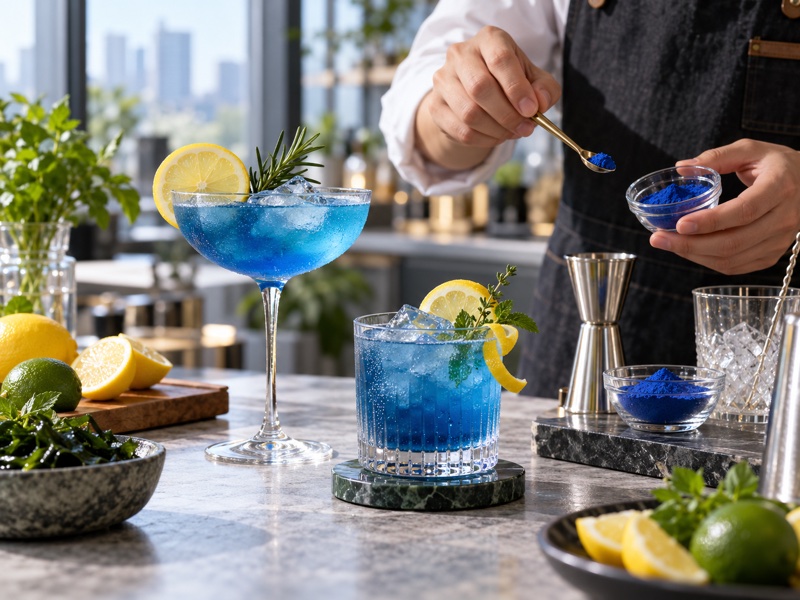
1. What belongs in a blue spirulina cocktail?
A blue spirulina cocktail needs a compatible liquid base, a measured blue extract, balanced flavor, and a defined serving method. The extract supplies color; it does not replace the spirit, acid, sweetener, or aromatic ingredients that make a cocktail enjoyable. A clear spirit or neutral nonalcoholic base gives the pigment room to show. Use food-grade extract and follow the intended market’s rules for the exact drink category. Start small enough that an unsuccessful trial is easy to discard.
What is a sensible first test?
Mix the spirit or alcohol-free base with water or soda in the planned ratio, then add a premixed blue dose. Taste before adding citrus or a colored garnish. Record grams of extract, total liquid, ice weight, glass, and serve temperature. A blue drink guide covers the general mixing sequence; this cocktail version adds alcohol, acidity, and dilution to the test. Make a second drink from the notes to see whether another bartender gets the same result.
| Component | First decision |
|---|---|
| Base | Clear, mild, and suitable for the menu |
| Blue extract | Food-grade and measured |
| Acid | Flavor need versus color risk |
| Garnish | Aroma without unwanted color |
The best first version is easy to repeat, not complicated to explain.
2. Which spirits show the blue most clearly?
Clear spirits usually show the blue most clearly because they add little color of their own. Gin, vodka, and some white rum styles can work, but their flavor profiles are different. A brown spirit or dark liqueur may turn the blue muted or greenish. Alcohol level can also alter the final system, especially when a recipe is prebatched or packaged. Select a spirit because it makes a good drink, then test how its color and composition affect the pigment.
How can you compare candidate bases?
Prepare equal-volume samples with the same blue extract lot and dose. Compare the base alone, the blue mixture before citrus, and the served drink after dilution. Taste for spirit balance and any extract note rather than judging color alone. The blue spirulina drink overview explains why a base can change the whole formulation. A neutral base that looks perfect but tastes flat may need aroma or sweetness rather than more blue powder.
| Base style | Visual effect to check |
|---|---|
| Clear spirit | Brightness and clarity |
| Botanical gin | Flavor interaction |
| Dark spirit | Hue masking |
| Alcohol-free base | Stability and mouthfeel |
Keep the base that earns its place on the menu.
3. How much blue extract should you use?
Use the smallest weighed dose that meets an approved color target in the fully diluted drink. A bartender’s pinch is too variable for costing or training. Blue extracts differ in pigment strength and carrier, so a spoon measure copied from another recipe may be wrong. A higher dose may add haze, sediment, or an off-note without improving the customer’s experience. The final shade should be judged in the actual glass under service lighting.
What does a small dose ladder look like?
Make a blank drink and several weighed blue levels, keeping every other ingredient constant. Include the planned ice and wait until the drink reaches a realistic service dilution. Compare color, clarity, taste, and cost. The blue powder guide explains why powder grade affects dose. If color fades after citrus is added, investigate acid before increasing pigment; a larger starting dose may still disappoint by the time the drink reaches a table.
| Dose result | Likely decision |
|---|---|
| Too pale | Trial a higher dose or grade |
| Bright but cloudy | Check dispersion and carrier |
| Bright then dull | Check acid and light |
| Strong flavor | Reduce dose or change base |
Dose for the served drink, not the undiluted shaker.
4. Why can lemon or lime change the color?
Lemon and lime can change blue spirulina’s visible hue and stability because phycocyanin responds to the acidity of its environment. Citrus is central to many cocktails, so the aim is not to ban it. The aim is to find a level that tastes right and still looks acceptable during the drink’s expected life. Fresh citrus varies, and packaged juice has its own specifications. Measure finished pH during development if the product will be batched or sold in a package.
How should an acid trial be run?
Prepare the same base and blue dose with several citrus levels. Note the color immediately, after shaking, and after the ice has partly melted. Taste each sample blind if possible so the most vivid glass does not win by sight alone. A blue lemonade guide examines a more acid-driven application. If a cocktail needs substantial citrus for flavor, accept a different shade or consider a different drink concept rather than promising a blue that the formula cannot keep.
| Trial point | What it reveals |
|---|---|
| Before citrus | Baseline shade |
| After citrus | Immediate shift |
| After 15 minutes | Service stability |
| After dilution | Customer’s later sip |
Flavor and color should be judged at the same moment.
5. Can you use tonic, soda, or sparkling wine?
Yes, but each mixer creates a different finished drink and deserves a separate trial. Soda water changes dilution and foam; tonic contributes bitterness, sugar or sweetener, and acidity; sparkling wine adds alcohol, acid, and its own color. Carbonation may change how the blue looks through a glass and how the drink foams when poured. A premix that looks stable without bubbles may behave differently when topped with mixer. Make the drink in the intended order.
What should the mixer test record?
Record brand or specification, volume, temperature, carbonation, and time between building and serving. Check the shade in the filled glass and again after stirring. A blue drink guide gives a useful comparison for a clear carbonated base, though a cocktail adds alcohol and flavor complexity. If the color only works with one tonic brand, write that into the bar recipe. A substitution during a busy service can change the drink more than a small pigment dose change.
| Mixer | Watch for |
|---|---|
| Soda water | Dilution and foam |
| Tonic | Bitterness, acid, and color |
| Sparkling wine | Acid, alcohol, and native hue |
Treat the mixer as an ingredient, not a neutral top-up.
6. What mixing order prevents blue specks?
Premix blue extract in a small compatible liquid before it enters the shaker or glass. Dry powder can float, stick to ice, or form visible specks in a transparent cocktail. A small clean whisk or frother can make the premix more even. Add it at a consistent stage, then use a defined shake or stir time. Filter only if the method does not strip color or change the intended texture.
How do you turn that into a bar instruction?
Write a short sequence with exact weights or preportioned units, liquid volumes, ice amount, tool, mixing time, and garnish. Ask a bartender who did not invent the drink to make it twice. Compare both glasses with the approved reference. The blue spirulina recipes collection can spark flavor ideas, but the service procedure needs measurements. A recipe that survives a crowded Friday shift is more valuable than one that works only during a styled shoot.
| Step | Simple control |
|---|---|
| Weigh | Preportion extract |
| Premix | Use a defined liquid volume |
| Combine | Add in the same order |
| Serve | Use the approved glass and ice |
The procedure is part of the drink’s identity.
7. Can the cocktail be prepared ahead?
It can be prebatched for short service periods if the recipe remains safe, flavorful, and visually stable under defined storage conditions. Citrus, oxygen, light, and dilution can all change a batch. Keep the extract and acid separate until service if that produces a better result, but document the final mixing step. Commercial ready-to-drink cocktails require a separate manufacturing and shelf-life plan. A successful single glass is not evidence for weeks of storage.
What should a prebatch trial include?
Make a batch at the intended volume and hold it in the actual container under realistic light and temperature. Sample at opening, midway through service, and near the end. Check color, haze, aroma, flavor, alcohol concentration where relevant, and food safety. A juice formulation article shows how storage can expose changes that are invisible at first pour. If the last serving differs from the first, shorten the hold or change the batch design.
| Service format | Evidence needed |
|---|---|
| Mixed to order | Reproducible bar method |
| Same-day prebatch | Defined hold and safety controls |
| Packaged RTD | Validated process and shelf life |
Prebatch only for the period your testing supports.
8. What garnish works with a blue drink?
A garnish should support aroma and presentation without staining the drink or hiding the blue. A pale citrus peel, herb sprig, or clear ice may work better than a dark berry garnish, depending on flavor. Garnish size and placement affect photographs and service speed. Check whether the garnish changes the drink over 15 minutes, especially if it releases juice or color. Food safety and allergen handling still apply at the bar.
How can you choose without overdecorating?
Serve the same recipe with two or three garnishes and ask tasters to judge aroma, drinkability, and appearance. Photograph the glass from the customer’s point of view, not just overhead. A blue drink can look crowded when garnish competes with its strongest visual feature. Use ingredients staff can source consistently. If the garnish adds acidity, include it in the color trial rather than treating it as decoration.
| Garnish | Check |
|---|---|
| Citrus peel | Aroma and oil on surface |
| Herb sprig | Flavor and shedding |
| Fruit slice | Juice and color bleed |
The garnish should finish the drink, not fix it.
9. Are there legal limits for blue extract in cocktails?
Yes, allowed uses and labeling depend on the destination market and the exact alcohol category. The current US rule in 21 CFR 73.530 includes alcoholic beverages below 20% alcohol by volume among specified uses for spirulina extract. The rule also has identity, specification, and other conditions, and a 2026 amendment was delayed indefinitely. Other jurisdictions may take a different approach. Have a qualified specialist review the final product, especially if it is packaged or exported.
What should a label review receive?
Provide the full formula, finished alcohol level, serving or package size, food category, ingredient grade, use level, and draft label. Ask about color-additive declarations and any rules that apply to the spirit or ready-to-drink format. A supplier contact route can help obtain ingredient documents, but the brand and packer remain responsible for the finished product. Do not turn the ingredient’s natural origin into an automatic organic or health claim. These are separate evidence questions.
| Review item | Why it matters |
|---|---|
| ABV | Category and permitted use |
| Grade and dose | Ingredient compliance |
| Final label | Declaration and claims |
| Market | Local law |
An attractive drink still needs a lawful label.
10. When is the blue cocktail ready for a menu?
It is ready when different bartenders can make a safe, balanced drink that looks and tastes the same throughout service. Approve the extract grade, dose, base, mixer, acidity, ice, garnish, glass, and preparation method. Test substitutions you realistically expect to make. Keep a visual standard under normal bar lighting and a method for recording customer feedback. Packaged versions need further process and shelf-life work before sale.
What belongs on the final recipe card?
Use exact measurements, short preparation steps, a serving photo, and any allergen or alcohol information staff must know. Include the supplier and lot handling instructions in the back-of-house file, not on the menu. The contact team can discuss blue extract samples and supporting documents for a commercial program. Recheck the drink when the mixer, spirit, or blue grade changes. A small change in one component can make a different cocktail.
| Final check | Owner |
|---|---|
| Taste and shade | Beverage lead |
| Repeatability | Bar training |
| Ingredient quality | Purchasing and quality |
| Claims and menu wording | Brand and compliance |
The customer should recognize the second glass as the same drink.
Frequently Asked Questions
Can I put blue spirulina in an alcoholic cocktail?
Yes, subject to the ingredient’s suitability and local use rules. Test the exact formula for color, taste, and compliance.
What’s the best spirit for a bright blue cocktail?
A clear, mild spirit is the easiest starting point. Choose it for flavor as well as appearance.
How do I know if lemon will change the blue?
Make a measured acid trial in the finished drink and observe it through service time. Fresh color alone is insufficient.
Can I prebatch a blue spirulina cocktail?
Yes, for a defined hold period after stability and safety testing. A packaged version needs a separate validated process.
Can I make the same drink without alcohol?
Yes, but rebalance sweetness, acidity, and dilution. An alcohol-free base may produce a different shade and mouthfeel.
Conclusion
A memorable blue spirulina cocktail depends on a good drink first and a stable blue second. You now have a way to test spirit, acidity, mixer, dose, mixing order, and service consistency before putting it on a menu. If your team needs extract samples or grade documents, contact us with your drink concept and target market. We believe color should make a well-made drink easier to remember, not harder to repeat.