
Blue spirulina juice is a fruit or vegetable drink colored with phycocyanin-rich spirulina extract. The combination can be beautiful, but juice is a difficult canvas: fruit acids, yellow pigments, pulp, oxidation, and short or long cold storage can all alter the result. A café may serve a fresh cup within minutes; a bottled juice needs a tested shelf life. This guide shows how to develop blue spirulina juice that keeps the promised color and still tastes like a drink people want.
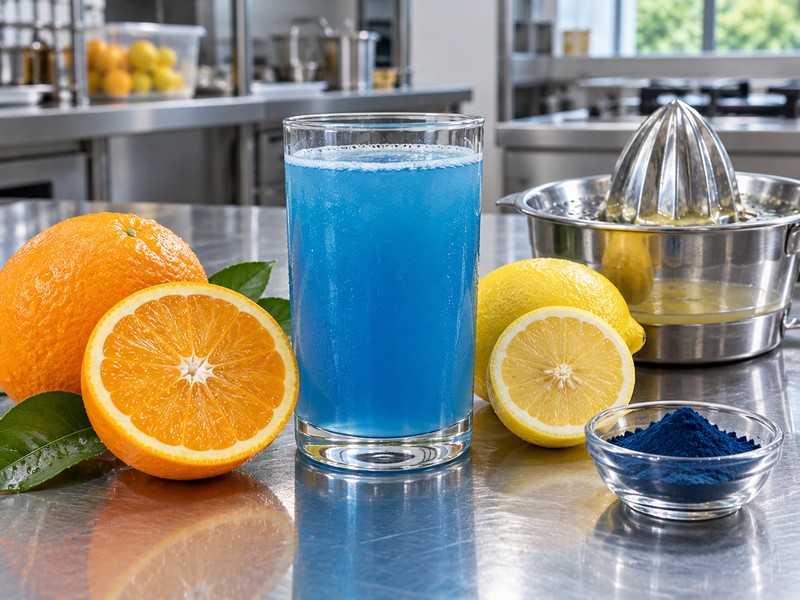
1. What ingredient makes blue spirulina juice blue?
The blue color comes from phycocyanins in a spirulina-derived extract, usually supplied as a powder. The extract is different from whole green spirulina, which may turn juice green and add a stronger flavor. A powder can contain a carrier, so its ingredient declaration should be reviewed before label copy is written. The best grade is the one that reaches your target hue in the actual juice at a workable dose.
What should arrive with the sample?
Request the food-grade extract specification, carrier declaration, lot-specific COA, storage guidance, and a sample large enough for repeat trials. Ask how the supplier defines its color grade. An E number is a grade label, not a universal purity percentage. Keep the lot number on every bench record so a later purchase can be matched to the tested material.
| Sample detail | Why it matters |
|---|---|
| Exact grade | Determines trial dose and color strength |
| Carrier | Changes label and possibly mouthfeel |
| Lot number | Links color trial to quality results |
| Storage advice | Protects the trial sample before use |
Do not let a generic blue-powder photo stand in for those details.
2. Which juice bases preserve a clear blue look?
Pale juice bases give the clearest blue look. Apple, pear, and coconut-water-style bases can be easier visual starting points than orange, mango, or berry blends, although each has its own acidity and flavor. A yellow base plus blue can read green; red pigments can push it purple or gray. Define the intended shade before choosing a fruit combination.
How should you screen fruit bases?
Prepare identical measured extract doses in several candidate juices. Photograph them under the same neutral light and taste them blind. Record pH, cloudiness, pulp level, and color immediately after mixing. Then repeat after the proposed holding period. If a fruit blend varies by harvest, test more than one lot so the blue does not depend on a single pale sample.
If you want a deep ocean hue rather than a clear sky blue, a colored fruit base may be intentional. The important step is to make that choice explicit in the product brief.
3. How does fruit acidity change the blue pigment?
Fruit acidity can change the blue pigment’s stability, so an acidic juice needs measured trials before scale-up. Phycocyanin is sensitive to its surrounding matrix, and a bright fresh sample may fade over time. The result varies with extract grade, pH, other ingredients, processing, and package. A supplier’s stability statement for water is useful background, but it cannot replace your finished-juice data.
What is the simplest acid trial?
Make several otherwise identical batches that cover the practical pH range of your recipe, under the oversight of your food-safety team. Use a fixed extract dose and package each batch as planned. Record pH and shade at filling and at storage checkpoints. If the lowest-pH batch fades, test a different fruit ratio or package before raising the pigment dose. A higher dose may increase cost without solving the reaction.
| Batch | Main observation |
|---|---|
| Target pH | Baseline commercial formula |
| Slightly lower pH | Worst expected fruit variation |
| Slightly higher pH | Potential color improvement, subject to safety design |
The pH values must stay within a validated safe process, not be adjusted for color alone.
4. Does pulp change how the juice looks?
Pulp changes how a blue spirulina juice looks by scattering light, adding its own color, and sometimes settling in the package. A blue drink can look cloudy or streaked even when the pigment is evenly dosed. Pulp can also carry fruit flavor that masks a mild extract note. Decide whether the product should be clear, lightly cloudy, or visibly pulpy, then test the extract in that exact format.
What should you examine in a pulp trial?
Compare a filtered version and a version with the intended pulp level. Check shade against the target, sediment after standing, ease of shaking, and taste. Observe the product in its final bottle as well as in a glass. A layer of settled pulp can change the apparent color on shelf. If customers need to shake before drinking, make sure the separation is acceptable and the label instruction fits the product.
The OEM service overview can frame the process discussion, but the final pulp specification should come from your own product trial.
5. When should the blue extract be added?
Add the extract at a process point that disperses it evenly while protecting color and maintaining food safety. For a made-to-order juice, a measured premix can make dosing easier. For bottled juice, the order of addition must work with filtration, heat or pressure treatment, and hygienic filling. Adding color after a validated kill step is not a casual shortcut; it changes the safety design.
How do you compare mixing sequences?
Test direct powder addition against a small liquid premix in the same batch size. Record mixing time, blue specks, foam, retained material on equipment, and color uniformity. If a filtration step follows, measure how much pigment it removes. Use the production line’s actual shear and hold time in a pilot; a hand-stirred beaker may hide scale-up problems.
| Addition option | Main risk to check |
|---|---|
| Direct powder | Clumps and inconsistent color |
| Liquid premix | Premix stability and dosing accuracy |
| Before filtration | Pigment loss on filters |
| After treatment | Hygienic process validation |
The best sequence is the one that passes both quality and safety requirements.
6. Can blue spirulina juice be bottled for retail?
Yes, but the bottled juice needs a validated process and shelf-life test in the intended package. A fresh café recipe cannot be assumed safe or color-stable for retail distribution. Refrigeration, preservatives, heat, high-pressure processing, and package barrier each affect a product differently. A juice brand should have its quality team define the process before finalizing the shade.
What should a retail pilot track?
Record the fruit lots, extract lot and dose, pH, process conditions, filling time, package, storage temperature, and light exposure. Measure color, flavor, separation, and microbiological safety at the checkpoints set by your team. Compare clear and light-protective bottles if both fit the business model. Keep unopened samples for each observation to avoid repeated-opening artifacts.
If you are requesting samples from Spirulina CN, include the intended process and shelf-life goal. The same color grade can perform differently in a fresh juice and a bottled one.
7. How much extract should a juice recipe use?
Use the lowest measured dose that delivers the approved finished-juice shade and passes taste and storage tests. A spoonful is not a stable commercial measure because density and scoop technique vary. Different fruit bases can require different doses even at the same bottle size. Calculate the ingredient cost per saleable bottle at the dose that survives the whole process.
How should the dose ladder be built?
Start with a no-color control and at least three weighed extract levels. Keep fruit blend, pH, process, and package fixed. Evaluate shade immediately and after the intended storage period, then taste for aftertaste and note any sediment. If a stronger grade reaches the target at lower weight, compare the total cost and carrier declaration. Retest when the fruit blend changes seasonally.
| Result | Likely next step |
|---|---|
| Pale but stable | Test a measured increase |
| Right color, off-taste | Try a lower dose or another grade |
| Right fresh, fades later | Review matrix and packaging |
A visually perfect first day is only one point in the trial.
8. Does the juice need a different flavor balance?
The blue extract may have a mild earthy or marine note, so the juice flavor balance should be checked at the final use level. Fruit aroma and sweetness can hide or reveal that note. A pale base may show the blue clearly while tasting too thin; a stronger fruit blend can taste better but alter the hue. The right recipe has to pass both sensory and visual goals.
How should a panel taste the prototypes?
Serve coded samples at the actual drinking temperature. Ask for notes on fruit identity, sweetness, acidity, first impression, and aftertaste. Include the same juice without blue extract as a control. Repeat the test after the product has been stored. If people dislike a sample, do not assume the pigment is the cause until the control is compared. Fruit oxidation or packaging can create its own off-notes.
The contact page is a useful route for application questions once the base and process are defined.
9. What label and claim checks apply?
Label checks depend on the extract identity, juice composition, destination market, and planned claims. A blue spirulina juice may need to declare a carrier and the color ingredient in a particular way. The current U.S. spirulina extract regulation addresses specified uses and ingredient identity; it does not authorize every wellness claim. Claims about immunity, detoxification, or disease need their own evidence review.
What should marketing avoid assuming?
Do not equate a blue color with nutritional value, or a study of whole green spirulina with a benefit from a small extract dose in juice. If the label says organic, verify documentation for the exact extract, production route, transaction, and market. Check the finished drink’s sugar and nutrient panel before using health-oriented positioning. The strongest claims are the ones that match the product you can actually document.
| Planned statement | Evidence to check |
|---|---|
| Spirulina-derived color | Identity and local use rule |
| Organic ingredient | Product-specific certification chain |
| Nutrition claim | Measured finished-juice values |
| Health claim | Direct evidence and market review |
Keep this review tied to the approved formula and lot.
10. What makes the juice recipe ready to launch?
The juice is ready when a pilot batch in the intended package passes color, taste, safety, and shelf-life criteria. A bench cup is a starting point, not a release decision. The final formula should state fruit ranges, extract grade and dose, mixing sequence, process limits, package, and quality checks. Purchasing should be able to reorder the same ingredient without guessing which blue powder was approved.
What belongs in the launch file?
Include the signed ingredient specification, lot-specific COA, approved sample, pH and process records, color reference, sensory results, shelf-life report, label review, and change-control trigger. Define what happens if a fruit lot shifts color or the extract carrier changes. Keep retained samples from the first commercial batch. That file makes later troubleshooting faster and protects the look that the launch promised.
If you are ready for blue extract samples, share the fruit base, process, package, target shade, and sales market. A useful sample request is a small product brief.
Frequently Asked Questions
Can I add blue spirulina to fresh apple juice?
Yes, it is a reasonable prototype base. Test pH, shade, taste, and holding time because fresh fruit lots can vary.
What is the best fruit base for a bright blue juice?
A pale base is the easiest visual starting point. Choose the final fruit blend by taste and stability in the intended package.
How do I know whether citrus will fade the color?
Run a measured pH and shelf-life trial in the full formula. A fresh cup cannot answer the packaged-product question.
Can I sell the juice with an immune-health claim?
Only if direct evidence and the destination market’s rules support the exact wording. Color and ingredient identity do not prove an immune outcome.
What is the best first document to ask for?
Request the offered grade’s specification and lot-specific COA. Add the carrier statement and market-use information before approving a label.
Conclusion
Blue spirulina juice succeeds when its fruit base, process, and package protect both color and flavor. You now have a way to test acidity, pulp, mixing, dose, shelf life, and label claims before a launch. If you are developing a fresh or bottled juice, contact us with the formula and destination market so we can discuss samples and records for a controlled trial. A blue juice should look as intentional at the last sale as it did in the first cup.