
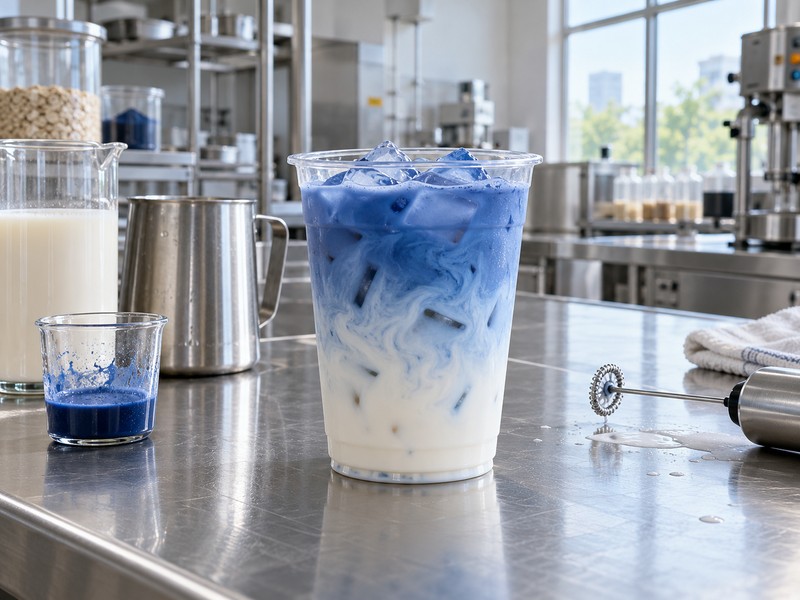
A blue spirulina latte is a milk-based drink colored with phycocyanin-rich spirulina extract, usually without coffee unless the recipe adds it. Its color looks simple in a photograph, but café service brings practical questions: Does the powder disperse? Does the blue survive hot milk? Will oat milk, foam, and sweetener change the shade? This guide helps you develop a blue spirulina latte with a recipe staff can repeat and customers will enjoy.
1. What is in a blue spirulina latte?
A blue spirulina latte usually contains milk or a plant-based alternative, blue spirulina extract, and an optional sweetener or flavor. It is a latte by preparation style, not necessarily by coffee content. Some cafés add espresso, but that changes the color and caffeine claim. Write the recipe in measured amounts so a menu description does not quietly promise a caffeine-free drink when the kitchen uses coffee.
Which extract should a café choose?
Request a food-grade blue spirulina powder with an ingredient statement, carrier declaration, and lot-specific COA. Compare color grades in the chosen milk rather than in water alone. A grade with a higher E number may reach the target at a lower dose, but the code is not a universal purity percentage. Taste the final cup before deciding that the strongest grade is the best one.
| Ingredient choice | What it changes |
|---|---|
| Dairy milk | Whiteness, sweetness, and foam texture |
| Oat or other plant milk | Base color and possible grain note |
| Blue extract grade | Dose, shade, and cost per cup |
The finished cup, not the dry powder, should drive the choice.
2. Does a blue latte contain caffeine?
Blue spirulina extract itself is not a caffeine ingredient, but the finished latte can contain caffeine if it includes espresso, tea, or another stimulant. This matters for menu copy and customers who avoid caffeine. A vivid blue color does not tell you what else is in the glass. Check every ingredient in a premix, syrup, or topping before describing the drink as caffeine-free.
How should the menu state it?
If the standard recipe has no coffee or tea, say what it actually contains and offer espresso as a separate addition if that suits the menu. If the base includes a tea concentrate, do not rely on the blue extract’s caffeine-free identity to label the whole drink. Keep ingredient and allergen information available for staff. A clear order script prevents a customer from receiving a caffeinated version by surprise.
The blue extract category can support ingredient questions, but final beverage claims belong to the complete recipe.
3. Which milk makes the blue look cleanest?
A pale milk base usually gives the cleanest blue shade, though the best-tasting base depends on the rest of the recipe. Whole milk, skim milk, oat milk, coconut milk, and other alternatives differ in color, natural sweetness, protein, and foaming behavior. Some bases make the blue look muted or gray. Choose the milk for both sensory quality and the hue customers will see under café lighting.
How can you compare milks fairly?
Use the same extract lot and measured dose in each milk at the same serving temperature. Photograph the drinks under neutral light, then taste them blind. Score shade, aroma, sweetness, mouthfeel, foam stability, and aftertaste separately. If you plan to offer two milks, write a separate dose or preparation note for each rather than assuming they are interchangeable.
| Milk base | Main comparison point |
|---|---|
| Dairy | Clean color and foam behavior |
| Oat | Beige tone and grain flavor |
| Coconut | Pale appearance and coconut aroma |
| Almond | Color, separation, and nut allergen handling |
The preferred base may differ between hot and iced service.
4. Can you make the latte hot without losing blue color?
You can make a warm latte, but high heat can weaken phycocyanin color, so the exact temperature and hold time need testing. Steam milk as required for quality, then compare the pigment added before and after heating. A hot cup may look acceptable when served immediately and fade while it sits. Do not infer stability from one photograph taken at the espresso bar.
What should a hot-latte trial measure?
Record milk temperature at pigment addition, final cup temperature, mixing time, shade at service, and shade after a normal waiting period. Test the same recipe in the cups and lids used for sale. If staff steam different amounts of milk or leave a batch on a warmer, include those conditions in the trial. The goal is a repeatable drink within the café’s actual workflow, not a perfect single cup made under laboratory care.
If the target blue cannot survive the heat, an iced format may suit the ingredient better. A color decision should not compromise safe milk handling.
5. How do you prevent blue specks in the cup?
Prevent specks by dispersing the measured powder in a small compatible liquid portion before combining it with the full milk volume. Directly tipping dry powder into finished foam can leave clumps and uneven color. The right premix volume depends on the extract’s carrier and the café’s equipment. Test the sequence that staff can perform reliably during a rush.
What should the preparation card specify?
List powder weight, premix liquid and temperature, whisking or blending time, milk volume, sweetener, and pouring order. Include a photo of the acceptable shade and a note about clumps or sediment that should trigger a remake. If a concentrated premix is held for service, validate its safe holding time and color stability. A premix that separates during the shift can make the last cup very different from the first.
| Process choice | Common failure |
|---|---|
| Powder into finished foam | Blue specks and uneven color |
| Premix without weighing | Cup-to-cup dose drift |
| Long-held premix | Sediment or shade change |
A short, weighed procedure beats a barista’s best guess.
6. What sweetener and flavor pairings work?
Mild vanilla, coconut, or lightly sweetened milk can work with blue spirulina’s generally subtle flavor. The exact pairing depends on the extract and base milk. Heavy spice, coffee, or chocolate can overpower the blue visual or turn the drink brown. Decide whether the latte should taste like milk, dessert, or a lightly flavored wellness drink, then adjust sweetness with measured trials.
How should you avoid masking problems with syrup?
Taste the unsweetened base with and without the extract first. If the blue version has a noticeable off-note, compare another grade or a lower dose before adding more syrup. Then test small sweetener steps with the same milk and temperature. Record the amount per cup and the finished nutrition data. A drink that looks “clean” but relies on a large syrup dose may not match the menu’s intended positioning.
The contact page is a good route for asking about alternative extract grades when the flavor or carrier does not fit your brief.
7. Can you layer a blue latte with coffee?
You can layer a blue latte with espresso, but coffee introduces caffeine, acidity, and brown color that can muddy the visual. A layered photo may look striking for seconds and blend into a different shade once stirred. If the product is sold for takeaway, the appearance after transport matters more than the initial pour. Decide whether customers are meant to stir it and show the final drink honestly.
How should a layered version be tested?
Prepare the standard blue milk, add espresso at a measured volume and temperature, then photograph the cup immediately and after several minutes. Taste both before and after stirring. Check whether the layers separate in the real serving cup and lid. If the blue disappears after mixing, consider serving the drink as a blue milk latte without espresso and offering coffee separately.
| Moment | What to assess |
|---|---|
| Immediately after pour | Layer definition and service speed |
| After stirring | True finished color and flavor |
| After travel | Appearance in takeaway conditions |
The menu photo should resemble the drink a customer receives.
8. How do you make an iced blue latte consistent?
An iced blue latte can preserve a bright shade while avoiding hot exposure, but ice melt changes concentration and flavor. The color can look rich at the first sip and pale at the last. Use a fixed ice weight and cup size, then test the drink after a realistic wait. If you serve it layered, evaluate the stirred version as well.
What should be standardized?
State the powder weight, milk volume, ice weight, sweetener, premix method, and cup size on the recipe card. Have two staff members make the same drink and compare the results. Taste at the start and after partial ice melt. If the final cup becomes watery, adjust the base recipe rather than adding more color alone. Customers notice dilution in taste before they notice a small shade change.
For multi-location cafés, collect color and taste notes from each site during rollout. Different lighting can make a good formula look inconsistent in photographs.
9. What quality and label checks matter?
Quality and label checks should cover the exact blue extract lot and the complete latte recipe. Request a specification, lot-specific COA, ingredient and carrier declaration, storage guidance, and relevant safety results. Review milk allergens, added sugar, caffeine sources, and any claims on the menu. A study of whole green spirulina does not establish a health benefit from a small dose of blue extract in milk.
What should a bottled-latte brand add?
A ready-to-drink latte needs a validated process, package, and shelf-life study. Dairy or plant-based milk introduces its own safety and stability requirements. Test color after the actual processing step and during refrigerated or ambient distribution, as applicable. Check separation and sediment in the filled bottle. A fresh café cup cannot support a bottled shelf-life statement.
| Document or trial | Decision it supports |
|---|---|
| Extract COA | Lot quality and traceability |
| Full ingredient review | Allergens and label wording |
| Finished-latte shelf life | Color, taste, and safety through sale |
The product format determines the depth of review.
10. What makes a blue latte ready for the menu?
A blue latte is ready when the approved recipe produces the target shade and flavor across normal staff, milk, and service conditions. A single successful demonstration is not enough. The business should know the cost per cup, the permitted substitutions, and the remake criteria. A clear preparation card also protects customers who need accurate caffeine and allergen information.
What should the final handover contain?
Keep the ingredient specification, approved extract lot, measured recipe, milk alternatives, hot and iced procedures, color reference, sensory notes, cost calculation, and menu wording. Set a change rule for a new powder grade or milk brand. Train staff on the premix and check cups from several shifts. If a supplier changes the carrier, retest the drink before the new lot enters service.
For ingredient samples, Spirulina CN can discuss options against your milk, temperature, and target market. Bring the service workflow along with the color photo.
Frequently Asked Questions
Can I make a blue spirulina latte without coffee?
Yes. Many recipes are blue milk drinks without espresso, but check every premix and topping before calling the whole drink caffeine-free.
What is the best milk for a bright blue latte?
A pale milk is the easiest visual starting point. Compare dairy and plant bases for shade, foam, taste, and allergens in your exact recipe.
How do I know if the powder will clump?
Test a weighed premix and the intended mixing equipment. Check the cup for specks immediately and after it has stood.
Can I steam milk after adding blue spirulina?
You can test it, but heat may alter the color. Compare addition before and after steaming at measured temperatures.
What is the best way to keep cups consistent?
Use a written recipe card with gram weights, temperature, mixing time, and a shade reference. Verify it across staff shifts.
Conclusion
A blue spirulina latte should be easy to order, pleasant to drink, and repeatable behind the bar. You now have a way to test milk choice, heat, dispersion, sweetness, layering, and menu claims. If you are developing a café drink or bottled latte, contact us with the recipe and market so we can discuss suitable samples and quality documents. The best blue cup is the one staff can make again tomorrow.