
Yes, spirulina extract is a natural-source blue food color, but its origin alone does not tell you whether it fits a recipe, label, or market. A product developer may choose “natural blue” to replace a synthetic dye, then discover that lemon, heat, or a clear bottle changes the shade. The phrase natural blue food coloring spirulina is useful only when it leads to a specific ingredient grade and finished-product test. This guide compares the decisions behind the label with the color customers will actually see.
1. Why is spirulina used as a natural blue color?
Spirulina is used because an extract from its cultivated biomass contains blue phycocyanins that can color suitable foods. In the United States, the regulated color additive is called spirulina extract, with identity and specifications in 21 CFR 73.530. “Natural-source” describes where the color originates; it is not a blanket claim about a finished product. Commercial preparations may contain permitted carriers. A buyer should know the exact grade and full ingredient statement before writing copy.
What makes it different from green spirulina powder?
Whole dried spirulina contains more than the blue fraction and often looks green. The blue versus green comparison explains the different roles in food. A blue extract can give a cleaner cyan shade at a color-use dose, while whole powder may add stronger flavor and green tones. Those differences matter if the original brief promised a blue drink. Ask a supplier whether the material is whole biomass, blue extract, or a formulated color blend.
| Material | Main visual role |
|---|---|
| Whole spirulina | Green or teal ingredient |
| Blue extract | Blue color fraction |
| Color preparation | Application-specific blue system |
The label should identify the material actually used.
2. Is “natural blue” a precise legal claim?
No, “natural blue” is a marketing phrase whose legal meaning and acceptability depend on the market and finished food. A spirulina-derived extract is not automatically certified organic, free from processing aids, or permitted in every category. The term may also lead a shopper to assume a health benefit that a color-use dose does not provide. Use product-specific, market-reviewed wording rather than a broad slogan. The ingredient declaration may require a prescribed name that differs from the front-of-pack story.
What should marketing check before launch?
Match every claim to the full formula, the exact grade, supplier documents, and local labeling rules. The natural-label article explains why natural origin and organic certification are separate. Also review any implied “clean,” “healthy,” or “chemical-free” statement; these can mislead even when the blue color is derived from spirulina. A clear description of the visual benefit can be both accurate and attractive. Let regulatory review see the design as well as the words.
| Claim | Evidence needed |
|---|---|
| Spirulina-derived color | Ingredient identity |
| Organic | Valid product and chain certification |
| No artificial colors | Full color system and local rule |
| Nutrition benefit | Finished-serving data |
Origin is one fact, not a complete product claim.
3. How does spirulina compare with other natural blues?
Spirulina extract is one option among several natural-source blue colorants, and each has its own chemistry and permitted uses. Butterfly pea flower extract contains anthocyanins and can show striking pH-dependent hue changes. Galdieria and gardenia-derived blues have different regulatory identities and application profiles. No single option wins across every recipe. A useful comparison starts with the finished food’s pH, heat process, target shade, and destination market.
What should a shortlist include?
Compare legal fit, dose to target shade, flavor, stability, carrier, supplier quality, and cost per finished unit. The natural blue guide clarifies source and label questions for spirulina. The FDA’s natural-source color announcement shows that approved sources and uses evolve, so verify the current rule before selecting a color. Do not assume two blue powders are interchangeable because their sample jars look similar.
| Color source | Main comparison point |
|---|---|
| Spirulina extract | Phycocyanin stability |
| Butterfly pea | pH-responsive hue |
| Other natural blues | Specific identity and use rules |
Choose a source for the application, not for the trend.
4. Which foods suit spirulina blue best?
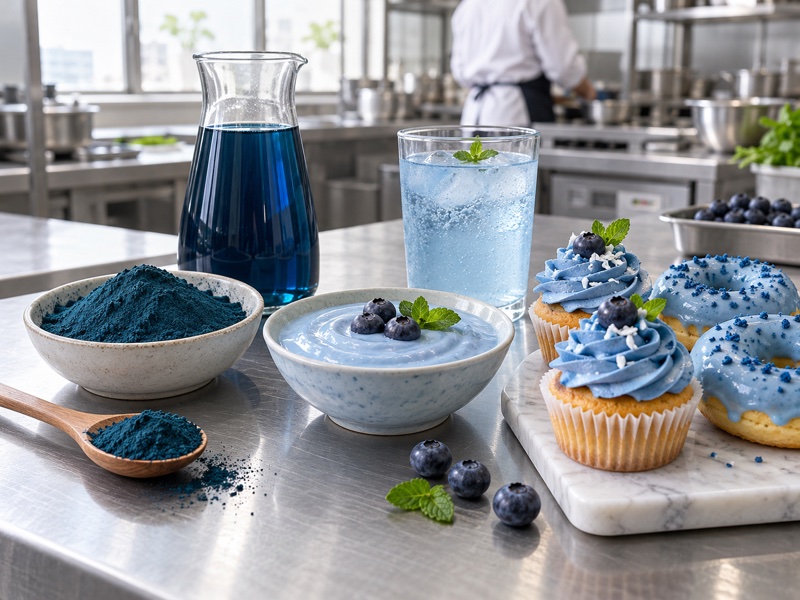
Pale, relatively mild, and compatible food bases are good first candidates. Clear drinks, light frostings, yogurts, and frozen desserts show color differently, so each needs its own trial. A white base can make the blue vivid or pastel; a yellow base may shift it toward teal. Strongly colored fruit or chocolate can mask it entirely. The best use is where the pigment’s shade remains appealing after the complete process and shelf life.
How should a developer screen applications?
Prepare a control and several weighed color levels in the real formula. Record shade, flavor, haze, texture, and cost at the intended serving condition. A natural blue guide covers the practical use tests; this article focuses on deciding whether spirulina is the right natural-source color. If the ingredient cannot show blue in a dark base, a more concentrated grade may not solve the fundamental visual problem. Move the color into a pale layer or change the concept.
| Food base | First risk to test |
|---|---|
| Clear water | Light and clarity |
| Yogurt | Acidity and pastel shade |
| Frosting | Mixing and display |
| Baked cake | Heat and browning |
The food matrix decides what “blue” looks like.
5. Why do acid and heat matter?
Acid and heat can alter phycocyanin’s color, so a recipe that looks bright before processing may not stay blue. Lemonade and baked goods are common examples where the final conditions are harsher than a room-temperature water sample. A food-safe acid level or heat treatment must not be abandoned for cosmetic reasons. Instead, test a grade, application, or color system suited to those conditions. The question is whether the finished product meets both safety and appearance standards.
What does a stress test include?
Record the recipe’s pH, temperature curve, hold time, and color before and after each step. Keep controls and inspect the finished package over the planned shelf life. The recipe guide shows the baking challenge, and the blue lemonade article shows the acid challenge. If the blue fades, identify the main cause before raising the dose. A higher dose can increase cost and off-notes without fixing the instability.
| Stress | Question |
|---|---|
| Low pH | Does shade shift or fade? |
| Heat | What survives processing? |
| Light | What survives display? |
| Time | Is shelf-end color acceptable? |
The approved shade should be a shelf-end result.
6. Can spirulina blue replace a synthetic dye?
It can replace a synthetic blue in some products, but a direct weight-for-weight swap is unlikely to be reliable. Natural-source colors can differ in strength, flavor, pH response, and processing tolerance. The replacement may require a pale base, protective package, or different process. That can change cost and label copy. Begin with a target appearance and consumer experience, then test whether spirulina extract can deliver both.
What should a reformulation brief contain?
Include the current product’s shade standard, formula, process, package, shelf life, and markets. Ask R&D to compare multiple extract grades at the finished-product dose. The powder buying guide explains why price per kilogram is a poor stand-in for cost at equal color. Record any extra packaging or processing cost. A reformulation that reduces one ingredient line but creates high spoilage is not a success.
| Replacement goal | Measure |
|---|---|
| Similar shade | Instrumental or visual standard |
| Acceptable flavor | Sensory test |
| Stable shelf life | Real-time study |
| Suitable label | Market review |
Replace the consumer experience, not just the formula line.
7. What does the US rule permit?
The US rule permits spirulina extract for specified food categories under its identity and specification conditions; it is not universal permission for all foods. The current text is in 21 CFR 73.530. A 2026 amendment mentioned on that page was delayed indefinitely, so a proposal or announcement should not be treated as an effective expansion. Other countries may classify or name the ingredient differently. The brand should have a market-specific regulatory review before launch.
What should the reviewer receive?
Provide the exact extract specification, planned use level, full food formula, category, process, destination markets, and draft label. Ask whether the color preparation’s carrier is permitted and how the additive must be declared. The FDA color-additives overview is useful background, but the specific current regulation controls the US decision. Keep the decision with the product file. If a flavor or food category changes, recheck the permission.
| Review input | Reason |
|---|---|
| Exact grade | Identity and carrier |
| Food category | Permitted use |
| Use level | Conditions |
| Label | Declaration |
Legal fit is a formulation requirement.
8. How can a buyer judge supplier quality?
A buyer should compare lot-specific evidence, not only color swatches. Request identity, phycocyanin or color method, microbiology, relevant contaminants, moisture, shelf-life guidance, and traceability for the exact grade. Supplier grade codes are not universal purity percentages. If certification matters, verify the precise product, site, date, and transaction. A claim about a company cannot automatically be assigned to every batch it sells.
What should the sample program test?
Ask for more than one lot when color variation would be expensive. Test equal finished shade, flavor, dispersion, processing loss, and shelf-end color. The factory information can help frame questions about capabilities, but the purchase decision should rest on documents for the actual material. Keep retained samples and an approved reference. If the supplier changes a carrier or method, the brand should know before production.
| Document | What it establishes |
|---|---|
| Specification | Agreed limits |
| Lot COA | Actual result |
| Traceability | Source and movement |
| Change notice | Revalidation trigger |
Reliable supply is part of natural color performance.
9. What does “clean label” leave out?
“Clean label” often leaves out the precise safety, stability, and legal questions a developer must answer. Consumers may prefer a spirulina-derived blue, but that preference does not prove the finished product is healthier or nutritionally richer. A small color-use amount may contribute negligible protein. Also, an extract’s natural source does not eliminate contaminants or the need for process controls. The useful story is specific: a color source, a tested formula, and honest wording.
How do you keep copy accurate?
Check every front-of-pack phrase against the full ingredient list, finished-serving nutrition, and market rules. The nutrition overview explains why a pigment-protein complex is not automatically a protein claim. Avoid suggesting disease protection or special health effects from a color dose. A visual benefit can be worth buying without a medical promise. Let the package explain what the color does rather than what science has not established.
| Copy idea | Question |
|---|---|
| “Natural blue” | Is the market wording acceptable? |
| “Organic blue” | Is the chain certified? |
| “Protein-rich” | Does the serving qualify? |
| “Better for you” | What evidence supports it? |
Specific language is stronger than a vague halo.
10. When should a brand choose spirulina blue?
Choose spirulina blue when it meets the finished food’s target shade, taste, stability, compliance, and supply needs at a realistic cost. It may be an excellent choice for one pale, cold product and a poor choice for an acidic heated one. Run a pilot with the exact commercial grade and intended package. Approve an end-of-shelf-life color standard, not just the first-day shade. Keep an alternative plan if the product or market changes.
What belongs in the final decision record?
Include the signed formula, grade, use level, process, package, color results, sensory findings, legal review, and supplier documents. Our team can discuss blue extract samples and batch data for a business project; the manufacturer owns the finished product validation. A substitution should trigger a new shade and stability trial. Buyers and marketers should read the same decision record. That prevents a natural-color story from outrunning the actual formula.
| Decision | Proof |
|---|---|
| Desired blue | Finished-product reference |
| Shelf stability | Realistic test |
| Lawful use | Market decision |
| Reliable supply | Approved lot program |
The right natural blue is one customers still recognize later.
Frequently Asked Questions
Can I use spirulina as natural blue food coloring?
Yes, when the exact use is permitted and the grade is suitable. Test the finished food before making a broad color claim.
What’s the best natural blue for acidic drinks?
It depends on pH, desired shade, and shelf life. Compare permitted color systems in the actual drink.
How do I know if a blue powder is spirulina extract?
Read the ingredient identity and specification. Whole green spirulina and formulated blends are different materials.
Can I call a spirulina-colored food organic?
Only if the full product and certification chain meet the relevant organic rules. Natural origin alone does not qualify.
Can spirulina blue replace FD&C Blue 1 directly?
Not reliably at the same dose. Test color, taste, processing, shelf life, label, and cost in the finished product.
Conclusion
Spirulina extract can supply a natural-source blue, but its value comes from a tested fit with the food, process, package, market, and label. You now have a way to compare it with other blues and to avoid claims that go beyond the finished serving. If your team is evaluating a commercial blue color, contact us with your formula and destination market. We believe a credible natural-color story begins with a color that lasts.