
Blue spirulina extract in a food may be suitable for some children when the ingredient and use are lawful and the finished food is appropriate, but there is no universal child-safe dose for every powder or supplement. Blue spirulina for kids is a product description, not a single dose or formula. A bright blue smoothie can hide uncertainty about the extract, other ingredients, and serving size. If you are a parent, the first step is to read the full product label. If you are a brand, the first step is to avoid turning a color into a child-health promise. This guide separates those decisions.
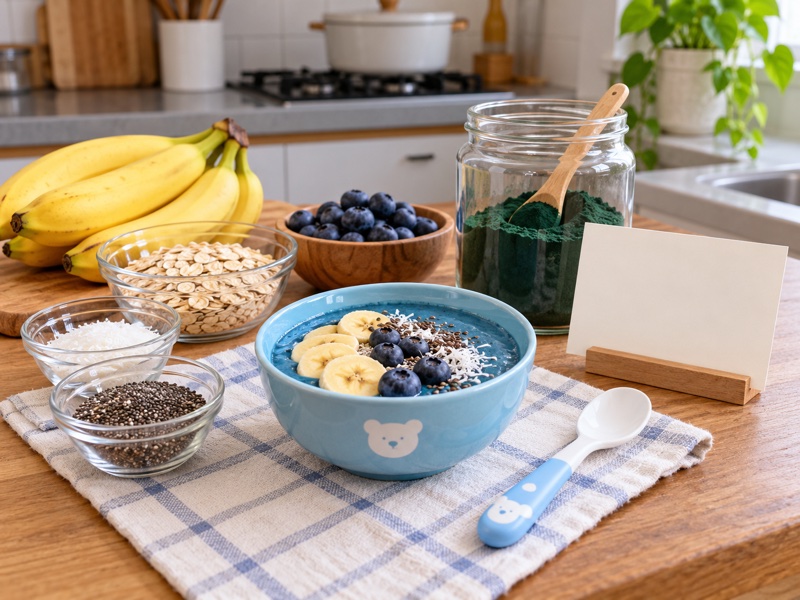
1. Is blue spirulina safe for every child?
No, blue spirulina cannot be declared safe for every child in every product and dose. A small amount of food-grade color in a permitted food is different from a concentrated powder taken daily as a supplement. Age, allergies, health conditions, medicines, and the rest of the formula can matter. Parents should follow product directions and ask a pediatrician before giving a child a supplement. A supplier’s general food-use document does not assess an individual child.
What should a parent identify first?
Check whether the blue ingredient is a spirulina extract, whole green spirulina, or a blend with other ingredients. The blue versus green guide explains why the forms differ. Look at the serving size, other actives, caffeine, and age guidance. A blue color does not tell you the dose. If the label is unclear, choose a simpler food or ask the maker before serving it regularly.
| Product | Main question |
|---|---|
| Colored food | What is the complete recipe? |
| Plain extract powder | How much is used? |
| Wellness supplement | Is it appropriate for this child? |
The exact finished product is the real question.
2. Is a colored snack different from a supplement?
Yes, a colored snack often uses a small amount of blue extract for appearance, while a supplement may direct a much larger daily serving. The fact that both say “blue spirulina” does not make their exposures equivalent. A child-sized serving also differs from an adult-sized smoothie. In the United States, a food color has specified permitted uses under 21 CFR 73.530, while supplements are regulated under a different framework. Check the category before applying advice from one product to another.
How should a family compare them?
Write down the exact product, amount per serving, frequency, and reason for use. The composition guide explains how blends can add sweeteners, herbs, or other components. A food chosen for its color is not a therapy, and a supplement should have a clear purpose discussed with a clinician. The American Academy of Pediatrics advises discussing supplements with a pediatrician. Keep the conversation about the specific child, not a trend.
| Feature | Colored food | Supplement |
|---|---|---|
| Main purpose | Eating experience | Intended nutrient or health use |
| Dose | Recipe-dependent | Directed daily amount |
| Extra ingredients | Full food formula | Often multiple actives |
Similar colors can represent different products.
3. Does blue spirulina help children’s nutrition?
A color-use amount should not be assumed to add meaningful nutrition to a child’s diet. Phycocyanin is a pigment-protein complex, but a small dose may deliver negligible protein. Whole spirulina’s nutrient tables cannot be copied onto a blue extract. The rest of a smoothie or snack supplies most of its calories, sugar, protein, and fiber. If a child has a nutritional concern, work with their healthcare team on a suitable diet or supplement.
How do you check a nutrition claim?
Look at the finished serving’s nutrition facts and ingredient amounts. The nutrition overview shows why a pigment can contain protein without making a drink high protein. Ask whether a claim was measured in the finished child-sized serving or copied from per-100-g powder data. Those are different numbers. A blue smoothie may be nutritious because of fruit, yogurt, or another ingredient, not because it is blue.
| Claim | Evidence needed |
|---|---|
| Protein source | Finished-serving amount |
| Vitamin benefit | Tested nutrient and claim rule |
| Growth support | Direct evidence and legal review |
Judge the whole snack, not the color.
4. What quality checks matter for children?
Identity, contamination controls, manufacturing hygiene, and batch traceability matter for any food ingredient, especially one marketed to families. Some blue-green algae products can be contaminated when source and controls are poor. The FDA’s microcystin page focuses substantially on wild-harvested AFA products; it should not be used to claim all cultivated spirulina extracts have the same risk. It does show why lot testing and source controls are important. Ask for evidence for the exact blue grade, not a broad category.
What should a business request?
Obtain the product specification, lot COA, relevant microbiology and contaminant results, source traceability, and storage instructions. The powder buying guide covers these supplier checks. Verify any organic or facility certification for the specific product and transaction. A “natural” badge does not replace a tested lot. Quality documents reduce known risks but do not prove every child will tolerate a product.
| Quality item | Why it matters |
|---|---|
| Identity | Correct ingredient |
| Contaminant result | Batch safety review |
| Microbiology | Hygiene control |
| Traceability | Problem response |
Good paperwork should describe the lot in the child’s food.
5. Can a child have an allergy or reaction?
Any new food or product can cause an individual reaction, and the full recipe may contain more familiar allergens than the blue extract. Milk, soy, nuts, and other smoothie ingredients deserve attention. A concentrated product can also cause stomach upset in some people. Stop use and seek appropriate medical advice if a child has symptoms. A general website cannot diagnose whether the blue ingredient or another component caused them.
What should a label make easy to see?
List all ingredients and required allergens clearly, including carriers and mix-ins. The side-effects article discusses general concerns without claiming every symptom comes from the pigment. If the food is made to order, staff should know the actual powder and its ingredient statement. For a packaged product, cross-contact controls matter. A bright color should never make the rest of the recipe harder to read.
| Possible source | Check |
|---|---|
| Extract or carrier | Supplier statement |
| Milk or soy base | Allergen declaration |
| Nut topping | Recipe and cross-contact |
| Added herb | Full blend label |
Assess the complete food when a reaction occurs.
6. What about babies and toddlers?
Babies and toddlers need age-appropriate foods and individualized advice; do not use a blue spirulina supplement as a shortcut to better nutrition. A colored food for an older child is not evidence that an infant should receive the same ingredient. Feeding stage, choking risk, allergens, and the food’s sugar content may be more important than the pigment. Ask a pediatrician before introducing a concentrated supplement to a young child. The label should not quietly convert an adult dose into a child dose.
What should a brand avoid implying?
Avoid images or claims suggesting an infant should consume a blue powder unless the finished product is specifically assessed for that age group and market. The smoothie bowl guide is a food-format example, not infant-feeding guidance. A company should specify the intended audience and serving size in its product brief. “Family-friendly” is too vague if the product also carries a supplement-style instruction. Age-sensitive products need more careful review.
| Age-related question | Responsible next step |
|---|---|
| Is the food age-appropriate? | Pediatric feeding advice |
| Is the dose for adults? | Do not scale by eye |
| Are there added actives? | Clinician and label review |
Age matters more than the shade.
7. Can blue spirulina replace vegetables?
No, a blue color ingredient cannot replace vegetables or a balanced diet. It may make a food more fun to look at, but that does not supply the fiber and varied nutrients children get from actual foods. A blue smoothie can be part of a menu while still needing a sensible recipe. Too much sweet juice or syrup can dominate its nutrition profile. Judge the whole serving by its ingredients and portion.
How should a family assess a blue snack?
Look at the base: fruit, vegetables, dairy or alternative, protein source, added sugar, and portion size. The blue smoothie guide provides recipe context, but a child’s needs vary. A product’s color may help a child try something new; it does not make the food inherently healthier. Keep the conversation focused on ordinary eating habits. If a child has a restricted diet or growth concern, seek professional guidance.
| Ingredient role | Example |
|---|---|
| Color | Blue extract |
| Fiber | Fruit or vegetable |
| Protein | Yogurt, milk, or suitable alternative |
| Sweetness | Fruit or added sweetener |
Color is one part of the experience, not the nutrition plan.
8. What claims should kids’ products avoid?
Kids’ products should avoid unsupported claims that blue spirulina boosts immunity, improves learning, prevents disease, or supplies major nutrition at a color-use dose. Such claims need direct evidence for the finished serving and market-specific review. The phrase “natural blue” can describe source in some contexts but should not imply universal safety. The child-focused design of a package can make a claim more influential. Review graphics, testimonials, and serving suggestions as well as the headline.
How can a brand write more clearly?
Describe the flavor, color source, serving size, and complete ingredients accurately. The benefits article explains why lab and animal findings cannot be turned into confident human benefit claims. A simple sentence about spirulina-derived blue color may be enough. If the product makes a nutrient claim from yogurt or fruit, verify that claim separately. Do not borrow credibility from the blue ingredient for unrelated benefits.
| Copy idea | Risk |
|---|---|
| “Boosts immunity” | Requires strong direct evidence |
| “Safe for all kids” | Overly broad |
| “Colored with spirulina extract” | Check declaration rules |
| “Organic” | Requires valid certification |
Trust grows from precise wording.
9. How should a brand formulate for children?
Formulate for an age-appropriate food experience with a clear ingredient list, acceptable sweetness, sensible portion, and verified color grade. Use the lowest extract amount that reaches a stable shade in the complete recipe. Test taste and texture with appropriate safeguards, then validate safety, shelf life, and labeling. A child-friendly color should not hide an unpleasant or overly sweet product. Parents need enough information to decide whether it fits their child.
What should the development team test?
Compare a plain control with measured blue levels for flavor, color, sugar, texture, and stability. The natural blue guide provides a matrix test method. Include packaging and light exposure if the product sits on a shelf. Have regulatory and nutrition staff review the final child-sized serving. A product that passes the adult panel may still need a different sensory target for its audience.
| Development check | Why it matters |
|---|---|
| Portion | Real child serving |
| Sweetness | Overall diet fit |
| Color dose | Consistency and exposure |
| Label | Parent decision |
Design the whole food for the intended age group.
10. When should a parent or buyer ask for more information?
Ask for more information when the powder type, dose, age guidance, extra ingredients, or quality controls are unclear. A parent can contact the maker or ask a pediatrician about a specific supplement. A business buyer should obtain the exact grade’s documents before using it in a children’s food. Stop if the supplier cannot identify the material or provide a usable ingredient statement. Uncertainty is a reason to slow a purchase, not to guess.
What details make the question answerable?
Keep the product name, ingredient list, serving instructions, lot number, and intended use together. Our team can discuss blue extract specifications for business customers, while personal medical questions belong with a child’s clinician. Ask whether the ingredient is used for color or nutrition. Those roles require different evidence. A clear answer should name the product, not simply say “spirulina is safe.”
| Missing fact | Who can answer |
|---|---|
| Grade and carrier | Supplier |
| Child-specific suitability | Pediatrician |
| Lot quality | Manufacturer and quality team |
| Market permission | Regulatory reviewer |
Specific questions protect both children and brands.
Frequently Asked Questions
Can I add blue spirulina to my child’s smoothie?
It depends on the exact food-grade product, amount, and child. Check the full ingredients and ask a pediatrician if you plan regular use or have concerns.
What’s the best blue spirulina dose for kids?
There is no universal dose for all products and ages. Do not scale an adult supplement serving by eye.
How do I know if a product is a supplement?
Read the label, serving directions, and full ingredient list. A supplement may contain a larger dose and other actives.
Can blue spirulina boost my child’s immunity?
That benefit is not established for a color-use dose in a finished food. Ask for direct evidence before trusting the claim.
Can babies eat a blue spirulina snack?
Do not assume an older child’s snack suits an infant. Ask a pediatrician about age-appropriate foods and the exact product.
Conclusion
Blue spirulina can color a child’s food, but its shade does not answer questions about dose, quality, nutrition, or individual suitability. You now know how to distinguish a colored snack from a supplement and which details to check before buying. Businesses seeking a food-grade extract can contact us with the intended food and market; parents should take a specific product question to a pediatrician. We believe children’s foods should be designed with clear evidence and clear labels, not just bright colors.