
Blue spirulina versus chlorella is mainly a choice between a blue spirulina extract used for color and a green chlorella ingredient often used for whole-algae positioning; the right one depends on the product you are making. A buyer who compares their protein panels without checking form and dose can end up with the wrong ingredient and an inaccurate claim. A cyan drink and a green nutrition blend are different briefs. This guide compares color, composition, processing, labels, and cost so you can choose on finished-product evidence.
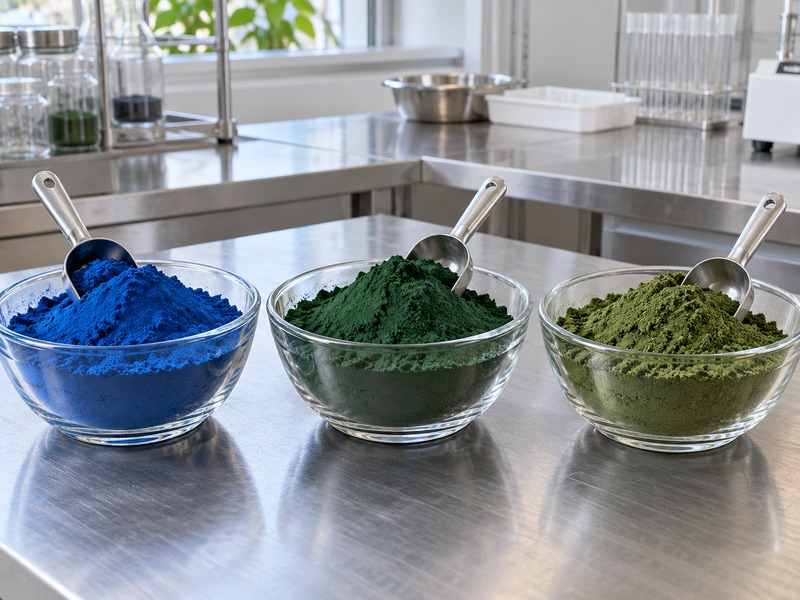
1. What does blue spirulina vs chlorella compare?
Blue spirulina vs chlorella starts with identity and form: blue spirulina is commonly a phycocyanin-rich extract from cultivated Arthrospira, while chlorella is a green microalga sold in several whole-cell or processed forms. The two are not the same organism and do not create the same appearance. The blue ingredient guide explains the extraction step. Check the exact SKU, because a blue blend with carrier and a chlorella protein ingredient each differ from a plain algae powder.
What should be on the comparison sheet?
List the source organism, processing, composition, carrier, grade method, and intended use. Compare supplier documents rather than marketing category names. A generic phrase such as “algae superfood” hides the details needed for formulation and labeling. Start with the function the food needs: color, protein, flavor, or a specific ingredient story.
- Identify each organism and product form.
- Record all carriers and additions.
- State the finished-food purpose.
| Feature | Blue extract | Chlorella ingredient |
|---|---|---|
| Typical color | Blue | Green |
| Typical role | Color | Whole ingredient or supplement |
| Processing | Extraction | Varies by SKU |
An exact product comparison is more useful than a species headline.
Key Takeaway: Compare named SKUs against a clear product brief.
2. Which one makes food blue?
For color, blue spirulina vs chlorella is straightforward: the extract usually makes a pale food blue, while chlorella normally makes it green. In a yellow base, blue may shift toward teal; in a dark base, either pigment can be masked. The blue-versus-green spirulina guide explains a related but different comparison within spirulina products.
Do not confuse green whole spirulina with chlorella just because both look green. Run color trials in the actual food at the serving dose.
How should a color trial be run?
Use equal finished-food batches and document the amount of each ingredient needed to reach a plausible target. Photograph under the same light after processing and storage. If the target is cyan, a large chlorella dose will not turn green into blue. If the concept intentionally needs deep green, the blue extract may be the wrong tool.
- Match base and process conditions.
- Test after heating or chilling.
- Compare cost at the usable dose.
| Target | First ingredient to test |
|---|---|
| Sky-blue yogurt | Blue extract |
| Green smoothie | Chlorella or green spirulina |
| Teal drink | Product-specific blend trial |
Choosing the target shade first saves expensive ingredient experiments.
Key Takeaway: Select by the color in the finished food, not the powder jar.
3. Which has more protein?
Blue spirulina vs chlorella protein comparisons depend on the exact materials and the amounts used. Whole chlorella can contribute nutrients at gram-level use, while a blue extract added mainly for color may contribute little protein per serving. The blue spirulina protein guide explains why extract and whole-powder numbers should not be mixed. Neither label should borrow a protein figure from a different form or species.
What does a fair nutrient comparison require?
Request product-specific nutrition values, then calculate each ingredient at a realistic dose in the same food. Include the base’s protein as well. If chlorella changes the flavor at a nutrient-relevant level, that is part of the decision. A blue drink can be high protein because it contains yogurt or a protein blend, not because its color ingredient is blue.
- Use exact SKU nutrient data.
- Calculate at the working dose.
- Include the rest of the recipe.
| Comparison basis | Why it matters |
|---|---|
| Per 100 g | Describes ingredient concentration |
| Per serving | Describes consumer intake |
| Finished food | Supports a label claim |
Per-100-gram figures alone cannot tell you what a colored drink delivers.
Key Takeaway: Judge protein by the complete serving and actual dosage.
4. How do their flavors compare?
For flavor, blue spirulina vs chlorella depends on dose: blue extract is often milder, while chlorella may bring a stronger green or earthy note at meaningful use levels. Taste varies with grade, carrier, freshness, and formulation, so neither ingredient is flavorless by definition. The what-blue-spirulina-tastes-like guide helps set a starting expectation for the extract. A strong fruit or chocolate base can mask notes that a clear drink cannot.
How do you taste them fairly?
Prepare each at the dose that delivers its intended function. Use a blind control and taste before adding strong flavor masks. Then test after the planned shelf period, since oxidation or processing can alter flavor. If a product requires heavy sweetness to hide a green ingredient, include that cost and nutrition impact in the comparison.
- Taste the ingredient in the final base.
- Compare immediately and after storage.
- Note added sweetener needed for acceptance.
| Application | Flavor sensitivity |
|---|---|
| Clear water | High |
| Yogurt | Moderate |
| Chocolate bar | Lower, but still test |
The mildest ingredient in water may not be the best choice in a complex food.
Key Takeaway: Taste at the dose that actually serves the product’s purpose.
5. Do processing needs differ?
Yes; blue spirulina vs chlorella processing needs differ because phycocyanin color is sensitive to heat, acid, and light, while a whole green ingredient brings particles and texture considerations. The food-color application guide explains why blue extract should be tested after the actual heat and pH steps. Chlorella products also vary in particle size and cell processing, which can affect dispersion and mouthfeel. Do not copy one ingredient’s mixing procedure to the other.
What should a pilot plant test?
Run the intended heating, mixing, filtration, or freezing process with each candidate. Observe color, sediment, texture, and flavor before and after storage. A blue extract that disperses well in cold water may fade in a baked batter; a chlorella powder may retain green but leave visible specks. Each result should be judged against the product brief rather than declared universally superior.
- Record heat and pH exposure.
- Check sediment and mouthfeel.
- Use the commercial process, not a bench shortcut.
| Process stress | Blue extract | Chlorella |
|---|---|---|
| Heat | Check color loss | Check flavor and color |
| Acid | Check blue shift | Check stability |
| Filtration | May remove color fraction | May remove particles |
The process can decide the ingredient before nutrition marketing enters the discussion.
Key Takeaway: Test each material through the actual production line.
6. Which one fits a vegan product?
For vegan products, blue spirulina vs chlorella cannot be decided by source alone; every carrier, processing aid, and co-ingredient matters. The blue spirulina vegan guide explains why source identity is only the first check. A blue yogurt made with dairy is not vegan because its pigment is plant-compatible. A chlorella tablet can include excipients that also need review.
What should a vegan review cover?
Get full composition and process statements for each proposed SKU. Check the base, flavors, capsules, glazing agents, and any animal-derived aids. Review cross-contact and certification claims according to the chosen standard. If marketing wants to use a vegan logo, confirm the exact finished product and manufacturing route meet that program’s requirements.
- Check ingredient and processing aid lists.
- Review the whole finished recipe.
- Verify any logo or certification scope.
| Product | Vegan question |
|---|---|
| Blue extract | What are its carrier and aids? |
| Chlorella powder | How is it processed or tableted? |
| Finished food | Are all other ingredients suitable? |
A vegan pigment cannot make a dairy dessert vegan.
Key Takeaway: Assess vegan status at finished-product level.
7. Are either of them allergy-free?
For allergy, blue spirulina vs chlorella has no universal safe winner; neither should be described as allergy-free for everyone. Spirulina-derived products have published allergy case reports, and any finished food may contain other allergens. The blue spirulina allergy guide explains why a small color dose does not justify a blanket safety promise. Chlorella has its own product-specific considerations, and a consumer with a suspected reaction should speak with a qualified clinician rather than relying on a general comparison chart.
What should a brand communicate?
Name the exact ingredient and provide a complete ingredient list. Review cross-contact controls at the supplier and food-production sites. Avoid claiming that one algae-derived material is automatically safer because it is natural or vegan. If a person reports symptoms, provide the product and lot details for clinical review without diagnosing the cause.
- Give clear ingredient names.
- Keep supplier allergen statements current.
- Refer personal risk questions to clinicians.
| Question | Evidence needed |
|---|---|
| What is present? | Exact formula |
| Is cross-contact controlled? | Site procedures |
| Is it safe for me? | Clinical assessment |
Product transparency is more helpful than an absolute safety claim.
Key Takeaway: Keep allergy communication specific to the material and person.
8. How do prices compare in a formula?
Compare blue spirulina vs chlorella on cost per finished product at the working dose, not on bag price. Their functions often differ, so an equal-gram comparison can be meaningless. The blue spirulina wholesale guide shows how grade, lot documents, and order terms affect delivered cost. Include rejects, extra flavoring, processing changes, and shelf-life losses where relevant.
What belongs in a cost model?
Set a specific product goal and calculate each ingredient’s dose, delivered price, waste, and any added processing cost. If the desired result is blue color, estimate the cost of the blue formulation and compare chlorella only if a green concept is genuinely acceptable. If the goal is nutrient contribution, compare whole-food forms at realistic servings. Avoid forcing two unlike materials into one misleading price table.
- Define the function first.
- Calculate dose and yield.
- Include formula changes caused by taste or color.
| Cost element | Why include it? |
|---|---|
| Working dose | True ingredient use |
| Flavor correction | Added cost and calories |
| Reject rate | Commercial waste |
The cheaper powder may create a more expensive product.
Key Takeaway: Price the outcome you need, not the organism name.
9. What should labels and claims say?
Labels for blue spirulina vs chlorella products should name the actual ingredient form and support any nutrient or health claim with finished-serving evidence. A blue extract should not inherit whole-chlorella claims, and whole chlorella should not be presented as a blue color. The nutrition facts guide covers serving-level calculations. Check color-use and ingredient rules in the sales market; “natural” and “organic” have separate requirements.
How can copy avoid confusion?
Use clear terms such as “spirulina-derived blue extract” or the precise chlorella ingredient name where appropriate. State the function in the product instead of broad “superfood” language. Keep a file connecting every front-of-pack claim to the formula, supplier data, and market rule. Recheck artwork whenever a carrier or processing form changes.
- Name the exact form.
- Tie nutrition claims to serving math.
- Review market-specific use and labeling.
| Claim | What it needs |
|---|---|
| Blue color | Correct ingredient identity |
| Protein | Measured serving contribution |
| Organic | Certified product and chain |
Specific words are easier to defend and easier for customers to understand.
Key Takeaway: Let the label describe the material that is actually in the food.
10. Which one should your product use?
For blue spirulina vs chlorella, choose blue extract when blue color is essential and it survives your recipe; choose suitable chlorella when a green whole-algae profile fits. If you want both functions, test a deliberate blend and calculate the final nutrition and color separately. The blue spirulina manufacturer guide helps buyers qualify the exact grade and source. No comparison article can replace a pilot in your base, process, and package.
What is the final decision test?
Write a short brief with target shade, flavor, nutrition objective, process, market, cost, and shelf life. Trial the shortlisted SKUs at realistic doses, then review quality and regulatory documents. Record which goal each ingredient meets and which tradeoffs remain. If neither works, change the concept rather than stretching claims to fit a fashionable ingredient.
- Confirm the primary product function.
- Run matched application trials.
- Review label, quality, and cost together.
| Product brief | Likely starting point |
|---|---|
| Pale blue beverage | Blue extract |
| Green nutrition blend | Chlorella SKU |
| Mixed color and nutrients | Formulated blend trial |
The finished product, not the trend, decides the ingredient.
Key Takeaway: Buy the material that meets your actual formulation brief.
Conclusion
Blue spirulina extract and chlorella differ in identity, color, processing, and common use level, so protein and price comparisons need product-specific context. You now have a way to test shade, flavor, nutrition, labels, safety, and cost before selecting either ingredient. For a blue extract specification or sample for your formula, contact us. We believe the right ingredient should earn its place through measurable performance in the food you sell.
FAQ
Can I replace blue spirulina with chlorella in a blue drink?
Usually not. Chlorella is generally green and will not produce the same clean blue.
What’s the best choice for a green smoothie?
Start with a suitable green ingredient. Compare chlorella and whole green spirulina by flavor, nutrition, and quality.
How do I know which has more protein?
Use exact SKU data at the real serving dose. An extract used for color is not comparable to a whole ingredient used in grams.
Can both be used in a vegan food?
Potentially, yes. Verify carriers, processing aids, and every other ingredient in the finished product.
How do I know if the comparison is fair?
Define the product function first. Then compare each candidate in the same recipe and process.