
Make blue spirulina sorbet by adding a measured phycocyanin-rich extract to a pale, cold sorbet base, then testing the finished frozen scoop for color, texture, flavor, and stability. A fresh blue mix can look promising and still freeze into a pale or icy product. If blue spirulina sorbet is meant for a café, frozen line, or contract manufacturer, the base and process deserve as much attention as the powder. This guide helps you turn a vivid prototype into a repeatable dessert.
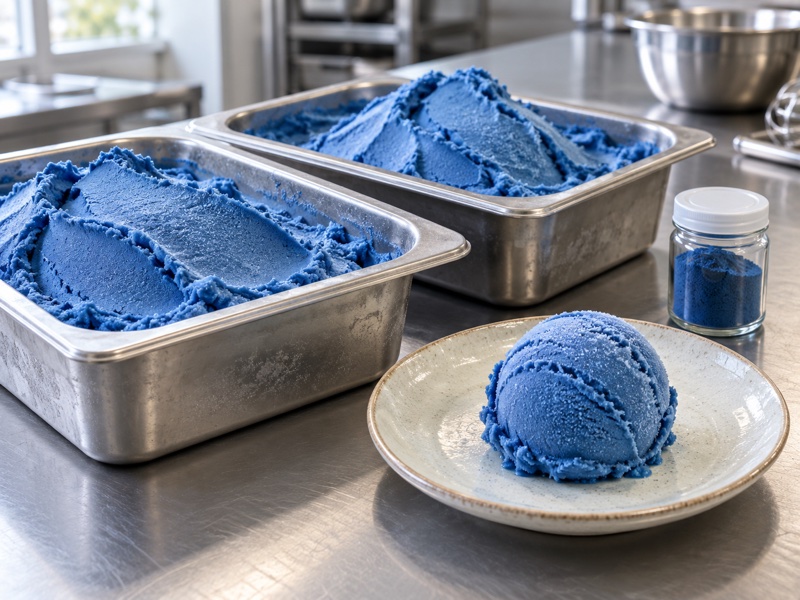
1. What gives sorbet its blue shade?
Phycocyanins extracted from spirulina give sorbet its blue shade. The color shows best in a pale base, while dark fruit or yellow ingredients can shift it toward green or violet. Whole green spirulina powder is a different ingredient and will not make the same clean blue. Frozen air and ice crystals also change how the color appears compared with liquid mix. Judge a standard scoop after hardening and tempering, not just a bowl of unfrozen syrup.
What should you request from a supplier?
Ask for a food-grade blue extract specification, carrier declaration, color grade method, and lot COA. An E-grade code reflects a supplier’s method, not a universal phycocyanin percentage. Trial two suitable grades at equal finished shade. The blue spirulina product page introduces options; the composition guide explains why carriers and source details matter. Keep the lot number with every frozen sample.
| Ingredient detail | Sorbet consequence |
|---|---|
| Color strength | Grams needed per kilogram |
| Carrier | Sweetness and solids |
| Solubility | Specks and uneven shade |
| Lot | Repeatability |
The commercial formula needs a defined ingredient, not a color name.
2. Which fruit base keeps the blue visible?
A pale fruit base usually keeps the blue most visible. Coconut, pear, white grape, and light tropical fruit can support a clear shade, while blueberry, cherry, or acai often cover it. Flavor still matters: a pale base that tastes flat may need acid or aroma adjustments that then affect pigment stability. Compare the actual fruit purées at the same sweetness and extract dose. Do not promise the same blue across every fruit variation.
How should a base comparison be run?
Prepare small batches with equal total solids and the same measured pigment level. Freeze them using the same equipment and record color, flavor, and scoop texture. Photograph each at a consistent serving temperature. If an acidic fruit tastes best but gives a dull shade, test a two-component presentation rather than forcing more pigment into it. The smoothie bowl guide shows a related contrast problem with dark fruit.
Base color and flavor should be approved together.
3. How does acidity affect the pigment?
Acidity can weaken or shift phycocyanin blue, so a sorbet’s pH needs its own trial. Many fruit sorbets rely on acid for a bright flavor, creating a trade-off between taste and color. The outcome depends on the complete formula and storage conditions, not pH alone. Do not raise pH solely for color without reviewing food safety, preservation, and flavor. A pale base can still fail if its acid system is harsh on the pigment.
What belongs in an acid trial?
Make otherwise identical batches at a few pH points that your quality team considers acceptable. Measure pH after mixing and again in a melted sample from the frozen product. Record shade immediately and at storage checkpoints. Taste blind because a small acid change can be obvious even when the color improves. The lemonade formulation guide explains a similar issue in drinks, but the sorbet’s freezing conditions need separate proof.
| Variable | What to record |
|---|---|
| Acid source | Citrus or other fruit system |
| Measured pH | Mix and melted serving |
| Color | Hue after freezing and storage |
| Flavor | Brightness and aftertaste |
The target is a saleable dessert, not a laboratory blue.
4. How much extract should a batch use?
Use the lowest weighed extract dose that reaches the approved frozen shade at serving time. A dry powder’s brightness does not show how much will be needed in a sugared fruit base. Run a dose ladder around the likely target, then compare cost per saleable scoop. Extra powder can increase cost and may create a taste or texture note. If a high dose is needed to compensate for fading, investigate the base and process first.
How can a dose ladder be practical?
Make a control and several measured blue levels in the same base. Freeze, harden, and temper them identically. Score fresh color, stored color, specks, and flavor. Record grams per kilogram of mix and expected serving yield. This is a formulation dose, not a personal supplement recommendation.
| Trial outcome | Next decision |
|---|---|
| Pale but stable | Modest dose or grade change |
| Bright then faded | Base, light, or process review |
| Dark with off-note | Lower dose or different grade |
The winning dose is the lowest one that holds its shade.
5. When should the blue ingredient be added?
Add the extract when the mix is cool enough for good pigment retention and the process still meets food-safety controls. Some sorbet bases are heated to dissolve sugar or stabilize the mix; prolonged heat can dull phycocyanin. A cooled premix may disperse powder evenly, but post-heat addition must be managed hygienically. The right point depends on your equipment, process, and regulatory requirements. Test rather than copying the timing from a home recipe.
What should a mixing trial compare?
Compare a weighed powder premix added before the heat step with an approved later addition, if the plant can safely perform both. Record temperature, time, agitation, color loss, and any powder clumps. Check the frozen product after hardening. If the later addition preserves color but creates a food-safety or sanitation problem, it is not a viable commercial option. The ice cream process article discusses the same decision in a different frozen base.
No shade is worth weakening a validated process.
6. What controls sorbet texture?
Sugar, water, fruit solids, freezing rate, and stabilizer system control sorbet texture more than blue pigment does. Too much free water can make a hard, icy scoop; too many solids can make it sticky or slow to freeze. A powder carrier adds solids and should be included in the calculation at meaningful use levels. Texture also changes during temperature cycling in storage. Compare the blue sample with a colorless control before blaming the extract for a base problem.
How should texture be evaluated?
Serve matched samples at the same temperature and record scoopability, ice crystals, melt rate, mouthfeel, and flavor release. Check after the intended storage period, not only on production day. If the blue sample feels different, measure whether its carrier or added premix liquid shifted solids. Rebalance the formula and retest color. A visually perfect blue pan is not ready if customers cannot scoop or eat it comfortably.
| Observation | First cause to examine |
|---|---|
| Hard and icy | Water balance and freezing rate |
| Sticky | Solids and sugar system |
| Grainy | Powder dispersion or crystals |
| Fast melt | Formula and service temperature |
Texture is part of the color experience because it affects the serving.
7. Can sorbet be layered with acidic sauce?
It can, but an acidic sauce may change the blue where the two components touch. Berry, citrus, and passion-fruit sauces bring color and acid that can create a dull edge after storage. A dramatic fresh swirl may blur when the product softens. Test the exact sauce ratio and assembly order. If the interface fails, a separate topping added at service may work better than a stored swirl.
What should a layered trial include?
Prepare plain blue sorbet, sauce on top, and sauce swirled through the base. Freeze and store them in the intended pack. Compare the boundary after hardening and during melting. Taste the combined spoonful because a beautiful layer can still make a poor flavor pairing. The juice article offers another view of fruit acid and pigment behavior, but frozen contact requires its own test.
The customer experiences the melted interface, not just the frozen cross-section.
8. How should sorbet be packaged and stored?
Package and store sorbet under conditions validated for the complete formula. Light can affect blue pigment, while temperature cycling can create ice crystals and surface color variation. A clear lid makes the color visible but may expose it during retail display. Compare clear and opaque options if both suit the brand. The powder supplier’s shelf life does not establish the frozen dessert’s shelf life.
Which checkpoints should quality record?
Assess the mix before freezing, hardened product, stored pack, and tempered serving. Record temperature history, package integrity, color, crystals, aroma, and melt quality. Keep unopened controls and repeat after a formula or pack change. A powder buying guide explains why the ingredient lot and packaging records should remain traceable through production. Color complaints can then be tied to real conditions.
| Checkpoint | Main question |
|---|---|
| Mix | Was pigment dispersed? |
| Hardened pan | Is the shade right? |
| Stored pack | Did color or texture change? |
| Tempered scoop | What will the customer see? |
Approve the serving state, not merely the production sample.
9. What belongs on the label?
The label should name the actual ingredients and follow the destination market’s rules for frozen desserts and color additives. In the United States, 21 CFR 73.530 lists conditions for spirulina extract in specified food categories, including frozen desserts. Check current use conditions for the exact formula. Do not infer that a blue sorbet is nutrient-rich, organic, or appropriate for every diet. Fruit, stabilizers, carriers, and allergens all matter.
Which claims need supporting files?
Review “vegan,” “organic,” “no added sugar,” and any wellness wording against the full recipe and market rules. Conventional extract should not be labeled organic without certification for the exact product and chain. Keep supplier declarations, lot COAs, the approved formula, and label sign-off together. The natural-label guide explains why a blue color source and an organic claim are separate issues. Recheck the file when a fruit supplier or pigment grade changes.
A trustworthy label describes the sorbet that is actually sold.
10. How can a business scale a successful recipe?
Scale by transferring a weighed formula and verified process, not a visual instruction such as “add powder until blue.” Pilot in the production freezer and package, then compare the batch with the approved bench standard. Mixing, freezing rate, and fill order can alter distribution of color and fruit solids. Keep staff instructions short enough to follow, with clear acceptance criteria. Calculate cost per saleable portion after process loss and storage testing.
What should the pilot approval contain?
Record extract grade and lot, powder dose, base formula, pH, heat exposure, mixing sequence, freezer settings, overrun if relevant, package, and storage plan. Photograph the approved scoop under consistent light. Sample the first and last filled packs for shade differences. The contact team can discuss ingredient samples and documents for the application; the manufacturer must validate the finished dessert. A recipe becomes commercial only when the plant can repeat it.
| Approval item | Owner’s question |
|---|---|
| R&D | Does it taste and look right? |
| Quality | Is it safe and stable? |
| Regulatory | Is the label correct? |
| Purchasing | Is the supply consistent? |
The pilot should answer all four questions.
Frequently Asked Questions
Can I use blue spirulina in any sorbet flavor?
No. Dark fruit and high acidity may hide or weaken the blue; test the exact fruit base.
What’s the best pale base for blue sorbet?
It depends on the target flavor and texture. Coconut, pear, or light tropical fruit can be good starting points, followed by a measured freeze trial.
How do I know whether my sorbet dose is right?
Judge a weighed trial after freezing, storage, and tempering. A fresh liquid mix is not enough to set the commercial dose.
Can I add the powder after heating the base?
Possibly, if the process allows safe, hygienic addition. Test dispersion and color without bypassing a validated food-safety step.
Can blue spirulina make sorbet healthy?
Do not assume it can. Nutrition claims depend on the complete finished serving and market requirements, not the blue color.
Conclusion
Blue spirulina sorbet starts with a pale base, but it succeeds through measured dosing, controlled acidity, safe mixing, good frozen texture, and storage that protects the scoop. You now have a practical trial plan from powder selection through label approval. If you are developing a frozen dessert, contact us with the base, process, and market so we can discuss appropriate extract grades and documents. A color belongs in the recipe only when it still looks right at serving time.