
Blue spirulina phycocyanin is the blue pigment-protein complex that gives spirulina extract its striking color. A product can look intensely blue without telling you how much phycocyanin it contains or how it will behave in a finished drink. If you buy an extract for food production, you need a defined grade, analytical method, and stability test rather than a color swatch alone. This guide explains what the molecule does and which questions matter when turning it into a commercial ingredient.
1. What is phycocyanin in blue spirulina?
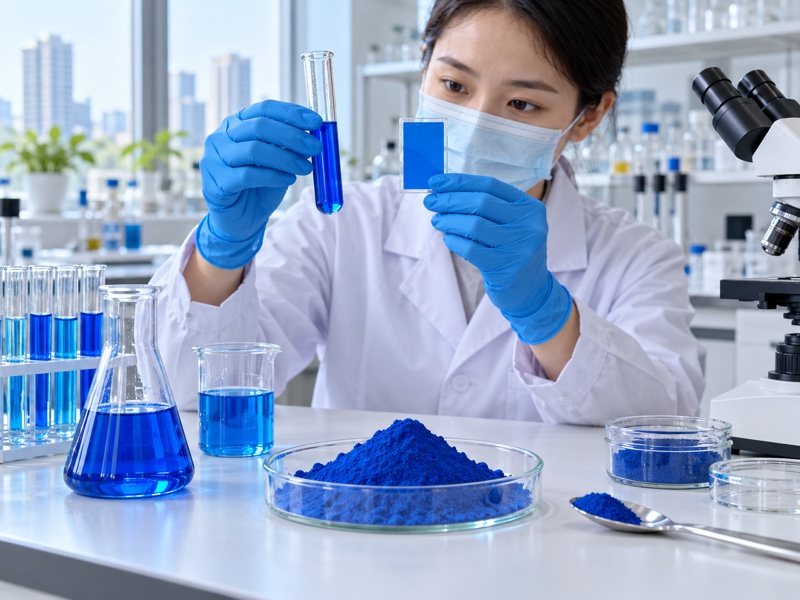
Phycocyanin is a water-soluble blue pigment-protein complex found in cultivated spirulina biomass. It is the principal coloring component of spirulina extract under the US color-additive identity rule. The molecule helps explain the characteristic cyan to deep-blue shades, but a commercial extract is not necessarily pure phycocyanin. Carriers, water, and other soluble components can be present. Ask for the exact product’s composition before interpreting a “phycocyanin-rich” claim.
Why is it called a pigment-protein complex?
The blue chromophore is bound to protein, giving the material both color and protein chemistry. A review of phycocyanin extraction and stability discusses how source and processing affect the ingredient. That does not mean a color-use serving is a meaningful dietary protein source. The nutrition overview explains why a pigment does not automatically provide meaningful nutrition. Keep the chemical description separate from a nutrition claim.
| Term | Useful meaning |
|---|---|
| Phycocyanin | Blue pigment-protein complex |
| Spirulina extract | Commercial color material |
| Whole spirulina | Dried biomass with more components |
The molecule explains the color; the product file explains the ingredient.
2. How is phycocyanin obtained from spirulina?
Phycocyanin is obtained by extracting the water-soluble fraction from prepared spirulina biomass, followed by separation, concentration, and often drying. The exact manufacturing method varies. Process conditions can affect yield, color strength, purity, microbial quality, and stability. A buyer does not need every proprietary detail, but should know enough to evaluate identity and repeatability. A generic “natural extraction” phrase is not a process specification.
Which process records matter to a food buyer?
Ask for source identity, a process flow description, carrier and processing-aid information, quality controls, and traceability. The composition guide turns those requests into a buying brief. If the supplier changes the biomass source, carrier, or drying method, the finished color may change. The buyer should receive change notice before a new grade reaches production. Processing is part of ingredient performance, not just a factory detail.
| Process stage | Possible impact |
|---|---|
| Biomass cultivation | Identity and starting quality |
| Extraction | Recovery and color strength |
| Concentration | Grade consistency |
| Drying | Moisture and handling |
Repeatable processing supports repeatable shade.
3. Does a darker powder mean more phycocyanin?
Not necessarily. Powder color can vary with particle size, moisture, carrier, lighting, and other pigments, so visual darkness is not a reliable assay. A darker jar might contain more pigment, but it can also disperse differently or lose more color in a formula. Ask for a defined analytical method and lot result. Then test each grade at an equal finished-product shade. The color customers see after storage matters more than the powder’s appearance in a bag.
How should grades be compared?
Request specifications and COAs that state method, units, and acceptance limits. Make dose ladders in the actual food. The powder buying guide explains why price per kilogram can mislead when grades differ. Supplier codes such as E3, E6, E18, E25, and E35 are product labels, not universal percentages of phycocyanin. If the analytical method differs, compare application performance as well as lab numbers.
| Evidence | What it answers |
|---|---|
| Method and units | What was measured? |
| Lot result | What is in this batch? |
| Dose to shade | How much does the food need? |
| Shelf-end color | Will the product stay blue? |
A color grade is only useful when its method is clear.
4. Why does phycocyanin fade in some foods?
Phycocyanin can lose or shift color when exposed to unfavorable heat, acidity, light, oxygen, or time. The extent depends on the grade and complete formula. A neutral cold drink can look vivid while an acidic hot-filled drink looks dull. Protein structure and the bound chromophore are sensitive to their environment. Do not infer shelf life from a fresh sample in water. Test the intended process and package.
How should a stability study begin?
Define target shade, pH, heat treatment, storage temperature, light exposure, and time points. Keep a control and photograph or measure color consistently. The natural blue guide explains why recipe conditions matter to natural color. If color fails, identify the dominant stress before increasing dose. More powder can raise cost without solving the chemistry.
| Stress | Trial question |
|---|---|
| Acid | Does pH change hue or stability? |
| Heat | What survives processing? |
| Light | Does retail display fade it? |
| Time | Is shelf-end color acceptable? |
Stability is a property of the finished food.
5. Is phycocyanin a good protein source?
Its protein structure does not make a color-use dose a useful protein source. A typical drink may contain only a small amount of blue extract, and that extract may contain carrier. Nutrition claims must be calculated for the actual serving and verified under the relevant market rules. Whole dried spirulina’s protein data cannot be copied onto an extract. If the product needs significant protein, use a tested protein ingredient and treat the blue extract as color.
What simple calculation prevents confusion?
Multiply grams of blue extract per serving by its tested protein fraction, then compare the result with the claim threshold. The ingredient composition guide explains why the extract’s composition differs from whole biomass. Record the exact lot and method. A high percentage per 100 g of powder can still be trivial in a small colored serving. A truthful label describes the finished food, not the pigment’s chemistry in isolation.
| Input | Needed for |
|---|---|
| Extract grams per serving | Exposure calculation |
| Tested protein fraction | Contribution estimate |
| Finished-product test | Claim validation |
Protein in a molecule is not protein on the nutrition panel.
6. What health evidence exists for phycocyanin?
Research describes biological activity in laboratory and animal systems, but that does not establish broad health benefits from a blue food-coloring dose in humans. Study material, dose, route, and population must match any proposed claim. A pigment can be scientifically interesting without being a treatment. Avoid transferring results from concentrated purified phycocyanin or whole spirulina to a consumer smoothie. Ask what the finished serving actually contains and what outcome was measured.
How should a brand assess a benefit claim?
Separate cell work, animal studies, human trials, and finished-product evidence. The benefits article details this evidence gap. A PubMed review of phycocyanin applications offers scientific context, but a review is not a license for any label statement. Have qualified clinical and regulatory reviewers check the exact wording. If the evidence is weak, describe color and application instead.
| Evidence level | What it can support |
|---|---|
| Cell study | Mechanistic question |
| Animal study | Further research rationale |
| Human study | Potentially relevant if dose matches |
| Finished-food trial | Direct product evidence |
Do not let a pigment’s promise outrun its proof.
7. Which applications make sense for phycocyanin?
Applications that can preserve the desired blue through processing and storage make the most sense. Pale cold drinks, frostings, yogurts, and frozen desserts are common trial matrices, but each has its own pH and package constraints. A blue powder is not a universal solution for every acidic or heated food. Use the final recipe to select a grade and dose. The same extract can look cyan in water and pastel in dairy.
How can you screen application fit?
Prepare a small matrix of realistic products and compare equal shade targets, flavor, dispersion, and shelf color. The blue drink guide and cake applications show two very different demands. Keep pH, heat, and package details with each sample. If a grade succeeds in one format, do not assume it will succeed in another. A portfolio may need different color systems by SKU.
| Product | Main challenge |
|---|---|
| Clear beverage | Clarity and light |
| Yogurt | Acidity and opacity |
| Frosting | Mixing and display |
| Baked cake | Heat and browning |
Application fit is more useful than a universal grade ranking.
8. What safety and regulatory rules apply?
Spirulina extract used as a color additive has identity, specification, and use conditions that depend on the market. In the United States, 21 CFR 73.530 lists the current rule, including contaminant limits and permitted food uses; a 2026 amendment was delayed indefinitely. Other markets require separate review. A supplier’s food-grade claim does not authorize every recipe or label. Verify the exact application before launch.
What should the quality file contain?
Keep the specification, lot COA, identity and source information, relevant contaminant and microbiology tests, and market documents. The natural blue article distinguishes origin from organic certification. Check certificates against the actual grade, production site, and transaction. A clean analytical result supports quality; it does not establish a health benefit. Regulatory and clinical claims need their own evidence.
| File item | Role |
|---|---|
| Identity | Correct material |
| COA | Lot release |
| Contaminants | Safety review |
| Market status | Lawful use |
Quality and claim evidence should never be merged.
9. How should suppliers report phycocyanin content?
Suppliers should report phycocyanin-related results with a defined method, basis, units, and acceptable range for the named grade. A number without its method can be difficult to compare. State whether the result is on an as-sold or dry basis if relevant. Include lot variation and change-control terms. Buyers should request enough information to connect an analytical result to the shade in their application.
What should a buyer compare across lots?
Compare COA values, dose to target shade, color after processing, and shelf-end appearance. The powder buying guide adds supply and contract questions. If one lot needs a very different dose despite a similar number, investigate method, carrier, storage, or mixing. A lot result is most useful when it predicts real production behavior. Keep retained samples and a finished-product reference.
| Report field | Reason |
|---|---|
| Method | Reproducibility |
| Units and basis | Fair comparison |
| Range | Release limit |
| Lot number | Traceability |
Good reporting connects the lab to the line.
10. When is a phycocyanin ingredient ready to buy?
It is ready when the exact grade gives the approved shade at a workable dose, passes the process and shelf-life test, and comes with suitable documents and supply terms. A beautiful blue solution is not a complete approval. Compare at least the intended recipe, package, and destination market. Define what changes require a new trial. Purchasing should know the same grade and method that R&D approved.
What belongs in the final decision record?
Include the ingredient specification, sample lot, analytical method, dose ladder, process and shelf results, label decision, and commercial terms. Our team can discuss samples and documents for a particular application. Assign an owner to review each incoming lot against the approved standard. If the supplier substitutes a grade, stop and revalidate. A repeatable natural blue is a system, not a single molecule.
| Approval gate | Proof |
|---|---|
| Shade | Finished-product reference |
| Stability | Realistic study |
| Quality | Lot documents |
| Supply | Contract and forecast |
Buy the grade whose performance you can reproduce.
Frequently Asked Questions
Can I call phycocyanin a protein?
It is a pigment-protein complex, but that does not mean a colored serving is a useful protein source. Calculate the actual amount.
What’s the best phycocyanin grade for drinks?
The best grade is the one that meets your shade and stability target in the exact drink at a workable cost. Test rather than choosing by code.
How do I know how much phycocyanin a powder contains?
Request the supplier’s analytical method, units, specification, and lot COA. Visual darkness alone is not enough.
Can phycocyanin survive heat?
Sometimes enough color remains for a given process, but heat can reduce it. Test the full time and temperature profile.
Can I claim health benefits from blue phycocyanin?
Only with evidence and legal review for the exact product and claim. Research on isolated compounds does not automatically support a food label.
Conclusion
Phycocyanin explains blue spirulina’s color, but useful ingredient decisions require grade data, application trials, quality controls, and honest claims. You now know how to read a phycocyanin result and test whether the blue survives the product you plan to sell. If you need a grade sample or batch documents, contact us with your formula and market. We believe a natural color is most valuable when its science and its finished performance agree.