
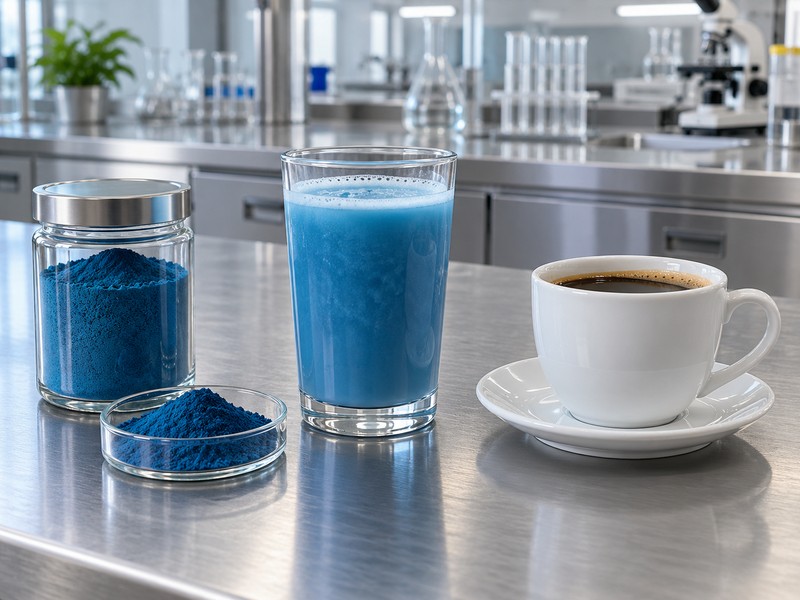
Pure blue spirulina extract does not naturally contain caffeine. Yet a blue drink may contain caffeine from tea, coffee, guarana, or another ingredient added alongside the pigment. If you are choosing a café drink or developing a bottled one, does blue spirulina have caffeine is a question about the complete formula, not the color alone. The useful answer comes from the ingredient list, supplier specification, and a clear statement of what else went into the cup.
1. Is blue spirulina naturally caffeine-free?
Yes, a pure phycocyanin-rich spirulina extract is naturally caffeine-free. Spirulina is a cyanobacterium, while caffeine is associated with ingredients such as coffee, tea, and guarana. Blue spirulina is usually sold as an extract for color rather than as an energy ingredient. That distinction matters when a customer chooses a vivid blue drink because it looks similar to a tea latte. Color offers no reliable clue about stimulant content.
What does the powder specification tell you?
Ask for the full ingredient declaration, including any carrier or processing aid that remains in the product. A specification should identify the material as blue spirulina extract or a comparable phycocyanin ingredient and state its intended food use. If a premix contains flavors, sweeteners, or other actives, review those separately. A plain blue extract and a finished “blue latte mix” are different purchasing decisions even if both make the same color in water.
| Material | Caffeine expectation | Verification |
|---|---|---|
| Pure blue spirulina extract | None naturally | Supplier specification |
| Flavored blue beverage premix | Depends on formula | Full ingredient declaration |
| Blue tea or coffee drink | Often present | Recipe and serving information |
The package name alone is too broad; read what is inside it.
2. Why might a blue spirulina drink still contain caffeine?
A blue spirulina drink can contain caffeine when it is blended with a caffeinated base. Matcha, black tea, espresso, and energy blends are common examples. Some bars also use a blue topping on a conventional coffee drink, leaving caffeine in the beverage despite the pigment being caffeine-free. For a packaged product, the full formulation and applicable labeling rules determine what the consumer should see. Never describe the complete drink as caffeine-free simply because its blue ingredient is.
Which part of the recipe should you check first?
Start with the liquid base, then check syrups, powders, and functional additions. A blue smoothie made with coconut water differs from one made with cold brew. Ask for the actual serving recipe, because staff substitutions can change the answer during service. For bottled drinks, review the approved bill of materials rather than relying on a marketing mockup. If the formula changes, the caffeine statement should be reviewed again.
The blue spirulina product page describes a color ingredient; the finished drink remains the formulator’s responsibility.
3. Can blue spirulina replace coffee or matcha?
Blue spirulina can replace the color role of a bright ingredient, but it cannot replace caffeine’s stimulant effect. A customer who expects an energy lift from a blue latte may be disappointed if the recipe contains only milk and pigment. Conversely, someone avoiding caffeine may appreciate a genuinely caffeine-free base. The product name and menu description should set that expectation plainly. Taste, acidity, temperature, and sweetness also need separate formulation work.
How do you describe a caffeine-free option honestly?
State the base and what the drink delivers: color, flavor, and format. “Blue spirulina oat latte” describes an ingredient and a style but does not by itself establish caffeine content. If you claim caffeine-free, verify every ingredient and consider cross-contact or preparation practices relevant to your operation. A menu team can train staff to answer the direct question without vague talk of “natural energy.” That phrase can imply a physiological effect the beverage has not demonstrated.
| Description | What a customer may infer | Better check |
|---|---|---|
| Blue latte | Possibly coffee | State whether espresso is included |
| Energy blue smoothie | Stimulant or performance claim | Identify actual active ingredients |
| Caffeine-free blue drink | No meaningful caffeine | Verify complete formula and handling |
Specific wording prevents confusion at the counter.
4. Does processing add caffeine to the blue extract?
Ordinary extraction and drying of spirulina pigment do not create caffeine. Processing can change color strength, solubility, carrier content, and stability, but caffeine would have to enter through another ingredient or contamination route. A supplier may blend the extract with maltodextrin or another food carrier to make a powder easier to handle. That carrier should be declared and assessed, yet it is not a caffeine source by default. Request a current specification for the exact grade you plan to buy.
What should procurement request?
Obtain the ingredient statement, technical specification, lot certificate of analysis, and any claim support needed for the intended market. Ask whether the product is a single extract or a formulated beverage base. Keep the documents tied to the actual manufacturer and lot; a certificate for another factory cannot validate your shipment. If a customer asks about caffeine, the response should draw from the exact product record, not a general article about algae.
You can discuss the necessary documents through the contact team when a specific application is known.
5. How can you verify a caffeine-free claim?
Verify a caffeine-free claim by checking the complete ingredient list, supplier data, and finished-product controls relevant to the claim and market. For an ordinary pure blue extract, chemistry provides a good reason not to expect caffeine, but a drink can introduce it elsewhere. Testing may be appropriate when the formulation is complex or a label claim requires a defined threshold. There is no universal proof supplied by the drink’s shade or by a photo of the powder. Document the conclusion at the serving level.
When is laboratory testing useful?
Consider testing when a premix has an uncertain composition, ingredients share equipment with caffeine sources, or the intended label requires analytical evidence. Agree on the method, detection limit, and sampling plan with a qualified laboratory. A single non-detect on one batch should not substitute for controlled sourcing and change management. In a café, the more immediate failure may be a recipe mix-up, so staff instructions and menu details matter too.
| Evidence | Useful for | Limitation |
|---|---|---|
| Supplier ingredient statement | Identifying sources | Must match purchased grade |
| Finished recipe | Checking additions | Can drift in service |
| Lab result | Measuring a sample | Represents tested sample only |
Use the evidence that matches the promise you make.
6. Is blue spirulina safe for people who avoid caffeine?
Blue spirulina’s lack of natural caffeine addresses the stimulant question, but it does not establish that a product is suitable for every person. Allergies, medical conditions, medications, and the other ingredients in a drink may matter. A consumer avoiding caffeine for pregnancy, sleep, or a clinician’s advice should read the full product label and discuss individual concerns with a qualified professional. A café should answer ingredient questions accurately and avoid turning a color statement into a medical assurance.
What else should a consumer check?
Look for coffee or tea in the base, caffeine-containing botanicals in a “functional” blend, and serving-size details. Also check sweeteners and allergens relevant to you. If the label is unclear, ask the maker for the current formulation. If you are developing a product, give staff a short ingredient sheet so they can answer the same question consistently. The most useful response is a clear yes or no backed by the recipe, followed by any relevant caveat.
The spirulina range includes other forms, so identify the exact blue ingredient rather than using “spirulina” as a catch-all.
7. Can blue spirulina make an energy drink blue?
Yes, blue spirulina can color some energy-style drinks, but its suitability depends on the formula and processing conditions. Acidic beverages, high heat, light exposure, and long storage can weaken or shift a phycocyanin blue. Many energy drinks are acidic and sold in clear packaging, which makes stability a serious question. The caffeine, if present, comes from another ingredient. A small bench sample is useful for visual screening, but it cannot establish shelf life.
What should a drink trial measure?
Start with the intended pH, sweetener, acid system, package, and thermal process. Compare appearance immediately after mixing and at planned storage checkpoints, including accelerated and real-time conditions where appropriate. Record haze, sediment, and flavor as well as color. Use the same caffeine source and level that will appear in the commercial formula. If the blue fades, changing the extract grade alone may not solve a fundamental pH or light problem.
| Trial condition | Question to answer |
|---|---|
| Acid level | Does the shade shift? |
| Process temperature | Does the pigment survive? |
| Package and light | Is the color stable on shelf? |
| Caffeine source | Is the claim and label correct? |
Design around the finished beverage, not a beaker of water.
8. Does the blue color imply an energy benefit?
No, a bright blue color does not imply an energy benefit. Some consumers associate vivid colors with sports drinks or wellness products, but appearance is not evidence of a performance effect. Blue spirulina is valued mainly for its pigment in many food and beverage uses. Its composition differs from whole green spirulina biomass, and broad claims made for one material should not be copied onto the other. Any nutrition or functional claim needs product-specific evidence and market review.
How should marketing handle the distinction?
Describe what the product contains and what a buyer can observe: blue color, beverage format, flavor, and relevant quality documentation. Avoid language that blurs a pigment ingredient with a stimulant. If a separate caffeine source is included, state it clearly and assess the applicable disclosure rules. A beverage can be visually striking without promising alertness. That is often a more credible product position.
The factory overview is relevant when your team needs to check manufacturing and quality information for a supplier.
9. What belongs on a blue spirulina drink label?
A blue spirulina drink label should identify its ingredients accurately and make any caffeine statement according to the rules of the target market. The exact ingredient name, permitted color use, allergen statement, and nutrition panel may vary by jurisdiction and recipe. In the United States, 21 CFR 73.530 defines specified uses and conditions for spirulina extract as a color additive. That regulation does not approve every formula or every claim. A regulatory specialist should review the finished product before launch.
Which documents keep the label defensible?
Keep the supplier specification, lot records, formulation, and approved label version together. If caffeine is intentionally added, record its source and amount according to your market requirements. If no caffeine is added, check whether “caffeine-free” has a legal definition or supporting-evidence expectation in that market. Also make sure a new flavor or syrup does not invalidate the existing label. A finished-product label is only as current as the formula behind it.
| Record | Why it matters |
|---|---|
| Ingredient declaration | Names the actual components |
| Formula version | Shows what changed |
| Lot COA | Links purchase to supplied grade |
| Label approval | Documents claim review |
Keep the paperwork as practical as the recipe.
10. How should a buyer choose a blue extract for drinks?
A buyer should choose the extract by testing the exact beverage, then checking documents and cost per finished serving. A high color grade may use a lower dose, but grade labels are supplier-specific and do not universally state purity. Solubility, carrier, taste, and stability often matter more than the color of dry powder. A sample that looks good in still water may fail in an acidic bottled drink or a warm milk base. Define the application before comparing quotes.
What should go in the sample request?
Tell the supplier your drink base, pH, process temperature, expected shelf life, package, target shade, market, and estimated volume. Request candidate grades and current specifications for each. Trial them at measured doses and keep the formula constant. Record both cost and the percentage of saleable batches after stability testing. If you plan a caffeine-free claim, ask the supplier to identify every component of the blue ingredient.
The OEM services page can be a starting point if your team needs help translating a concept into a repeatable product.
FAQ
Can I drink blue spirulina before bed?
Usually, yes, if it is a pure blue spirulina drink without other ingredients that affect your sleep. Check the complete recipe for coffee, tea, guarana, or other stimulants.
Can I order a blue latte without caffeine?
Yes, if the café makes it without espresso or caffeinated tea. Ask what liquid base and powders are used, because “latte” describes several different recipes.
How do I know if a blue powder contains caffeine?
Read the full ingredient list and the maker’s product information. A pure blue spirulina extract should not naturally contain caffeine, while a premix may include caffeinated ingredients.
What’s the best way to label a caffeine-free blue drink?
Use a clear, market-compliant statement backed by the final recipe and appropriate evidence. Review every ingredient and any processing change before printing the claim.
Can blue spirulina give me energy without caffeine?
Do not assume it will. Blue color and caffeine-free status do not establish a stimulant or performance effect; evaluate any specific claim against the actual product evidence.
Conclusion
Pure blue spirulina extract is naturally caffeine-free, while a finished blue beverage can still contain caffeine from its base or added ingredients. You can resolve the question by checking the whole formula, choosing words that match it, and testing the beverage under real processing and storage conditions. If you are developing a drink, contact us with your base, target market, and label goals so we can discuss suitable blue extract samples and documents. A distinctive color should never leave the consumer guessing what is in the cup.