
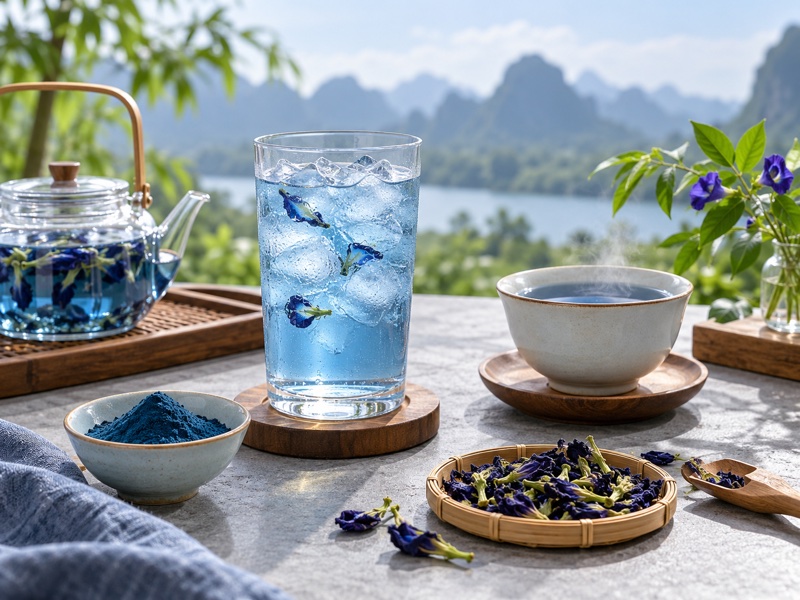
Make blue spirulina tea by brewing a mild tea or herbal infusion, cooling it to a suitable mixing temperature, and stirring in a measured food-grade blue extract. If you add the extract to a boiling cup and squeeze in lemon, the vivid blue you expected may not last. A blue spirulina tea recipe must balance the taste of the infusion with pigment stability, serving temperature, and any caffeine claim. The useful starting point is to choose the tea, then test the color in the drink you will actually serve.
1. What is blue spirulina tea?
Blue spirulina tea is a tea or herbal infusion colored with spirulina-derived blue extract. It is not usually tea made from blue spirulina leaves; the blue ingredient comes from cultivated spirulina biomass. A true tea base such as green, black, or white tea may contribute caffeine and its own color. A herbal infusion may be caffeine-free if its ingredients are. Decide which version you are making before choosing the shade and menu wording.
What should the recipe brief identify?
Name the tea or herb, brew strength, serving size, blue extract grade, sweetness, acidity, and hot or iced service. The composition guide explains why a blue color ingredient and whole green powder are different. A pale herbal base may give a clean cyan, while dark black tea can obscure it. Make the base taste good before adding pigment. That avoids using color to distract from a weak drink.
| Tea base | First color question |
|---|---|
| Pale herbal infusion | Is the blue vivid and clear? |
| Green tea | Does the yellow tone shift it? |
| Black tea | Is the blue still visible? |
| Milky tea | Is a pastel shade acceptable? |
Define the beverage before calling it blue tea.
2. Which tea base shows the blue best?
A pale, mild infusion usually shows the blue best. White tea, lightly brewed green tea, or a clear herbal infusion may let the pigment dominate, while a dark or strongly flavored tea changes the hue and taste. “Best” still depends on the intended drink. A floral tea can taste elegant but conflict with the extract’s subtle note. Compare bases at the same finished volume and pigment dose rather than judging dry leaves.
How do you run a tea-base screen?
Brew each candidate to its normal drinking strength, chill or cool it to the planned serving temperature, then add the same weighed blue dose. Record color, aroma, bitterness, haze, and flavor after 15 minutes. The blue drink article discusses beverage bases more broadly, but tea adds tannins and a brewing step. If a base looks attractive only when brewed too weak to taste like tea, remove it from the shortlist. The final glass must work without a filter or a color edit.
| Observation | Likely action |
|---|---|
| Teal tint | Check native tea color |
| Haze | Check brew, water, and extract |
| Bitter finish | Adjust tea, not only sweetener |
| Faint blue | Compare grade and dose |
The drink should still taste like the tea named on the menu.
3. Should the blue powder go into hot tea?
Add blue extract after the brewed tea has cooled enough for the exact grade and recipe, unless a validated hot process proves otherwise. Phycocyanin can lose color under heat, and a freshly boiled cup is a harsh first test. That does not mean every warm drink must be cold. It means the finished serving temperature and hold time need evidence. For iced tea, cooling before pigment addition is usually straightforward.
What is a useful temperature trial?
Split one tea batch into samples at several measured temperatures. Add the same extract dose and compare color immediately, after 15 minutes, and after the expected service period. The blue latte guide shows why warm milk drinks also need a temperature decision. If a café wants a hot blue tea, specify a safe serving method without claiming that all heat is harmless. The blue may be best as a cold topping or added at the last practical stage.
| Trial | Record |
|---|---|
| Chilled tea | Baseline shade |
| Warm tea | Service color |
| Near-boiling tea | Heat loss |
| Held tea | Color after time |
Temperature belongs on the recipe card.
4. Will lemon turn the tea purple or dull?
Lemon can change the blue spirulina shade or stability because it lowers the drink’s pH. It may move the hue, weaken the blue, or make the change more noticeable during holding. A dramatic blue-to-purple effect is associated with butterfly pea flower, a different ingredient; do not promise that exact effect from spirulina extract. Taste and color both matter, so test the real lemon amount. A lemon wedge squeezed by the customer creates more variation than a measured juice addition.
How should citrus be tested?
Use one tea base and blue dose, then add measured lemon levels. Record pH, appearance, flavor, and color after ice dilution or warm holding. The blue lemonade guide covers a drink where acid is central. If citrus is essential but the blue does not last, consider a different visual concept instead of increasing extract endlessly. A color-changing idea should use a colorant whose behavior has been tested in that exact recipe.
| Version | What it tells you |
|---|---|
| No lemon | Baseline blue |
| Light lemon | Flavor and immediate hue |
| Full lemon | Stability and sourness |
Do not write the menu description until the citrus trial is done.
5. Does blue spirulina tea contain caffeine?
The caffeine comes from the tea or other added ingredients, not from pure blue spirulina extract. Black, green, and white teas naturally contain caffeine, though the amount varies with type and brewing. A caffeine-free herbal base can support a caffeine-free concept only if every ingredient and process supports that statement under the relevant rules. Matcha or guarana in a blend changes the answer. The blue color by itself cannot tell a customer whether the drink contains caffeine.
How should a caffeine claim be checked?
List every ingredient, including tea concentrates, flavors, and optional toppings, then obtain suitable data or testing for the finished serving. The caffeine article separates the extract from the recipe. Do not describe a green-tea version as caffeine-free because the blue ingredient has no caffeine. If the product is bottled, check how brew strength and serving size affect the declaration. A clear menu note is often more useful than a vague wellness phrase.
| Drink | Caffeine source to check |
|---|---|
| Blue black tea | Black tea |
| Blue green tea | Green tea |
| Blue herbal infusion | Full herb and flavor blend |
| Blue latte | Tea or coffee addition |
Judge caffeine from the complete formula.
6. How much blue extract should a cup use?
Use a weighed amount that reaches an approved shade without harming flavor or clarity. A teaspoon is an unreliable measure because extract grades and powder density vary. A clear tea makes clumps or sediment easy to notice. Test several doses in the final tea base, not just in plain water. The final shade should be checked in the serving glass after ice dilution if the tea is iced.
What should a dose ladder record?
Prepare a blank cup and several measured levels from the same extract lot. Compare appearance, flavor, haze, and cost per serving. The blue powder guide explains why grade and carrier affect use level. If the tea is yellow, a higher dose may make a deeper teal rather than the cyan you want. Changing the tea base may be more effective than adding pigment.
| Dose result | Next step |
|---|---|
| Pale and clear | Raise dose cautiously |
| Strong but grassy | Try another grade or base |
| Cloudy | Check dispersion |
| Teal | Check tea color |
Dose for the drink customers receive.
7. What mixing sequence avoids specks?
Premix the extract in a small amount of compatible liquid before adding it to the full tea. Dry powder can float on iced tea or stick to a shaker, leaving blue dots in the glass. A small whisk or frother can help, but the procedure must be easy for staff to repeat. Straining the tea first may reduce leaf particles that confuse the visual test. Keep the extract addition point consistent between servings.
What should a café procedure include?
Write the tea brew ratio, brew time, cooling method, blue weight, premix volume, mixing tool, ice amount, and garnish. Have another staff member make it without coaching. The blue drink guide gives a broader method for colored drinks. If their result differs, simplify the sequence. A recipe that depends on one person’s feel is difficult to scale across shifts.
| Step | Control |
|---|---|
| Brew | Fixed tea-to-water ratio |
| Cool | Defined target temperature |
| Premix | Weighed blue dose |
| Serve | Standard ice and glass |
Repeatability makes the color believable.
8. Can blue tea be bottled?
It can be developed as a bottled product, but it needs a validated process and shelf-life plan separate from a café recipe. Tea compounds, acidity, oxygen, light, and heat can interact with the blue extract. A product that stays blue for 20 minutes may not do so for weeks. The manufacturer must validate food safety first, then assess color and flavor in the intended package. A transparent bottle may sell the blue visually but expose it to light.
What should a pilot bottle test?
Record the tea brew and filtration, extract addition point, heat treatment, fill conditions, pH, package, and storage. Compare color, haze, sediment, flavor, and microbiological results at planned intervals. The blue drink guide helps frame clear-bottle issues; tea adds its own compounds and color. If a process change protects blue but weakens safety controls, reject it. The finished bottle must be safe and appealing through the stated shelf life.
| Bottled-tea factor | What to measure |
|---|---|
| Tea brew | Strength and native hue |
| Process | Safety and pigment loss |
| Package | Light exposure |
| Shelf life | Color, flavor, and sediment |
The bottle, not the pilot glass, sets the launch standard.
9. What should the label say?
The label should identify the drink accurately and avoid unsupported health or nutrition claims. “Tea” can mean different products, and caffeine claims depend on the complete formula. The blue extract’s natural origin does not establish that the finished drink is organic. For US food color use, check the current conditions in 21 CFR 73.530. Export markets may use different categories and declarations.
What should regulatory review receive?
Provide the tea source, all other ingredients, extract grade and dose, process, package, intended markets, and proposed claims. The natural-label article explains why natural and organic are separate. If the drink contains green tea, do not imply the blue ingredient makes it stimulant-free. Avoid disease or performance claims based on a color-use dose. A simple description of flavor and color may be the strongest accurate copy.
| Label phrase | Check first |
|---|---|
| Caffeine-free | Full formula and data |
| Organic | Valid certification chain |
| Natural blue | Market-specific wording |
| High protein | Finished-serving nutrition |
Make the label match the cup.
10. When is the tea ready to serve or sell?
The tea is ready when its flavor, blue shade, mixing method, safety, and label are repeatable in the intended setting. A café can validate a short service window; a bottled brand needs production and shelf-life evidence. Keep a signed recipe, approved extract grade, visual standard, and substitution rules. Recheck the formula when the tea leaf, water, flavor, or powder lot changes. A drink that looks beautiful only once is still a prototype.
What belongs in a handoff file?
Include brew instructions, target color, measured blue dose, pH where relevant, serve temperature, storage period, and quality documents. For a bottled tea, add process validation, package tests, shelf-life results, and regulatory approval. Our team can discuss extract samples and lot documents for a tea concept; the beverage maker validates the complete drink. Train staff to spot an off-color batch before customers do. Simple controls help preserve a delicate visual promise.
| Handoff item | Owner |
|---|---|
| Tea brew | Beverage team |
| Extract grade | Purchasing and quality |
| Safety and shelf life | Manufacturer |
| Claims | Regulatory review |
Serve the blue tea you can make again.
Frequently Asked Questions
Can I put blue spirulina in hot tea?
You can test it, but heat may weaken the color. Add it after cooling to a tested temperature when possible.
What’s the best tea for a bright blue cup?
A pale, mild infusion is the easiest starting point. Choose a tea that also tastes good at the intended strength.
How do I know if my blue tea has caffeine?
Check the tea and every added ingredient. Blue extract itself is not the caffeine source.
Can I add lemon to blue spirulina tea?
Yes, but test the exact amount. Acidity may change the shade or its stability.
Can I bottle a café blue tea recipe?
Not without process, shelf-life, package, and label validation. Use the café drink as a starting concept.
Conclusion
Blue spirulina tea succeeds when the chosen infusion tastes good and the pigment survives the way the drink is brewed, served, and stored. You now know how to test the tea base, temperature, citrus, caffeine, dose, and bottled version. If you need an extract sample or grade documents for a commercial tea, contact us with your formula and market. We believe color should make a good cup more inviting, never hide a weak one.