
A green snack prototype may look promising yet collapse, harden or taste too strong on a production extruder. Spirulina powder extruded snack trials turn those risks into a controlled formula and process comparison. The goal is a repeatable finished piece, not a target spirulina percentage in isolation. A study of spirulina-enriched snacks found altered pigment and nutritional measures in its own 2.6% formulation. That result justifies testing color and nutrition together; it does not set a universal inclusion level.
Contents
- Which product decision should the pilot answer?
- How should the powder lot be qualified?
- How should a formula matrix be designed?
- Which feed and barrel variables need control?
- How should expansion and texture be measured?
- What happens to green color during extrusion?
- How should flavor and seasoning be evaluated?
- What sampling plan catches line drift?
- How should shelf life and packaging be tested?
- What makes a pilot transferable?
1. Which product decision should the pilot answer?
Write one measurable brief
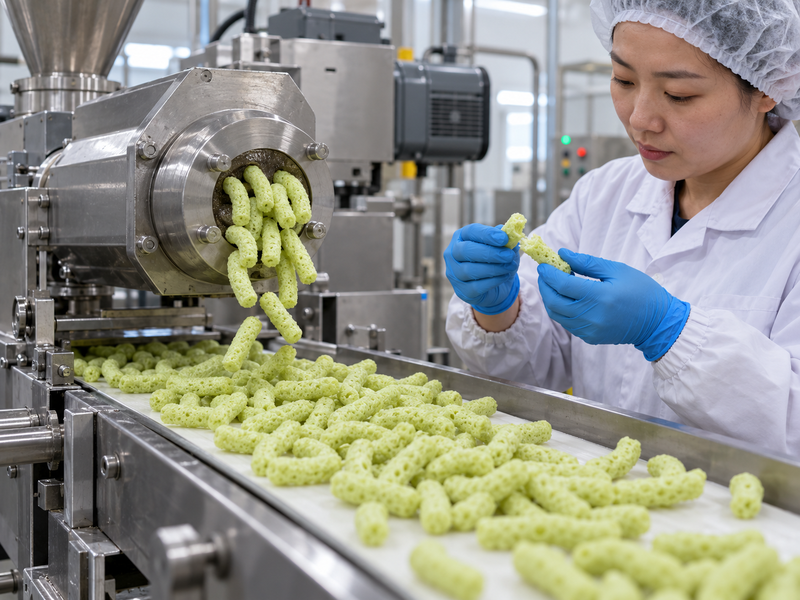
Choose whether the launch aims at visible green color, ingredient differentiation, protein contribution or a blend of those goals. Each goal changes the dose and the acceptable flavor tradeoff. Describe base cereal, shape, intended crunch, coating, pack and target market. The control must use the same base formulation and line settings without spirulina. Start with the shelf: define how the consumer will see and eat the product before deciding how much powder enters the feed.
A dense protein claim may be impossible at a dose that keeps the desired puff and aroma; nutritional labeling needs finished-product analysis and local claim review. Ask the plant to state its available screw profile, die and dryer. A bench extruder result cannot be copied onto a different line without a transfer study. Use the pilot to choose a feasible operating region, then confirm it in production.
2. How should the powder lot be qualified?
Record the ingredient actually fed
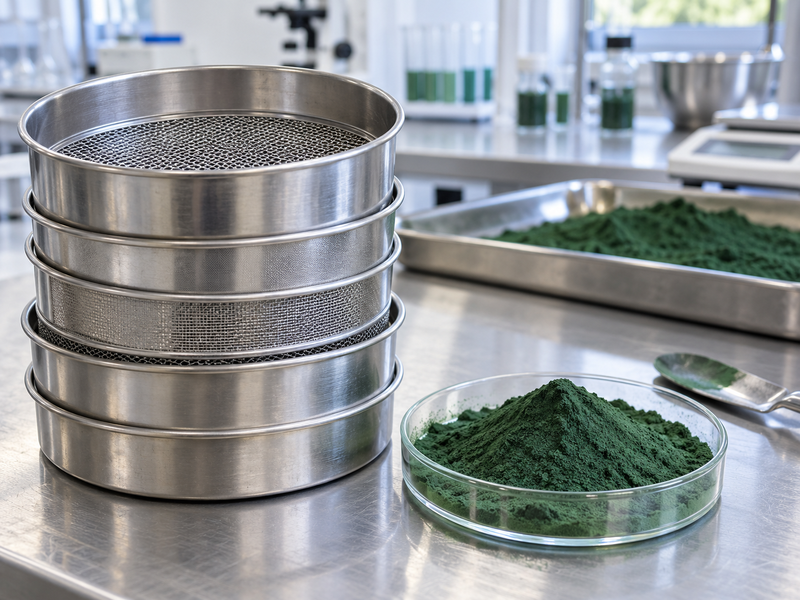
Use a traceable commercial food-grade whole-biomass powder. Request its current specification, certificate of analysis, particle-size description, moisture data and relevant contaminant and microbiological results. Whole spirulina powder differs from purified blue extract; the two cannot be substituted in an extrusion trial. Log the lot, opened-pack date, storage condition and preblend method. A useful cross-check: compare the trial material with the supplier’s powder moisture and water activity information.
Powder moisture enters the actual feed-water balance and can alter flow at the feeder. Check whether clumps form in the plant environment, then screen or break them only under a controlled procedure. If a new lot has a different green shade or odor, evaluate that difference before changing barrel conditions to compensate. Keep a retained ingredient sample alongside finished pieces.
| Ingredient evidence | Request | Pilot consequence |
|---|---|---|
| Traceability | Lot and manufacturing date | Reproducible comparison |
| Moisture | Method and result | Feed-water calculation |
| Particle size | Method and distribution | Mixing and visible specks |
| Sensory | Standardized odor/color check | Finished flavor baseline |
Before the main pilot, run a short feeder check with the candidate blend. Weigh output over several fixed intervals and inspect powder remaining in the hopper for segregation. A blend that looks uniform in a drum can separate under vibration if the spirulina fraction differs in particle size or density from the cereal flour. Record room humidity and any bridging or dust loss. Keep a small sample from the beginning and end of the hopper discharge for color or compositional comparison.
If feeding is unstable, fix premixing, hopper geometry or handling before using extrusion settings to explain irregular finished pieces.
3. How should a formula matrix be designed?
Change dose deliberately
Prepare a control plus at least two practical spirulina inclusion levels around the commercial objective. Keep total dry feed constant by specifying which base flour the powder replaces. Otherwise a higher dose can change starch content and expansion for reasons unrelated to pigment alone. Replicate a promising condition rather than using every kilogram for new variants. Here is the tradeoff: higher inclusion may improve an ingredient story while intensifying color, aroma and texture changes.
One extruded-snack study reported a formulation with 2.6% spirulina and measured physical and sensory properties. Another corn-extrudate study used mixtures of cricket and spirulina, so its effects cannot be attributed to spirulina alone. Both show why your starch system and dose ladder need direct measurement.
4. Which feed and barrel variables need control?
Record actual conditions rather than setpoints
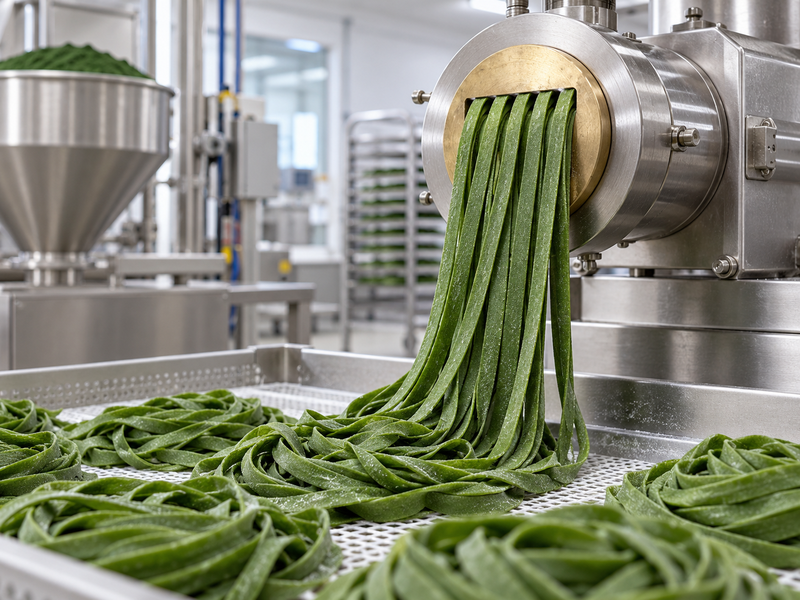
Log feed rate, added water, feed moisture, screw speed, zone temperatures, pressure, torque or motor load, die configuration and cut rate. Document startup stabilization and every intervention. Setpoints alone can conceal a fluctuating process. A wet powder preblend may appear homogeneous yet feed unevenly if it bridges in the hopper; a dry premix can segregate before the feeder. Sample feed upstream and downstream of blending. Watch the water balance: moisture from the spirulina lot and seasoning carrier belongs in the calculation.
When testing temperature, change one zone plan at a time and keep feed composition stable. Product temperature and residence history matter, but production lines may not measure them directly; record available proxies and interpret with care. Never infer pigment survival from barrel setpoint alone. This process map lets engineers distinguish a formula effect from a mechanical drift. When a trial has limited material, prioritize a stable control run and one deliberate change over many short conditions.
Record how long each condition ran before samples were taken; material still inside the extruder can blur a transition. Ask operators to note visible surging and die build-up alongside instrument trends.
| Variable | Record location | What drift may signal |
|---|---|---|
| Feed moisture | Premix and feeder | Expansion change |
| Torque or load | Extruder trend | Viscosity or feed shift |
| Die pressure | Before die | Blockage or composition change |
| Cut rate | Knife setting | Size and drying variation |
5. How should expansion and texture be measured?
Use physical data and a bite test
Measure diameter or expansion ratio, bulk density, piece mass, moisture and a defined instrumental hardness or fracture response. Specify whether measurements use unseasoned or finished pieces; oil and coating can alter results. Count broken pieces after transport simulation or a standard handling step. The key comparison: a color improvement is not valuable if puff collapse creates a hard snack or excessive fines. The spirulina snack study included expansion, density and hardness among its outcomes and found its particular formula acceptable.
Your die geometry and cereal blend can respond differently. Sensory panels should test crispness and mouthfeel blind, with control and dose coded. Interpret means with variation, since a line may make both airy and dense pieces in one run. Investigate whether irregular pieces cluster near startup or a feed interruption.
6. What happens to green color during extrusion?
Separate ingredient hue from processing loss
Green powder carries multiple pigments and an opaque biomass matrix. Finished hue depends on dose, base flour color, thermal history, moisture and subsequent seasoning. Measure powder, unseasoned extrudate and finished snack under a defined lighting or color-instrument procedure. Photograph cut faces as well as surfaces. Do not overread a single value: a color shift may reflect starch expansion and light scattering as much as pigment change. The corn-extrudate research quantified CIELAB color changes across its specific blends.
Use the same idea for your own line while avoiding transfer of its numerical tolerances. If your green target fails, test feasible dose and process changes separately. A post-extrusion coating may change appearance, but it also changes adhesion, flavor and nutritional distribution; qualify it as a new process route.
| Stage | Color sample | Question |
|---|---|---|
| Incoming powder | Standardized dry cup | Did lot hue change? |
| Hot piece | At die exit | What color emerged? |
| Dried piece | Before seasoning | What did drying change? |
| Packed piece | After storage | What did pack exposure change? |
7. How should flavor and seasoning be evaluated?
Test an unseasoned base before masking
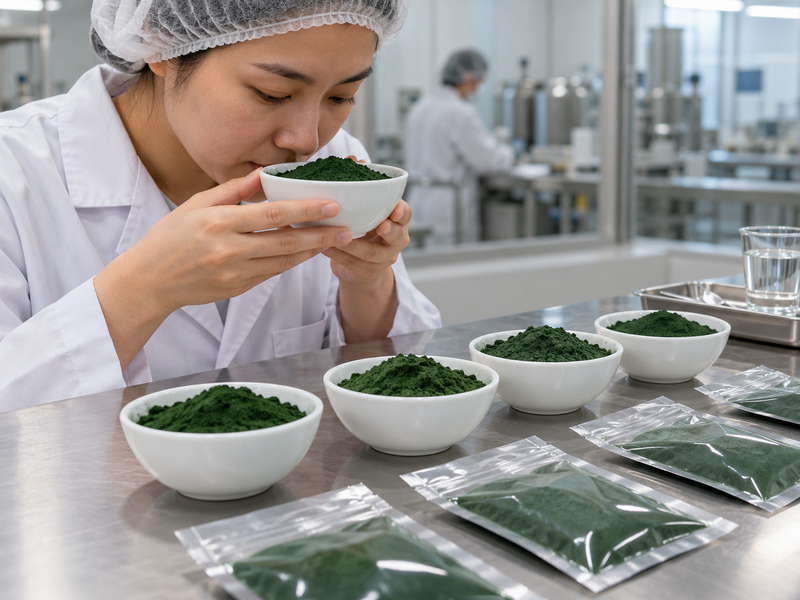
Taste the unseasoned extrudate to understand the ingredient’s contribution. Then evaluate seasoning at the planned application rate. Strong flavors can conceal algae notes immediately but may fade or interact during storage. Run blind, randomized samples and collect separate scores for aroma, aftertaste, crunch and overall acceptance. The revealing question: does a disliked note come from spirulina, overheated cereal or oxidized coating oil? Compare the no-spirulina control processed under the same conditions.
If a higher spirulina level needs much more seasoning, calculate finished sodium, cost and ingredient-list impact before approving it. A published snack enrichment experiment measured sensory acceptance; that is evidence that acceptance can be tested, not a promise for every brand. For product development, keep a coded retained set from the selected formula and repeat sensory checks after storage.
8. What sampling plan catches line drift?
Link every piece to process time
Collect feed blend and finished pieces at startup, stable mid-run and end. Add samples after water adjustments, die cleaning, feeder refill or stoppage. Record exact clock time so each set can be paired with torque, pressure and temperature trends. Averages can mislead: a satisfactory overall protein or color result may conceal a short run of poorly mixed pieces. Measure multiple pieces per interval and report spread as well as mean. Include fines and rejects when calculating yield, not only attractive samples.
If seasoning is applied after extrusion, sample both before and after the tumbler. Weigh coating pickup and check whether green appearance varies across piece surfaces. For supplier traceability, align run intervals with the spirulina lot traceability principles and retain the ingredient lot record.
| Event | Sample | Investigation value |
|---|---|---|
| Stable feed | Premix and pieces | Baseline distribution |
| Refill | Feed and first pieces | Detects segregation |
| Water adjustment | Immediate and later pieces | Shows lagged response |
| End run | Final pieces and fines | Captures residence effects |
Create a run sheet that pairs every physical sample with the nearest stable process readings. A piece taken immediately after a water change may represent material that entered the barrel earlier; ask the engineer to estimate this lag from line volume and feed rate. Do not discard transition material without weighing it, because yield and cost depend on what the line rejects. If a condition appears promising, hold it long enough for the system to settle and collect repeat samples before changing another variable.
This sequence gives a more reliable operating window than a rapid sequence of attractive but unrepeatable puffs.
9. How should shelf life and packaging be tested?
Follow crunch, color and odor in the sold pack
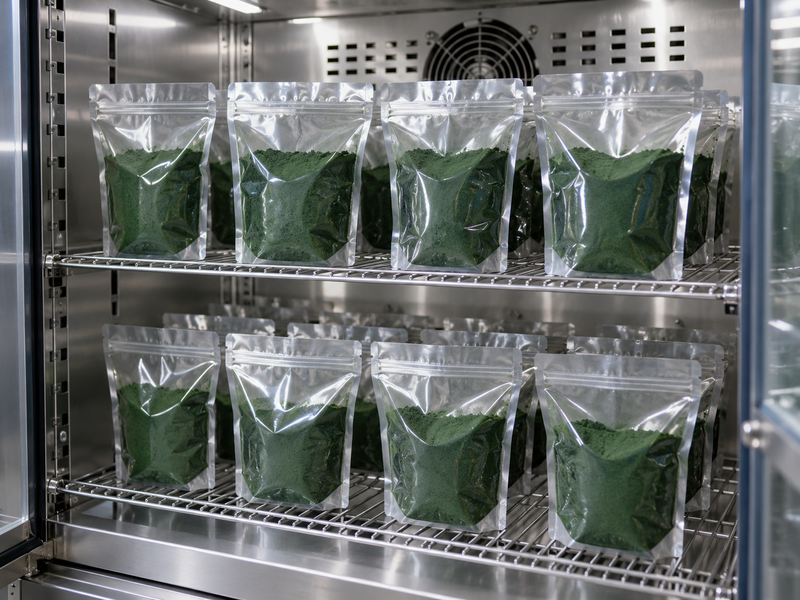
Use the proposed pack, fill weight and seal settings. Measure moisture or water activity, texture, breakage, color and sensory properties at defined intervals. Include a realistic transport or humidity challenge if distribution warrants it. Spirulina powder may be stable in its unopened bag while the snack absorbs water or its coating oxidizes; finished-product evidence must decide shelf life. Look at the mechanism: if crunch falls, examine package barrier and seal data before changing spirulina dose.
If green color shifts, compare light-exposed and protected packs, then check coating and ingredient lot. The site’s oxygen-barrier packaging article can help frame pack questions, but the correct barrier is product-specific. Establish a retained-pack program for the first commercial batches so later complaints can be compared with production controls.
10. What makes a pilot transferable?
Write a line recipe with evidence limits
The transfer packet should contain approved powder specification, formula revision, preblend instructions, feasible process window, sampling map, finished-product targets and shelf-life plan. Include yield and reject rates because a formula that makes attractive sample pieces may be uneconomic at scale. Make a deliberate release decision: list deviations from the brief and assign each one an owner and resolution date. If the production extruder differs from the pilot, schedule a confirmation run and define which properties must match.
Avoid declaring a universal spirulina addition cap based on one machine. Verify market-specific labeling and any claims against finished composition. Keep the control and selected formula’s retained samples together. Procurement can then source against a measured ingredient and manufacturing requirement rather than a generic request for “green spirulina powder.”
| Transfer element | Required evidence | Decision owner |
|---|---|---|
| Ingredient | Qualified lot and spec | Quality/procurement |
| Formula | Dose and dry mass balance | Product development |
| Process | Trend logs and line settings | Manufacturing |
| Product | Texture, sensory, shelf life | Quality/brand |
FAQ
Q1: Can published inclusion percentages be used as a plant limit? No. They describe particular cereals, machines and sensory panels. Establish your own operating range.
Q2: Is blue spirulina extract interchangeable with green powder? No. Whole biomass brings solids and multiple pigments; blue extract has different composition and stability.
Q3: Should color be measured before seasoning? Yes. Measure before and after seasoning so the source of any color shift remains visible.
Q4: Which metric catches a hard snack? Pair a defined instrumental fracture or hardness test with blind sensory crispness ratings.
Q5: What should a supplier send for the pilot? A traceable commercial lot, specification, COA, particle-size method and change-notification terms.
Next action
Run a control and dose ladder on the intended cereal base. Tie time-coded samples to line trends, then select a formula using expansion, texture, sensory and packaged shelf-life evidence together.