
Spirulina powder moisture and water activity describe different properties of the same dried whole-biomass lot. Moisture tells a buyer how much water the powder contains by a specified method; water activity estimates how available that water is for physical and microbial processes. Confusing the two can distort protein comparisons, packaging choices, and shelf-life decisions. This guide shows how to request both results and use them in a bulk receiving program. The FDA water-activity reference explains the underlying distinction.
Contents
- What is moisture content in spirulina powder?
- What does water activity measure instead?
- Why can two powders with equal moisture behave differently?
- How should moisture be measured and reported?
- How should water activity be measured?
- What can these measures say about microbial risk?
- How do packaging and transport alter results?
- How should shelf-life trials use both measures?
- What happens if receiving data differ from the COA?
- What limits and records belong in the contract?
1. What is moisture content in spirulina powder?
Read the test method as part of the value
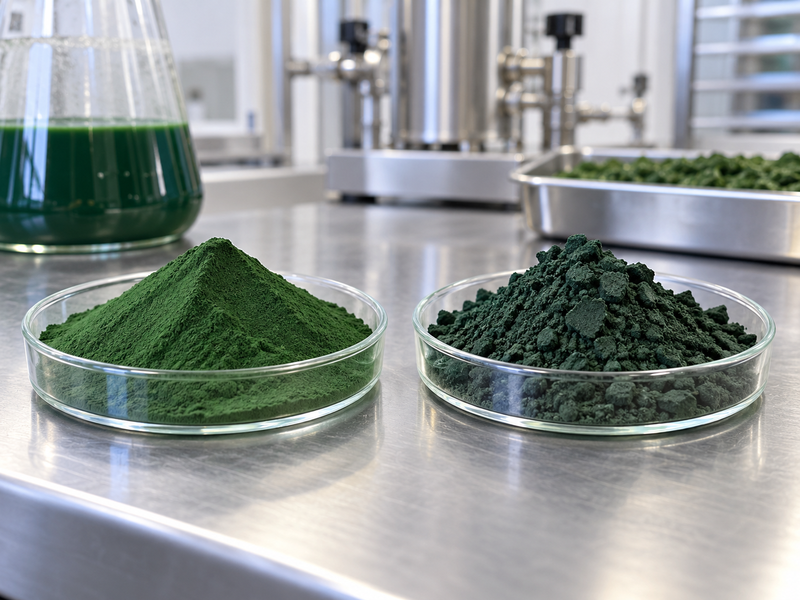
A percentage alone is incomplete. Moisture content expresses water or mass lost under a specified analytical procedure relative to powder mass. A loss-on-drying method can also drive off other volatile substances, so ask exactly how the laboratory performed and interpreted the test. Record the result as a percentage, sample date, basis, and method conditions. Whole spirulina biomass is not interchangeable with a purified blue extract; carriers and process history can alter drying behavior. The buyer should set a grade-specific acceptance range rather than borrow a value from another ingredient.
Moisture changes commercial arithmetic. If protein is reported on an as-sold basis, a wetter powder can show a lower percentage even with similar dry solids. It can also clump or flow differently. Ask for a representative commercial-lot sample instead of a dried laboratory reference prepared only for analysis. An incoming container exposed to humid air during sampling may shift before testing, so use a controlled procedure and prompt resealing. This basic measurement supports inventory handling but does not alone establish microbial safety or shelf life.
| Moisture field | Ask for | Use |
|---|---|---|
| Result | Percent and basis | Compare lots |
| Method | Temperature, time or validated protocol | Compare laboratories |
| Sample | Finished-lot code and date | Link to goods |
2. What does water activity measure instead?
Think about water availability rather than total mass
Water activity is a ratio. FDA defines it through the vapor pressure of a food relative to pure water at the same temperature in equilibrium. A value such as 0.60 describes water availability, not 60% water by weight. The FDA’s technical guide also notes temperature dependence. Ask the lab for instrument, temperature, calibration, equilibration, and sample handling, especially when comparing results close to a buyer limit.
Water activity can inform expected microbial growth conditions and physical stability, while moisture content helps quantify water mass and dry-basis composition. Neither number explains every risk by itself. A low-aw powder can still contain surviving microorganisms introduced earlier, and opening a bag in a humid packing room may change surface conditions. Buyers should use aw alongside hygiene controls, microbial tests, barrier packaging, and real-time stability data. The most useful question is not “Which single number is best?” but “How do both measurements behave in the exact pack and distribution route we will use?”
3. Why can two powders with equal moisture behave differently?
Consider solids, structure and measurement conditions
Equal water mass does not mean equal availability. Solutes and physical binding influence how water interacts with dried material. Two whole-biomass powders can have the same measured moisture but different aw after different drying, milling, or storage histories. Particle size and packaging exposure can also affect equilibration. This does not mean one number is wrong. It means the tests answer separate questions, and a buyer should trend both under consistent conditions.
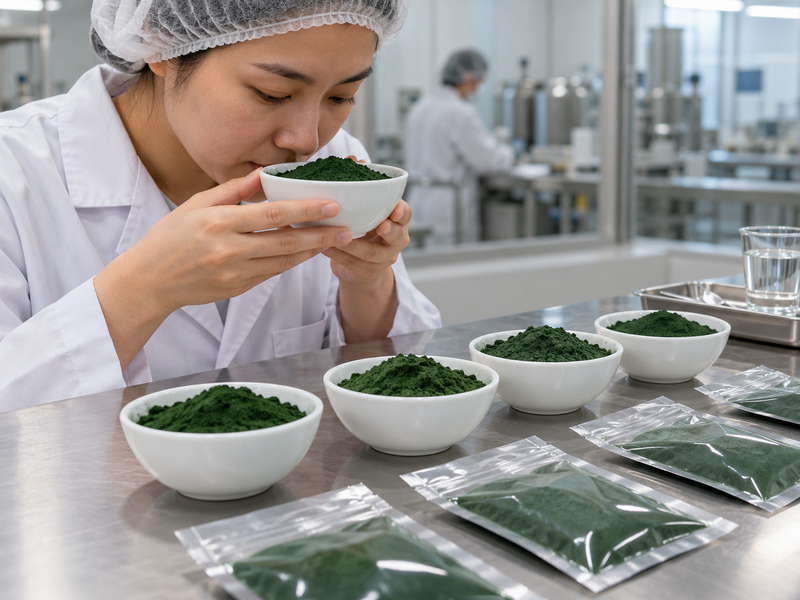
Imagine two supplier samples each reported at the same moisture percentage. One pours freely after a humid shipping route; the other cakes inside its liner. Check aw, packaging barrier, seal quality, particle distribution, and transport history before concluding that one laboratory erred. A short application trial in the intended blend can reveal whether caking affects dosing or mixing. Avoid claiming a fixed aw from moisture percentage through a generic conversion; the relationship depends on the product’s sorption behavior. A supplier should provide stability evidence for the proposed grade and pack, not a universal chart from an unrelated powder.
| Observation | Potential question | Evidence |
|---|---|---|
| Same moisture, different aw | Binding or process difference? | Matched-lot test |
| Same aw, different caking | Particle or pack issue? | Flow and pack trial |
| Rising moisture in storage | Barrier failure? | Seal and humidity log |
4. How should moisture be measured and reported?
Standardize preparation and timing
Method consistency beats casual precision. Define the approved moisture procedure or accepted equivalent in the specification. Ask whether the laboratory uses gravimetric loss on drying, Karl Fischer analysis where suitable, or another validated approach. Different conditions can give different results in a complex biomass. Report temperature, time or end-point rule, sample mass, replicate policy, and rounding. Record whether the sample was tested immediately after packing or weeks later from an opened container.
For supplier comparisons, have candidate commercial samples tested by one qualified lab under the same method and handling conditions. Keep a sealed retain and note ambient humidity during draw. If protein is reported on a dry basis, use moisture from the same lot and ideally the same sampling event for conversion. Do not treat a historical “typical moisture” figure as a current shipment result. Ask the supplier to show variation across recent lots and its internal drying stop criteria. A result just below the contractual ceiling still warrants a look at the wider trend if recent lots have been moving upward.
5. How should water activity be measured?
Control temperature and equilibration
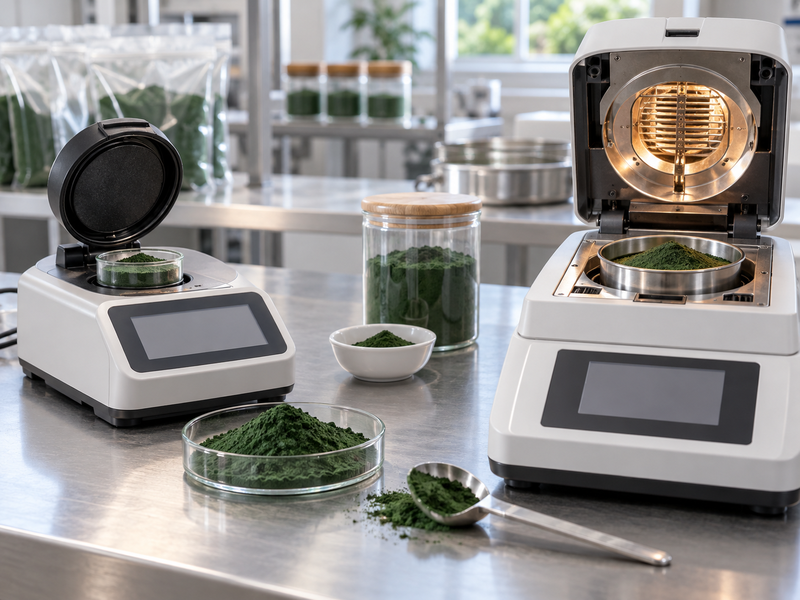
An aw meter needs a disciplined sample. Specify the instrument method, calibration checks, measurement temperature, equilibration approach, cup fill, and handling time. A powder exposed to room air can absorb or lose moisture before the reading settles. The FDA water-activity guide defines the measurement at equilibrium and notes that aw changes with temperature. Ask the lab to state the test temperature so a warehouse reading and supplier report can be compared fairly.
Use a sealed commercial pack for receiving verification when possible. Let the laboratory follow its validated equilibration procedure rather than opening and stirring repeatedly for convenience. If a value is near the specification limit, repeat the reading from another representative sample under the written method and examine packaging condition. Do not cherry-pick the lowest reading. Consider testing after a pilot transport cycle to see whether the selected liner and sealing process protect the powder under expected humidity. A reliable aw result belongs to a documented sample and method, not an unlabeled handheld-meter photograph.
| aw detail | Ask the laboratory | Why |
|---|---|---|
| Temperature | Measurement condition | aw varies with temperature |
| Calibration | Check record | Instrument confidence |
| Equilibration | End-point rule | Stable reading |
6. What can these measures say about microbial risk?
Use aw as one control among several
A low value can restrict growth without erasing history. FDA explains that many foods with high aw support bacteria, yeast, and mold growth in its technical guide. Yet a dry ingredient may carry organisms that survive until rehydration. An aw result cannot replace pathogen testing, hygienic processing, or a validated kill step. The risk changes if consumers stir powder into a cold smoothie, blend it into a supplement, or cook it in a food product.
Ask the supplier where contamination can occur after drying and what controls protect the finished powder. Link aw limits with microbial criteria in the purchase specification and trend both across lots. A rise in aw together with yeast and mold counts may point to a process or packaging problem, but investigation is needed before naming the cause. If a bag arrives damp or caked, quarantine it even if an old COA shows a low aw at dispatch. The condition of goods at receipt is part of the decision. Finished-product testing and shelf-life studies must reflect the actual use.
7. How do packaging and transport alter results?
Test the pack, not just the powder
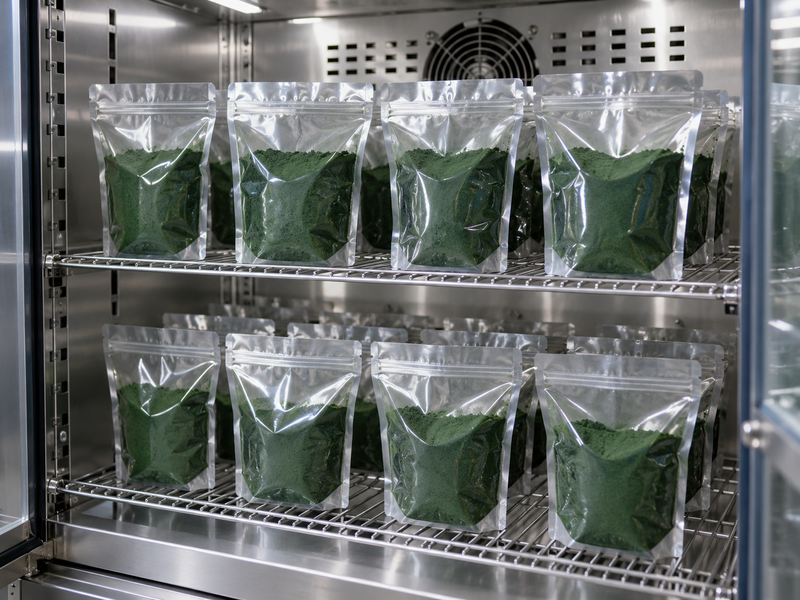
The liner is part of the shelf-life system. Ask for the proposed bag material, moisture-barrier properties, seal method, outer protection, pallet pattern, and storage recommendations. Bulk powder can encounter humidity during packing, consolidation, sea freight, warehouse holding, and repeated opening. A water-tight claim should be supported by material specifications and practical seal checks. Review whether a liner is single use and how the buyer will close a partially used bag during production.
For a long shipping route, compare sealed bags from dispatch and receipt. Record pack condition, moisture, aw, and sensory observations under the same methods. A sudden difference may signal a compromised seal, condensation, or handling exposure. Do not assume the product failed at the factory without reviewing transport data. A desiccant, if used, is not a substitute for a sound barrier and may require separate packaging and food-contact review. Write responsibility for storage conditions into the sales contract and instruct the receiving team how to protect opened powder before it reaches a mixer.
| Route point | Check | Record |
|---|---|---|
| Packing | Liner and seal | Batch pack log |
| Transport | Exposure and damage | Shipment inspection |
| Receipt | Moisture, aw and caking | Incoming report |
8. How should shelf-life trials use both measures?
Observe the proposed pack over real time
A shelf-life date needs evidence. Store representative commercial powder in its proposed package under defined real-time conditions, with accelerated conditions used as supporting information where appropriate. Measure moisture and aw at planned intervals and also inspect color, odor, caking, flow, and microbiology. If the grade is intended for a blend, test its application performance after storage. The accepted end point should reflect the buyer’s product needs and applicable safety criteria, not an arbitrary loss of one decimal place.
Use more than one lot when feasible, especially if production or seasonal water conditions vary. Record the packaging material and seal version because a later liner change can invalidate a study’s assumptions. An accelerated trial may reveal vulnerabilities but should not be treated as a direct substitute for real-time evidence without a justified model. Ask the supplier for its study design and raw trend summary rather than only a stated “24 months.” The buyer may need its own stability work after repacking or mixing, since the new product and package create different conditions.
9. What happens if receiving data differ from the COA?
Investigate sample and route before assigning blame
Start with two clocks and two samples. The supplier’s COA may reflect powder just after packing, while the buyer tests a bag after weeks in transit. Match lot codes, sample conditions, methods, temperatures, and basis. Inspect seals and pallet exposure. If a bag was opened in a humid room before the buyer’s aw test, that handling may explain a difference. Conversely, widespread caking in sealed bags can signal a real pack or process problem. Quarantine suspect inventory while quality staff review the evidence.
Retest from unopened representative packs under the agreed method, keeping the original report. Compare multiple containers rather than selecting the one that looks best. Ask whether moisture and aw moved together and whether microbial or sensory checks show a corresponding change. Follow a written dispute rule for a near-limit result. A replacement COA with a new date does not erase the initial receiving observation. The aim is to decide whether the commercial lot remains suitable and what action will prevent recurrence, not merely to produce matching PDFs.
10. What limits and records belong in the contract?
Pair numbers with method and pack conditions
Set measurable acceptance terms. State whole-biomass grade, moisture method and limit, aw method and limit, sample point, packaging specification, storage conditions, shelf-life evidence, and receiving-dispute plan. Link each COA to the finished lot and retain the original laboratory reports when needed. Make clear who approves a liner substitution or changed drying process. A buyer with a very narrow acceptance range should check that the methods can reproduce it before imposing it contractually.
The Spirulina CN site describes products but does not substitute for current SKU and lot records. Ask the supplier for a recent commercial-lot trend and the pack proposed for your route. Then run a small receiving and application trial. The decision should reflect both measures and the actual bag arriving at your facility. A sound specification gives suppliers a clear target and gives the buyer a way to hold a changed or damaged lot without guessing why it feels different.

| Contract field | State | Review trigger |
|---|---|---|
| Moisture | Method, basis and maximum | New dryer or grade |
| Water activity | Temperature, method and maximum | Pack change |
| Packaging | Liner, seal and storage | New transport route |
FAQ
Q1: Are moisture content and aw the same? No. One describes water mass by a method; the other describes water availability at equilibrium.
Q2: Can low aw prove a powder is pathogen-free? No. It can restrict growth but cannot prove no organisms survived or entered after drying.
Q3: Why record aw test temperature? Water activity changes with temperature, so readings need comparable conditions.
Q4: Does a supplier shelf-life date cover my repacked product? Not automatically. New packaging and processing require their own support.
Q5: What if a sealed bag arrives caked? Hold it, document condition, test representative packs, and review transport and packaging records.
Spirulina powder moisture and water activity work best as a pair. Define how each is tested, trend results across lots, and challenge the proposed bulk pack under your route. Ask for a current lot COA and packaging details with the next RFQ. The practical gain is powder that flows and performs when your production line opens the bag.