
A COA cannot help a buyer locate affected stock if its lot code stops at the packing line. Spirulina lot traceability connects source biomass with drying, blending, finished packs and customer shipments. This guide shows the records and mock-trace checks that make that connection useful. The FDA’s traceability resources explain key data elements for listed foods; whether a specific spirulina product falls under those additional rules requires a separate scope assessment.
Contents
- What should a spirulina lot code identify?
- How does culture or purchased biomass enter the genealogy?
- What happens when one harvest becomes several dryer runs?
- How should blended powder keep its parent lots?
- Which packing records link powder to saleable units?
- How do COAs and retain samples fit the trace?
- What must a buyer capture at receipt?
- How do shipments complete the forward trace?
- What should a mock trace reveal?
- How can both parties improve weak links?
1. What should a spirulina lot code identify?
Choose a stable key, then link its history
A lot code should identify a defined quantity made under a documented process and allow a user to retrieve its parent inputs. It need not encode every date and machine in its characters. A short, unique code with a reliable database or paper index is more useful than a long code nobody applies consistently. Agree whether the code identifies wet biomass, dried flakes, milled powder, a blend, or a packed unit. Those stages may need separate codes because material can split and recombine. The buyer sees the saleable pack code, so that code must lead backward through each transformation.
Ask a simple question: if one carton label is photographed, can the supplier identify the exact powder lot and every production record behind it? Ask for a sample record rather than a verbal assurance. A code reused annually or across sites needs extra context to remain unique. Date codes alone are weak when multiple drying runs or reworks occur on the same day. The FDA’s food traceability framework illustrates how a traceability lot code can anchor other data in covered foods; adopt the linkage principle even when the additional rule does not apply to your product.
2. How does culture or purchased biomass enter the genealogy?
Start where material identity becomes controlled
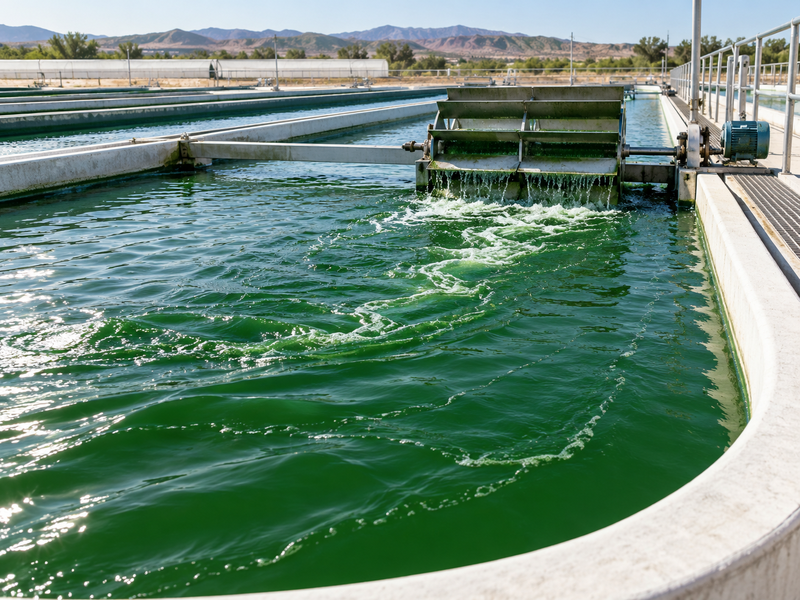
For in-house cultivation, capture pond or reactor identifier, harvest window, transfer vessel and wet-biomass quantity. Record process-water and culture checks required by the plant’s food-safety plan, but keep them linked to the material rather than filed by day alone. If biomass is purchased, record supplier name, supplier lot, receiving date, receipt quantity and acceptance status. A certificate from the vendor does not connect the delivered sacks unless labels and receiving records match it. Put rejected or held material outside available inventory so a later lot cannot consume it by mistake.
The handoff matters. A wet harvest may move through several tanks before dewatering. Each transfer can split a lot or combine material from different harvests. The batch record should state what entered and what left, with quantities and the operator who approved the transfer. A buyer does not always need every cultivation detail in routine purchase documents, but the supplier must be able to retrieve it during a deviation. If a contract promises a specific cultivation site or species, the genealogy must support that claim. Ask the supplier to demonstrate one recent incoming-to-dryer path and to show how it would handle an undocumented source change.
| Source event | Minimum link | Failure if absent |
|---|---|---|
| Harvest | Vessel and harvest code | Source window unclear |
| Purchased biomass | Supplier lot and receipt | Vendor scope unclear |
| Transfer | From/to and quantity | Split not visible |
| Acceptance | Release status | Held stock could enter production |
3. What happens when one harvest becomes several dryer runs?
Record every split at the dryer
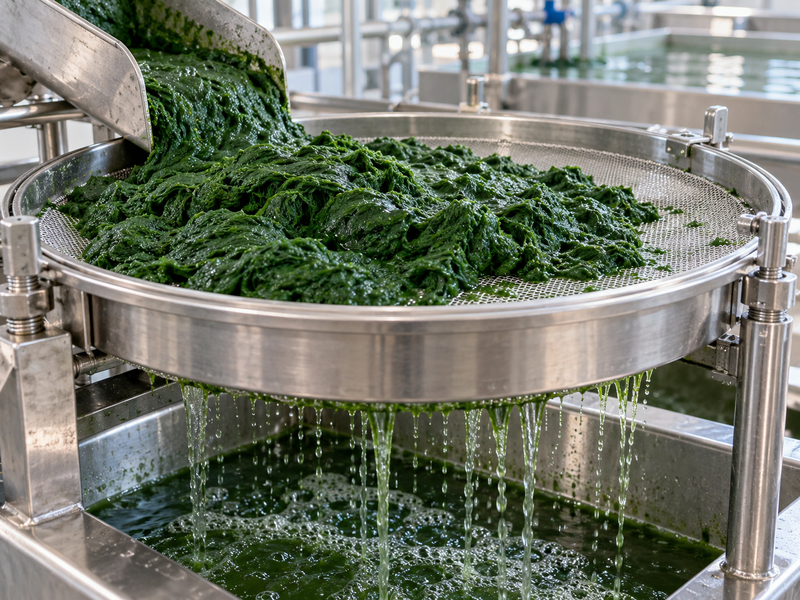
One wet-biomass harvest can feed several drying runs, each with different start times, inlet conditions, equipment states and operators. Give every run its own identifier and record the amount of source material charged. Record dried output weight and any material left in transfer equipment. The dryer log should show cleaning status, parameter readings, alarms and any interruption that could affect a subset of output. If an issue appears in only one run, this detail can reduce the affected scope. Without it, a buyer may need to hold the entire harvest.
Imagine the reverse trace. A bag from dryer run D3 shows abnormal color. Can the supplier identify its source harvest and other finished lots that used D3? The answer needs a two-way map, not merely a sequential list of production dates. A dried intermediate may be held before milling; record that hold location and container codes as well. During rework, do not fold off-spec powder into later production without a controlled authorization and parent-lot record. FDA’s CGMP overview describes broader production and process controls for U.S.-regulated food facilities. The exact record design belongs to the manufacturer’s process and risk assessment.
4. How should blended powder keep its parent lots?
Treat the blend as a new child lot
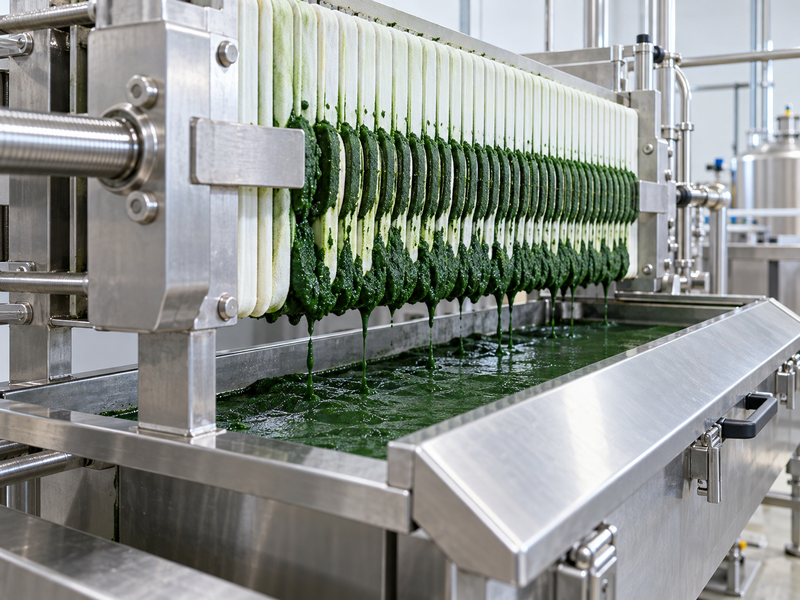
Blending can combine several dried or milled lots into one commercial powder lot. Record every parent code and charged weight, the blend-vessel ID, start and end times, yield and any rejected material. Assign the output a new code. Do not label it only with the largest parent’s number. That shortcut hides minor components and can make a complaint investigation dangerously narrow. If the line runs consecutive blends, record line clearance and the remaining heel, especially when residual material can carry into the next batch.
The genealogy should support both directions. From blend B, list parent lots A, C and D. From parent A, list every blend and packed lot that consumed it. A paper test works: choose a parent drying lot at random and ask staff to list all downstream packs without relying on the person who ran production. If weights do not reconcile, find whether sampling, dust collection, rework or a transcription error explains the difference. Use a stated tolerance based on the actual process. A missing kilogram is not proof of a safety problem, but an unexplained discrepancy weakens the trace. Keep blend formulation revisions with the record so a lot is not evaluated against the wrong specification.
| Blend record | Buyer question | Useful proof |
|---|---|---|
| Parent codes | Which runs entered? | Charged-lot list |
| Parent weights | How much entered? | Weigh tickets |
| Child code | Which output was created? | Batch record |
| Reconciliation | Where did material go? | Yield and waste log |
5. Which packing records link powder to saleable units?
Follow the code onto every physical package
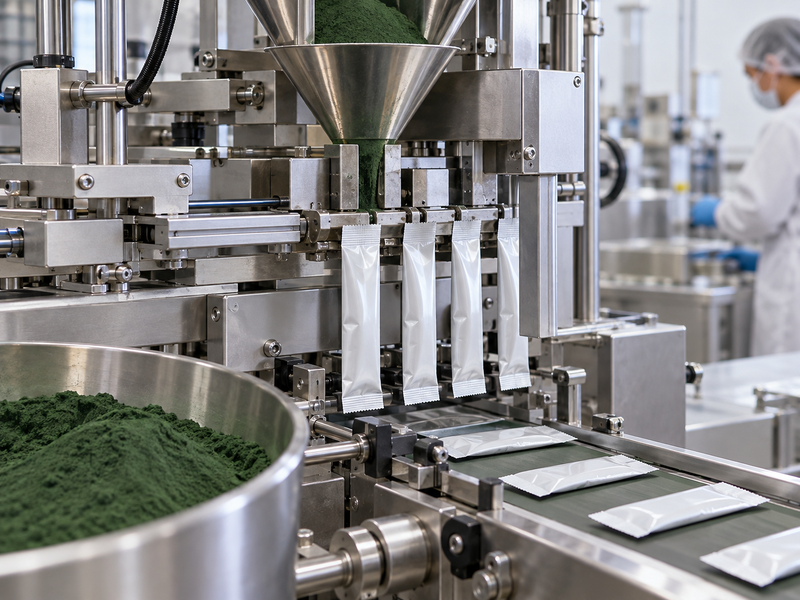
The packer should record the powder lot, packaging material lot, line, pack format, production window and quantity packed. Sample printed codes at start-up, after roll changes and at the end. Reconcile labels and finished units. If the packer changes an inner bag or places several inner bags in a carton, each saleable unit must still link to the powder lot. A shipping pallet code may group cartons, but the carton code should not disappear when the pallet is broken at a warehouse. Agree what appears on the buyer’s receiving label and invoice.
Look for the quiet break: a hand-written re-label after a smudged print. It may be legitimate, but it needs a controlled record that maps old and new labels and identifies who approved the change. Repacking returned or damaged stock creates another child lot or at least an explicit cross-reference. If the same powder lot enters several pack sizes, all formats belong on the forward map. A packer’s release check should compare physical code, finished-good code and COA code before stock becomes available for dispatch. This is also where buyer private-label artwork and expiry coding must be checked against the approved order.
6. How do COAs and retain samples fit the trace?
Link results to the material actually shipped
A COA should identify the finished lot and its test methods, results, units, specifications and approval date. If the laboratory sampled a pre-blend intermediate, state that clearly; do not present the value as a direct test of each finished pack. Record who collected the sample, where it came from and how it was handled. A retain sample should carry the same lot linkage and be stored under defined conditions so later investigation can compare it with the buyer’s sample. A laboratory report lacking a lot code is difficult to use during a complaint.
Separate identity from quality. A complete trace does not prove that the powder meets the specification, while a passing COA does not prove the material’s lineage. Both records need independent checks. If a lot is retested, keep the original result, reason for retest and disposition decision. Do not overwrite a failed result with a clean report. For imported ingredient programs, the FDA FSVP overview explains importer verification duties where applicable. Lot-specific records give the importer a workable evidence set but do not replace its own hazard and supplier assessment.
| Evidence | Code link | Review question |
|---|---|---|
| COA | Finished or intermediate lot | What was sampled? |
| Lab raw data | Sample ID | Can result be reproduced? |
| Retain | Pack and storage code | Is custody documented? |
| Release record | Finished lot | Who approved shipment? |
7. What must a buyer capture at receipt?
Preserve the supplier code in your system
At receiving, compare purchase order, packing list, COA, carton labels and actual quantity. Capture the supplier’s original lot code exactly, even if your ERP assigns an internal inventory number. Store a searchable mapping between both codes. Inspect damaged packs and seal integrity before moving stock to released inventory. If several supplier lots arrive together, keep their pallets and samples separate. An internal code attached to a mixed pallet without lot-level detail can erase the supplier’s genealogy in one receiving step.
Record receipt date, storage location, quantity, inspection result and disposition. When material is issued into production, link its supplier lot to your own finished-product batch. Use a receiving drill: choose a carton and ask which customer goods could contain it. If the answer depends on a warehouse employee’s memory, the system needs repair. For a rejected shipment, retain a record of returned or destroyed quantity so the supplier’s forward trace remains accurate. Agree how overage, short shipment and partial pallet returns are reconciled. Practical traceability extends through buyer operations; it does not end at the supplier’s dock.
8. How do shipments complete the forward trace?
Match dispatch records to the packed lot
For each dispatch, record customer, order, ship date, destination, transport unit, finished lot and quantity. The packing list should identify lots when more than one lot shares a shipment. Track samples and free-of-charge replacements as well; these may reach customers outside the ordinary invoice flow. If a distributor repacks or splits stock, require it to retain upstream codes in its own records. The supplier’s map should allow a quality manager to identify all recipients of a suspect packed lot without searching individual email threads.
Try the reverse path: start with a customer’s COA and ask which cartons, production run and biomass source it represents. A good map can answer both directions with the same records. The FDA Food Traceability Rule page details shipping and receiving data for foods within its scope. Do not claim those specific obligations automatically govern spirulina powder. Still, quantity, location and date are sensible fields for a private traceability program. Agree with logistics how quickly records can be retrieved during a real incident.
| Shipment field | Why retain it | Example use |
|---|---|---|
| Customer/order | Recipient identification | Notice list |
| Lot and amount | Exposure scope | Recall quantity |
| Date and destination | Movement path | Warehouse search |
| Carrier reference | Shipment proof | Delivery reconciliation |
9. What should a mock trace reveal?
Challenge the system with an unknown lot
Choose a finished pack code that plant staff did not prepare for the exercise. Ask the supplier to trace it backward to cultivation or received biomass, then forward to all shipments and stock on hand. Time the exercise and record who had to retrieve which data. Do not judge success only by speed. Check whether quantities reconcile and whether any parent lot is missing. Include one blend, one repack or a partially shipped lot if the system normally handles those events. A simple lot with no transformations may give a false sense of security.
Put an edge case on the table. What if one dryer run was split across two blending days? What if a carton was returned and reintroduced? Can staff identify both customer shipments and remaining warehouse inventory? Note every manual workaround. Decide whether the gap requires a changed form, training, software rule or a tighter release check. Run the next exercise after those actions so the team can see whether the fix works. FDA has published traceability readiness exercises for covered foods; their tabletop logic provides a useful model for broader supplier drills without implying the same statutory duties apply here.

10. How can both parties improve weak links?
Fix the handoff where information disappears
The most damaging gaps often sit between firms or systems: cultivation to dryer, manufacturer to contract packer, exporter to buyer or buyer receipt to finished product. Map each handoff with the code used by the sender, the code received and the person who confirms equivalence. Create a controlled mapping sheet when codes change. Add a release check that blocks stock when a link is missing. Retain source documents in a place a second employee can access. A spreadsheet can work for a small operation if it has version control, backups and disciplined entry.
Set a measurable improvement target: reconcile every parent-to-child quantity within a justified range and retrieve a selected lot path within an agreed time. Review exceptions after actual complaints and mock exercises. Keep the buyer involved: tell suppliers which lot details must appear on pack labels, COAs and dispatch documents so your own records connect. Spirulina lot traceability is a chain of ordinary, checked handoffs. Ask for a recent example, test a difficult lot and repair the missing links before a real hold forces a rushed reconstruction.
| Weak link | Process change | Proof it worked |
|---|---|---|
| New code at packer | Controlled cross-reference | Sample trace |
| Missing blend weight | Mandatory weigh entry | Reconciled batch |
| Mixed receiving pallet | Lot-separated receipt | Warehouse drill |
| Slow shipment lookup | Searchable dispatch log | Timed exercise |
FAQ
Q1: Is a COA enough for spirulina traceability? No. It supplies test evidence, while genealogy links the tested lot to all inputs and shipments.
Q2: Should a blend receive a new lot code? Yes, a new code with every parent lot and quantity recorded supports accurate backward and forward tracing.
Q3: Can a buyer use an internal code? Yes, if it preserves a reliable mapping to the supplier’s original lot.
Q4: Does FDA’s extra traceability rule automatically cover spirulina? No. Check the actual food and activity against the current Food Traceability List and applicable exemptions.
Q5: How often should a mock trace run? Set a risk-based schedule and repeat after changes or a failed exercise.