
Two green spirulina powder lots can look different in a finished snack even when both pass incoming checks. A spirulina powder color deviation investigation distinguishes ingredient variation from mixing, processing, packaging and measurement effects. The goal is a documented cause and proportionate corrective action. Research on spirulina-enriched extrudates illustrates that processing and formula alter measured color; its experimental color numbers are not universal commercial tolerances.
Contents
- When is a color difference a deviation?
- How should suspect lots be contained?
- Which reference samples should be compared?
- How can the measurement method mislead?
- What incoming-material differences matter?
- How can mixing and dosing change color?
- How do heat, pH and light enter the investigation?
- What does packaging and storage evidence show?
- How should a cause be confirmed?
- What closes the deviation?
1. When is a color difference a deviation?
Define the observable failure
Start with the exact product and acceptance requirement. A buyer may report that powder is darker, that a beverage is duller after storage or that one side of an extruded piece looks brown. Those are different events with different likely causes. Record product code, lot, date, complaint photos, viewing conditions and where the difference appears. Put a boundary around the issue: compare the observation with a documented approved sample and specification, not memory of last month’s green.
Distinguish a numerical out-of-range result from a customer preference inside the agreed range. Both deserve a response, but they need different commercial decisions. If no acceptance method exists, do not invent a retroactive universal cutoff. Establish an interim hold and a jointly agreed comparison method while protecting traceability. Use the site’s powder color and odor specification as a practical starting point for incoming checks.
2. How should suspect lots be contained?
Hold only after mapping exposure
Identify all ingredient lots and finished batches linked through the blending and production records. Segregate unopened bags, in-process material and finished stock according to the site’s hold procedure. Record quantities, locations and shipment status. The first useful question: did the difference appear across all products using one powder lot or only on one processing shift? A single affected product could still trace to ingredient variation, but shared exposure narrows the first review. Preserve representative samples before operators clean or dispose of material.
Notify procurement, quality, manufacturing and the supplier with the same lot identifiers and photographs. Avoid a premature claim that every lot from the supplier has failed. If released stock has shipped, use documented risk and contract procedures to decide customer communication. Keep the investigation factual and separate safety questions from visual quality until test results establish any connection.
| Inventory state | Immediate record | Decision |
|---|---|---|
| Unopened powder | Bag and lot codes | Hold and sample |
| Open powder | Time and storage condition | Check exposure |
| In-process mix | Tank/bin and batch code | Preserve representative sample |
| Finished goods | Run interval and shipment | Assess scope |
Maintain a disposition ledger during containment. Each pallet or bin should have a status, location, quantity, owner and time of status change. Reconcile those quantities with the production and shipment records each day the review stays open. If a suspect powder lot was blended with another lot, identify the ratio and all child batches rather than treating the blend as a separate unexplained source. Keep a timeline of when the first unusual color was seen and when the last acceptable sample was made.
That timeline helps prioritize ingredient, equipment and storage changes without presuming which one caused the result.
3. Which reference samples should be compared?
Build a complete comparison chain
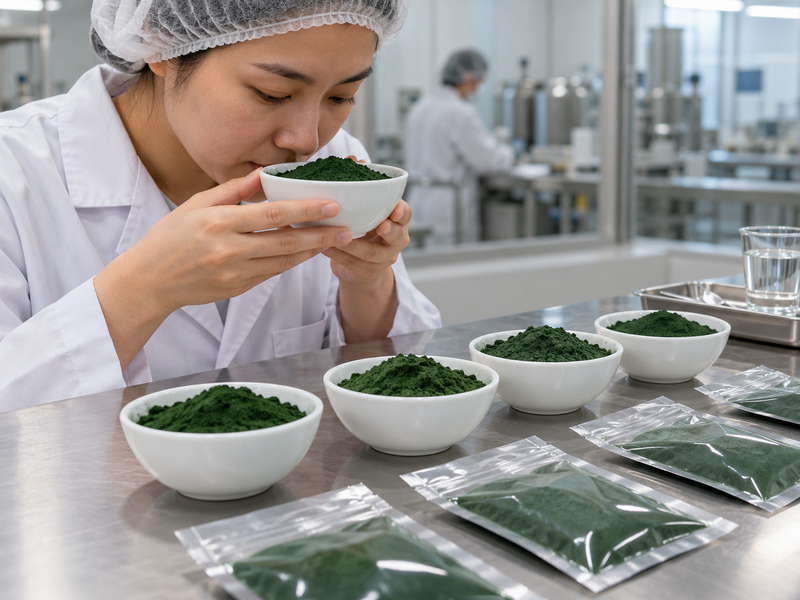
Retrieve the supplier’s retained powder, the plant’s incoming retain, the approved standard, the suspect production sample and a recent acceptable finished batch. Include the same package type and age when possible. A fresh reference compared with a six-month-old finished product can exaggerate a difference unrelated to the suspect lot. Work from source to shelf: inspect unopened powder, opened powder, premix, immediately processed food and stored food in order. Note if one step introduces a sudden shift.
Use batch genealogy from the site’s spirulina lot traceability framework to connect samples. If a supplier’s retain differs from the customer’s receipt, review transport or receiving conditions. Seal and label every investigation sample with collection time and custodian. Unlabeled jars often become persuasive visual evidence without proving which lot or time they represent.

4. How can the measurement method mislead?
Standardize presentation before comparing values
Color readings depend on instrument calibration, illuminant, aperture, sample thickness, background, particle packing and moisture. A shallow powder dish can reveal its white base; a compacted cup may look darker than a loose one. For finished food, decide whether the surface, cut face or blended homogenate answers the question. Record the CIELAB method and any total color difference calculation with its reference; a delta without the comparator is incomplete. Check repeatability first: measure the same sample several times and across more than one prepared portion.
If operator variation is large, improve preparation before blaming production. Photographs are useful evidence when lighting and camera settings stay fixed, but automatic phone processing is poor quantitative proof. Research on corn extrudates containing spirulina measured color under a specified setup, illustrating why its values cannot serve as a supplier tolerance on another product.
| Method field | Record | Common failure |
|---|---|---|
| Instrument | ID and calibration | Device drift |
| Geometry | Cup depth or cut face | Different light scattering |
| Reference | Approved sample ID | Wrong comparator |
| Replicates | Portions and readings | Hidden sample variability |
5. What incoming-material differences matter?
Review the lot beyond its COA pass status
Compare supplier COAs, drying or milling change notices, production dates, particle-size results, moisture, storage duration and powder sensory notes. A passing COA can still show movement within a broad agreed range. Check whether the supplier changed its analytical procedure or sample preparation. Follow the physical clues: larger particles may create visible specks, while a change in powder moisture or packing density can affect apparent shade and dosing. Ask whether the retained supplier sample matches the customer’s unopened receipt under one method.
If it does, a real lot shift may exist; if it does not, transport, exposure or sample identity needs review. Avoid inferring a specific pigment loss from visual inspection alone. Laboratory pigment work, if relevant, requires a validated method for whole biomass. The site’s powder COA guide helps distinguish reported specification tests from application performance.
6. How can mixing and dosing change color?
Test uniformity before chemistry
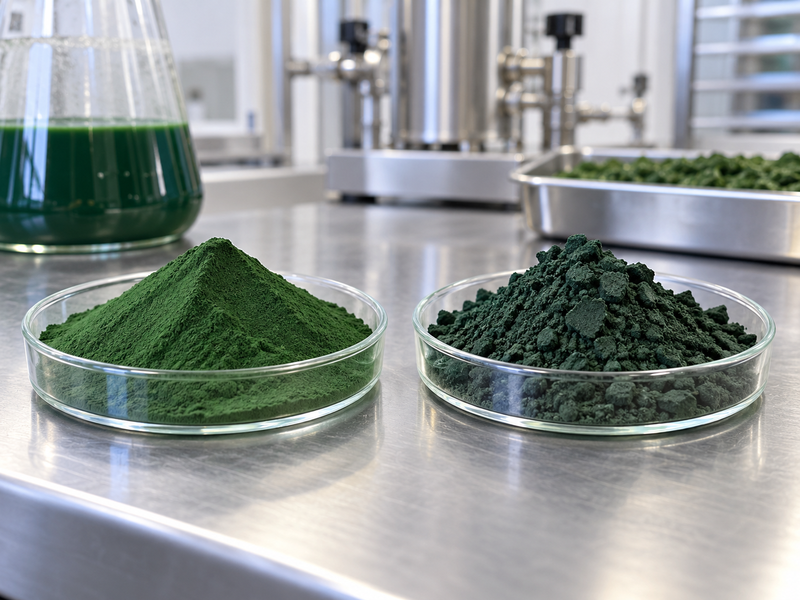
Audit scale checks, feeder calibration, ingredient reconciliation, addition sequence and mixing time. A green streak may be an agglomerate; a pale region may be underdosed. Compare samples from the start, middle and end of the run. If the powder settles in a liquid hold tank, time-linked differences may appear even with correct total input. Use the mass balance: reconcile kilograms of spirulina consumed against kilograms of finished product and rework. A correct recipe sheet does not prove the correct dose reached every piece.
Examine whether other colored ingredients or opaque bases changed; a new flour, fat or fruit preparation can shift apparent green. For an automated feeder, review actual feed trend, hopper refill and calibration record. For manual batching, confirm bag weights and second-person verification. Only after distribution is credible should the team prioritize pigment degradation hypotheses.
| Pattern | Likely first check | Evidence |
|---|---|---|
| Green streaks | Wetting and mixing | Smear or cross-section |
| Time drift | Feeder or settling | Time-coded samples |
| Uniform pale batch | Dose and base color | Material reconciliation |
| Random specks | Sieve and agglomerates | Particle inspection |
7. How do heat, pH and light enter the investigation?
Compare actual exposures with the approved process
Capture ingredient-addition temperature, residence time, product pH where meaningful, cooling delay and light exposure during processing. Green whole-biomass powder includes chlorophyll-related color as well as other pigments; do not apply purified phycocyanin stability numbers as if they describe the whole powder. Look for a changed exposure: a longer line stop at elevated temperature or a new transparent holding vessel can explain a local difference. If a finished formula became more acidic, test a controlled comparison with the previous formula.
Published phycocyanin stability research demonstrates sensitivity in extracted pigment under studied conditions, but it cannot specify the tolerance of every whole-powder food matrix. Run paired small trials that vary only one suspected factor and compare immediate plus stored color. Record both the outcome and whether the trial genuinely reproduced the complaint.
8. What does packaging and storage evidence show?
Reconstruct the sample’s history
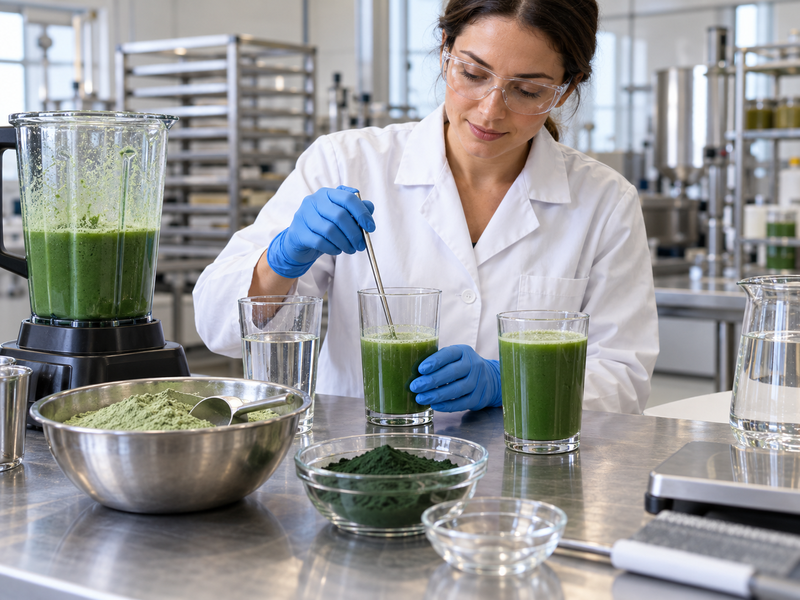
Compare pack film, seal integrity, headspace, light exposure, warehouse temperature, humidity and elapsed storage time. Note whether the complaint came from a retail display, a transport carton or a plant retain. A color difference between protected and exposed packs suggests a storage or package route, but still needs a controlled confirmation. Check the clock: compare products of similar age and history; otherwise normal aging may be mistaken for a batch defect. Inspect damaged packs separately from intact packs.
Moisture ingress may alter texture and visual appearance even without a direct pigment reaction. The site’s oxygen-barrier packaging discussion can frame a package audit, but the relevant barrier properties depend on the finished product. Request logger data if available rather than assuming a trailer stayed at its booked condition.
| Storage comparison | If difference appears | Next test |
|---|---|---|
| Light vs protected | Exposure may contribute | Controlled light study |
| Intact vs damaged | Package breach may contribute | Seal and barrier check |
| Recent vs aged | Time may contribute | Matched-age retains |
| Factory vs customer | Transit may contribute | Route history review |
Request shipment dates, transit route, warehouse location and any available environmental records for both a complaint lot and a matched acceptable lot. Compare equivalent package positions where possible; a carton near a vehicle wall may face different exposure from one in the center. Ask whether display lighting or repeated opening occurred at the customer. If only opened packs look different, reproduce opening frequency under controlled conditions instead of concluding that all sealed stock will fade.
Package and distribution records rarely prove a cause alone, but they can identify a realistic challenge test and prevent an unnecessary ingredient specification change.
9. How should a cause be confirmed?
Reproduce the deviation with one changed factor
Write competing hypotheses and the evidence each predicts. Then design a small trial using approved powder and suspect powder under identical conditions, or one powder under two exposure conditions. Include a control, time-coded sampling and the same color method used to describe the complaint. A convincing result has three parts: the factor changes, the visual or numerical symptom appears and the result repeats. If a suspected heat effect appears only when dose also changes, the cause remains unresolved.
Consider whether several contributors act together: a slightly darker ingredient and a longer dryer residence may combine into a visible shift. Document negative results as carefully as positive ones; they prevent repeated guesswork. When laboratory testing is sent outside, specify the sample identity, requested analyte and method. An unrelated pigment number cannot prove why a consumer saw a different shade. If a test fails to reproduce the complaint, revisit sample age and viewing conditions before declaring the hypothesis false.
Keep a written decision trail for every discarded cause.
10. What closes the deviation?
Link disposition, correction and verification
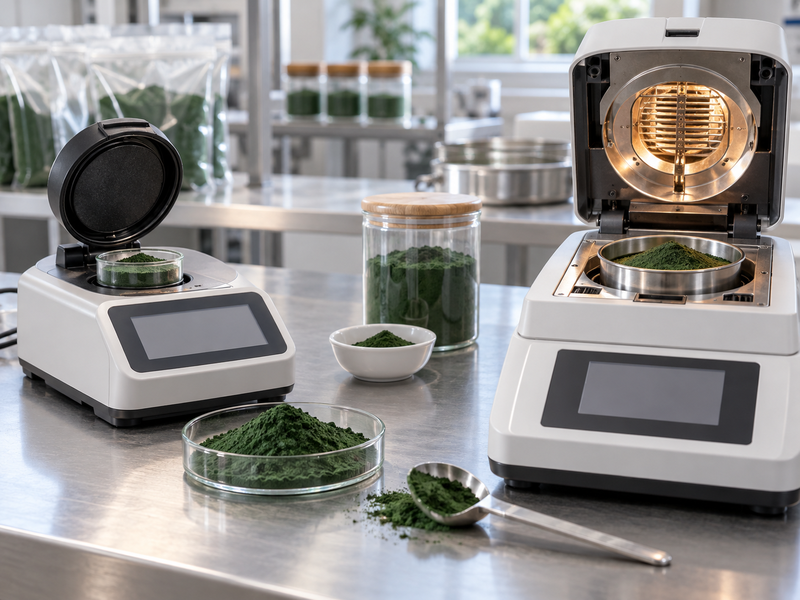
Close the record with affected-lot scope, confirmed or most likely cause, uncertainty, disposition and approved corrective actions. A supplier lot change may call for tighter incoming comparison or change notice; a feeder fault calls for calibration and process controls. Do not impose a narrower powder specification if the finished-product issue arose from a changed package. Prove the fix: check the next representative run and a stored sample against the agreed acceptance method.
Update the work instruction and train operators if the addition or sampling step changed. Record who accepts any stock under concession and why. If root cause remains uncertain, state that limit openly and use enhanced monitoring until evidence improves. The buyer and supplier should agree whether the color range is an ingredient requirement, a finished-food requirement or both, with separate tests for each.
| Closure item | Evidence | Owner |
|---|---|---|
| Scope | Traceability map | Quality |
| Cause | Controlled comparison | Technical team |
| Stock decision | Documented disposition | Quality/commercial |
| Effectiveness | Next-run and storage check | Manufacturing |
FAQ
Q1: Does a passing COA rule out a color deviation? No. A specification may allow a range, and a finished product can change during processing or storage.
Q2: Can a phone photograph settle a dispute? It can document appearance, but uncontrolled light and camera processing make it weak quantitative evidence.
Q3: Is phycocyanin degradation always the cause of fading? No. Whole powder contains multiple pigments, and dosing, matrix and packaging can change apparent color.
Q4: Should every linked batch be rejected? Apply documented hold and disposition criteria after mapping exposure and assessing actual results.
Q5: What sample is most useful? A sealed, traceable incoming retain compared with an approved standard and time-linked finished retains.
Next action
Preserve matched samples, map affected lots and standardize the comparison method. Test the most plausible cause with one controlled change, then verify the corrective action in the next run.