
Bulk spirulina powder can leave a factory in a beautiful bag and still reach your blender with weak seals or stale odor. Spirulina oxygen barrier packaging depends on material performance, filling practice and the storage route together. This guide helps B2B buyers compare those pieces without treating a film specification as a guarantee of shelf life. ASTM D3985 describes oxygen-transmission testing for plastic film; FDA food-contact guidance reminds buyers that contact materials must be suitable for their intended use.
Contents
- Why does oxygen exposure matter to powder buyers?
- Which package layers should be specified?
- How do buyers compare oxygen transmission data?
- What role does moisture protection play?
- How should filling headspace be controlled?
- Which seal checks belong on the line?
- What does a storage study need to show?
- How should bulk pack size be selected?
- What defects should receiving teams look for?
- How can buyer and supplier agree on release?
1. Why does oxygen exposure matter to powder buyers?
Connect the barrier to a measurable product outcome
Oxygen can contribute to changes in color, aroma and other quality attributes during storage, but the rate depends on the formulation and environment. Whole spirulina biomass and a phycocyanin-rich blue extract are different materials; do not use one product’s shelf-life claim for the other. Ask the supplier which attribute limits shelf life for the specific SKU and how it was measured. A barrier choice should protect that attribute through the expected transit and storage period, including time after a bulk pack is opened.
Here is the starting point: compare fresh control material with samples stored in candidate packs under realistic conditions. Record color, odor, moisture-related changes and any agreed analytical marker. Oxygen exposure begins before sealing if powder sits in an open hopper, so ask how long product waits and whether the fill area is controlled. A low transmission film cannot undo hours of uncontrolled handling. Buyers should define an acceptable delivered condition and review evidence from the complete process, not the packaging brochure alone. Keep the discussion about quality preservation; avoid health or nutrient claims without a separate substantiation file.
2. Which package layers should be specified?
Name the construction rather than the marketing label
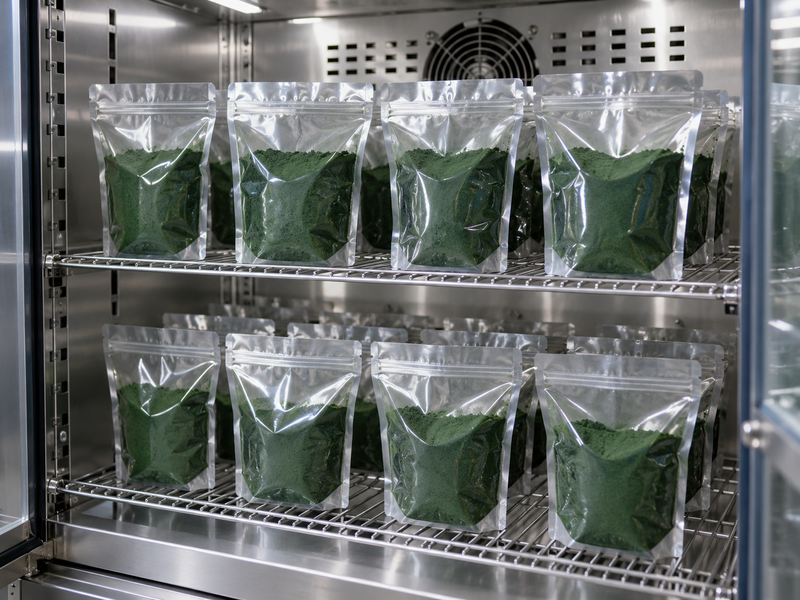
“High barrier bag” says little about its material stack. Request the laminate structure, nominal thickness, food-contact layer, closure format and supplier’s material specification. A foil-containing laminate, metallized film and clear polymer laminate can perform differently when flexed, punctured or sealed. Inner liners, fiber drums and outer cartons each have a role; identify which layer actually provides the oxygen barrier. If the powder touches an inner liner, that liner’s intended food-contact use deserves review.
Check the interfaces: a strong film with a poor zipper, loose drum lid or punctured corner is still a weak package. Ask whether the supplier uses heat seals, ties, clamps or tamper-evident closures and how each is checked. The FDA food-contact overview describes U.S. authorization concepts, but buyers should confirm rules in the destination market. A supplier should provide a declaration for the actual contact material and use, not for an unrelated laminate family. Record the approved construction in the purchase specification so a later film substitution requires review.
| Package part | Buyer specifies | Typical concern |
|---|---|---|
| Contact liner | Material and use | Compatibility |
| Barrier layer | Construction and performance | Oxygen entry |
| Seal | Type and width | Leaks |
| Outer pack | Drum or carton | Handling damage |
3. How do buyers compare oxygen transmission data?
Match units and test conditions
Oxygen transmission rate, or OTR, describes gas passage through a material under specified conditions. Ask for units, temperature, relative humidity, method, sample thickness and whether testing covered the final laminate. Two OTR numbers are not comparable when conditions differ. ASTM D3985 is a recognized film test method using a coulometric sensor, but its result concerns a material sample. It does not measure a commercial bag’s seal leaks, pinholes or damage after shipping.
Make the comparison practical: require the supplier to identify the worst permitted material grade and the finished bag construction. Then inspect a representative pack. If the supplier quotes “zero oxygen,” ask for the method’s detection limit and test report rather than accepting a literal zero. Oxygen-permeability data can help screen materials, while package-level checks and storage trials establish whether the chosen construction works in the actual program. Keep approved OTR conditions in the specification so future certificates remain comparable. A buyer should also consider how film properties change with folds, creases and storage conditions rather than extrapolating a flat-sheet result without review.
4. What role does moisture protection play?
Control water and oxygen as separate questions
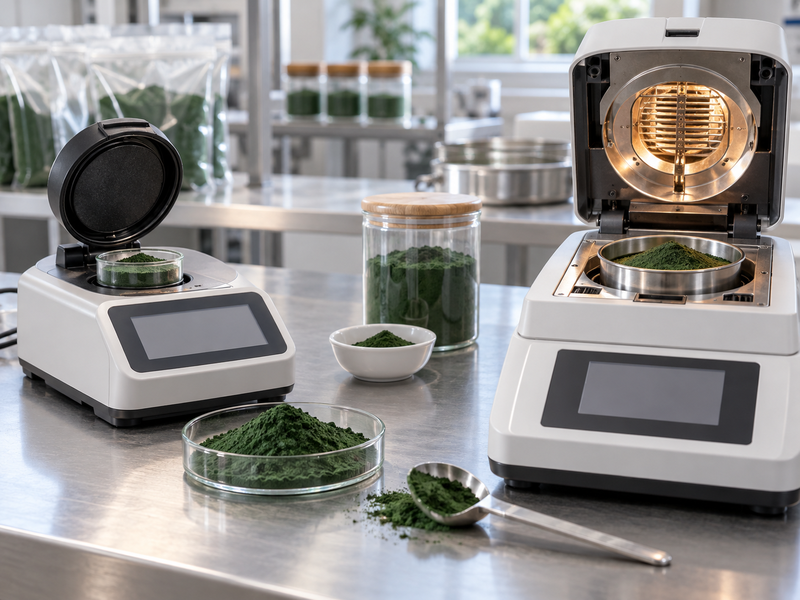
Powder quality may suffer from moisture uptake even when oxygen transmission is low. Caking, poor flow and changes in color appearance can complicate downstream blending. Ask for water-vapor transmission data under stated conditions, the powder’s initial moisture or water activity specification and the storage environment used in shelf-life work. The ISO 18787 standard page describes principles for water-activity measurement in foods. Water activity and total moisture are different measures; record which one the supplier uses.
The paired test matters: a candidate pouch should be evaluated for both moisture and oxygen protection against the actual powder. A desiccant, if used, introduces its own control questions: food-contact separation, capacity, labeling and accidental inclusion prevention. Do not add one as a cure for wet powder; drying and release limits still matter. Ask how humidity is controlled during bag opening and filling. In a humid loading area, moisture can enter before a perfect seal is made. Buyers should compare the full storage chain, including ocean freight and warehouse dwell, with the conditions of the supplier’s study.
| Quality risk | Package question | Process question |
|---|---|---|
| Oxygen exposure | OTR and integrity | Open dwell time |
| Moisture uptake | Vapor barrier | Fill-room humidity |
| Caking | Pack tightness | Powder release condition |
| Puncture | Laminate strength | Handling and pallets |
5. How should filling headspace be controlled?
Avoid assuming that a gas flush solves every problem
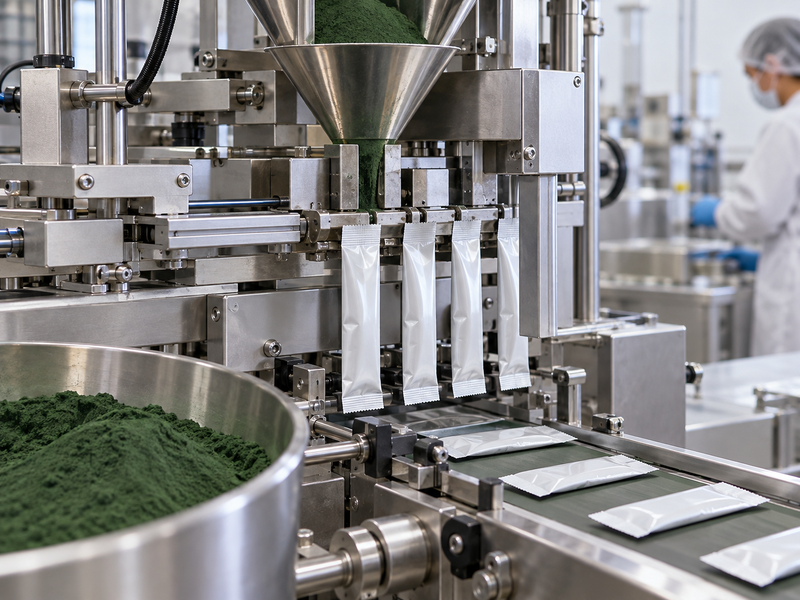
Even an excellent barrier may trap a large volume of air above powder. Ask how the supplier controls fill mass, bag shape, residual headspace and time from fill to seal. Nitrogen flushing can reduce oxygen in some packages, but its value depends on equipment setup and verified residual oxygen. If a supplier makes such a claim, request its measurement point, frequency and acceptance rule. A flush applied at the nozzle does not prove the finished sealed bag retains that atmosphere.
Look at the process record: which lot, packaging material roll, fill line and sealing settings produced each pack? A change in fill mass can alter headspace and seal geometry. Powder in the seal area can create channels even when gas readings look good. The buyer should define whether nitrogen flushing is required or merely one acceptable option supported by stability evidence. Ask the supplier to handle oxygen exposure during temporary holds and rework as well. Package design and filling practice should be qualified together, because a theoretical barrier only protects material after a sound seal encloses it.
6. Which seal checks belong on the line?
Check both strength and continuity
Seals need enough strength for handling and enough continuity to prevent leaks. ASTM F88/F88M covers measurement of seal strength in flexible barrier materials; a strength result alone does not prove that every millimeter of a production seam is leak-free. Ask for the plant’s seal temperature, dwell and pressure controls, visual inspection, start-up verification and ongoing check frequency. Operators should keep powder out of the seal area and respond to wrinkles or burned film.
Use a real bag: inspect one from start-up, one after a pause and one near run end. Compare seam width and integrity. If the supplier uses a package leak method, ask which defect size and pack configuration it can detect. Set a documented response when a check fails: stop the line, identify packs since the last good result, reseal or reject as justified, and record the disposition. Maintenance changes to jaws or film can alter seal performance, so change control should trigger renewed checks. The pack specification should name the approved closure method rather than relying on a generic “airtight” label.
| Check | Purpose | Failure response |
|---|---|---|
| Visual seam review | Finds folds and contamination | Segregate affected packs |
| Seal-strength test | Quantifies bond force | Adjust process and resample |
| Leak check | Finds package pathways | Hold since last good check |
| Lot-code check | Confirms identity | Relabel under control |
7. What does a storage study need to show?
Test the product in its final pack
Ask for a study using commercial powder in the proposed bag, with a documented fill level and seal method. Compare protected and less protected conditions if the supplier wants to support a barrier claim. Define test points through the proposed shelf life and include expected transport stress where relevant. The attributes should match the buyer’s intended use: appearance in a beverage, aroma in a capsule blend or powder flow in a mixer. An accelerated study can guide development, but real-time data anchor a commercial shelf-life decision.
Read the raw context: batch identity, package lot, storage temperature and humidity, opening procedure and test methods. If the supplier changed its laminate during the study, old results may not cover new packs. A study on a tiny heat-sealed sachet cannot automatically support a large drum liner that gets opened repeatedly. Buyers may need a separate in-use assessment after opening, particularly when a factory consumes bulk powder over several days. Define what can be said about unopened shelf life and what handling instructions apply once the inner bag is broken.

8. How should bulk pack size be selected?
Match a pack to the buyer’s consumption pattern
A larger bag may reduce material cost and handling, but it can expose unused powder repeatedly after opening. Ask how many production shifts your facility needs to consume one pack. If partial packs sit in storage, specify resealing, transfer containers and maximum open time based on the product’s evidence. A small pack can protect quality but adds seals and packaging waste. The correct size depends on throughput, opening practices and freight, not a universal kilogram threshold.
Consider a simple trial: run the powder from candidate pack sizes through your normal receiving, weighing and blending process. Record spillage, clumping, fill accuracy and the remaining powder condition after normal hold time. Ask the supplier to show how full and partial packs are sealed and palletized. Large liners can crease or puncture where they contact drum edges, so handling checks matter. If a supplier offers vacuum packing, evaluate whether compression changes powder handling or creates sharp folds. Agree on pack weight tolerance and inner-bag dimensions before production, then keep that format tied to the storage study.
| Buyer pattern | Pack choice to examine | Main tradeoff |
|---|---|---|
| High daily use | Larger inner bag | Repeated exposure |
| Small batches | Smaller units | More seals |
| Long transit | Protective outer pack | Freight volume |
| Open-bag storage | Reclose method | In-use quality |
9. What defects should receiving teams look for?
Inspect before opening
Receiving staff should compare carton and liner counts with the packing list, inspect for crushed corners, punctures, wet spots, loose closures and broken tamper evidence, then record lot codes. A damaged outer carton does not always mean the barrier liner failed; inspect and document the inner pack before deciding. Conversely, an intact carton can hide a split seam. Set a quarantine rule for uncertain packages and avoid tipping powder from a suspect bag into accepted stock.
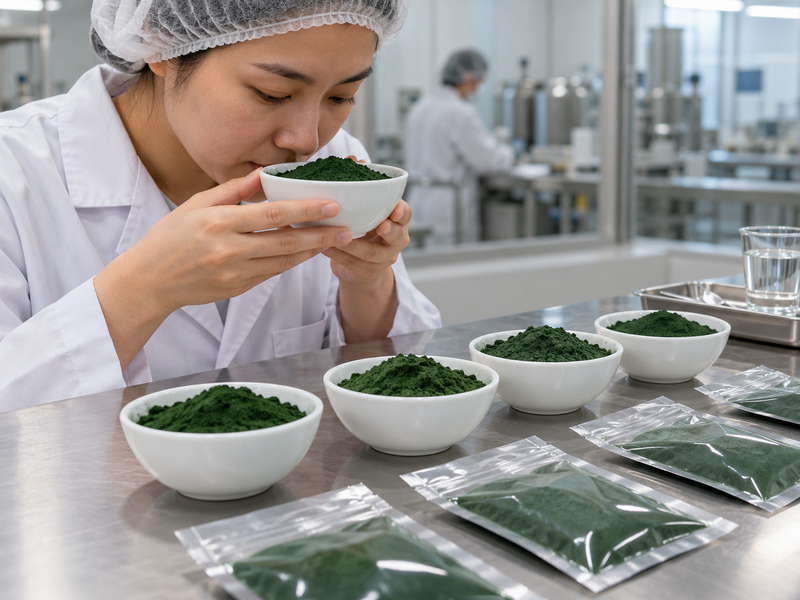
Keep evidence usable: photograph the defect with the pack code and pallet ID, note arrival conditions and retain the package for supplier review. Do not make a quality decision from a smell after opening alone; compare with a retained reference and agreed specification. The supplier should be able to trace each pack to film and sealing records. If failures cluster in one pallet position, handling may be more likely than a material issue, but investigate rather than assume. A clear claim process helps the buyer obtain replacement stock while giving the supplier enough information to correct packing or freight practices.
10. How can buyer and supplier agree on release?
Put material, process and storage in one specification
Write down the approved laminate, food-contact declaration, pack size, closure, seal checks, lot coding and outer protection. Identify what test evidence supports the requested shelf life and what conditions the buyer must maintain after receipt. Ask the supplier to keep packaging-material lot records and to notify you before a substitution. Review one production run against the approved specification, including any start-up rejects and seal-check failures.
Make the next order measurable: agree on acceptance criteria for finished packs, a receiving defect process and a change-notification period. Neither an OTR report nor a nitrogen-flush claim alone guarantees delivered quality. Spirulina oxygen barrier packaging works when an appropriate material is sealed consistently, stored as studied and opened responsibly. Request a trial shipment in the final pack before committing to annual volume. Then compare arrival inspection and end-use performance with the supplier’s data; both teams will have a clear basis for improvement.
| Release evidence | Supplier provides | Buyer verifies |
|---|---|---|
| Film identity | Material lot and structure | Approved revision |
| Seal control | Production check log | Defect limit |
| Shelf life | Final-pack study | Intended storage |
| Shipment | Pack codes and protection | Arrival condition |
FAQ
Q1. Does a low OTR film guarantee long shelf life? No. Seal integrity, headspace, filling and storage conditions also affect the powder.
Q2. Is nitrogen flushing required? Only if the product-specific evidence and agreed specification call for it; verify residual oxygen when claimed.
Q3. Does seal strength prove a bag has no leak? No. Strength and continuity answer different questions.
Q4. Can a different liner be used without notice? Require review of material performance, food-contact status and sealing compatibility before substitution.
Q5. Should an opened bulk bag keep its unopened expiry date? Establish separate in-use handling and hold conditions for material after opening.
Closing note
Compare candidate packs using the actual spirulina grade, final fill and intended storage route. Ask for film data, line checks and final-pack stability evidence. A controlled trial order gives buyer and supplier a shared view of quality before annual volumes depend on the package.