
Spirulina harvest timing quality means choosing a harvest window that yields suitable biomass for a defined product. A pond may look full while its pigment, protein or contamination profile fails a buyer’s needs. A written release decision connects culture trends with downstream use. Published culture-status research found that observable filament features change over a batch; its particular day count belongs to that experiment, not every commercial pond.
Contents
- Why does harvest timing matter?
- Which culture readings inform the window?
- How should target composition affect timing?
- What does morphology add to the decision?
- When should a pond be held?
- How do partial harvests change the plan?
- What happens between cutting and dewatering?
- How should samples represent the pond?
- Which records connect harvest to powder?
- What should buyers compare across suppliers?
1. Why does harvest timing matter?
Match biomass with its intended use
Harvest date affects what material enters washing, dewatering and drying. A producer seeking whole-food powder may weigh dry biomass yield, sensory condition and specification results. A producer selling pigment-rich material may examine a different set of markers. These are operational tradeoffs, not a rule that older biomass is inherently poor. The supplier should state what product it intends to make before claiming that one harvest time is best.
The key question: what evidence caused the team to cut this pond today? A dated approval should include culture identity, measured condition, open deviations and intended downstream lot. Compare a good batch with one harvested early after an anomaly. The large-scale cultivation literature describes how cultivation and harvesting choices interact. Buyers can ask for those links without dictating the exact day of harvest.
2. Which culture readings inform the window?
Build a small trend dashboard
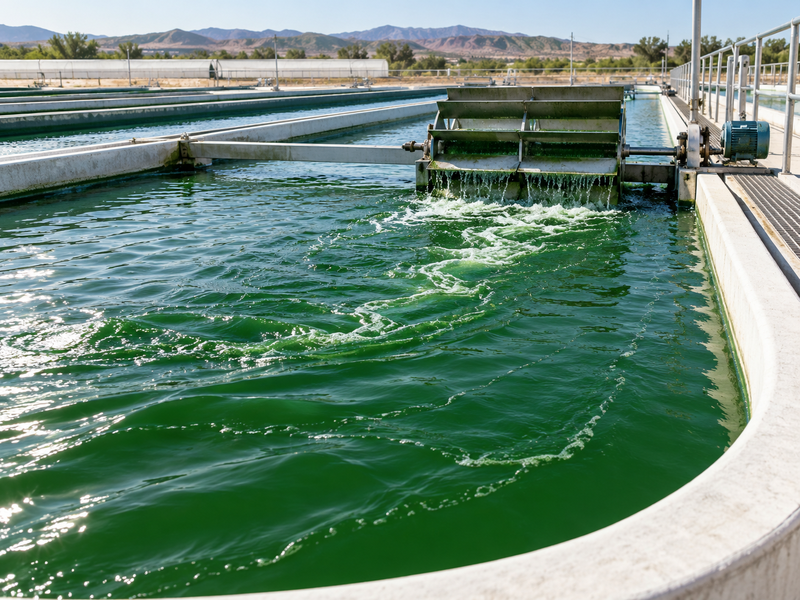
Useful inputs may include biomass concentration, pH, temperature, nutrient status, visual condition and microscopy. Choose methods and sampling points that fit the site’s system. A pH trend has more value when meter checks and sampling time are recorded. For open ponds, weather and mixing notes can explain abrupt changes. Ask whether the team reviews sequential results before scheduling a cut.
Read the combination. A pond showing rising density but a new off-odor needs investigation before harvest. A normal color with low nutrient input may warrant closer composition checks. Published work on Spirulina culture status observed shifts in pH, morphology and floating activity together. That finding supports a multi-signal review, while commercial limits must come from the supplier’s validated practice and customer specification. Record who made the final call and which data were available then; later tests cannot substitute for the contemporaneous decision.
| Reading | Useful context | Common misread |
|---|---|---|
| Biomass density | Dilution and sampling point | Dark color means high yield |
| pH | Meter and addition history | One value proves stability |
| Microscopy | Defined sample location | One field represents pond |
| Nutrient trend | Feed record and target | More feed always helps |
3. How should target composition affect timing?
Specify the output before choosing a date
Whole spirulina powder can be purchased against color, protein, moisture and other agreed characteristics. An extraction feedstock may prioritize phycocyanin or another measurable attribute. A supplier should link its harvest decision to the intended specification rather than use a generic “maximum quality” claim. Research on nitrogen depletion and Arthrospira found marked pigment and protein changes under the studied conditions. It does not create a universal harvest threshold for every strain or pond.
Ask for paired data. Compare culture measurements at harvest with finished-lot results across several runs. If color drops after a longer cultivation period, check drying records too; processing can alter appearance. If protein varies, examine test basis and method before blaming harvest age. Correlation alone does not identify the cause. A buyer purchasing for beverage use should also consider dispersibility and sediment behavior. The site’s beverage sediment guide covers that downstream constraint. Document which harvest attributes the supplier can actually control and which need confirmation after drying.
4. What does morphology add to the decision?
Use microscopy as a supporting signal
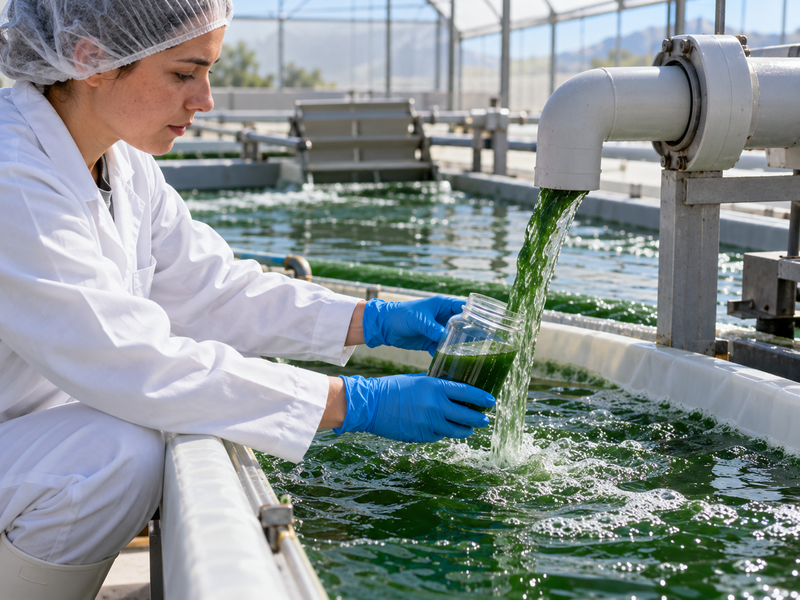
Arthrospira forms filaments, and their appearance can shift during growth. Primary microscopy research documents filament extension and fragmentation. A trained reviewer can record unusual shortening, competing organisms or debris, then compare findings with a reference image set and past batches. The method needs a defined sample point and observation protocol.
Do not overinterpret one image. Filament changes can reflect normal physiology or a stressed culture. If a notable change accompanies poor growth or atypical pH, widen the investigation. If measurements otherwise remain stable, repeat sampling and document the judgment. The supplier should state what finding triggers a hold versus a routine observation. This practice makes morphology useful without turning an operator’s subjective impression into a standalone safety test. Final product release still requires its own applicable testing and specification review.
| Microscopy result | Immediate step | Next evidence |
|---|---|---|
| Expected filaments | Record and continue | Trend comparison |
| Shortened filaments | Repeat representative sample | Growth and pH history |
| Unexpected organisms | Hold transfer or harvest | Identification plan |
| Debris | Protect lot | Equipment and pond inspection |
5. When should a pond be held?
Decide before the harvest line starts
An unresolved contamination signal, unidentified debris, major instrument uncertainty or out-of-pattern culture trend can justify a hold. The site should define triggers in its procedure and record who has authority to release. A hold is an investigation state, not proof that all biomass is unsafe. Map any partial harvests already removed from the pond and stop their downstream use until the scope is known. Otherwise a pond-level hold may leave wet biomass already entering the dryer.
Follow the branch. One suspect pond may share inoculum, water or harvesting equipment with others. The review should ask which exposure path applies and whether adjacent lots need assessment. The FDA food CGMP overview frames sanitary operations and process controls for covered facilities; site-specific harvest release criteria remain its responsibility. For buyer assurance, request the disposition of an actual held pond and the evidence used, not merely a policy stating that questionable material will be rejected.
6. How do partial harvests change the plan?
Treat each cut as a defined event
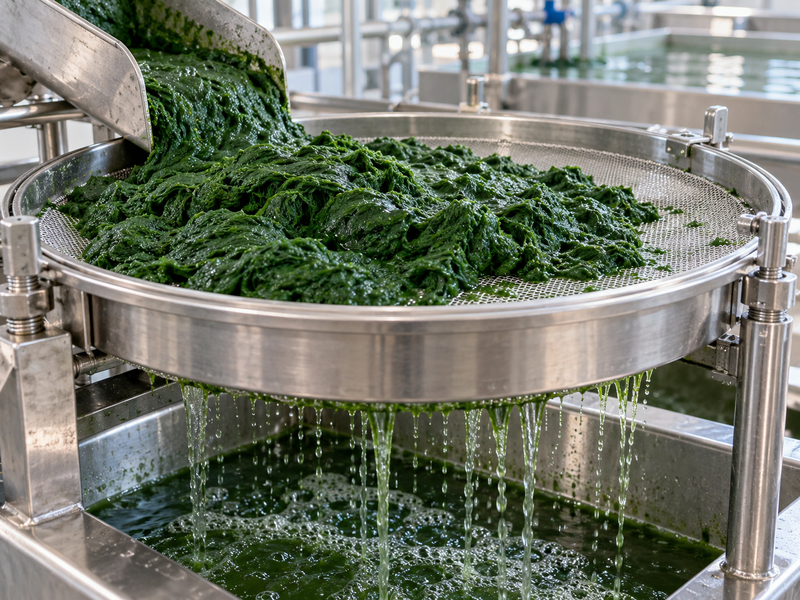
Some producers remove only part of a pond’s biomass and continue cultivation. That practice changes culture density, light exposure and nutrient demand. Record the date, volume removed, estimated dry solids and any medium or nutrient replacement. Give each cut a distinct harvest identifier so a later anomaly can be tied to the correct material. Pooling cuts into one lot may be possible under a controlled policy, but the manufacturer must show which cuts contributed and whether each met release criteria.
Check the recovery curve. Compare density and culture condition after a partial harvest with the pre-harvest trend. A rapidly refilled pond is not necessarily equivalent to a newly inoculated one. Published harvesting-strategy research examined how harvesting ratio and nutrient conditions affected biomass and phycocyanin in specific cultures. Its ratios are research observations, not buyer limits. Request the supplier’s own evidence for its operating pattern, especially if it sells tightly specified material. A simple mass balance can also flag an implausible reported yield.
| Partial-harvest record | Why buyer needs it | Check |
|---|---|---|
| Cut identifier | Separates events | Link to dryer lot |
| Removed volume | Supports mass balance | Meter or tank record |
| Replacement medium | Explains new trend | Input lot record |
| Recovery check | Supports next cut | Density and condition |
7. What happens between cutting and dewatering?
Control the wet-biomass interval
Harvested culture is moved through screens, pumps or holding vessels before dewatering. That interval creates opportunities for mix-ups, temperature drift, contamination and loss of solids. A supplier should specify maximum holding conditions from its process evidence and record actual start and end times. The acceptable window depends on the equipment and product; do not assume a universal duration. Keep wet-biomass containers identified and protected. If two ponds feed a common holding tank, log the joining event and assess whether the combined lot remains traceable.
Look beyond the pond. Screening efficiency affects how much biomass reaches the next stage. A filter blockage may extend hold time or lead to an unplanned transfer route. Large-scale cultivation research notes that filamentous Arthrospira can be harvested by filtration, but the site’s own screen and sanitation performance still need evidence. Ask for harvest equipment cleaning, pre-use inspection and wet-biomass reconciliation. This section of the process often explains a finished-lot difference that a pond chart alone cannot.
8. How should samples represent the pond?
Define locations, timing and handling
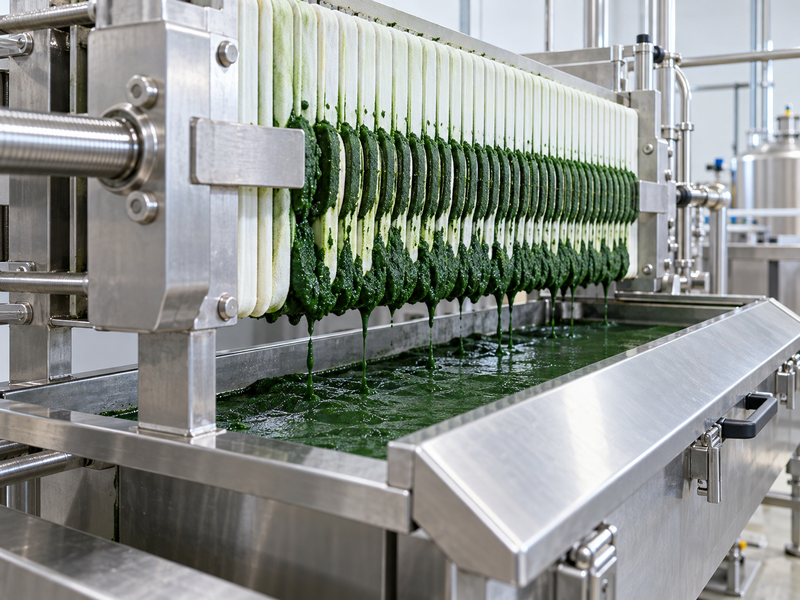
One dip from a convenient edge may miss variation caused by mixing or the timing of a nutrient addition. The supplier should document sample locations, collection depth where relevant, time relative to mixing and any composite method. Use different samples for different purposes when the method demands it. For example, a biomass density sample and a microbiological sample may require different containers and handling. Record who collected them and when the laboratory received them. Retained wet material may change during storage, so sample conditions matter.
Question the inference. A passing sample supports the tested material under that sampling plan; it does not prove every corner of a pond identical. When results disagree, investigate method, location and process history before averaging them away. Buyers can ask the supplier to demonstrate sampling on a site map or process diagram. If several harvest cuts enter one powder lot, the sampling plan must also explain how each cut is represented. Link test results to harvest IDs and finished lots through the site’s lot-traceability process.
| Sample purpose | Collection detail | Record to retain |
|---|---|---|
| Density | Mixed location and time | Method and result |
| Microscopy | Pond point and magnification | Image or worksheet |
| Composition | Basis and handling | Laboratory report |
| Retain | Container and storage | Chain of custody |
9. Which records connect harvest to powder?
Build a genealogy across wet and dry stages
The harvest sheet should identify pond, seed lineage, cut time, transfer vessel, wet mass or volume, dewatering batch and dryer run. Packaging records then link dried powder to bags and shipment. Document blending, rework or split runs explicitly. A powder lot assembled from several harvests needs all of its source codes; a single headline date hides material history. Reconcile input and output quantities within the site’s measurement tolerance and explain significant losses rather than silently changing figures.
Test one trace. Pick a shipped bag and walk backward to its harvest events. Then choose one harvest event and identify every finished bag that contains it. If a culture hold occurs after packing, that forward trace determines the containment scope. The site’s powder certificate of analysis should reference the same finished-lot identity. A certificate and a harvest chart with different lot codes need a documented bridge. Strong genealogy turns a quality question into a bounded investigation.
10. What should buyers compare across suppliers?
Evaluate decisions, not a claimed best day
Ask each supplier for its harvest criteria, completed records from representative lots and the path between wet biomass and finished powder. Compare how it handles a fast-growing pond, a slow pond and a pond with an unresolved observation. The strongest evidence is a consistent decision process tied to product requirements. Different systems may legitimately use different windows.
Bring one scenario. Ask what happens when target biomass is reached but a microscopy concern appears. Who can pause cutting, what additional evidence is gathered and how are any earlier cuts held? Compare those answers with the supplier agreement and the buyer’s incoming checks. Request a small dataset of paired harvest and finished-powder results, with methods and lot IDs. It can reveal variability without assuming that every difference came from harvest timing. Close gaps as supplier actions with named owners and dates.
| Supplier evidence | What it answers | Follow-up |
|---|---|---|
| Harvest criteria | Why cut now? | Check approved revision |
| Culture trend | Was pond stable? | Review anomalies |
| Hold record | Can staff stop? | Trace affected material |
| Paired lot results | Did output meet use? | Compare method and basis |
FAQ
Q1: Is there one best harvest day for spirulina? No. Strain, cultivation system and product specification change the suitable window.
Q2: Can color alone approve a harvest? No. Compare measured trends, observations and any relevant composition results.
Q3: Does a partial harvest need a separate code? A distinct event identifier makes later tracing and mass balance much clearer.
Q4: Should a held pond automatically be discarded? The reviewed investigation and applicable requirements determine disposition; keep descendants contained meanwhile.
Q5: What should a buyer request? Ask for harvest criteria, one completed lot genealogy and a real deviation example.
Practical next step
Spirulina harvest timing quality depends on matching culture condition with the intended powder specification and a documented decision. Request three linked records from your supplier: a culture trend, a harvest approval and the resulting finished-lot test. Review any gaps before the next purchase order. That evidence gives purchasing and quality teams a shared basis for accepting material.