
Spirulina culture inoculum management means controlling the seed culture that starts each production run. A supplier can present a clean finished-powder certificate while leaving buyers unsure which culture entered the pond, how it grew, or why it was transferred. A documented seed train solves that gap. Published Arthrospira cultivation research shows that growth depends on strain and culture conditions; the questions below turn those variables into reviewable handoff records.
Contents
- What counts as a spirulina inoculum?
- How is strain identity carried through scale-up?
- What should a seed-stage record contain?
- How should culture growth be assessed?
- Which contamination signals call for a hold?
- How is the transfer volume chosen?
- What changes between flask and production pond?
- How should water and nutrient inputs be recorded?
- What evidence supports production handoff?
- What should a buyer ask during supplier review?
1. What counts as a spirulina inoculum?
Define the culture being transferred
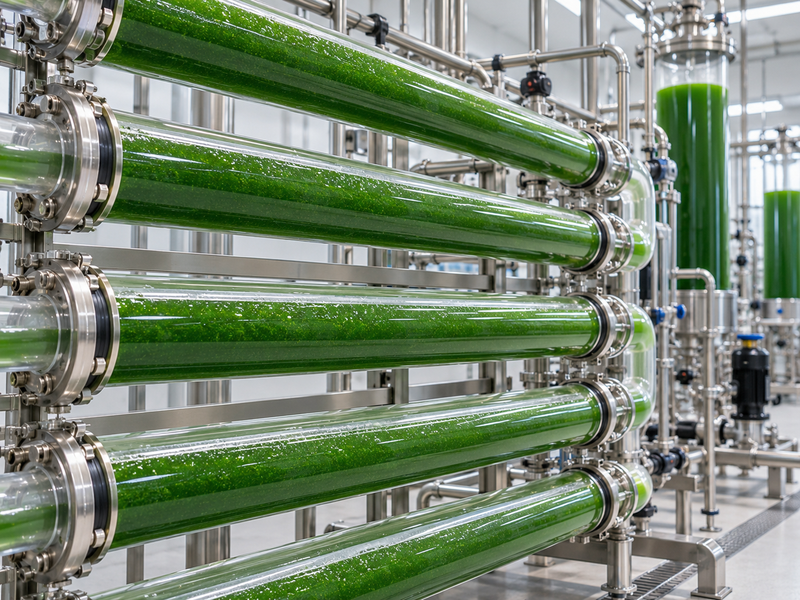
An inoculum is living Arthrospira culture deliberately transferred into a larger vessel or pond. It includes cells and the liquid medium that travels with them. Ask a supplier where its working seed comes from, whether it maintains a reference culture, and how many transfers sit between that reference and the production unit. The answers reveal whether the plant can trace a finished lot back to a specific starting culture.
Start at the handoff. A useful record names the source vessel, destination vessel, transfer date, operator, volume and observed condition. The research on Arthrospira growth and morphology describes filament growth and fragmentation; that biology explains why an image alone cannot prove seed identity.
2. How is strain identity carried through scale-up?
Follow one identifier through every vessel
A reference culture should have a stable identifier, while each working vessel needs its own batch code. The scale-up ledger should show parent and child codes, not simply a date and the word “spirulina.” Compare that ledger with inoculation sheets, laboratory checks and production batch records. If the supplier changes strains, it should evaluate whether growth behavior, color and downstream specifications remain suitable. Different Arthrospira strains can behave differently under the same medium and light regime; a published cultivation review cautions against assuming one universal best medium.
The practical test: choose one shipped powder lot and ask the supplier to work backward to its pond, seed tank and reference line. Then choose the seed tank and work forward to every production unit it inoculated. Reconcile dates and quantities in both directions. A missing intermediate vessel is a traceability gap even when all finished tests pass.
| Identity point | Record to request | Review question |
|---|---|---|
| Reference line | Culture register | Who approved its use? |
| Working vessel | Parent-child log | Which seed filled it? |
| Production unit | Inoculation sheet | Which volume arrived? |
| Finished lot | Batch genealogy | Which harvests contributed? |
3. What should a seed-stage record contain?
Capture conditions and decisions together
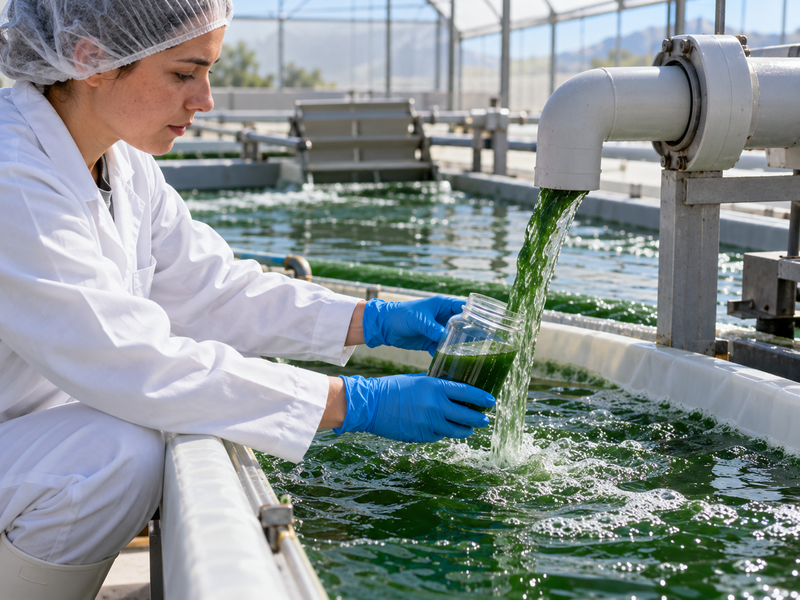
At minimum, record vessel code, dates, medium recipe revision, water source, nutrient additions, light arrangement, mixing, temperature, pH, sampling and transfer decision. Those fields form a timeline rather than a decorative checklist. Instruments need identifiers and calibration status. A pH number without its sampling time or meter cannot explain a sudden change. If a vessel is rejected, keep its record and state its disposition; deleting the failed branch would break lineage.
Look for a decision trail. Suppose a seed vessel grew slowly after a nutrient addition. A useful record shows when the addition occurred, who checked the dose, what trend changed and who approved continued use. A bland “within range” tick box gives no way to test that choice later. The same principle applies to contamination observations: note sampling point, microscopy finding and follow-up sample. Buyers can compare the supplier’s controlled form with a completed example, then ask whether its fields support a credible review.
4. How should culture growth be assessed?
Read trends rather than one green sample
Growth can be followed by a validated site measure such as optical density or dry biomass, with pH and visual or microscopic observations alongside it. The plant should define a consistent sampling point and method. Compare a vessel against its own trend and the supplier’s historical range for that strain and setup. Research on culture status found morphology and floating behavior useful indicators in a studied batch system; its particular harvest day is not a universal production limit.
Ask what changed. Slow growth after scale-up can arise from low starting density, a medium preparation error, uneven light or mixing trouble. A sudden pH shift may have several causes, so investigate it with the full log. When a supplier reports “good growth,” request the graph or sequential measurements behind that judgment. Note if a measurement saturates at high density; dilution or a different method may be needed under the plant’s procedure.
| Observation | What it may reveal | Useful cross-check |
|---|---|---|
| Density trend | Growth or dilution | Transfer and water log |
| pH trend | Medium or gas change | Meter and addition log |
| Filament appearance | Culture condition | Microscopy record |
| Visible debris | Possible intrusion | Vessel and cover inspection |
5. Which contamination signals call for a hold?
Separate an observation from a diagnosis
Unexpected organisms, unusual odor, color change, visible debris or an abrupt growth shift should trigger a defined review. None proves a particular contaminant on its own. Operators should isolate the suspect vessel from transfers, retain a sample under controlled conditions and document what they saw. The scope of a hold depends on shared seed, water and equipment. Trace every child vessel before deciding that only the sampled tank is affected.
This is the hard part: high-pH cultivation can discourage some organisms but does not make a culture sterile. The Arthrospira cultivation review notes contamination challenges in open systems. Ask which observations trigger microscopy or laboratory testing, who can release a held seed vessel and how the supplier protects adjacent lines while investigating. For supplier due diligence, link this review with the site’s cultivation contamination monitoring procedure and compare both against actual deviation records.
6. How is the transfer volume chosen?
Check the calculation and the condition
The plant should calculate transfer quantity from the destination working volume, seed concentration and its validated operating practice. A large inoculum may shorten the low-density period yet consumes more seed capacity. Too little may leave the new vessel vulnerable to slow establishment. Neither tradeoff can be settled by a universal percentage because vessel geometry, light, mixing and strain vary. Record both intended and actual amounts, along with the method of measuring volume.
Follow the material. Measure or estimate what left the seed vessel, what entered the destination and what remained. Explain significant differences such as hose hold-up or a partial transfer. The receiving vessel’s starting density should agree with the transfer calculation within the facility’s accepted method. If operators top up medium afterward, record that separately so a dilution does not resemble a growth failure. This request checks whether the supplier makes handoff decisions deliberately and retains enough evidence to investigate a weak start.
| Transfer variable | Why it matters | Evidence |
|---|---|---|
| Seed concentration | Defines starting biomass | Pre-transfer sample |
| Target volume | Sets dilution | Vessel fill record |
| Actual delivered | Detects loss or partial fill | Meter or weigh record |
| Post-fill density | Checks calculation | Receiving sample |
7. What changes between flask and production pond?
Review exposure created by scale
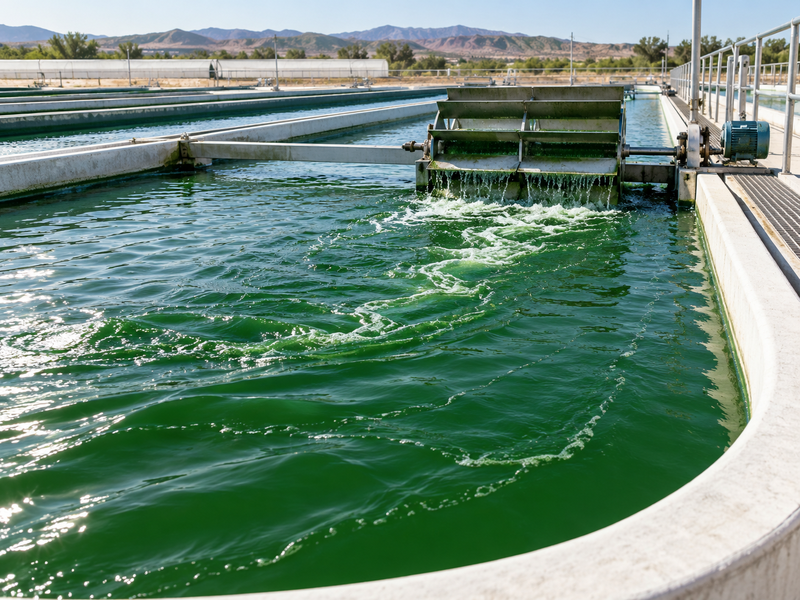
A flask has short light paths and controlled handling. A production pond adds changing weather, longer flow paths, more surface exposure and a different mixing pattern. Even a closed reactor changes light distribution as culture density rises. The large-scale cultivation review discusses light, mixing, contamination and harvesting as linked scale-up challenges. Ask the supplier which seed-stage measures transfer directly and which require a new range at production scale. Copying a flask pH or optical-density target into a pond form without validation can mislead operators.
Watch the interfaces. Hoses, pumps, valves and receiving ports create opportunities for wrong-line connection or poor sanitation. The transfer instruction should name equipment preparation, line clearance and who confirms the destination. If a seed vessel feeds several ponds, sequence and cleaning between transfers matter. Record weather or cover status when open systems are involved, then compare early pond behavior with seed trends. Buyers can connect those findings with the supplier’s cultivation water quality evidence.

8. How should water and nutrient inputs be recorded?
Preserve the input history for each vessel
Water source and treatment, medium batch, ingredient lot, preparation date and addition amount belong in the seed record. These inputs influence growth and can become shared pathways across otherwise separate vessels. Under US food CGMP rules, water contacting food or food-contact surfaces must be safe and of adequate sanitary quality; 21 CFR 117.37 states that principle. The buyer should also assess local requirements and the supplier’s intended market.
Trace the common input. If several seed tanks change behavior after the same nutrient delivery, batch records should identify that common lot. If only one tank changes, local transfer or vessel conditions become stronger hypotheses. Record late additions as events, not silent revisions to the original recipe. A corrected dosing sheet should retain the original entry and approval trail. For a buyer, the question is whether inputs can be linked to affected production and finished lots quickly. Request a sample genealogy that joins water and nutrient batches to culture stages without disclosing more formulation detail than needed.
| Input | Record | Investigation value |
|---|---|---|
| Water | Source and treatment batch | Identifies shared exposure |
| Nutrient | Supplier lot and weighed amount | Checks preparation error |
| Prepared medium | Recipe revision and mixer | Links vessels |
| Late adjustment | Time, reason, approver | Explains trend changes |
9. What evidence supports production handoff?
Require a release decision before transfer
Before transfer, the supplier should compare seed identity, growth trend, pH, visual findings and open deviations with its release criteria. The reviewer needs authority to hold a culture even if a production slot is waiting. A signed release or electronic approval should state the destination and the time of decision. A retrospective signature after pond filling does not demonstrate prospective control.
Make the handoff reconstructable. Put the seed-vessel code on the receiving pond record, then preserve the transfer quantity and post-fill check. The FDA food CGMP overview frames sanitary operations and process controls for covered food facilities; the precise release criteria remain a facility-specific decision. For buyer review, ask for one accepted transfer and one rejected or investigated transfer.
10. What should a buyer ask during supplier review?
Audit one actual seed-to-powder path
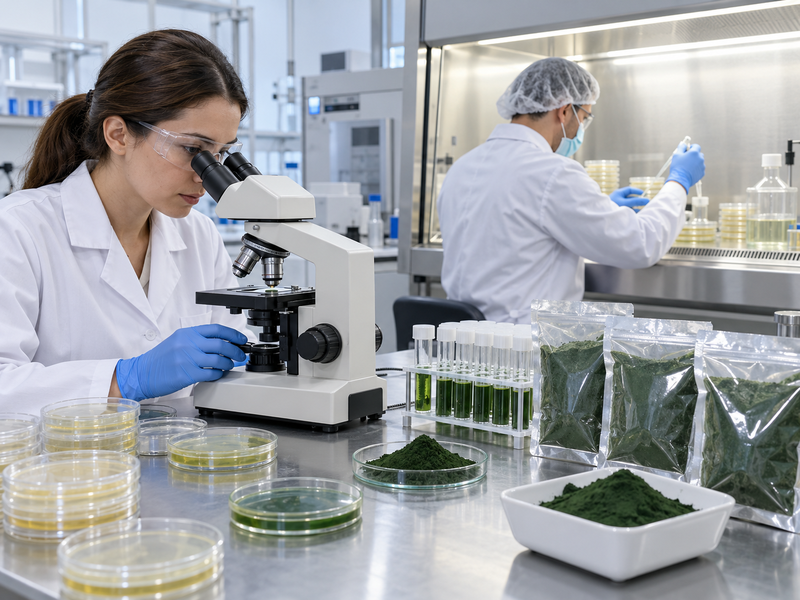
Begin with a recent finished lot rather than a presentation. Ask the supplier to identify its harvest pond, inoculating seed vessel, parent vessel and reference line. Compare transfer volumes, dates and approvals with harvest and packing records. This path should connect with the buyer’s lot traceability expectations. Ask who can stop a transfer, how abnormal morphology is investigated, and how shared input lots are located.
End with a challenge case. Choose an early growth deviation and ask what product was held, what was tested and how release was justified. If no real deviation is available, ask the team to walk through a plausible scenario using its procedure. Capture unresolved questions as supplier actions with an owner and due date. The review should reveal decisions, records and escalation paths that can actually operate during a production interruption.
| Buyer request | Strong evidence | Weak answer |
|---|---|---|
| Seed lineage | Parent-child vessel codes | “Same strain as usual” |
| Growth review | Time series and method | One green photograph |
| Hold response | Dated deviation and disposition | Verbal assurance |
| Handoff | Approval before transfer | Retrospective sign-off |
FAQ
Q1: Does a seed culture certificate replace vessel records? No. A certificate may describe a reference strain, but each transfer still needs a traceable parent, child and decision record.
Q2: Can open ponds use controlled inoculum? Yes. Their environmental exposure makes documented seed condition and receiving-pond checks particularly useful.
Q3: Is darker green always healthier seed? No. Density, illumination and pigment composition all affect appearance; compare measured trends and microscopy.
Q4: Must buyers set one inoculation percentage? No. Ask for the supplier’s justified method, actual transfer quantities and post-fill verification.
Q5: What if a result arrives after transfer? Trace every destination, apply the site’s hold procedure and document a reviewed disposition before further use.
Practical next step
Spirulina culture inoculum management works when a supplier can link identity, observed condition and approval at every scale-up handoff. Ask for one seed-to-powder genealogy, one abnormal-culture case and the current transfer form. Compare them against your ingredient specification and intended market. If a link is missing, agree on a documented correction before depending on the next production lot.