
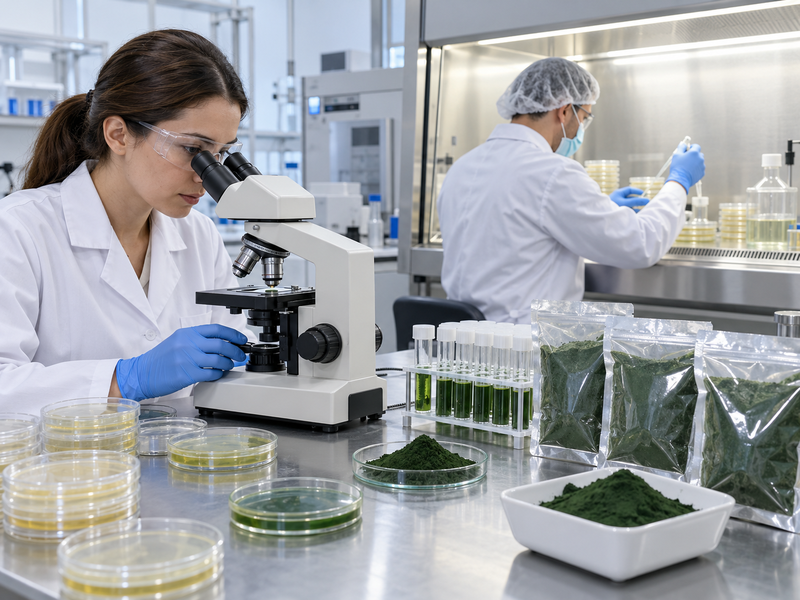
Spirulina powder can turn a yogurt prototype green while also changing acidity, graininess and consumer flavor response. A pilot must show how the actual powder behaves through fermentation, cooling and storage. Spirulina powder yogurt pilot trials compare defined doses and addition points against a matched control, then set product-specific acceptance criteria. An original study comparing commercial and agglomerated spirulina powders in yogurt found formulation-dependent differences in texture and sensory properties. Its laboratory results are a starting question, not a factory specification.
Contents
- What should the pilot decide?
- Which yogurt base and controls are needed?
- How should powder dose be screened?
- When should spirulina enter the process?
- How can graininess be controlled?
- Which fermentation measures matter?
- How should color and flavor be judged?
- What texture and whey tests are useful?
- How should storage and food safety be assessed?
- What evidence supports plant scale-up?
1. What should the pilot decide?
Choose a product target before selecting a dose
State whether the business wants a visibly green yogurt, a particular ingredient declaration, a nutritional formulation or a new sensory profile. Each objective may favor a different amount of whole biomass powder. The decision to write down: which finished product would the team approve, and what would disqualify it? Define an acceptable color range, flavor profile, smoothness, whey separation, fermentation behavior and shelf-life endpoint. Food safety requirements remain independent from sensory preference.
Specify dairy or plant base, culture system, pack size, intended distribution temperature and market. A coconut or oat base may respond differently from milk because protein and fat structures differ. Do not transfer a study’s successful inclusion rate directly to a new matrix. In an original fresh-biomass yogurt experiment, acidity, consistency and acceptance changed with biomass level; fresh biomass differs from dried powder and its reported percentages are not a pilot recommendation. Use the literature to identify measures, then test your own powder and process.
2. Which yogurt base and controls are needed?
Keep the comparison interpretable
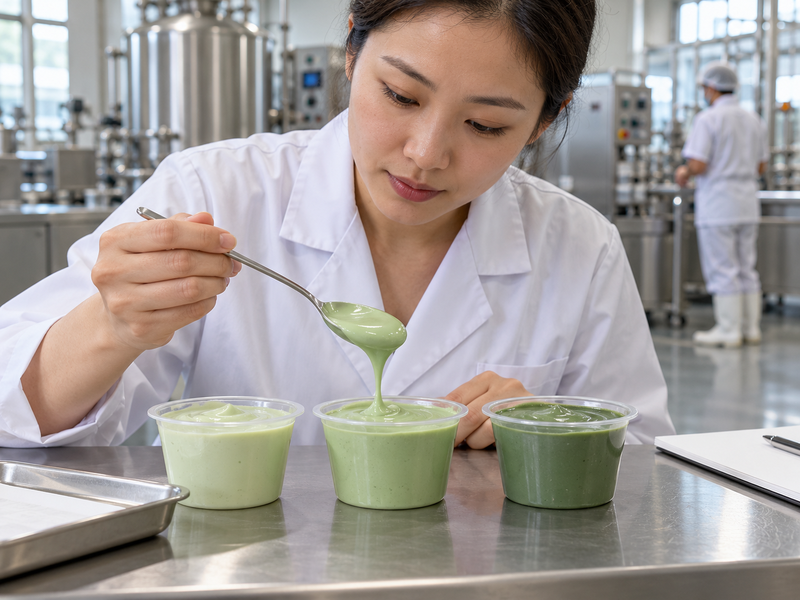
Make an unfortified control from the same base, starter culture and process day. If a flavor system is planned, include it equally in control and spirulina treatments unless the trial explicitly studies masking. Record total solids, fat or oil, stabilizer, sugar and heat treatment. One small difference can confuse the result: a green sample with extra water from a powder slurry may appear thinner because of dilution rather than spirulina. Count all slurry water in the formula.
Use one released powder lot for the initial dose series and retain a sealed reference. Later, repeat the chosen formula with another lot to assess supplier variation. If both dairy and plant yogurt are being developed, treat them as separate pilot tracks; their fermentation and structure may differ. The yogurt powder study compared commercial and agglomerated forms, underscoring that powder physical form belongs in the record. Note whether the powder was prewetted, sieved or added dry. A control that lacks the same mixing step may overstate the powder’s effect.
| Pilot arm | Purpose | Keep constant |
|---|---|---|
| Plain base | Process control | Culture, heating, cooling |
| Low powder level | Sensory threshold | Base and pack |
| Mid powder level | Candidate formula | Mixing and hold |
| High powder level | Stress condition | Same assessment method |
3. How should powder dose be screened?
Use a small graded series
Choose a starting range from product goals and preliminary bench data, then test several clearly spaced levels alongside zero. State percentages on the same basis, preferably mass of powder per final product mass. Avoid chasing only the deepest green: more powder may increase odor, graininess or texture change faster than it improves the desired appearance. Use coded samples so tasters do not know which cup has the highest addition. Record whether color is acceptable before and after fermentation.
The recent yogurt study assessed commercial and agglomerated powders at several concentrations and observed differences in rheology and sensory properties. Those conditions show why a dose-response pilot is useful; they do not establish a universal industry optimum. If the lowest tested dose already tastes too strong, consider a different powder grade or product concept rather than automatically adding flavor. If a nutritional target drives dose, check whether the final serving genuinely supports the intended label statement in the selling market.
4. When should spirulina enter the process?
Compare addition before and after fermentation
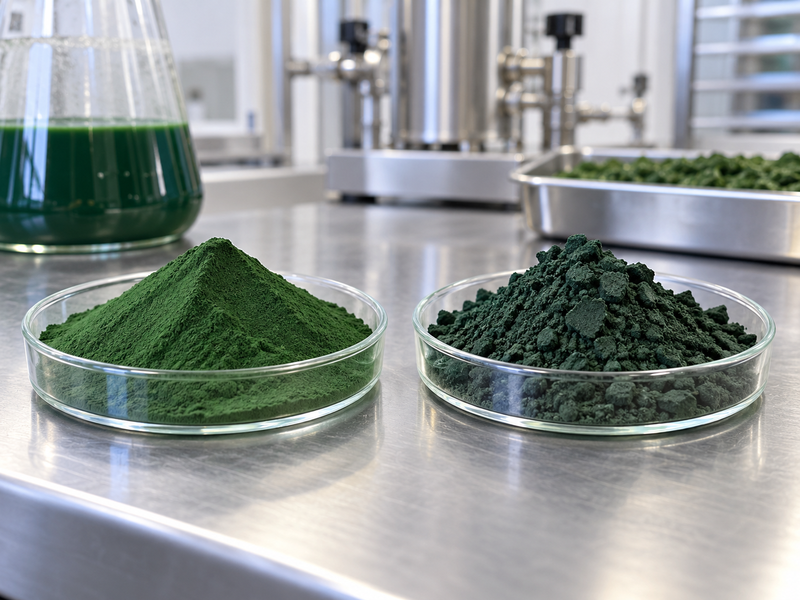
Pre-fermentation addition may distribute powder during base preparation but exposes it to heating and culturing conditions. Post-fermentation addition can protect an approved base process but requires hygienic blending into an acidic product and may damage set structure. Trial both only if the line can support both. For each route, document powder wetting, heat exposure, pH at addition, mixing intensity and sanitation controls. A smooth sample stirred by hand after fermentation may not represent a set yogurt filled at industrial speed.
If powder enters before heat treatment, observe clumps after heating and whether color or odor shifts. If it enters afterward, evaluate recontamination risk under the plant’s food safety plan and check whether the powder meets the required receiving criteria. Record culture addition and incubation conditions in both arms. An original fresh-spirulina yogurt study showed changed acidification under its particular recipe; dried powder may behave differently. Treat fermentation timing as a measured outcome, not a fixed prediction. The site’s blue spirulina yogurt manufacturing article concerns a different extract ingredient, useful for contrasting color-process questions but not a substitute for green biomass trials.
| Addition point | Potential benefit | Trial concern |
|---|---|---|
| Before base heating | Early dispersion | Heat effect and clumps |
| After heating, before culture | Less heat exposure | Hygienic addition |
| After fermentation | Protects culture step | Texture damage and sanitation |
| At fruit preparation | Localized color | Uneven distribution |
5. How can graininess be controlled?
Test powder form and wetting sequence
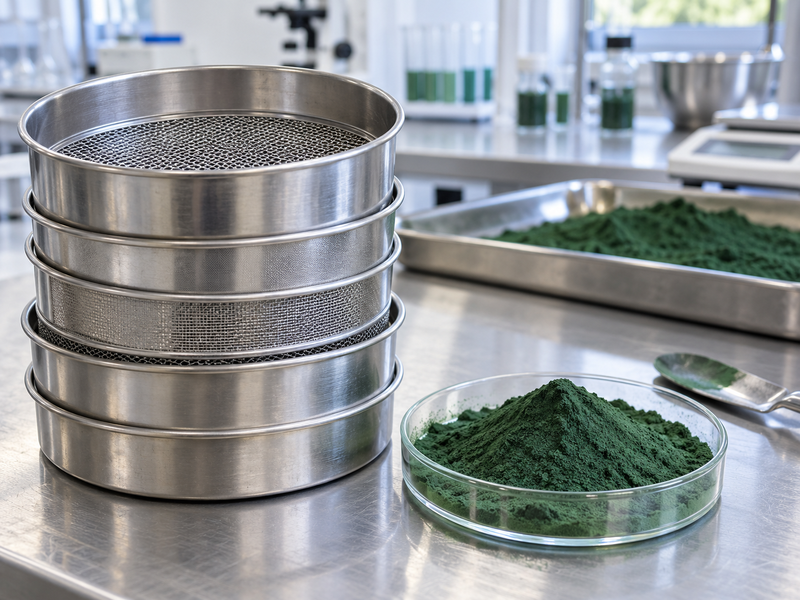
Screen for dry cores, gritty particles and visible specks separately. Prewet a measured powder portion in a compatible part of the base, then add it under controlled mixing. Compare with direct dry addition. Touch and taste both samples: a visually even cup can still feel sandy. Do not assume a finer sieve always improves dispersion; very fine powder may clump on contact with liquid. A powder modified for easier wetting may change other recipe characteristics and needs its own assessment.
The spirulina powder agglomeration research reported improvements in wetting and flow under its experimental conditions. The related yogurt formulation study found physical powder form affected yogurt texture. Use these papers to justify a direct comparison, not to promise that every agglomerated grade will win. Measure sieve residue and inspect the premix vessel heel. A change that removes graininess but adds too much water or mixing energy may cause whey separation later.
6. Which fermentation measures matter?
Follow the acidification curve
Record pH and titratable acidity at defined intervals for control and treated cups, along with incubation temperature and time. Track the point where the plant normally stops fermentation, then compare cooling rates. Do not judge only the endpoint: two batches can reach similar final pH but at different times, changing scheduling and texture. Keep culture identity and inoculation rate fixed during the comparison. If a plant yogurt uses a different starter, establish its own baseline.
The fresh-biomass study observed a faster acidification pattern for a particular spirulina yogurt formulation. That result cannot predict dried-powder behavior in every dairy or plant base. Evaluate whether any observed change repeats across pilot batches. Also note that pH drift during refrigerated storage can affect flavor and color. If spirulina is added after fermentation, the culture curve may remain similar while post-mix pH and stability change. Record both phases. Agree on a practical sampling schedule so measurements do not repeatedly disturb set products.
| Fermentation measure | Sampling point | Interpretation question |
|---|---|---|
| pH | Before culture, intervals, endpoint | Did rate change? |
| Titratable acidity | Start, endpoint, storage | Did buffering differ? |
| Temperature | Continuous or scheduled | Were arms comparable? |
| Cooling time | Endpoint to cold storage | Could texture change? |
7. How should color and flavor be judged?
Evaluate the cup consumers will open
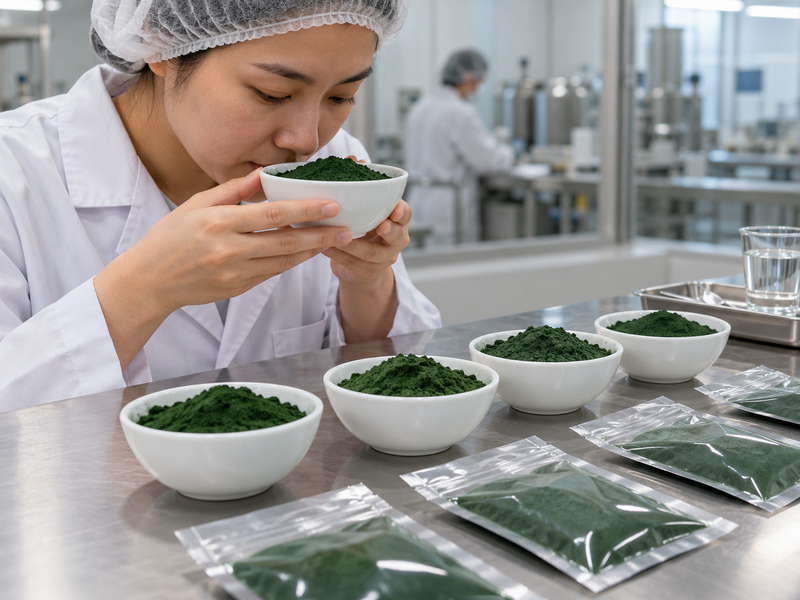
Assess color under fixed lighting, container depth and product age. A colorimeter can help track consistency if sample preparation is standardized. Sensory panels should use blind codes and consider aroma on opening, flavor while eating and aftertaste. Do not hide the difficult result: a green color may be visually appealing while a marine note limits acceptance. The right decision may be a lower inclusion rate, a different flavor pairing or a different product concept.
Record temperature at service because cold yogurt can mute some notes and alter thickness. Compare a freshly made sample with refrigerated samples at planned checkpoints. If fruit or inclusions are added, assess both mixed and unmixed presentation. A published fresh-spirulina yogurt experiment found sensory acceptance differed by concentration in its test; it also used fresh biomass, not the powder in this article. Buyer approval should rely on the actual formula and target panel. Keep supplier lot and storage details with sensory data so a later shift can be traced.
8. What texture and whey tests are useful?
Measure both immediate body and storage change
Select tests that match the product: spoonable firmness for set yogurt, apparent viscosity for stirred yogurt, and flow or pour behavior for drinkable yogurt. Record instrument spindle, speed, temperature and sample age. For whey separation, measure free liquid after a defined refrigerated hold without disturbing the cup. A thicker fresh sample can still disappoint later: powder may alter the gel network or interact with stabilizers, producing a change after several days. Keep a control made on the same day.
The yogurt study using commercial and agglomerated powders measured rheological, textural, color and sensory effects, supporting a multi-measure pilot. Its numerical results belong to its specific recipe and cannot serve as plant acceptance limits. For plant bases, note whether the structure comes from protein gelation, starch or hydrocolloid; each may respond differently to added solids and mixing. Check packaging effects as well: a cup can experience vibration in transport, and a stirred product may shear during filling.
| Product style | Useful texture check | Storage check |
|---|---|---|
| Set dairy yogurt | Firmness or spoon cut | Surface whey |
| Stirred dairy yogurt | Viscosity at fixed conditions | Post-stir thinning |
| Plant yogurt | Flow and gel integrity | Separation |
| Drinkable yogurt | Pour rate | Sediment and resuspension |
9. How should storage and food safety be assessed?
Treat pilot hygiene as part of the result
Use released powder, clean equipment and documented process controls. Review the supplier’s powder microbiological specifications against the yogurt plant’s own hazard analysis. If powder is added after a kill or heat step, the hazard analysis must account for that exposure. A cultured product still needs a safety plan: desirable starter activity does not prove unrelated hazards are controlled. The Codex General Principles of Food Hygiene call for process-specific controls, monitoring and verification. Quality should set the testing and hold rules for the actual market and product.
Store pilot cups in the intended package at the intended distribution condition, with planned challenge conditions only if justified. Assess pH, acidity, color, odor, texture, separation and relevant microbiology at defined intervals. Note light exposure and headspace. Do not infer shelf life from a single fresh sensory session. Trace every cup to powder lot, base batch and incubation run. If a package leaks or a refrigerator deviates, record it rather than silently replacing the sample. Repeated results from independent pilot batches provide stronger evidence than many cups from one batch.
10. What evidence supports plant scale-up?
Convert pilot findings into line instructions
Approve a specific powder grade and supplier specification, dose range, addition point, wetting method, heat and mixing conditions, fermentation endpoint and finished-product criteria. Give the plant a representative retained sample and a sampling plan for the first full run. Ask whether the process is repeatable: can operators make the same green yogurt without a product developer manually correcting every cup? If the answer is uncertain, run a larger pilot with real transfer and filling equipment.
Include yield, tank heel, fill variation and cleaning observations in the report. Green residue may lengthen changeover or contaminate the next white product if the sanitation sequence is weak. Confirm label and ingredient-declaration review for the selling market. If the target depends on a nutrition or health statement, obtain separate substantiation and regulatory review rather than deriving it from a pilot study. Review the first commercial lot at fresh and stored ages before expanding distribution. Store failed trials with their reasons; they define the edges of the workable window.
| Scale-up item | Evidence | Owner |
|---|---|---|
| Powder and dose | Approved lot and formula | Development |
| Process window | Pilot curves and settings | Operations |
| Safety controls | Hazard review and results | Quality |
| Sensory target | Blind comparison and reference | Product team |
FAQ
Q1: Is green spirulina powder the same as blue extract? No. Whole biomass powder has particles and a different composition and handling profile.
Q2: Can a published yogurt dose be copied? Use it to plan a range, then test the actual powder and base.
Q3: Should powder enter before culture? Compare feasible addition points under the plant’s food safety and texture constraints.
Q4: Does a green color prove uniform dose? No. Use controlled sampling and a suitable analytical or process check.
Q5: When is shelf life established? After planned storage testing in the intended package and conditions.
Next step
Run a matched control and a graded powder series in the target yogurt base. Advance only the formula that meets fermentation, sensory, texture and storage checks, then document its operating window for the plant.